A tree dressed entirely from a shop can be beautiful, but a tree carrying a few handmade ornaments is a family archive. The slightly wobbly salt dough star from a child’s first December, the cinnamon ornament that still scents the room, the photo bauble from the year everyone was home: these are the pieces nobody would trade for designer glass. This guide to diy christmas ornaments for 2026 walks through six reliable ornament crafts with honest difficulty, timing and durability notes, so you can choose projects that suit your makers.
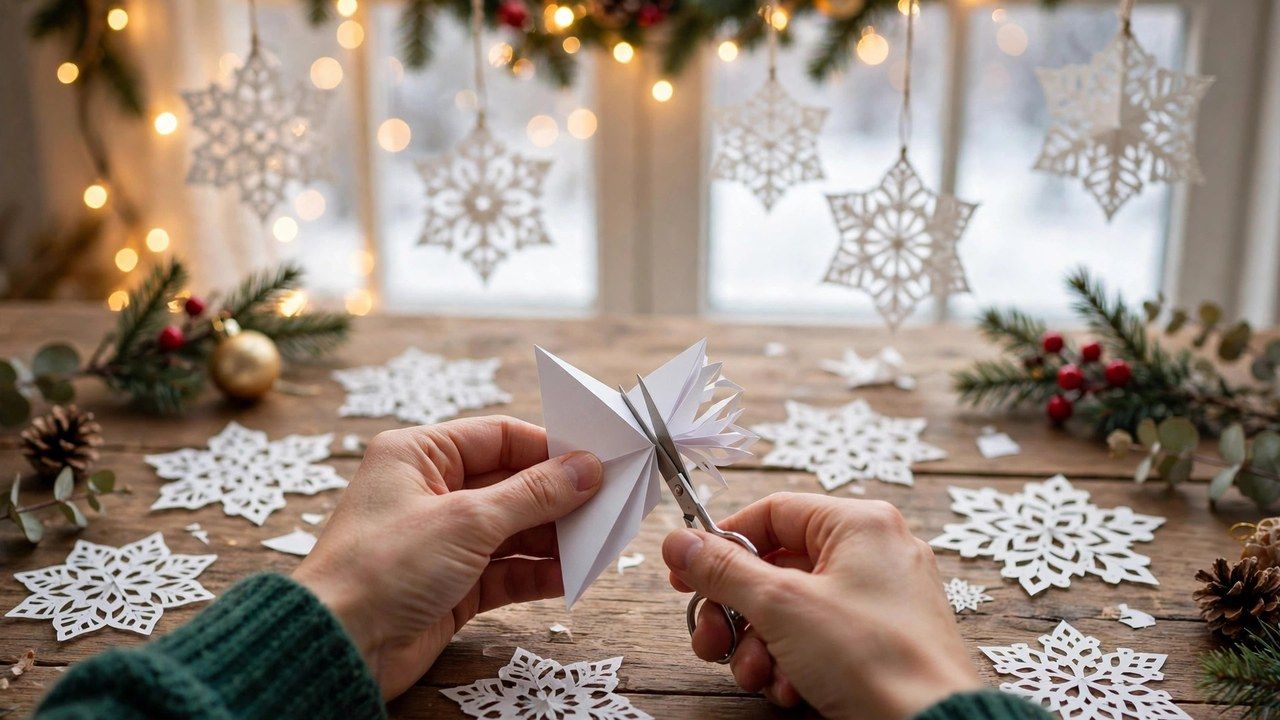
If you want the full method for the most classic project here, our salt dough ornaments recipe gives the complete recipe and troubleshooting. For wider handmade decor beyond the tree, see our DIY Christmas decorations guide, and for the paper based member of the family, our paper snowflakes tutorial makes a perfect same afternoon pairing.
Start With the Project Comparison: Six Ornaments, Honestly Rated
| Ornament | Difficulty | Active time | Durability | Best makers |
|---|---|---|---|---|
| Salt dough | Easy | 30 minutes plus slow drying | Years, if sealed and stored dry | All ages; handprints for babies |
| Cinnamon dough | Easy | 20 minutes plus drying | Years; scent fades slowly | All ages; wonderful smell |
| Felt shapes | Easy to medium | 30 to 45 minutes each | Excellent; unbreakable | Older kids learning to sew, adults |
| Wood slice painting | Easy | 20 minutes plus paint drying | Excellent | All ages; forgiving canvas |
| Fillable clear baubles | Very easy | 10 minutes each | Good; contents stay safe inside | Toddlers with help, memory keepsakes |
| Dried orange slices | Easy | 15 minutes plus oven drying | One to two seasons | Adults; natural and rustic trees |
Read the durability column before you fall in love. A dried orange garland is a one season romance, while a sealed salt dough handprint can outlive the child’s school years. Match the project to the intention: ephemera for this year’s look, sealed and sturdy crafts for keepsakes, and unbreakable felt anywhere a toddler or a cat can reach, a theme our Christmas ornaments guide develops for bought pieces too.
Salt Dough and Cinnamon Dough: The Kitchen Classics
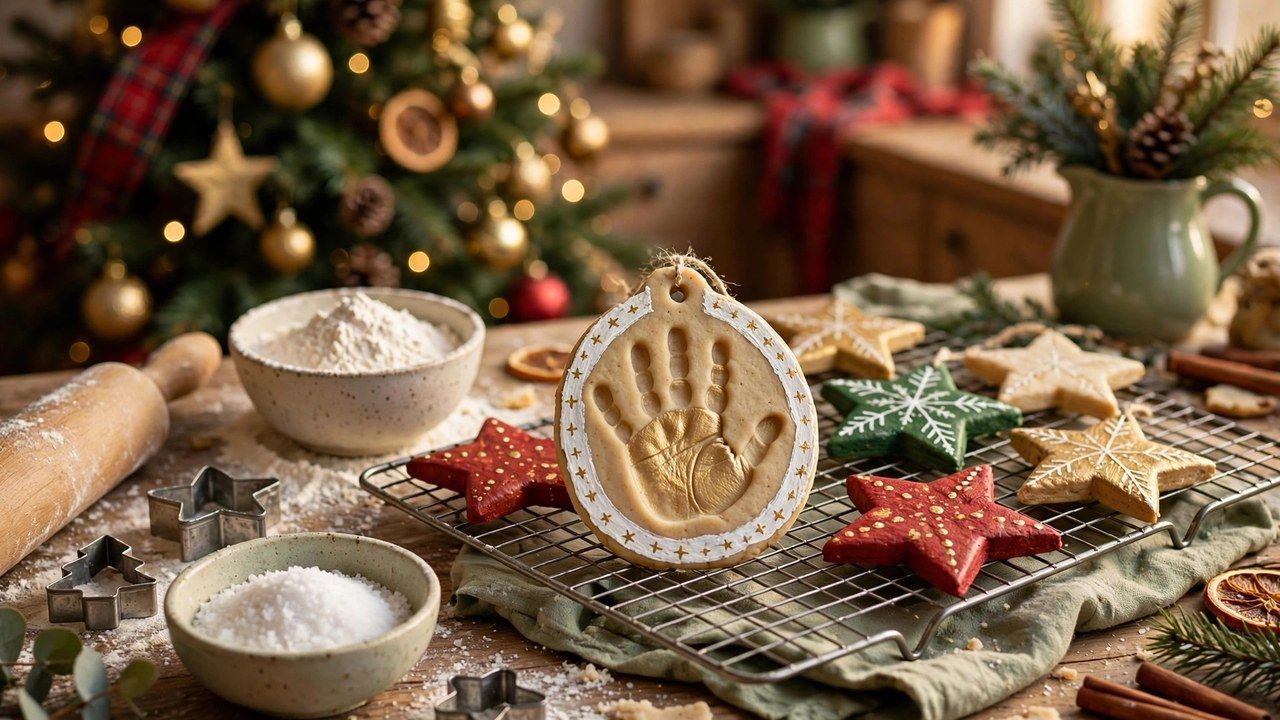
Salt dough is the foundation craft: flour, salt and water rolled, cut with cookie cutters, pierced with a straw for a hanging hole, then dried low and slow before painting and sealing. The full ratios and troubleshooting live in our dedicated salt dough recipe, but the spirit is patience: rushed, hot drying puffs and cracks the dough, while slow drying gives you a stone hard keepsake. Handprints pressed into circles of dough are the single most treasured version, so make those first while small hands are fresh.
Cinnamon dough swaps the base for applesauce and ground cinnamon, rolled and cut the same way, and fills the house with scent while it dries. It is darker, more fragile and not a keepsake for rough handling, but for pure December atmosphere nothing else on this list competes. Neither dough is edible despite the kitchen ingredients, and the high salt content means both must be kept away from dogs, during making and on low branches alike.
Felt Ornaments: The Unbreakable Heirlooms
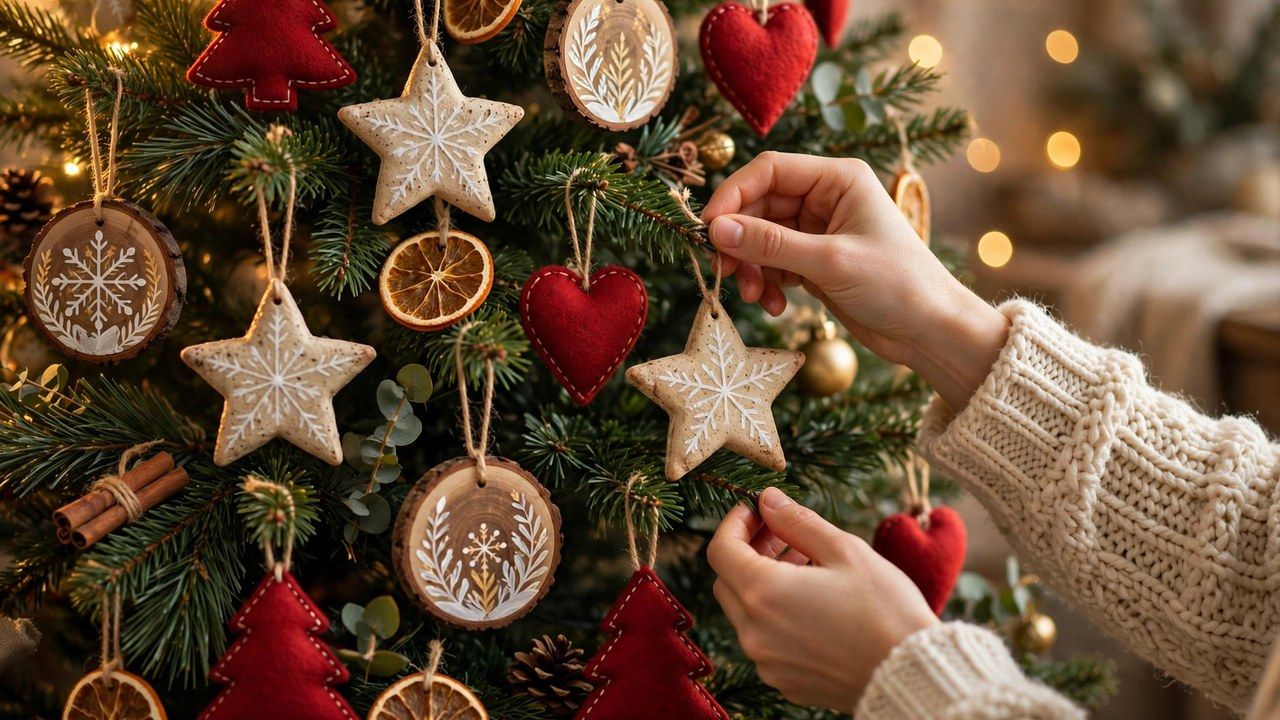
Felt ornaments are made by cutting two identical shapes, a tree, a star, a stocking, a gingerbread figure, decorating the front with simple stitching or glued details, then sewing or gluing the pair together around a little stuffing with a ribbon loop caught at the top. Blanket stitch around the edge in a contrasting thread turns the construction itself into the decoration, and even first attempts look intentionally homespun rather than failed.
Because felt cannot shatter, these are the ornaments for the bottom of the tree, for toddler hands, for posting to family overseas and for children to hang themselves without a hovering adult. A child who sews one felt tree a year builds a personal collection by the time they are ten, and the annual ritual matters more than the stitching quality. Templates can be as simple as cookie cutters traced onto the felt, the same trick we use for tags in our gift tag ideas guide.
Wood Slices and Nature Ornaments
Wood slice ornaments, small rounds of branch with the bark left on, are a forgiving canvas for painted trees, snowmen, robins, initials and dates. Acrylic paint or paint pens give control, a drilled or screwed in eyelet takes the ribbon, and a coat of clear sealer keeps the design bright. Mistakes wipe off while wet, which makes wood the least stressful painting surface for perfectionist children and adults alike.
Nature supplies the rest of the rustic family: pinecones brushed with white paint at the tips to suggest snow, acorn caps, cinnamon sticks tied in bundles, and dried orange slices glowing like stained glass against the lights. Group natural ornaments together on one section of the tree rather than scattering them, and they read as a designed woodland theme instead of random finds, a styling principle shared with our DIY decorations guide.
Fillable Baubles and Photo Keepsakes
Clear fillable baubles, in plastic for safety around children and pets, turn almost anything small into an ornament: a curl of ribbon from a wedding, sand from a holiday beach, tiny pinecones, a rolled message, or the classic snow scene of a miniature tree and fake snow. They take ten minutes, need no drying, and suit makers who want a finished tree today, though the caps can loosen, so check the closure and hang precious contents where a fall would not scatter them.
Photo ornaments carry the strongest sentiment per minute of effort. Print a small photo, mount it inside a fillable bauble, on a wood slice, or in a simple frame ornament, add the year discreetly, and you have started the collection grandparents value most. One photo ornament per year, chosen together, becomes a timeline on the tree, and it pairs naturally with the coordinated outfits in our Christmas photo outfits guide if your annual photo is a formal one.
Making Handmade Ornaments Look Cohesive, Not Chaotic
The difference between a charming handmade tree and a jumble sale is editing. Choose a palette for the year’s making, say red, cream and wood tones, and let every project obey it, whatever the craft. Repeat each ornament type at least three times across the tree so single experiments become a motif. Use one ribbon or twine style for every hanger, because unified hangers quietly unify everything hanging from them.
Placement helps too: distribute handmade pieces evenly among plain filler baubles that act as the background, rather than clustering all the crafts in one proud corner. Step back and photograph the tree; the camera shows imbalance your eyes forgive. And keep the fragile, precious keepsakes at adult height, with felt and wood filling the grab zone below, a compromise that keeps both the ornaments and the peace.
Kids, Safety and Realistic Expectations
Match tasks to ages honestly: toddlers press handprints, stick and pour fillings; primary age children roll, cut, paint and glue; older children can sew felt, use fine brushes and help supervise the younger ones. Hot glue and craft knives are adult tools, full stop, and oven drying is an adult job even when the craft is a child’s. Salt dough’s high salt content makes it dangerous for dogs to eat, so craft and store it out of reach, as our dog gifts guide also warns about seasonal hazards.
Set expectations with love: a four year old’s painted wood slice will look like a four year old painted it, and that is the entire point of the archive. Resist repainting their work into neatness. Date every piece on the back in fine pen, because in five years the date will move you more than the artistry, and future you is counting on present you to bother.
Gifting and Storing Handmade Ornaments
A handmade ornament is a complete small gift: personal, postable, and exactly right for teachers, neighbors and coworkers where a larger present would overshoot. Present it in a small box or a paper bag with tissue and one of the tags from our gift tag guide, and write the year and the maker on the back before it leaves, because recipients treasure the provenance as much as the object.
Storage decides whether keepsakes survive: wrap salt dough and painted wood in tissue, store in a dry box rather than a damp attic or garage, and keep felt in a breathable container. Check scented and dried fruit ornaments each year and retire any that look tired or attract attention from pests. Honest storage is the unglamorous half of the heirloom promise, and it is the half entirely within your control.
Conclusion
The handmade ornaments that matter are rarely the neatest; they are the ones with a date, a maker and a memory attached. Pick two or three crafts from this guide that suit your makers, keep the palette unified, seal the keepsakes properly, and add a few pieces every year. A decade from now, your tree will tell your family’s story better than any photograph album you own.