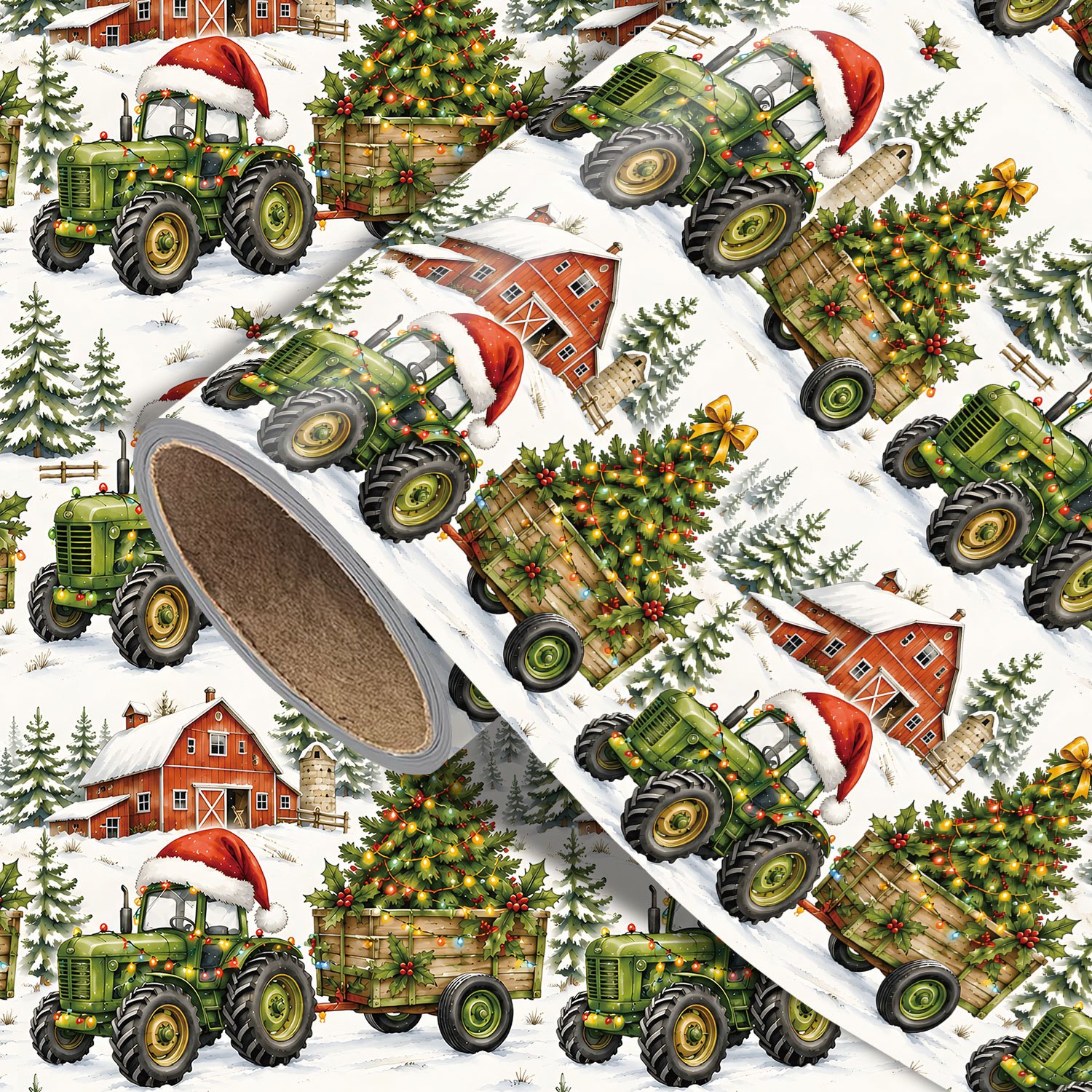
The gift tag is the smallest piece of stationery at Christmas and one of the hardest working. It prevents the Christmas morning disaster of a beautiful present nobody can assign to an owner, carries the one line of handwriting many gifts get all year, and quietly finishes the design of every parcel. This guide to christmas gift tags for 2026 covers the design styles that suit different wrapping, the wording to write for family, friends, coworkers and children, and the DIY methods that make tags from simple supplies.
Tags belong to the same finishing school as wrapping itself, so keep our gift wrapping ideas guide open alongside this one, and if you are making cards too, our DIY Christmas cards guide shares tools and papers with everything below. A note on scope: this guide describes designs and teaches you to make and print your own tags at home; it does not promise a downloadable tag library, because the craft and the wording are the point.
Why Tags Matter More Than Their Size Suggests
Function first: Christmas morning often involves presents from several givers, for several households, transported between homes and stacked under one tree. The tag is the only reliable map through that pile, and the difference between a tag and a sticky label is that a tag stays legible, stays attached, and does not leave residue on the paper someone chose carefully. A few seconds per parcel in December saves real confusion and at least one awkward unwrapping every year.
Design second: a tag is the full stop at the end of your wrapping sentence. Kraft paper looks finished with a rustic stamped tag and twine, while glossy paper wants a crisp white tag with a single initial. Because tags are small and cheap, they are also the easiest place to give a whole pile of presents a coordinated identity, matching tags across different papers so gifts from your household read as a family under any tree.
Anatomy of a Good Tag: Size, Space, Hole and String
A good tag gives the pen room to work. The classic gift tag shape, roughly the size of a playing card or a little smaller, holds a name, a short line and a signature without cramping. Very small novelty tags look charming in photographs and become useless the moment a real name meets a real marker, so judge every design by whether an ordinary hand can write on it legibly. One hole, reinforced if the paper is soft, plus string, ribbon or twine completes the mechanics.
Attachment matters as much as paper. String threaded through the wrapping ribbon survives transport; a tag tucked loosely under ribbon slides off in the car; a tag glued flat to the parcel cannot be flipped for a private message on the back. Write names on the front, and keep the back for the line you do not want announced across the room, a habit that also protects Santa’s cover in houses with early readers.
Design Styles: Classic, Rustic, Minimal and Playful
| Style | Look | Pairs with | Effort level |
|---|---|---|---|
| Classic | Cream or white tag, red or gold border, neat lettering | Traditional paper, tartan, deep red and green | Low: buy or print, write well |
| Rustic kraft | Brown kraft tag, stamp or white pen, twine | Kraft and recycled papers, natural greenery | Low to medium: stamping is quick |
| Minimalist | Plain tag, one initial or a tiny motif, lots of space | Solid papers, monochrome and Scandinavian schemes | Low: restraint does the work |
| Playful | Bright colors, character shapes, glitter accents | Kids presents, novelty paper, stocking gifts | Medium: shapes take cutting time |
| Photo tags | A small photo of the recipient as the tag itself | Plain paper that lets the photo speak | Medium: printing ahead required |
| Reusable | Wood, chalkboard or thick board tags, wiped clean | Family gifts that stay in one house | Higher once, then free for years |
Choose one house style per year rather than mixing freely. A single style across all your parcels looks intentional in photographs and under the tree, speeds up production because you repeat one process, and lets recipients identify your gifts at a glance at other people’s houses. Save the variety for recipients: playful shapes for children, classic for grandparents, minimal for design minded friends, all within a shared color family.
Wording: What to Actually Write on the Tag
The classic formula is To, a name, a short line, and From, a name, but the short line is where tags become keepsakes. For family: a genuine sentence beats a generic greeting, so write the small true thing, like thanks for every Sunday call. For children from Santa, a playful line in different handwriting keeps the magic, and our letters to Santa guide helps you keep stories consistent across the season. For partners, one private reference outperforms any printed verse.
For coworkers and professional gifts, warm and brief is the register: name, a line wishing them a restful break, your name, and nothing that tries too hard, which aligns with the etiquette in our gift card ideas guide. Funny tags work when the joke is affectionate and the recipient is the hero of it, never the target. And for group gifts, list every contributor on the back, because the one omitted name is the one that will be noticed.
DIY Method One: Stamped and Hand Lettered Tags
Start with blank tags or cut your own from card stock using one tag as a template, punch a hole, and thread twine. A single festive stamp, a tree, a star, a reindeer, inked in one color stamps a whole batch in minutes, and the slight unevenness of hand stamping is the charm. Add names in your best handwriting with a fine pen, or practice a simple faux calligraphy, thick downstrokes and thin upstrokes, which makes even short names look designed.
White and metallic gel pens on kraft or deep green card are the highest impact, lowest skill combination in this whole guide. Work in batches: cut all, punch all, stamp all, then write all, letting ink dry fully between stages so nothing smudges. This assembly approach, borrowed from our DIY cards workflow, turns fifty tags from an evening of faff into forty calm minutes.
DIY Method Two: Recycled, Traced and Photo Tags
The classic recycled tag uses last year’s received Christmas cards: cut the picture front, which has no writing on its back, into a tag shape, punch a hole, and write on the plain reverse. It is thrifty, genuinely pretty, and a tradition in many families. Traced tags use a cookie cutter or a glass as a template to draw circles, stars and trees on card, then cut and decorate, a method children can fully own with safety scissors and supervision.
Photo tags print a small photograph of each recipient, mounted on card with a hole and ribbon, so pre readers can deliver presents by matching faces, a joyful job for the youngest in the house. Designing tags on a computer and printing them onto card stock at home follows the same printing discipline as our coloring pages guide: correct paper setting, highest quality mode, and a test sheet before the full batch.
Tags for Awkward Parcels and Special Cases
Bottles take a neck tag: a longer tag or a small card looped over the neck with ribbon, which also suits jars and candle gifts. Soft parcels like clothing squash flat tags into invisibility, so use a stiffer board tag or attach the tag to a small card tucked under the ribbon. Oversized gifts swallow standard tags entirely; scale up to a proper small card wired to the bow, and write big. Bikes and similarly un wrappable gifts traditionally get one tag on a ribbon tied to the handlebars, plus the treasure hunt treatment if children are involved.
For gifts shipped by post, put the tag message inside the parcel as a card as well, because outer tags are routinely destroyed by sorting machinery and weather. For charity and donation gifts given in someone’s honor, the tag carries the explanation, so use a folded mini card with room for two or three sentences rather than a standard tag.
Honest Pros and Cons: Bought Tags Versus Handmade
Bought tags: instant, consistent, and often beautifully printed; the cons are generic wording areas, thin paper that tears at the hole, and strings too short to be useful. Handmade tags: personal, matched exactly to your wrapping, and nearly free from scraps; the cons are time and the risk of a rushed, uneven batch. The sensible middle most households land on: handmade tags for family and close friends, a quality bought set as backup for the late December surprises.
Conclusion
A good Christmas tag is small proof of care: legible, attached properly, written with one true line, and styled to finish the parcel beneath it. Pick one house style, batch the making, write names large and messages honestly, and keep a backup set for late arrivals. Do that, and the humblest item in your wrapping box will quietly hold Christmas morning together.