A beautiful tree is rarely about owning beautiful ornaments; it is about choosing ornaments that agree with each other and placing them where each kind does its best work. This christmas ornaments guide covers the practical system behind the trees you admire: how many ornaments a tree actually needs, how to build a color palette that holds together, how size and finish layer from the trunk outward, and how to collect over years so the box you open each December gets better instead of just bigger.
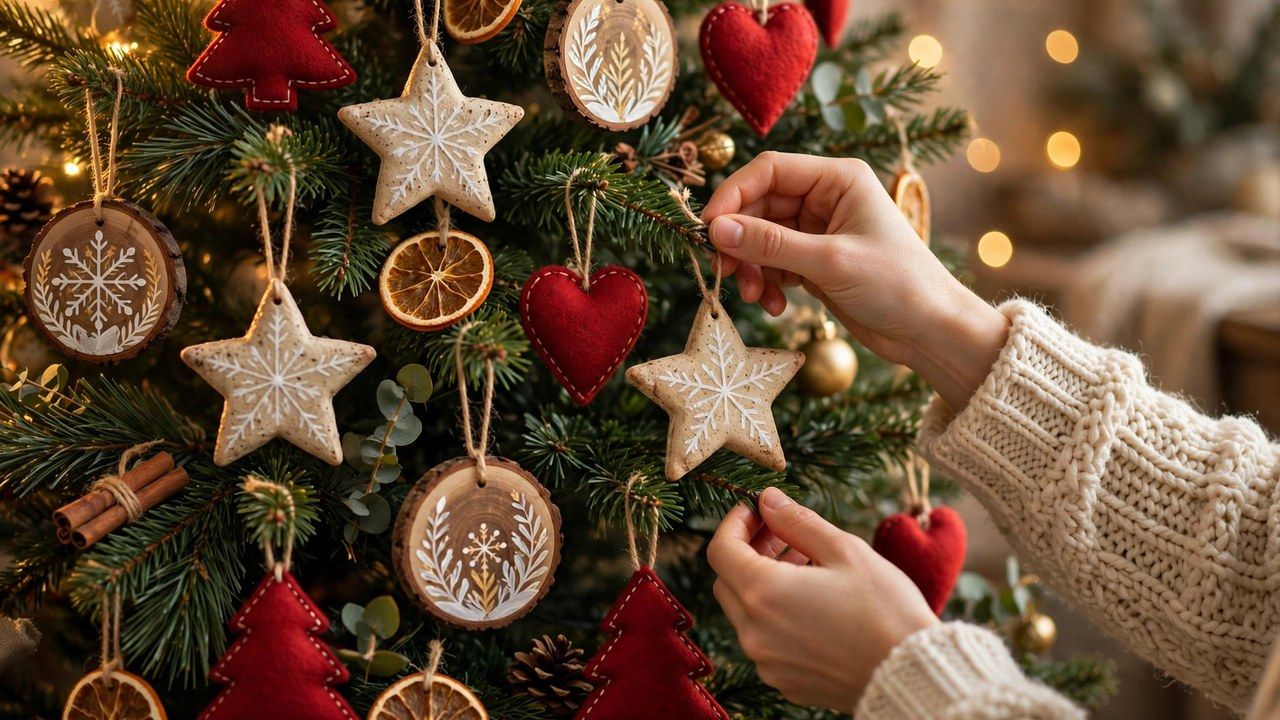
Use it alongside our tree decorating ideas for complete looks and our DIY Christmas ornaments guide if you want handmade pieces inside the same system. Whether your collection is heirloom glass, shatterproof family-proof sets, or a decade of travel souvenirs, the coordination rules below will make it look intentional.
How Many Ornaments Does a Tree Need?
| Tree height | Full, styled look | Lighter, minimal look |
|---|---|---|
| 4 feet | 40–60 ornaments | 20–30 |
| 6 feet | 80–110 | 45–60 |
| 7.5 feet | 120–160 | 65–85 |
| 9 feet | 180–240 | 100–130 |
Treat these as planning ranges, not commandments, because ornament size changes everything: a tree dressed in large statement balls needs a third fewer than the same tree in small pieces. Count what you own before you shop, sorted by size, and you will usually find the real gap is not quantity but distribution, plenty of medium ornaments, too few large ones to anchor the interior, and a crowd of small favorites competing for the same front branches.
Building a Palette That Holds Together
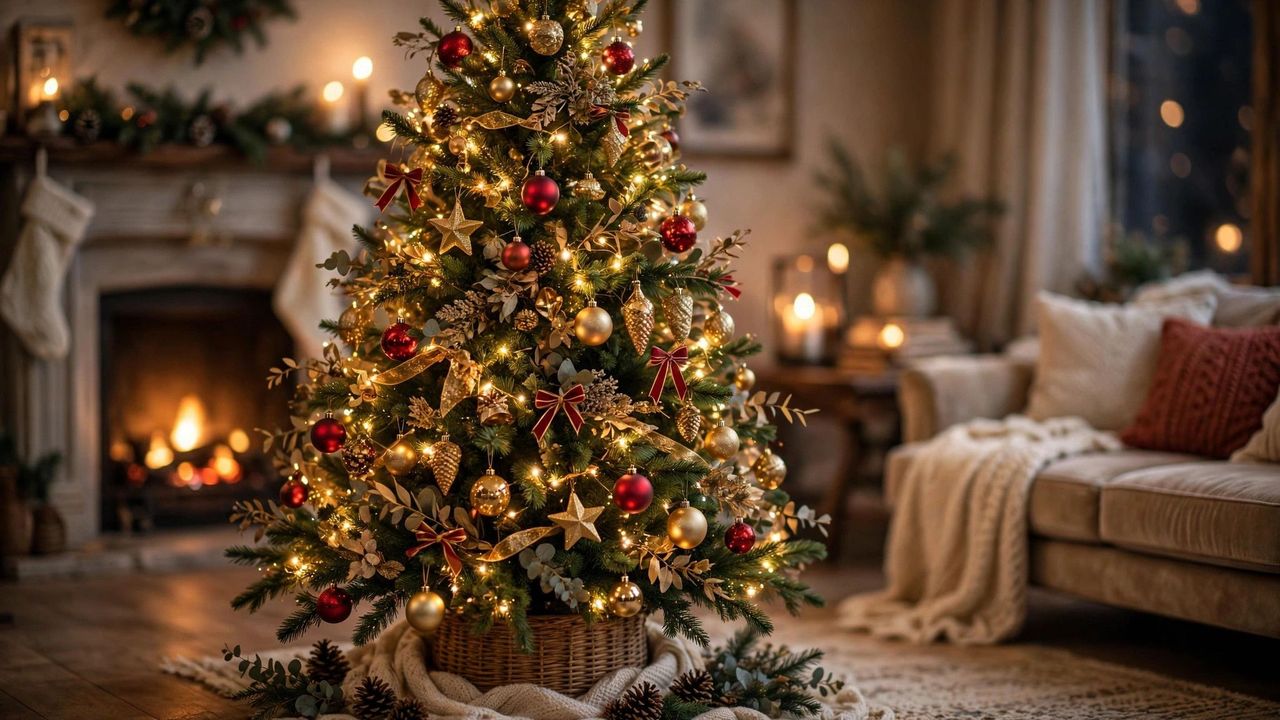
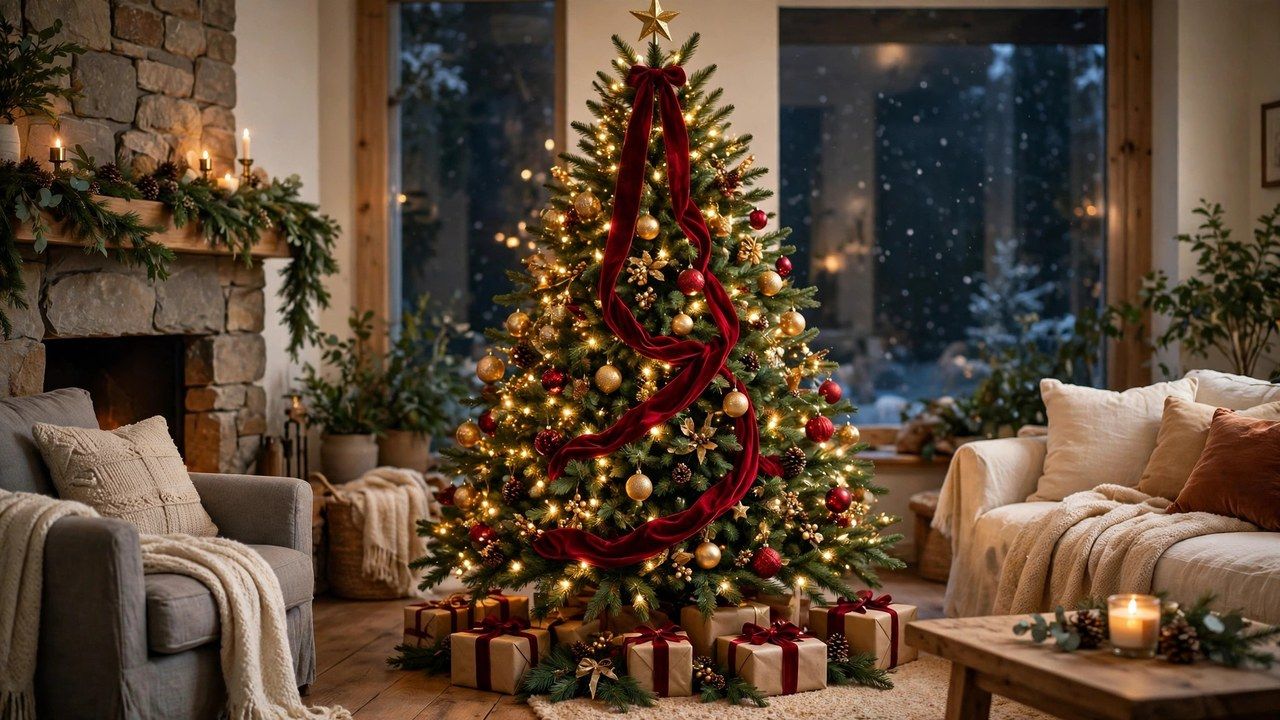
Choose two main colors, one metallic, and let everything you hang answer to that palette. Classic combinations endure because their proportions are proven: mostly green-tree neutral with red and gold, icy white and silver with one blue accent, blush and champagne for a soft modern tree. The palette includes the ribbon, the tree skirt and the topper, so decide it before any of them, and photograph your tree’s palette card on your phone for shopping trips; memory lies about shades in store lighting.
Sentimental ornaments are exempt from palette law, but placement keeps the peace: group the rule-breakers together as a deliberate family cluster on one section of the tree, where they read as a story rather than as noise scattered through a disciplined scheme. Many households run a formal tree by palette and let the family tree carry every color ever made; both approaches honor the collection better than a guilty compromise on one tree.
Layering by Depth: The Trunk-to-Tip System
Professionals hang ornaments in three depths. Large, plainer ornaments go deep near the trunk, where they fill the tree’s dark interior, reflect the lights and stop the hollow look. Medium ornaments take the middle layer as the tree’s main body of color. The smallest, finest and most detailed pieces hang at the branch tips where they catch light and movement. Work in that order, largest first, and the tree gains the depth that makes people ask what you did differently this year.
Hang by type in passes rather than finishing branch by branch: all the deep anchors, then all the mid-layer, then the tips, stepping back between passes. This is the same discipline as our ribbon tutorial’s step-back rule in how to put ribbon on a Christmas tree, and it is what keeps one overloaded showpiece branch from stealing the tree. Finish with a slow walk-around, moving five ornaments rather than fifty.
Mixing Finishes and Textures Without Chaos
Within one color, three finishes do the work of ten colors: shiny for sparkle and light play, matte for calm and modern depth, and glitter or textured for the festive hit. Distribute finishes evenly through each layer instead of clustering all the glitter where it shouts. Glass, metal, wood, fabric and ceramic each bring a weight and light behavior; mixing materials inside a tight palette is how a tree looks collected and expensive rather than matched and flat.
Shape variety matters as much as finish. Balls alone, however coordinated, read as a showroom tree. Add finials, drops, icicles and a few flat or figured pieces per section so the eye keeps discovering. Keep the ratio sane, roughly two-thirds balls to one-third special shapes, and let truly special pieces stand slightly apart from their neighbors with a little breathing room.
Buying Well: Sets, Singles and Where Money Shows
Ornament sets are the economical backbone: they give you coordinated balls in graded sizes at a fraction of single-piece cost, and nobody can tell a set ball from a boutique ball at eight feet. Spend single-piece money on the ornaments people actually examine, the detailed, the handmade, the commemorative, placed at eye level on the tree’s front. Shatterproof sets earn their place on lower branches and in homes with toddlers and cats, and the best modern ones are nearly indistinguishable from glass until dropped, at which point they are infinitely preferable.
Inspect before you buy: caps should be firmly seated, paint should not flake at a fingernail’s test, and glass should be free of thin spots and bubbles near the neck. Buy ornaments at season’s end for next year if storage allows, and keep a short list of your palette’s gaps on your phone so sale enthusiasm buys the large matte reds you need rather than a fourth set of small shiny golds you do not.
Collecting Over Years: The One-a-Year Tradition
The most satisfying collections are built, not bought: one meaningful ornament a year, a trip, a birth, a new home, a joke between partners, dated on the back in paint pen. Over a decade the tree becomes a family archive that no budget can purchase at once. Buy commemoratives from museum shops, local makers and travel stops rather than generic souvenirs, and record where each came from while you remember, because the story is the ornament’s real value.
Give children in the family their own small series within the tree, theirs to hang and eventually theirs to take to a first home. It solves the sentimental-scatter problem elegantly, teaches care for breakable things at a height you choose, and turns decorating day into the ceremony households actually remember. Our family activities guide has more traditions in this spirit.
Storage: Protecting the Collection You Built
Ornaments die in storage, not on the tree. Wrap glass individually in tissue or soft paper, store in divided boxes that prevent contact, and keep the whole collection in a climate-stable space rather than a damp basement or a baking attic where adhesives and paint fail. Photograph the tree before takedown and tape the photo inside the box lid; next year’s decorating starts from evidence instead of archaeology. Keep one small repair kit, spare caps, hooks and a glue pen, with the boxes.
Hooks deserve a decision: reusable ornament hangers and ribbon ties store cleaner and snag less than the wire hooks that migrate into carpets and vacuum cleaners. Whatever you use, remove ornaments to their boxes before the tree comes down and the branches compress, and never store a decorated tree section with ornaments still on unless the pieces are shatterproof and the storage is genuinely protected.
Honest Pros and Cons of a Curated Collection
Pros: a coordinated, layered collection makes any tree look designed, photographs beautifully, and grows more meaningful every year. Cons: palette discipline means occasionally not buying the gorgeous piece that fits nothing, glass demands storage care, and building the collection takes seasons rather than a single shopping trip. The households happiest with their trees treat the palette as a frame and the exceptions as honored guests, structured enough to look intentional and loose enough to hold a family’s actual history.
Ornaments for Themed and Character Trees
A themed tree, woodland, coastal, vintage, a child’s character tree, still obeys the same physics: a neutral base of coordinated balls in the theme’s palette does the quiet work, and the themed pieces arrive as the special-shapes third of the hang. Skipping the base is the classic themed-tree mistake; forty character ornaments with nothing behind them look sparse and expensive in the wrong way, while fifteen over a good base look curated.
Character and novelty ornaments age fastest in taste, so buy them the way you buy for a collection: one or two a year that genuinely delight, hung at the front at child height where they belong. When a child outgrows a theme, retire its pieces to their keepsake box rather than the main collection, and the tree’s story stays current while the archive stays complete.
Conclusion
Count by size, choose a palette of two colors and a metal, layer large to small from trunk to tip, and add one meaningful piece a year. That simple system turns any box of ornaments, heirloom, handmade or brand new, into a tree that looks designed and feels like yours. Start with the count this season and let the collection improve every December from here.