The difference between a Christmas photograph that looks styled and one that looks like a coincidence is coordination, and coordination is a skill with rules anyone can learn in ten minutes. This guide to christmas photo outfits for 2026 teaches the central principle, coordinate, do not clone, then gives you five proven color palettes, a building order that starts with the hardest person to dress, outfit guidance by family member and setting, and the comfort rules that decide whether children smile or stage a small protest in front of the tree.
Wardrobe is half the photograph; the other half is light, setting and timing, covered in our Christmas photo ideas guide. If pajamas are your family’s genre, our matching family pajamas guide is the specialist version of this topic, and the four legged family member gets a dedicated treatment in our dog costumes guide, where fit and comfort come before cuteness, exactly as they should here.
The Golden Rule: Coordinate, Do Not Match
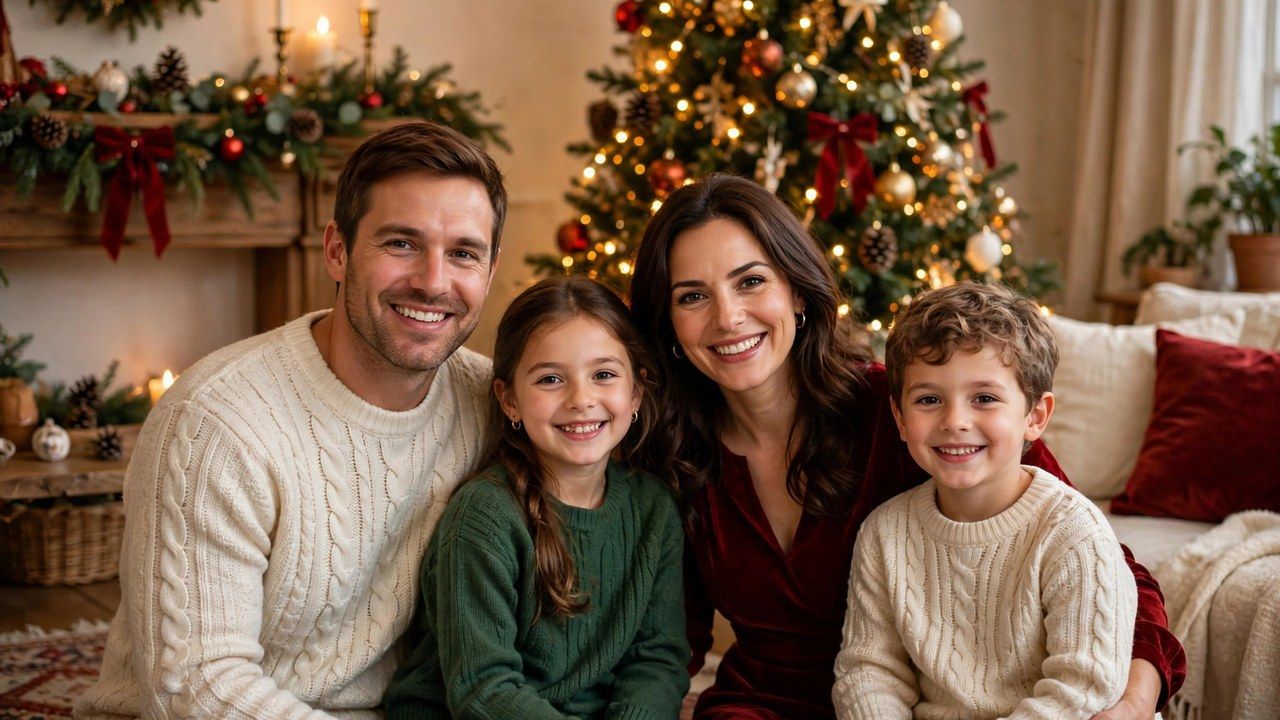
Identical outfits on every family member photograph as a uniform, flattening the personalities that make a family picture worth taking. Coordination is the richer art: a shared color palette of three, perhaps four, colors, distributed differently across each person, with varied textures and one pattern at most in the whole group. The result reads as one photograph with several people in it, rather than one outfit photocopied at different sizes, and it has the side benefit that everyone wears something that suits their own shape and taste.
Three practical tests keep coordination honest. The palette test: squint at the laid out outfits and you should see a family of colors, not a rainbow and not a photocopy. The solo test: each outfit should look good alone, because individual portraits happen at every shoot. The black and white test, beloved of photographers: convert a test snap to monochrome, and if the outfits still read as varied tones rather than one grey block, your textures and values are working.
Five Palettes That Never Miss
| Palette | Colors | Best setting | Watch out for |
|---|---|---|---|
| Classic Christmas | Deep red, forest green, cream, gold accents | Tree lit home shoots, cards | Bright scarlet red can overwhelm small faces; choose deep tones |
| Warm neutrals | Cream, camel, warm grey, brown, one burgundy accent | Studio, minimalist homes, outdoor autumn color | Can look washed out against snow; add the accent generously |
| Jewel tones | Emerald, sapphire, ruby, plum with black or navy | Formal shoots, evening events, church portraits | Dark on dark needs good light; separate tones by person |
| Winter white | Whites, ivory, pale gold, soft metallics | Bright studios, snowy exteriors | Pure white beside ivory reads as dirty in photos; keep whites in one family |
| Plaid led | One tartan piece, solids pulled from its colors | Rustic, farmhouse and outdoor shoots | One plaid only; two plaids in one photo start an argument |
Build the palette around your setting before your wardrobe: a home shoot against a green tree wants cream and red to lift faces out of the foliage, while a snowy exterior rewards saturated jewel tones that hold their own against white. If the photograph is destined for the family card, the palette thinking in our DIY cards guide will help you picture the finished object, border, outfits and all.
The Building Order: Dress the Hardest Person First
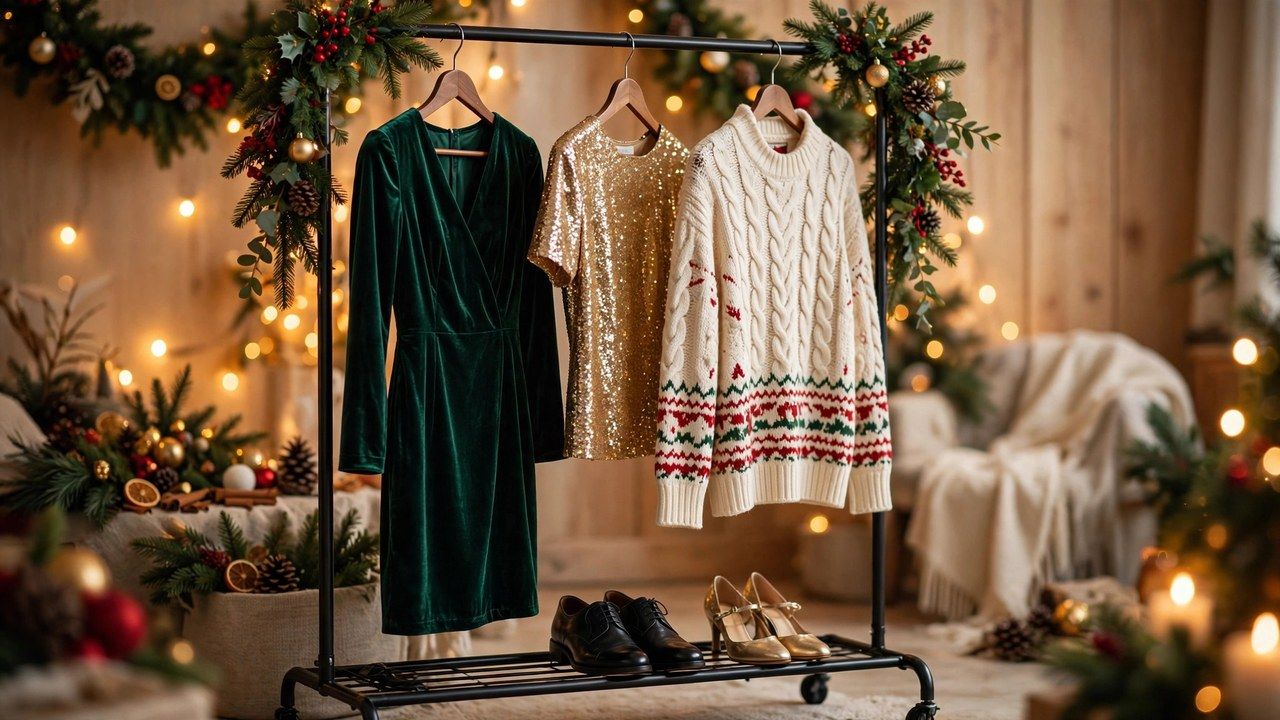
Experienced stylists start with the person whose outfit is hardest to source or whose comfort is least negotiable, usually the mother or lead adult whose dress anchors the palette, or a teenager with strong opinions. Choose that anchor outfit, pull its colors into the family palette, then dress everyone else toward it, easiest dressers last. Children, who look good in almost anything clean, go near the end of the order; babies, who will be held and mostly seen as a top half, go last of all and get dressed at the venue.
Lay every outfit out together, shoes included, and photograph the arrangement before the day. The flat lay exposes clashes, missing pieces and the one item that exists only in your imagination while there is still time to fix all three. Keep a small kit for shoot day: lint roller, safety pins, spare tights, wipes for small faces and hands, and a complete change for any child under five, because the photograph you planned assumes a clean front until proven otherwise.
Outfits by Family Member
Adults: choose classic shapes in palette colors, avoid logos, slogans and very current trends that date the photograph by February, and let one texture, velvet, knit, satin, carry the festive note. Teenagers: negotiate within the palette rather than dictating pieces; a teen whose style was respected smiles like it. Children: comfort is the whole brief, soft fabrics, nothing scratchy, shoes they can stand in happily, because a miserable child photographs miserably in any palette ever devised.
Babies: one soft festive outfit plus a plain backup, dressed last, photographed early before tiredness votes. Grandparents: offer the palette and let them choose their most comfortable smart clothes within it; a grandparent at ease is worth more than perfect color compliance. The dog: one accent, a bandana or bow tie in a palette color, fitted and supervised per our dog costumes guide, or simply their brushed natural self.
Outfits by Setting: Studio, Snow, Home and Formal
Studio portraits forgive the most and flatter neutrals and winter whites, since the background is controlled and the light is kind. Outdoor snow shoots demand saturation and layers: jewel tones and classic red read through white landscapes, coats become part of the outfit rather than an obstacle, and hats, scarves and boots should be chosen as palette pieces, not grabbed at the door. Everyone needs to be genuinely warm, because cold photographs as tension in every face.
At home by the tree, dress a half step smarter than your everyday, since the camera flattens and the tree adds festivity free of charge; avoid green tops that merge adult torsos into the foliage behind them. Formal and church portraits take the jewel palette and classic shapes, with party ready polish shared with our party outfits guide. Whatever the setting, shoot the group photograph first while outfits and moods are fresh, then release everyone into candids.
Fabric, Pattern and the Small Details That Photograph
Texture is the quiet star of coordinated photographs: knit beside velvet beside denim beside satin gives the camera depth that flat cotton alone cannot, and it lets a tight palette stay interesting. Patterns obey the one pattern rule in family groups: a single plaid, floral or fair isle worn by one person, with everyone else in solids drawn from its colors. Fine stripes and tiny checks can shimmer and distort on camera, so medium scale patterns only, and check any suspect fabric in a phone photo before the day.
Details to settle in advance: nails and hands, which appear in every close photograph; glasses glare, solved by tilting frames slightly or a few frames without glasses if the wearer is comfortable; and jewelry kept simple and consistent in tone with the palette. Shoes matter in full length shots and are forgotten in half of them, so include footwear in the flat lay and banish the bright trainers by agreement in advance, not by ambush on the day.
Pajama Photos and Themed Shoots
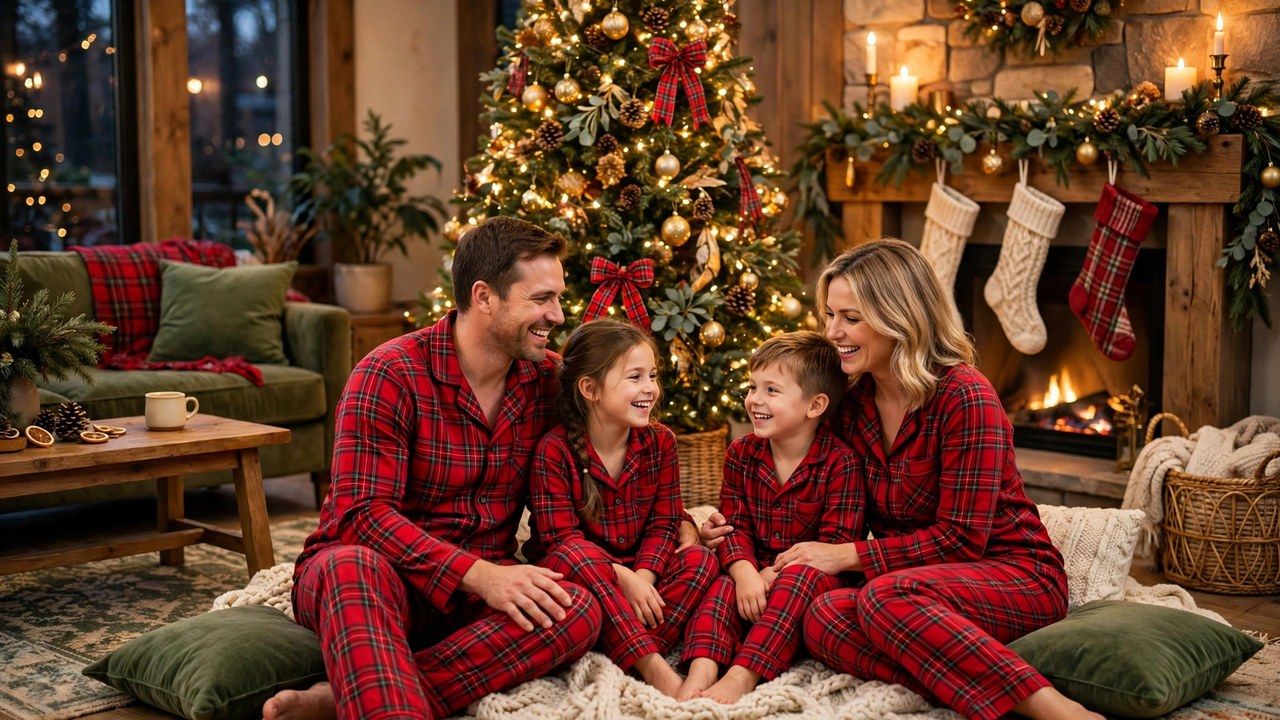
The matching pajama photograph is its own genre with its own rules, and they are more relaxed: here, true matching is the point, and the charm is the uniform. Choose the softest set rather than the funniest, photograph on the bed or before the tree in morning light, and include the dog under the same fit and comfort rules as ever. Our matching pajamas guide covers choosing sets everyone genuinely loves, including sizing honesty across a whole family.
Themed shoots, vintage, fairytale, film inspired, succeed when the theme is carried by color and one or two props rather than full costumes for the whole family, which tips quickly from charming to fancy dress. Keep one foot in the coordinated portrait: if the photograph needs explaining in ten years, it leaned too far into theme; if it simply looks like your family on a particularly magical day, the balance was right.
Honest Mistakes, Pros and Cons
The classic mistakes: everybody in white tops and jeans, a combination that photographs as a choir of floating heads; one person in neon or a slogan tee pulling every eye; new shoes bought for the shoot and hated by their owner within four minutes; and outfits chosen for the photograph alone with no thought for the meal, the weather or the toddler’s dignity. Coordination done well has real pros, a timeless family photograph, prints and cards that look professionally styled, and clothes everyone wears again; its honest con is one planning hour and the diplomacy of dressing teenagers, both repaid the first time the framed photograph goes on the wall.
Conclusion
Pick a palette of three or four colors, dress the hardest person first, give the group one pattern and many textures, protect comfort like it is the entire assignment, and lay everything out together before the day. Do that, and your Christmas photograph will look the way the season felt: one family, distinct people, unmistakably together. Then print it large; coordinated effort deserves more than a phone screen.