Every Thanksgiving cook fears the same two things: a dry turkey and a late turkey. This recipe removes both. There is no brine to babysit, no fussy technique, just butter, salt, patience and a thermometer. It works for a first turkey and for a fiftieth, and it leaves the oven free enough for the sides. Cook it for Thanksgiving Day, Thursday, November 26, 2026, and it will be the bird people remember.
Thanksgiving Turkey Ingredients
- 1 whole turkey, 12 to 14 pounds, fully thawed
- 1/2 cup unsalted butter, softened
- 2 teaspoons salt
- 1 teaspoon black pepper
- 1 tablespoon fresh thyme leaves, or 1 teaspoon dried
- 1 tablespoon fresh rosemary, chopped
- 4 garlic cloves, minced
- 1 onion, quartered
- 1 lemon, halved
- 1 orange, halved, optional
- Fresh herbs and extra citrus, for the platter
How to Roast a Turkey, Step by Step
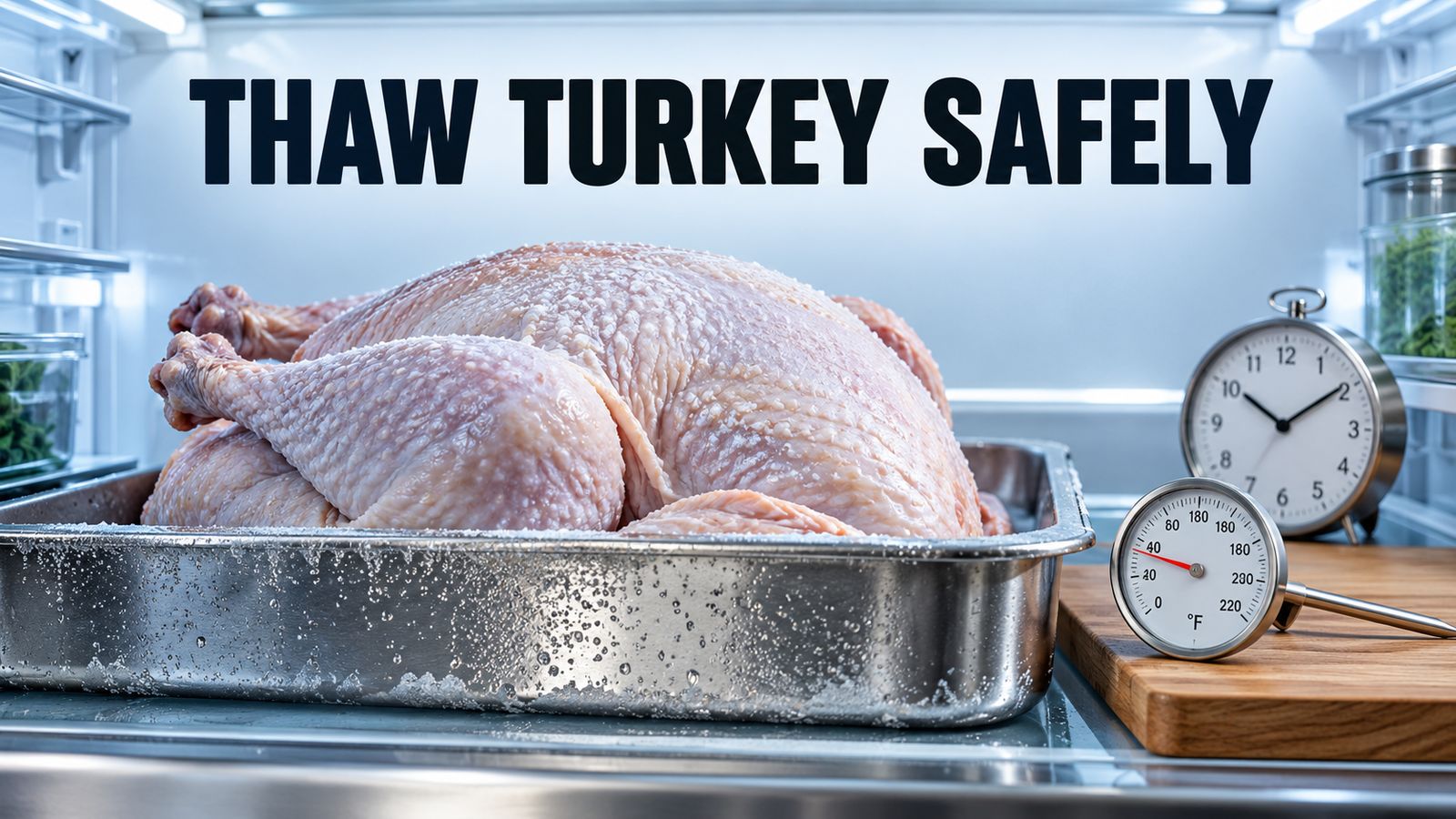
1. Thaw it properly. A frozen turkey needs days in the fridge, never on the counter. Plan ahead and read our Thanksgiving turkey thawing guide for the full timeline, including the cold-water method if you are short on time. A half-frozen bird cooks unevenly, so do not rush this step.
2. Prepare the bird. Take the turkey out of the fridge an hour before cooking and remove the giblets and neck from the cavities. Pat the skin very dry with paper towels: dry skin is what turns golden and crisp. Tuck the wing tips under the body so they do not burn.
3. Butter and season. Mix the softened butter with the salt, pepper, thyme, rosemary and garlic. Loosen the skin over the breast with your fingers and spread half the butter underneath it, then rub the rest over the outside. Put the onion, lemon and orange halves inside the cavity for flavour and steam.
4. Roast low and steady. Heat the oven to 325°F (163°C), the lowest temperature the USDA recommends for roasting poultry. Put the turkey breast-side up on a rack in a roasting pan, tent the breast loosely with foil, and roast. As a rough guide, plan on about 1 to 1.5 pounds of turkey per person when you choose the size, and allow roughly 3 to 3.5 hours for a 12 to 14 pound bird, but the thermometer, not the clock, decides when it is done.
5. Brown and baste. Remove the foil for the last hour so the skin turns golden. Baste once or twice with the pan juices if you like, but do not open the oven every twenty minutes: each peek drops the temperature and slows the roast.
6. Check the temperature. The turkey is done when a food thermometer reads 165°F (74°C) in the thickest part of the breast, the innermost part of the thigh and the innermost part of the wing, with the tip kept away from the bone. This is the USDA safe minimum temperature for all poultry, and it applies to stuffing cooked inside the bird too. If the breast hits 165°F before the thighs, cover the breast with foil and keep roasting until the thighs catch up.
7. Rest before carving. Move the turkey to a platter, tent it loosely with foil, and rest it for 20 minutes. Resting lets the juices settle back into the meat instead of running out onto the board, and it is the difference between a juicy turkey and a dry one. Use the rest time to make the gravy from the pan drippings.
How to Carve a Turkey
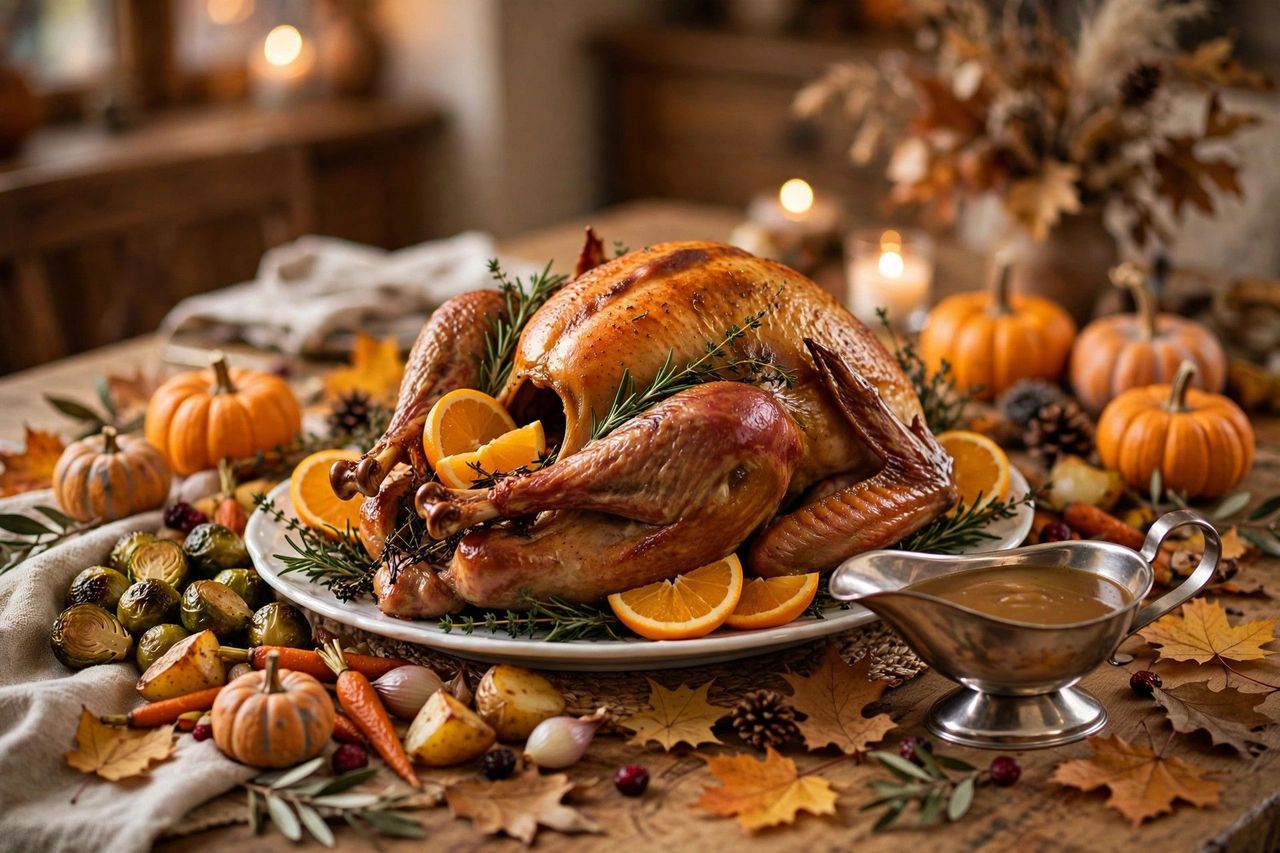
Carving is easier than it looks. Remove the legs first by cutting through the joint where the thigh meets the body, then slice the thigh meat off the bone. Cut the wings off at the joint. Then slice the breast meat in even slices, cutting down along the breastbone and outwards. Arrange it all on a warm platter, pour over a little of the pan juices, and bring it to the table while it is still warm.
Brine or Not to Brine?
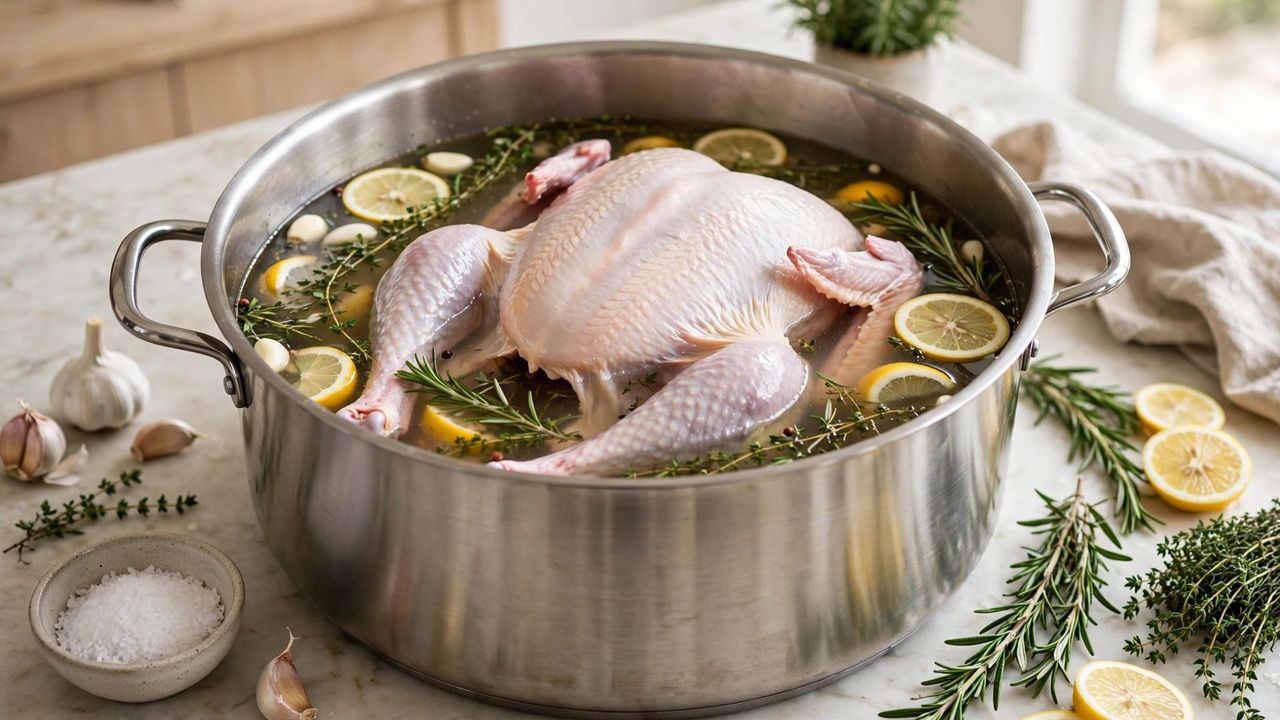
Brining adds moisture and flavour, and a dry brine of salt rubbed on the skin a day ahead is the simplest version. But this recipe is written to work without brining at all, because butter under the skin and a steady 325°F oven already keep the bird juicy. If you want to brine, read our turkey brining guide for the wet versus dry comparison, and start a day earlier than you think.
Common Mistakes to Avoid
Four mistakes dry out a turkey. Roasting it from partly frozen, which cooks the outside before the inside. Skipping the thermometer and guessing by time or by colour, which is never reliable. Carving it the second it leaves the oven, which loses all the juices to the board. And cooking it above 325°F to save time, which browns the skin long before the thighs are done. Avoid these and the recipe does the rest.
Helpful Finds for the Turkey
Carving is where good knives earn their keep, and a big pan set covers the gravy and the sides.
- Professional Kitchen Knife Set, High Carbon Steel Forged Blades, Chef's Knife, Meat Cleaver, Carving Knife, Chef's Knife, Full Tang Design, Includes Poultry Shears, Birthday Christmas Gift for Women
- Professional Forged Stainless Steel Kitchen Knife Set (7pcs/6pcs) - Includes a Boning Knife, Slicing Knife, Carving Knife, Fish Knife, Butcher Knife, and Scissors. Suitable for Meat and Fish; Ultra-sharp and Durable Knives
- 18 Piece Nonstick Cookware Set - 8in Pan, 9in Deep Pan, 11in Griddle, 1, 2, 3 Qt Saucepan with Lid, 4 Qt Dutch Oven with Lid, Steamer & 6 Utensils - Dishwasher Safe, Compatible with Gas, Electric & Ceramic Glass Cooktops - Home & Kitchen
As an affiliate, EventBuzz may earn a commission on qualifying purchases at no extra cost to you.
More Turkey Recipes and Guides
Compare methods in our Thanksgiving turkey recipes collection, pour over our foolproof gravy, and plan the whole feast with our Thanksgiving menu planner and the full Thanksgiving recipes list.
Conclusion
A great turkey is not a trick, it is a thermometer and twenty minutes of patience. Butter under the skin, a steady 325°F oven, 165°F in the breast, thigh and wing, and a proper rest before the knife. Do that and the bird will be juicy, golden and on time. Happy Thanksgiving, and save the drumsticks for whoever carves.