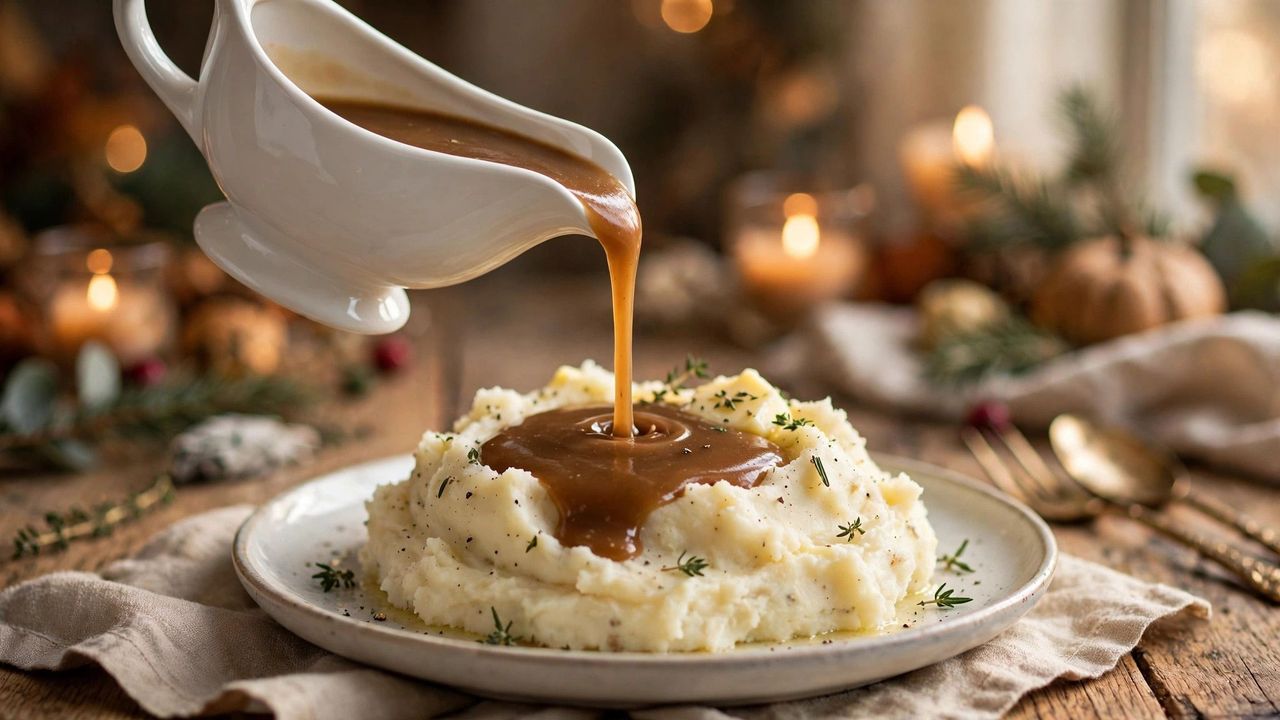
Gravy is the quiet hero of Thanksgiving dinner. It ties the turkey, potatoes, and stuffing together, and bad gravy is the one flaw guests actually remember. The good news: perfect gravy is mostly technique, not talent. Whether you have a roasting pan full of drippings or nothing at all, these foolproof recipes deliver silky, deeply savory gravy with zero lumps, plus rescue tricks for the rare disaster.
Classic Turkey Drippings Gravy
This is the gold standard. Once the turkey comes out of the oven, pour the pan drippings into a fat separator or measuring cup and let the fat rise to the top. Skim off the fat and measure it; you want about a quarter cup. Place the roasting pan over two burners on medium heat, add the fat back, and whisk in a quarter cup of all-purpose flour. Cook the roux for 2 to 3 minutes, stirring constantly, until it smells nutty and turns light brown. This toasting step is what separates flavorful gravy from pasty flour soup.
Now the critical part: add warm stock gradually, about half a cup at a time, whisking constantly after each addition. Warm stock incorporates far more smoothly than cold. Scrape up all the browned bits from the pan as you go; that fond is concentrated turkey flavor. Once you have added 3 to 4 cups of stock, simmer for 5 to 8 minutes until the gravy coats the back of a spoon. Season with salt, pepper, and a splash of soy sauce or Worcestershire for depth. Strain through a fine-mesh sieve for guaranteed silkiness.
No-Drippings Gravy That Tastes Like the Real Thing
Deep-frying your turkey, cooking a breast only, or just short on drippings? Make gravy ahead with butter and roasted turkey parts. Roast 2 pounds of turkey wings or necks at 425°F until deeply browned, about 45 minutes. Transfer to a pot with onion, carrot, celery, thyme, and 6 cups of stock, and simmer for 90 minutes. Strain, then use this rich stock to build your gravy with a butter-and-flour roux exactly as above.
Even simpler: brown 4 tablespoons of butter until nutty, whisk in a quarter cup of flour, and build the gravy with good-quality store-bought turkey or chicken stock. Add a teaspoon of soy sauce, a bay leaf while simmering, and a pinch of poultry seasoning. Nobody at the table will know there were no drippings involved. This version can be made up to 3 days ahead, which is its real superpower on a chaotic Thanksgiving.
Flavor Variations Worth Trying
Giblet gravy is the traditional Southern upgrade: simmer the turkey neck, heart, and gizzard in stock for an hour, chop the meat finely, and stir it into the finished gravy along with a chopped hard-boiled egg. For a vegetarian gravy that does not taste like an afterthought, build the roux with butter and use a rich mushroom stock made from dried porcini; add a splash of cream and fresh thyme for a gravy vegetarians actually look forward to.
Cider gravy swaps one cup of stock for dry apple cider for a sweet-tart note that loves pork and turkey alike. Herb gravy finishes with a tablespoon each of chopped sage, thyme, and rosemary stirred in at the end. And for a darker, more dramatic gravy, add a teaspoon of instant coffee or a splash of red wine while simmering; neither is detectable as itself, but both deepen the color and savoriness remarkably.
The Anti-Lump Playbook
Lumps happen when flour hits hot liquid too fast and the outside of each flour clump gelatinizes before the inside can hydrate. Prevention beats rescue, so build these habits:
- Whisk flour into fat first. A proper roux coats every flour particle in fat, which is the single best lump prevention there is.
- Add liquid gradually. Half a cup at a time, whisking smooth after each addition. Patience here is everything.
- Use warm stock. Cold stock shocks the roux and seizes it into lumps. Warm it in a saucepan first.
- Strain always. Even perfect gravy benefits from a pass through a fine-mesh sieve. It takes 30 seconds and guarantees silkiness.
- Rescue with a blender. If lumps still appear, an immersion blender for 20 seconds fixes almost anything. No immersion blender? Whisk a tablespoon of flour with cold water into a smooth slurry and whisk it in.
Make-Ahead and Reheating
Gravy is an ideal make-ahead dish. Cook it fully 2 to 3 days before Thanksgiving, cool quickly, and refrigerate. It will gel in the fridge; that is normal. Reheat gently over medium-low heat, whisking in splashes of warm stock until it returns to pouring consistency. Taste and re-season, since cold dulls salt perception. On Thanksgiving day, stir any fresh pan drippings into your reheated gravy for the best of both worlds: make-ahead convenience with day-of flavor.
Plan on about a third to half a cup of gravy per person, and always make more than you think you need. Leftover gravy keeps 3 to 4 days refrigerated and freezes for 3 months. It is the secret weapon for leftover sandwiches, shepherd's pie made from turkey scraps, and next-morning biscuits.