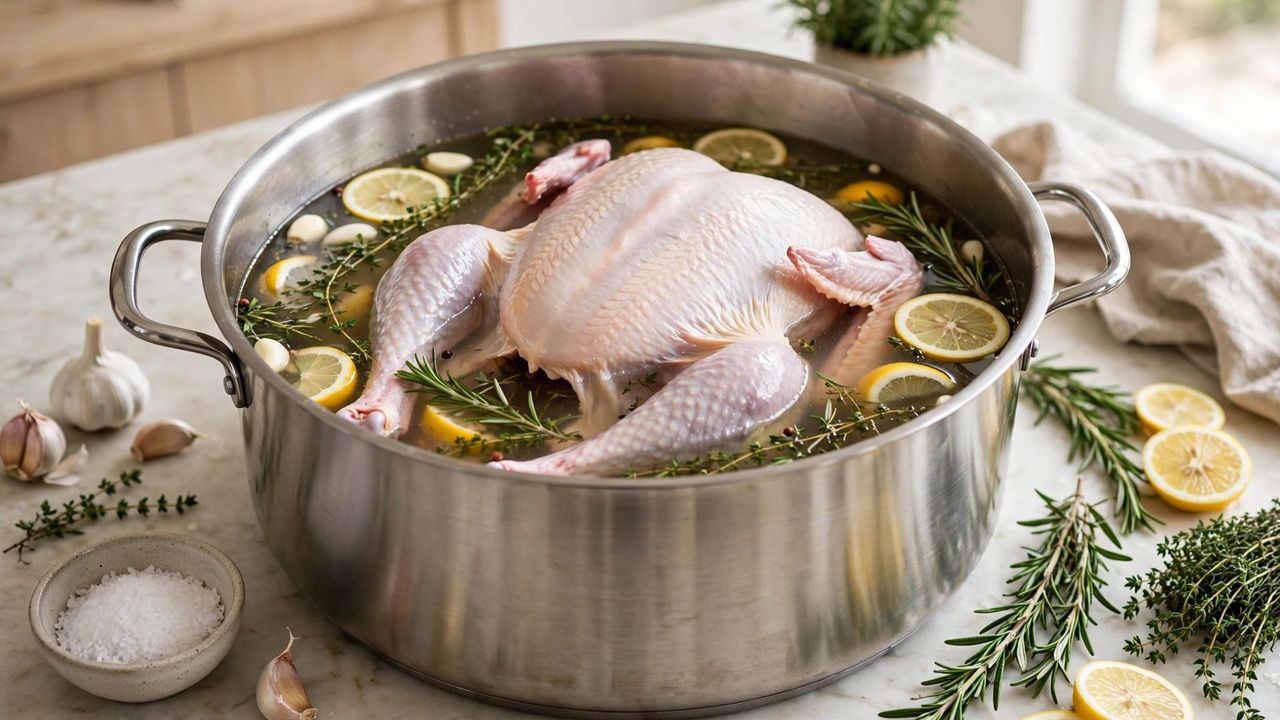
The single biggest upgrade you can make to your Thanksgiving turkey costs almost nothing and takes no extra cooking skill: brining. Salt changes the protein structure of the meat so it holds onto moisture through the long roast, which is exactly what a lean bird like turkey needs. There are two schools of brining, wet and dry, and both beat an unbrined bird by a mile. Here is how each works, how to do them right, and which one to pick for Thanksgiving 2026.
Why Brining Works
Turkey breast is the leanest meat on the bird, and lean meat dries out fast in a hot oven. Salt, given time, dissolves some of the muscle proteins so they cannot squeeze out as much water during cooking. The result is a turkey that stays juicy even if you overshoot your target temperature by a few degrees. Brining also seasons the meat all the way through, not just on the surface, so every slice tastes seasoned instead of bland in the middle.
Wet Brining: The Classic Method
A wet brine is a salty bath. The standard ratio is 1 cup of kosher salt (Diamond Crystal; use 3/4 cup if it is Morton's) and 1/2 cup of sugar per gallon of water, enough to fully submerge a turkey in a large stockpot, brining bag, or cooler. Add aromatics: bay leaves, peppercorns, crushed garlic, sliced citrus, fresh thyme, or a sliced onion. Heat half the water to dissolve the salt and sugar, add the cold water, and cool the brine completely before the turkey goes in. Brine for 12 to 24 hours in the refrigerator, never longer than 24, or the texture can turn spongy. Rinse the bird lightly and pat it very dry before roasting. The wet-brined turkey will be noticeably juicier, though the skin takes a little more work to crisp.
Dry Brining: The Modern Favorite
A dry brine is simply salt rubbed all over the bird, and it has won over many professional chefs. Use 1 tablespoon of kosher salt per 4 to 5 pounds of turkey, mixed with a little sugar and any dry herbs or spices you like (black pepper, dried thyme, garlic powder, smoked paprika). Rub it over every surface, including under the skin of the breast where you can reach, and refrigerate uncovered for 24 to 72 hours. The salt draws out moisture, dissolves into it, and the turkey reabsorbs the seasoned liquid. Dry-brined birds produce the crispiest skin of any method, take up almost no extra fridge space, and make superior pan drippings for gravy because there is no extra water diluting them.
Wet vs Dry: Which Should You Choose?
- Choose wet brine if maximum juiciness is your goal, you have a big pot or cooler, and you do not mind a slightly softer skin. Best for very large birds over 20 pounds.
- Choose dry brine if you want the crispiest skin, have limited fridge space, want the best gravy drippings, or prefer a simpler, cleaner process. Most chefs pick this one.
- Skip brining only if your turkey is labeled "enhanced," "injected," or "self-basting" with a salt solution already; those birds are pre-brined and more salt will over-season them.
- Timing: Start a dry brine 2 to 3 days before Thanksgiving; start a wet brine 1 day before. Both fit a normal holiday schedule.
Pro Tips for a Perfect Brined Bird
Always use kosher salt, not table salt; table salt's fine grains pack denser and its iodine can add off flavors. If you wet brine, chill the brine fully before adding the turkey, and keep the whole setup at or below 40 degrees Fahrenheit, using ice packs in a cooler if needed. Pat the bird completely dry after brining; moisture on the skin is the enemy of crispness. Rub the skin with butter or oil before roasting. Roast at 325 degrees Fahrenheit to 165 in the thickest part of the thigh, rest 30 to 45 minutes, and carve. Your guests will notice the difference before the first bite is even swallowed.