The real vs artificial christmas tree debate returns every November, usually argued with more loyalty than information. Both sides have genuine strengths and genuine annoyances, and the honest answer depends on your home, your health, your storage space and how many seasons you will actually keep a tree. This comparison lays out the real trade offs for 2026, with no winner declared in advance and no fake numbers, so you can match the tree to your household instead of to someone else's tradition.
Two narrower decisions sit underneath this one. If you land on artificial, our flocked vs unflocked comparison settles the finish, and our artificial tree buying guide covers quality. If you land on real, our real Christmas tree care guide is the follow up that keeps it fresh. Start here, with the full picture.
The Short Answer First
Choose a real tree if the outing to choose it, the scent, and the ritual matter to you, if you have no storage space to spare, and if you are comfortable with watering, needle cleanup and a tree that lasts one season. Choose an artificial tree if you want the tree up for many weeks, need a specific size or shape, have needle or mold sensitivities in the household, or simply want to pay once and decorate the same reliable tree for years. Neither answer is the moral high ground, whatever the loudest voice at your table claims.
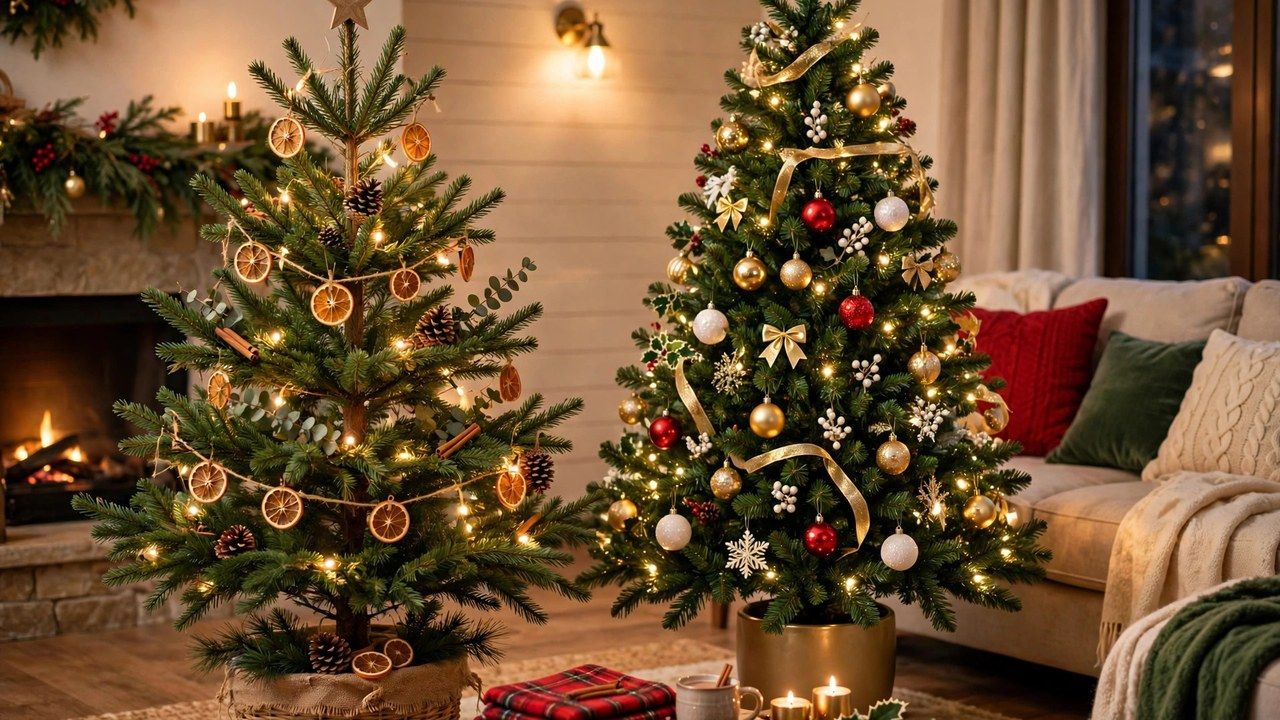
There is also a legitimate hybrid life: many households keep a good artificial tree as the main tree and add real greenery, a real wreath, garland or a small real tabletop tree, for the scent and texture. Nothing about this decision has to be all or nothing.
The Honest Comparison Table
| Factor | Real tree | Artificial tree |
|---|---|---|
| Cost pattern | Bought fresh every year; cost repeats each season | Higher cost once, then reused for years |
| Look | Natural variation, no two alike, imperfect in a good way | Consistent shape; quality varies widely by price and materials |
| Scent | The real pine and fir fragrance people associate with Christmas | No scent unless you add scented ornaments, sprays or real greenery |
| Setup effort | Transport, fresh cut, stand, daily watering | Assembly and fluffing, then nothing but decorating |
| Mess | Needles shed, sap is sticky, water can spill | Minor needle and flock shedding; no water, no sap |
| Allergies | Can carry pollen and mold; bothers some households | Can hold household dust; needs cleaning before use |
| Pets | Tree water needs covering; needles can irritate paws and stomachs | No tree water; watch for chewing on branches and flocking instead |
| How long it stays up | Roughly a month of good looks with faithful watering | As long as you like, from November to January |
| Storage | None; disposed of or recycled after the season | Needs a box or bag and real storage space all year |
| Fire considerations | A dry, unwatered tree is a genuine fire risk; a watered one is far safer | Many are made with flame resistant materials, but no tree is fireproof |
Read the table by your own household's weak points. A family that travels every December cannot water a real tree, whatever its other charms. A household with zero storage cannot keep an artificial one, whatever its convenience. The right column wins where your life is tightest.
Look, Feel and Scent: Where Real Trees Win Honestly
A real tree has irregular branching, subtle color variation and a fragrance no product has fully copied. Fir and spruce scent fills a room gently rather than perfuming it, and for many families the smell is the season arriving. Real trees also forgive sparse decorating, because the tree itself is the decoration.
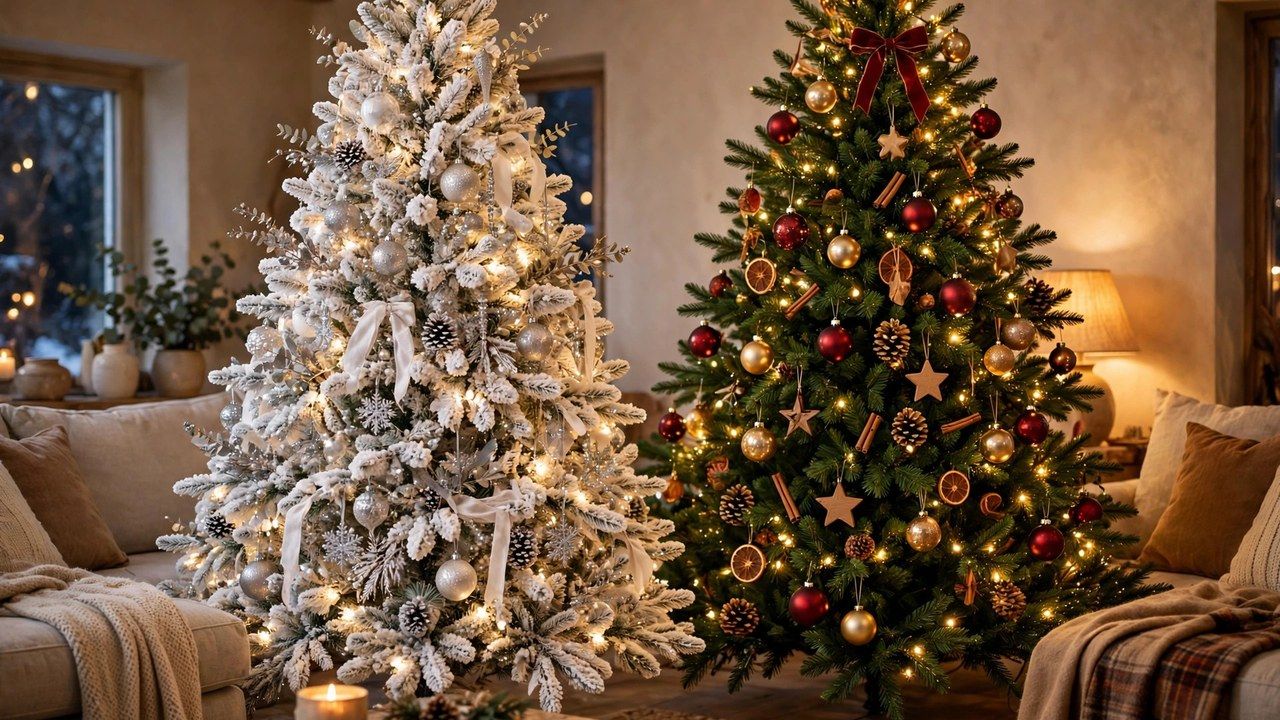
Artificial trees have closed much of the look gap at the higher end, with molded branch tips that imitate real needles closely, but the honest spread is wide: inexpensive artificial trees can look thin and plasticky, especially in bright daylight, while good ones are convincing at normal viewing distance. What no artificial tree has yet matched is the scent and the slight yearly surprise of a living thing. What no real tree can match is waking up on December first to a tree that is already, exactly, reliably yours, which is why timing fans read our guide to when to put up your tree differently depending on which type they own.
Cost Over Time, Without Invented Numbers
We are not going to print prices here, because tree prices vary enormously by region, species, size and quality, and invented figures would not help you. The honest structure of the cost is what matters. A real tree costs a moderate amount every single year, plus a stand once, plus disposal effort. An artificial tree costs more in year one, sometimes considerably more for a realistic pre lit model, and then close to nothing for years, beyond storage and eventual light repairs.
That means the artificial tree's value depends entirely on how many years you actually keep it. Replaced after two seasons because tastes changed or a cheap model fell apart, it was the expensive option. Kept for a decade, it was almost certainly the economical one. When you shop artificial, you are really shopping for durability: sturdy hinges, a solid stand, replaceable lights and branch tips that will not crush flat in storage. Buy the tree you will still like in year seven, because year seven is where it pays you back.
Mess, Allergies and Pets
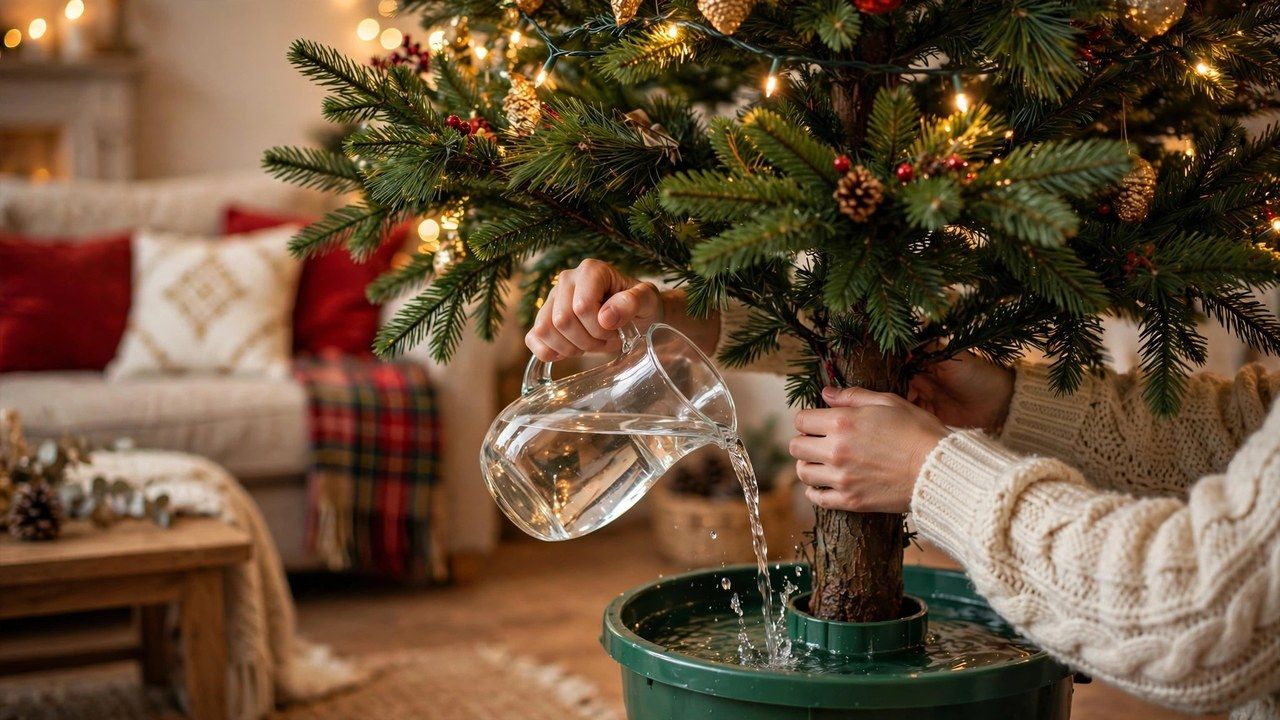
Real trees shed needles, drip sap onto hands and ornaments, and need their water checked daily, and anyone who tells you otherwise has a housekeeper or a short memory. The mess is manageable, a skirt catches most needles and a handheld vacuum handles the rest, but it is real, daily mess. Artificial trees shed a little, flocked ones shed more, and then the mess simply stops, which households with toddlers, white carpets or limited patience genuinely appreciate.
On allergies, both sides carry caveats. Real trees can bring in outdoor pollen and mold spores, which is why many allergy sensitive households hose the tree down outdoors and let it dry before bringing it in. Artificial trees accumulate a year of household dust in storage and should be shaken out or wiped down before decorating, ideally outdoors. For pets, the real tree's water reservoir must be covered because pets drink from it and additives do not belong in pets; with artificial trees, the watch item is chewing on branches, cords and any flocking. Neither tree is pet proof; both are pet manageable with supervision.
The Environmental Question, Without the Spin
This is the factor most often argued with slogans, so here is the balanced version. Real Christmas trees are grown on farms as a crop, typically for years before harvest, absorbing carbon and providing habitat while they grow, and farms replant. After Christmas they are biodegradable and widely mulchable through local recycling programs. Set against that: transport, and a tree landfilled rather than mulched gives its carbon back less gracefully.
Artificial trees are made largely from plastic and metal and are shipped, often long distances, and they are not practically recyclable at end of life. Their environmental case rests entirely on reuse: the longer one artificial tree stays in service, the more its manufacturing footprint is spread out, and most balanced assessments conclude an artificial tree needs to be used for many seasons before it compares favorably on that front. The honest conclusion is unglamorous: a real tree from a local farm, recycled after use, is a defensible choice, and an artificial tree bought once and kept for a decade is also a defensible choice. The worst option in both worlds is the short lived one: the real tree landfilled thoughtlessly, or the cheap artificial tree replaced every couple of years.
Lifespan, Storage and the January Question
A real tree asks nothing of you in January except disposal, and many cities run curbside or drop off mulching programs; check your local options before the season ends. An artificial tree asks for a storage box or bag, a dry place off the floor, and enough space for something roughly the size of a golf bag or larger, every month of the year. Our Christmas storage and organization guide shows how to store a tree so its branches survive, because a crushed, badly stored artificial tree quietly becomes next year's regret.
Lifespan expectations should be honest too. A well made artificial tree can serve for many years, but lights fail, hinges loosen and styles date. A real tree has the opposite profile: perfect reliability within its single season, guaranteed replacement cost the next. Households also change, babies, moves, new pets, smaller homes, and the best tree is the one that fits the household you have now, not the one you had five years ago. The history behind both traditions is older than the debate, as our history of the Christmas tree explains.
The Verdict Framework: Who Should Choose Which
- Choose real if: the tree farm outing is part of your Christmas, scent matters, your storage space is zero, you are home to water it, and you put the tree up in December rather than November.
- Choose artificial if: you decorate early and leave the tree up for many weeks, someone in the home has needle or mold sensitivities, you want an exact size like a slim or pencil profile, or you will genuinely keep it for years.
- Choose the hybrid if: you want reliability plus fragrance: an artificial main tree with a real wreath, garland or small real tree in a second room.
- Reconsider either if: your life has changed since last year. Moves, pets, babies and travel plans are all legitimate reasons to switch sides, and plenty of happy households have been on both sides across different decades.
Whichever side you land on, commit properly: water the real tree faithfully or buy the artificial one well enough to keep. The half hearted version of either tree is the only genuinely wrong answer in this whole comparison.
Conclusion
Real and artificial trees are not a test of Christmas authenticity; they are two different bundles of cost, effort, scent, mess and storage that suit different households. Read the table against your own life, be honest about how long you will keep an artificial tree or how faithfully you will water a real one, and the right choice usually names itself.