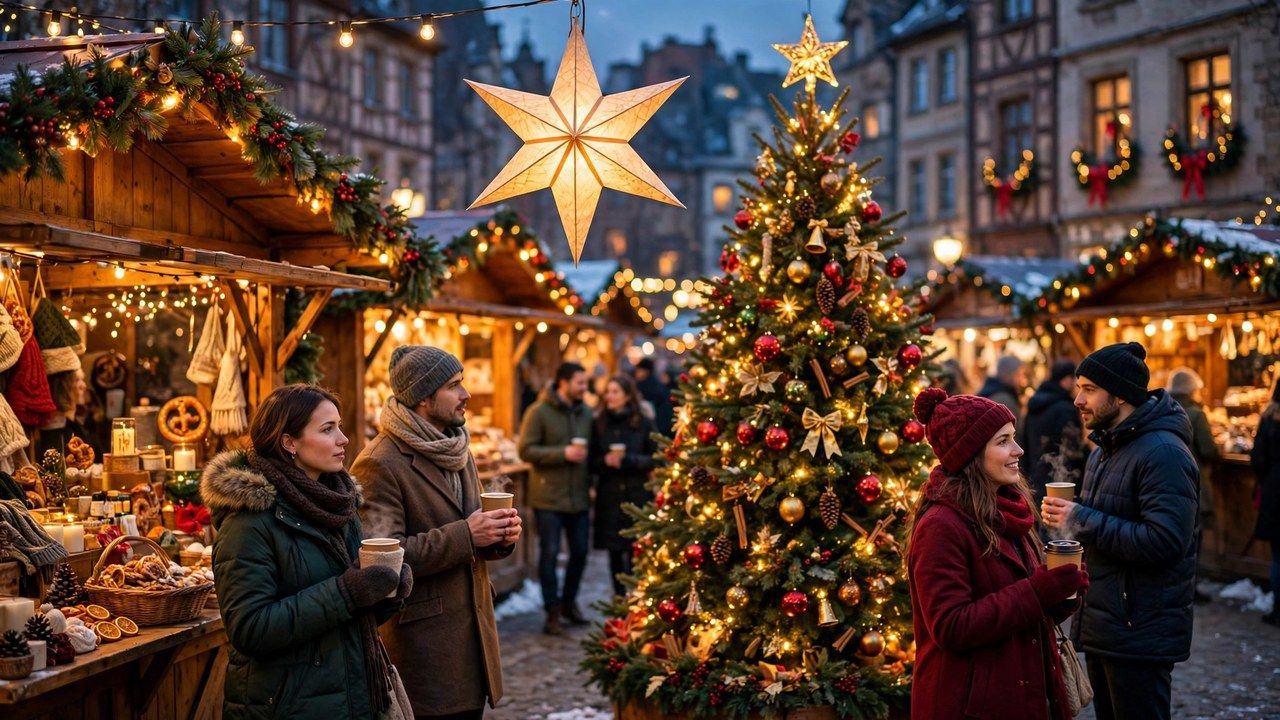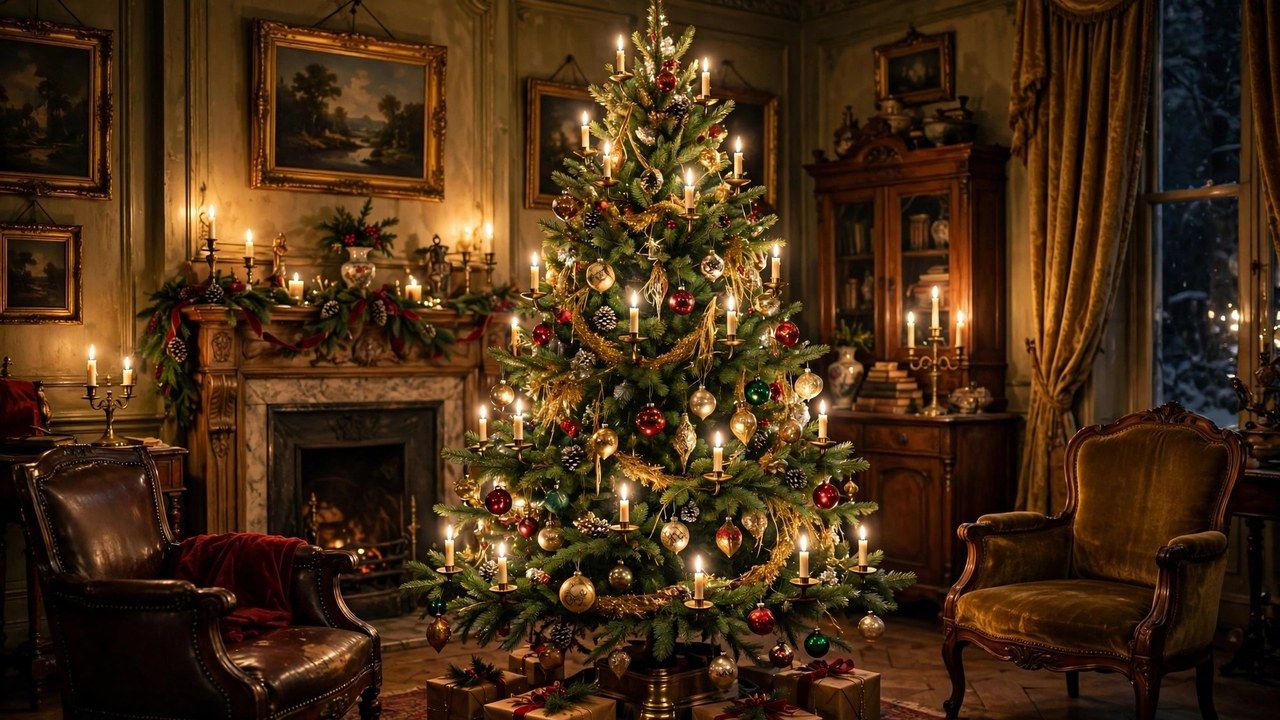
Every December, millions of people drag a tree indoors, cover it in lights, and agree this is completely normal. The history of the christmas tree explains how that happened, and it is a better story than most people expect: ancient winter greenery, German guildhalls and parlors, a beloved queen, a famous illustration, and a young country that turned the custom into an industry. This telling sticks to widely documented history and flags the legends as legends, because the true story needs no embroidery.
For the tree’s famous traveling companion, continue with our history of Santa Claus, and for the global customs the tree now joins, see Christmas traditions around the world. We begin long before Christmas itself, with the oldest winter symbol of all: green life that refuses to die.
Evergreens Before Christmas
Long before the Christmas tree existed, people across the ancient world brought evergreen branches indoors in winter. In Egypt, palm rushes symbolized life triumphant over death; in Rome, evergreen boughs decorated homes during the Saturnalia festival in December; and northern European peoples valued evergreens as signs that the sun and growing season would return. These customs were about survival and hope at the darkest point of the year, the emotional soil in which the Christmas tree would later grow.
Medieval Europe added a more direct ancestor: the paradise tree. In mystery plays performed around the feast of Adam and Eve, traditionally held on December 24th, a fir tree hung with apples represented the Garden of Eden. Historians often point to these paradise trees, sometimes joined by wafers symbolizing redemption, as one of the threads that German households later wove into a Christmas custom. The line from stage prop to living room is not perfectly documented, and honest historians say so, but the resemblance is hard to unsee.
Germany: Where the Christmas Tree Was Born
By the 1500s, decorated trees at Christmas are documented in German speaking lands. Records from guildhalls in cities like Bremen describe trees set up for apprentices and children, decorated with apples, nuts, pretzels and paper flowers. The Baltic cities of Tallinn and Riga both claim early public trees in the 1400s and 1500s, claims historians still debate, since the surviving evidence is thin and both cities make their case proudly. What is certain is the direction of travel: the custom grew up in German homes and civic life, then spread outward.
A famous legend credits Martin Luther with the first candle lit tree, said to have walked home under a starry winter sky and recreated the sight for his children with candles on an evergreen. It is a beautiful story and is best introduced exactly that way, as a story tradition tells rather than a documented event. What records do show is that by the 1600s and 1700s, candle lit trees were a cherished custom in German homes, decorated with sweets, fruit and handmade ornaments, while many other countries had never seen one.
A Queen, a Prince and an Illustration That Changed Everything
The tree reached Britain through German connections at court, but it conquered the English speaking world through one image. Queen Victoria had grown up with trees at Kensington Palace, and her husband Prince Albert, raised in Germany, made the tree central to the royal family’s Christmas at Windsor. In 1848, an illustrated newspaper published an engraving of the royal family gathered around their decorated tree, and middle class families on both sides of the Atlantic suddenly wanted exactly that scene in their own parlors.
German immigrants had already carried trees to America, where some communities had them decades earlier, but the royal illustration lit the fuse. Within a generation, the tree moved from immigrant custom to national symbol. American ingenuity scaled it up: trees grew taller, ornaments became a manufactured industry, and in the 1880s, in the early years of electric light, the first electrically lit trees appeared among wealthy experimenters, a novelty that would transform the custom completely in the century ahead. For the styling chapter of the story, see our tree decorating ideas.
Candles to Electric Lights: How the Look Evolved
Candle lit trees were glorious and dangerous in equal measure, lit for short supervised periods with buckets of water or sand kept near. The arrival of small electric lights in the early 1900s, and mass produced string lights in the decades after, let trees glow for whole evenings safely, and colors multiplied beyond candle gold. Ornaments evolved alongside: German glassblowers in towns like Lauscha had made glass baubles famous in the 1800s, and American manufacturers later produced them at enormous scale, alongside tinsel, garlands and eventually themed trees in every imaginable style.
The twentieth century also gave the tree its public giants. Cities raised municipal trees, most famously in New York at Rockefeller Center, where a large tree and ice rink became a national broadcast tradition beginning in the 1930s. Families chose sides in the real versus artificial debate as factory trees improved, a debate our honest real vs artificial comparison settles by lifestyle rather than loyalty. Through every change, the grammar stayed the same: a green tree, lifted lights, and gathered people.
The Modern Tree: Bigger, Earlier and Everywhere
Today the custom the German guilds would barely recognize includes pre lit artificial trees, themed color stories, and second trees in kitchens and bedrooms, trends our tree themes guide happily documents. Trees appear earlier in the season than our great grandparents would have believed, and the tree industry, farms, growers and makers, supports whole regional economies. Even the arguments are traditional now: real versus artificial, early versus after Thanksgiving, star versus angel on top.
What has not changed is the tree’s job. It remains the hearth of the modern Christmas: presents gather under it, photographs happen in front of it, and families measure children against it year by year. A custom that began as winter greenery against the dark now carries five centuries of accumulated Decembers in its branches. When you plug in your lights this year, you are switching on the oldest continuously loved decoration in the Western home, and the newest one, at the same time.
A Short Timeline to Tell at the Table
Ancient world: evergreen boughs indoors at midwinter festivals in Egypt, Rome and northern Europe. Medieval era: paradise trees in December mystery plays link evergreens to the season. 1500s: decorated trees documented in German guilds and homes; Baltic cities claim early public trees, a claim still debated. 1600s to 1700s: candle lit trees become a beloved German household custom. 1848: the royal family illustration carries the tree across Britain and America. Late 1800s: German glass ornaments and early electric lights transform the look. 1900s: mass produced lights and ornaments, giant public trees, and artificial trees make the custom universal.
Tell it in that order and you will be accurate, which at a Christmas table is its own small gift. If you are choosing this year’s tree with new respect for its ancestry, our guide to the best artificial Christmas trees and our step by step on how to decorate a Christmas tree will take you from history to practice in one evening.
Conclusion
The history of the Christmas tree is the history of people refusing to let winter have the last word: greenery against the dark in ancient homes, candles in German parlors, a queen’s family portrait that taught two continents to want one, and electric light that let the whole world join in safely. Your tree this year, real or artificial, grand or tabletop, is the latest verse of a five hundred year song. Decorate it like you know that, and it will glow a little brighter.