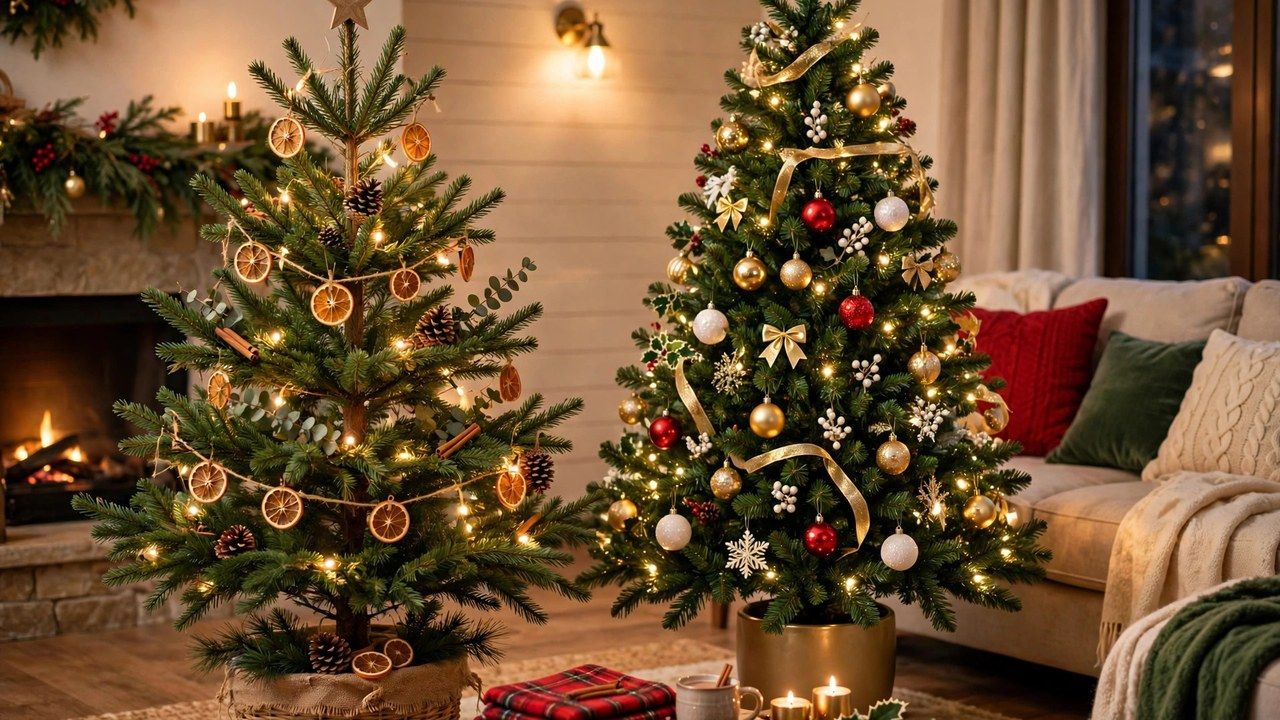
A real Christmas tree does not fade because it is real. It fades because it got thirsty, hot or off to a bad start in its first 24 hours at home. Real christmas tree care is genuinely simple, one fresh cut, plain water that never runs out, and a spot away from heat, but it has to happen on schedule. This guide covers the whole life of the tree, from freshness tests at the lot to recycling day, so your tree still looks and smells like Christmas morning on Christmas morning.
Still deciding between real and artificial? Our honest real vs artificial comparison comes first. Already committed to real? Then timing matters too, because even perfect care has limits, as our tree timing guide explains. Here is the care routine itself, in the order your tree will need it.
Start at the Lot: How to Choose a Fresh Tree
Care begins before the tree is yours. A fresh tree holds its needles, its moisture and its scent for weeks; a tree that was cut long ago and stored badly is already on the clock. Run these checks at the lot. Needle test: run a branch through your closed hand, fresh needles stay on and feel flexible rather than brittle, and only a few older inner needles should fall. Bounce test: lift the tree a few inches and drop it lightly on its trunk end, a shower of green needles is a bad sign, while losing some brown inner needles is normal. Weight: a fresh tree feels surprisingly heavy for its size because it is full of water.
Look at the cut end of the trunk as well. A pale, fresh looking cut is good; a dark, dried, cracked end suggests the tree has been standing cut for a while. Ask when the tree was cut if the seller knows, and favor local farm trees when you can, since they have usually travelled least. Species matter for needle retention too: firs are widely known for holding needles well, spruces smell wonderful but tend to drop sooner, and pines sit in between, so ask the lot what they recommend for a long display.
The First Cut and the Right Stand
The single most important care step happens in the first hours at home. Saw a thin slice, about half an inch to an inch, straight off the bottom of the trunk as soon as you can, and get the tree into water immediately. The reason is simple: a cut trunk seals itself with sap over time, and that seal blocks water uptake. A fresh cut reopens the tree's drinking surface. If the trip home takes hours, make the cut at home right before the tree goes into the stand, not at the lot in the morning.
Choose a stand that holds a generous amount of water, at least a quart and ideally much more for a large tree, and that grips the trunk with screws or a clamp without needing the bark stripped or the trunk whittled down. Never shave the trunk to fit a small stand: the water conducting layer sits just under the bark, and removing it starves the tree. If the trunk does not fit, the stand is wrong, not the tree. Set the stand on a waterproof tray or mat, because reservoirs overflow exactly once before you learn this.
Water: The One Rule That Matters Most
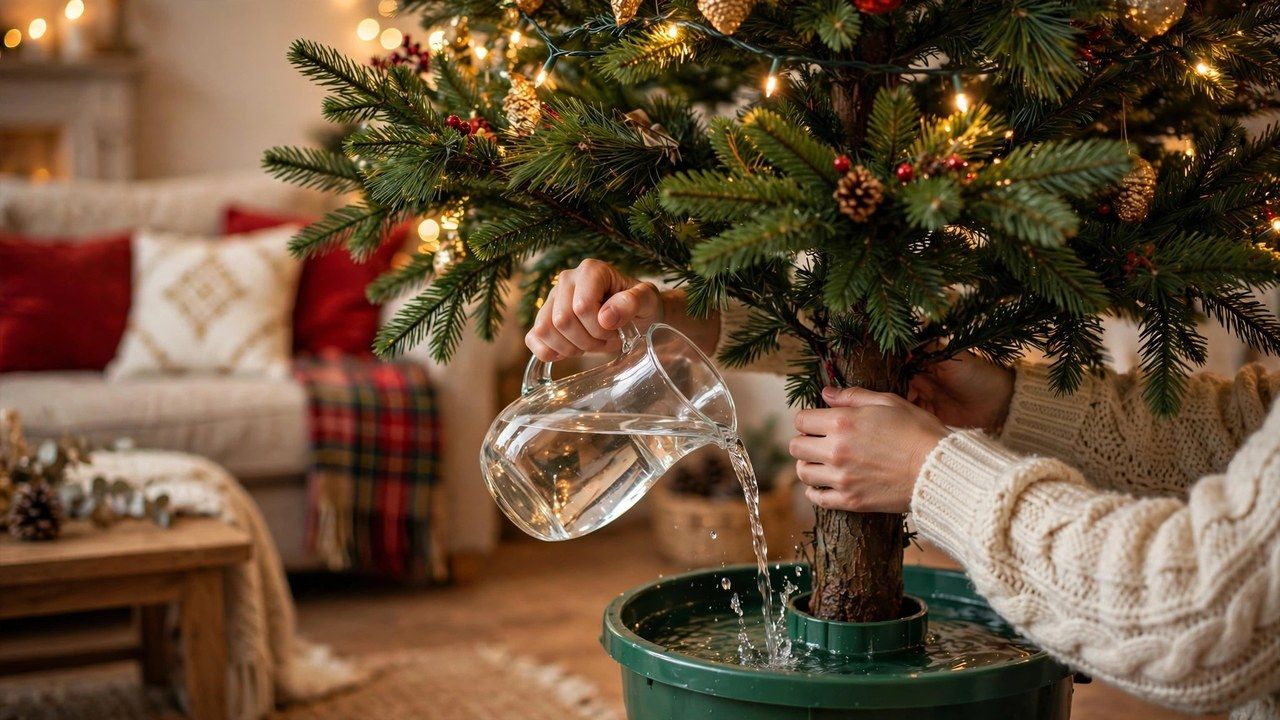
Plain, fresh tap water is the whole recipe. Tree care guidance from extension services and tree growers consistently lands in the same place: a well watered tree does not need sugar, soda, aspirin, bleach or commercial additives, and some of those can do more harm than good. What the tree needs is volume and consistency. A fresh tree drinks heavily in its first days, sometimes a quart or more a day for a large tree, then settles into a steadier rhythm.
The rule that actually keeps trees green is this: the reservoir must never run dry. If the water level drops below the cut end of the trunk, sap can reseal the cut and the tree stops drinking even after you refill it. Check the water every morning for the first week and every day or two after that, topping up before it gets low rather than after. Make checking the tree part of the morning routine, like coffee, and assign it to a named person, because care tasks owned by everyone are done by no one.
Placement: Heat, Sun and Traffic
Where the tree stands decides how hard your watering has to work. Keep it away from fireplaces, radiators, heat vents and wood stoves, ideally several feet from any heat source, because heat pulls moisture from needles around the clock. Direct all day sun through a south facing window has a similar drying effect, so the brightest window in the house is not automatically the best corner. A cooler room, or the cool side of a warm room, keeps a tree fresher with noticeably less effort.
Traffic matters too. A tree in the main walkway gets brushed, bumped and knocked daily, and every bump costs needles and ornaments. Give it a protected corner with good sightlines instead. Before the tree goes up, check that it will not block exits, heaters or the path you carry hot dishes along on Christmas Day, and confirm it is the size your room can hold using our Christmas tree sizes guide rather than discovering a fit problem with the tree already in the stand.
The Care Rhythm, Day by Day
| When | Task | Why |
|---|---|---|
| Day one | Fresh cut, into the stand, fill the reservoir completely | Reopens the trunk and starts drinking before the cut can seal |
| Days two to seven | Check and top up water every morning | Thirst is highest in the first week indoors |
| Weekly | Run a hand along inner branches and check needle feel | Brittle, dull needles are your earliest dryness warning |
| Weekly | Check stand screws, water tray and floor beneath | Catches slow leaks and settling before they become damage |
| All season | Turn lights off overnight and when away | Reduces heat on the branches and is basic electrical sense |
That rhythm takes perhaps a minute a day. Real tree care has a reputation for fussiness that the reality does not support: it is not skilled work, it is scheduled work. The trees that dry out by December twentieth are almost never the victims of bad luck; they are the victims of three forgotten water checks in a warm room.
Needle Drop: What Is Normal and What Is a Warning
Some needle drop is unavoidable and normal. Interior needles brown and shed naturally as the tree ages, and a light scattering under the tree across the whole season is the honest cost of a real tree. A tree skirt catches most of it, and a quick pass with a handheld vacuum keeps it civilized. What is not normal is green needles falling in quantity when branches are touched, or needles that feel dry and snap instead of bending.
Those are thirst symptoms, and the response is water and heat checks, in that order: confirm the reservoir actually has water reaching the trunk, confirm the trunk is not sitting sealed above the waterline, and confirm no heat vent is quietly blowing on the tree. If a tree has gone fully dry and brittle, no amount of late watering restores it, and the kind and safe decision is to take it down early rather than decorate a fire risk out of optimism. A fresh tree next year, chosen and watered well, is the fix, along with the timing advice in our look at how the tree tradition developed for why December, not November, has always been its natural season.
Fire Safety and Electrical Care
The safety facts are plain: a well watered real tree is difficult to ignite, while a dry one is a serious hazard, which makes watering a safety task and not just a cosmetic one. Keep the tree watered, keep it away from open flames and heat sources, and never place candles on or near it. Check light strands before they go on for frayed wires, cracked sockets and loose bulbs, and discard damaged sets rather than taping them into one more season of service.
Use lights as directed, do not overload outlets or piggyback extension cords, and switch tree lights off overnight and whenever the house is empty. LED strands run cooler than older incandescent sets, which is gentler on needles as well as safer. Keep a clear path to the outlet so nobody has to reach through the tree daily, and make sure the stand is stable enough that a curious child or a large dog cannot rock the tree. None of this is complicated; all of it is the difference between a festive tree and a cautionary tale.
Pets, Kids and Sap: Living With a Real Tree
Cover the stand's water reservoir, because pets will drink from it and tree water is not a beverage anyone should encourage. Sweep fallen needles regularly, since needles are unkind to paws and small stomachs, and consider a low barrier or a tree placed where a determined toddler cannot climb or pull. Hang fragile and heirloom ornaments high, keep breakable glass off the lowest branches, and skip tinsel in homes with cats, because swallowed tinsel is a genuine veterinary emergency.
Sap is the other daily reality. It will get on hands during setup and occasionally on ornaments and floors. Rubbing alcohol or an oil based hand cleaner lifts it from skin, and patience lifts it from most surfaces; test any cleaner on fabric first. Accept a little of this as the texture of the real tree choice. The households that love real trees are not the ones who avoid the mess; they are the ones who decided the scent and the ritual are worth a minute with the vacuum, a fair summary of the whole real tree bargain.
End of Season: Removal and Recycling
Take the tree down when the season ends or when it dries out, whichever comes first, and do not let a brittle tree linger into mid January because taking it down feels like work. Remove ornaments and lights, then carry the tree out inside an old sheet or a tree removal bag fitted under the stand from setup day, which contains the needle trail that otherwise redecorates your hallway.
Then recycle if you possibly can. Many communities run Christmas tree recycling and mulching programs in early January, turning trees into garden mulch, and some areas use collected trees for habitat and erosion projects. Check your city or county page for dates and drop off points rather than assuming. A tree that is mulched finishes its story well; a tree in a landfill is the one ending every tree farmer wishes people avoided. Pack the stand away dry, note what worked this year, and your next real tree starts ahead of this one, right down to finding its box again with help from our Christmas storage guide.
Conclusion
Real tree care is a short list done faithfully: choose a fresh tree, cut the trunk, give it plain water every single day, keep it away from heat, and take it down when it dries. Do those five things and a real tree rewards you with the scent, color and presence that made you choose real in the first place, all the way to Christmas Day.