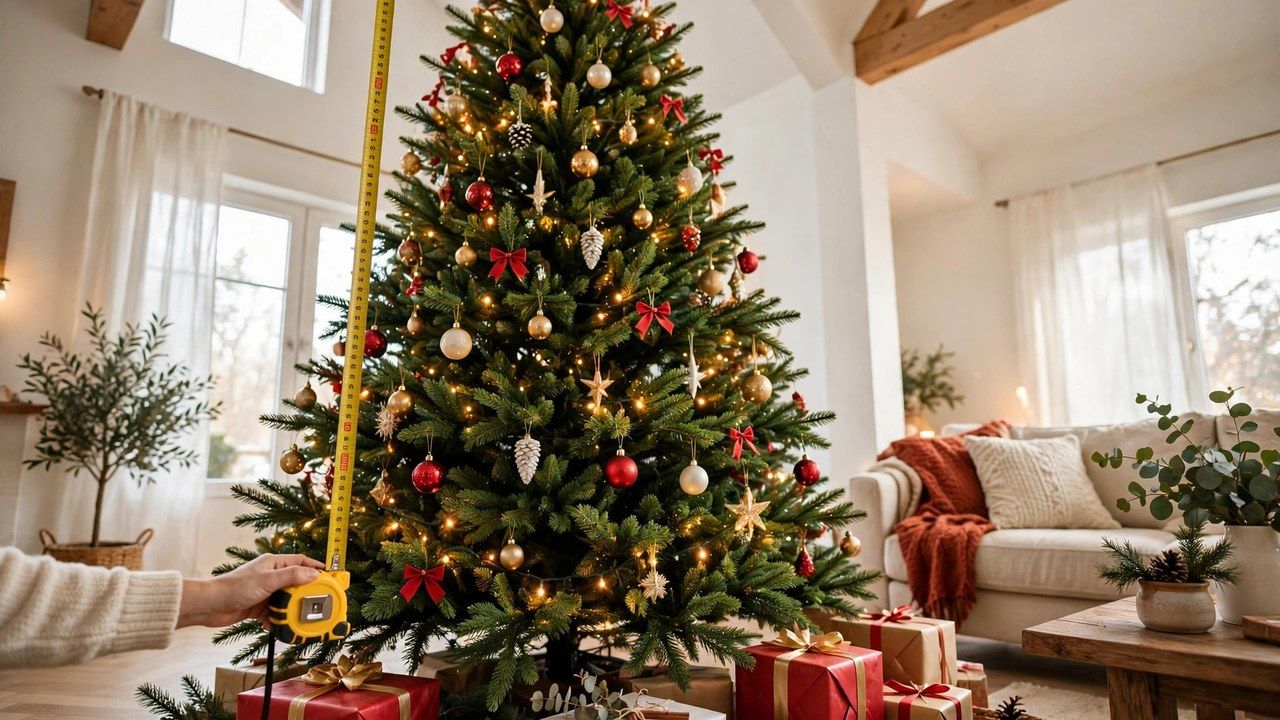
Most Christmas tree disappointment is a measuring problem, not a taste problem. A tree that looked modest at the lot turns out to scrape the ceiling, swallow half the living room, or arrive home too wide for the front door. Getting christmas tree sizes right takes about five minutes with a tape measure before you shop, and it decides almost everything that follows: which trees you can consider, how much decorating it needs, and where in the room it can actually live. This guide walks through height, width, shape and footprint in that order.
If you are still choosing the tree itself, pair this sizing guide with our artificial Christmas tree buying guide for construction and branch quality, and with the step by step process in how to decorate a Christmas tree once your tree is home. Here, the focus stays on one question: what size should that tree be?
The Two Measurements That Decide Everything
Every tree decision starts with two numbers: height and diameter at the widest point. Height is the one shoppers usually know, because it is printed largest on the box or the lot tag. Width is the one that causes trouble, because a full profile tree can be nearly as wide as it is tall at the base, and that footprint has to fit your floor, not just your ceiling. Measure both spaces before you fall in love with anything.
For a real tree, remember that lot sizes are approximate and the tree is measured before it goes into your stand. For an artificial tree, the stated height normally includes the stand, and the stated width is measured tip to tip on the widest lower branches after fluffing. Branches compress against a wall or in a corner, so a tree placed in a corner can be slightly wider than the same tree standing in the middle of a room.
Start With the Ceiling: The Height Rule
The working rule is simple: choose a tree at least six inches shorter than your ceiling, and ideally a full foot shorter if you use a tall topper. That gap is not wasted space. It holds the tree topper, keeps the top branches from bending against the ceiling, and gives the tree visual breathing room so it reads as grand rather than crammed. Measure to the lowest point the tree will sit under, which means accounting for ceiling beams, sloped ceilings, hanging light fixtures and ceiling fans.
Standard eight foot ceilings therefore pair best with trees around six and a half to seven and a half feet once the stand and topper are counted. Nine foot ceilings comfortably take seven and a half to eight and a half foot trees. Cathedral and vaulted ceilings can go taller, but very tall trees bring their own costs: more lights, more ornaments, a ladder for decorating, and a bigger storage problem in January. Tall is only better if you will actually enjoy decorating all of it.
The Christmas Tree Size Chart
Use this chart as a starting point, then adjust for your room using the sections that follow. Widths are typical ranges for each height, and real trees vary tree to tree, so always check the individual tree, not just the chart.
| Ceiling height | Suggested tree height | Typical full width | Typical slim width |
|---|---|---|---|
| Under 7 ft (basements, some apartments) | 4.5 to 5.5 ft, or a tabletop tree | 28 to 38 in | 20 to 26 in |
| 7 to 8 ft | 6 to 7 ft | 42 to 52 in | 28 to 36 in |
| 8 to 9 ft | 7 to 7.5 ft | 48 to 58 in | 32 to 40 in |
| 9 to 10 ft | 8 to 9 ft | 55 to 66 in | 38 to 46 in |
| 10 to 12 ft | 9 to 10.5 ft | 62 to 76 in | 44 to 54 in |
| Over 12 ft (vaulted) | 11 to 12 ft or taller | 70 in and up | 50 in and up |
Notice how quickly width grows with height on full profile trees. One extra foot of height can add eight or more inches of width, which is why the tree that fits the ceiling so often fails the floor. If your ceiling says tall but your floor says narrow, that is exactly the situation slim profiles exist for.
Width and Shape: Full, Slim, Pencil and Tabletop
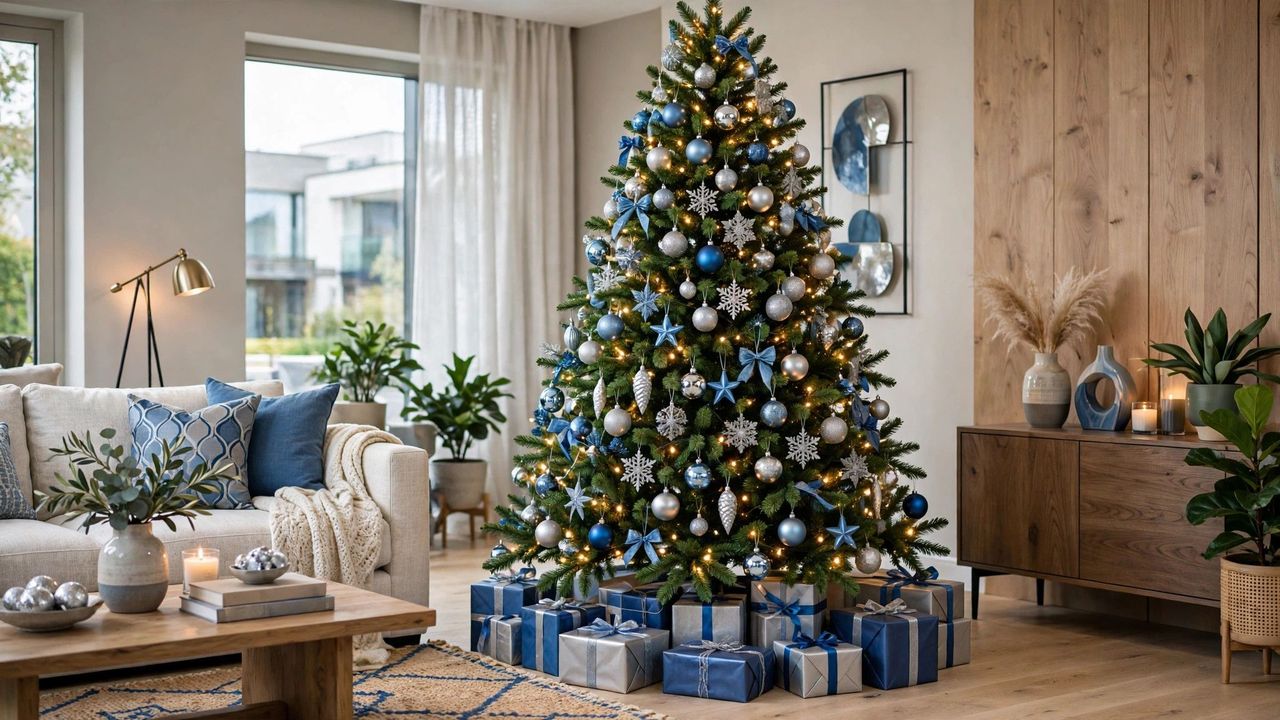
Full profile trees are the classic silhouette, with the widest base and the most branch volume to decorate. They suit open living rooms and corners with real floor space. Slim profiles keep most of the height while cutting the base diameter significantly, which makes them the default answer for apartments, narrow rooms and spaces where the tree stands between furniture rather than in an open area.
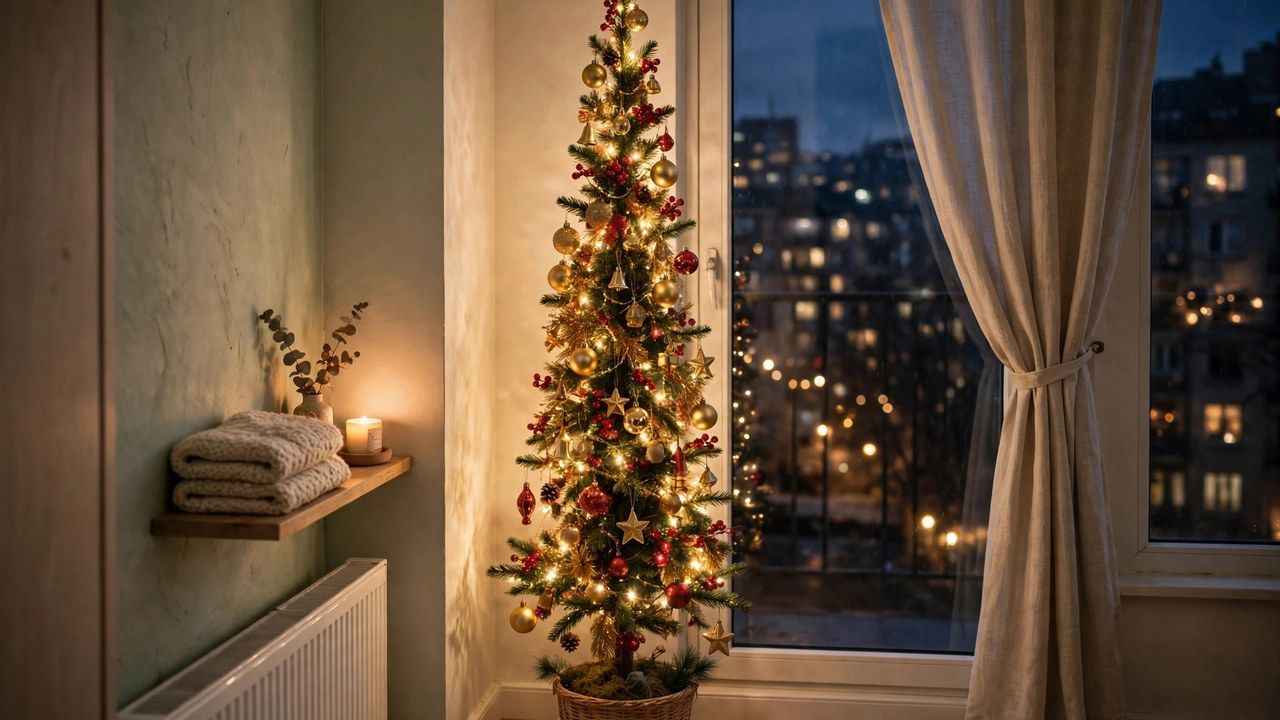
Pencil trees are the extreme version, a narrow column of green that fits beside a fireplace, in an entryway, or in the corner of a small bedroom; our slim and pencil tree guide covers how to make them look full rather than sparse. Tabletop trees, usually under four feet, sit on a sideboard, desk or kitchen counter and are the right answer for dorms, offices, hospital rooms and anyone who cannot manage a floor tree this year. Half trees and flat back trees, made to sit flush against a wall, are a lesser known fifth option worth knowing about if every inch counts.
Think in Footprint, Not Just Height
Before you buy, mark the tree's footprint on your floor with painter's tape or a bedsheet folded to the base diameter, then live with it for an hour. Can you still walk past without turning sideways? Do doors, drawers and cabinet fronts still open? Is there room in front of the tree for gifts without blocking the walkway? A tree needs its full circle of floor plus a comfortable margin, and it steals more visual space than the tape suggests once branches and gifts arrive.
Also look up and around. Keep branches clear of heat vents and radiators, which dry real trees and look wrong behind artificial ones, and leave space between the tree and any fireplace. Corner placement buys you room because the back third of the tree's width disappears into the corner, while a tree centered on a wall needs its honest full footprint. Our small apartment Christmas decor guide shows several of these space saving placements in real room layouts.
Sizing by Room: A Quick Tour
Living rooms take the flagship tree, sized by the chart above. Entryways favor slim or pencil profiles so the door swing and coat traffic stay clear. Bedrooms do best with four to six foot slim trees or tabletops that will not crowd the bed. Kids' rooms suit small, sturdy trees placed out of climbing temptation. Offices and desks call for tabletop sizes that leave the work surface usable. Dining rooms need extra caution: chairs pull out, people carry hot dishes, and a wide tree near the table becomes an obstacle course, so go slimmer than the chart suggests.
Two tree households, usually a main tree plus a smaller second tree, should size the second tree down more than feels necessary. The second tree lives in a smaller room by definition, and a four or five foot tree that fits gracefully beats a seven foot tree that dominates a bedroom or hallway.
Do Not Forget the Stand, the Topper and the Doorway
Three allowances catch people out every year. First, the stand: a real tree's trunk goes into a stand that holds the tree at its measured height, but the stand itself needs floor width and a water reservoir you can actually reach for daily watering. Second, the topper: stars and angels commonly add six to twelve inches above the top branch, so count them inside your ceiling gap rather than discovering them on decorating day.
Third, the route home and in: measure your doorways, stairwell turns and any elevator before choosing a very tall or wide tree. A nine foot real tree that cannot make the staircase turn is a famous and entirely avoidable disaster. Artificial trees travel in sections, but their storage boxes are bulky, so check the box will fit your storage spot too, a point our Christmas storage and organization guide covers in detail.
Common Size Mistakes, Honestly Rated
Buying for the ceiling and ignoring the floor is mistake number one, and it is why so many trees end up shoved into corners with squashed backs. Forgetting the topper is number two. Going smaller to be safe is the underrated third: a tree that is too small for a big room looks apologetic no matter how well it is decorated, and extra garland cannot fix wrong proportions. The honest trade off is this: a slightly slimmer tree at the right height beats a full tree at the wrong height almost every time, because height is what the eye reads first.
Finally, measure your existing ornaments and lights against the new size if you are changing trees. A bigger tree needs noticeably more of both, and a smaller one can leave treasured large ornaments homeless. Sizing is a system decision, not just a tree decision, and five minutes with a tape measure now saves a season of small annoyances.
Conclusion
The right Christmas tree size is the one that fits your ceiling with room for the topper, fits your floor with room to walk, and fits through your door without a struggle. Measure the ceiling, check the chart, tape the footprint on the floor, and choose full, slim, pencil or tabletop to match the space you actually have. Do that, and the tree you bring home will look like it grew there.