A letter to Santa is often the first real letter a child ever writes: a real purpose, a real reader in their imagination, and handwriting that suddenly matters. letters to santa are also a gift to parents, because a child’s unfiltered December thinking, part wish list, part good behavior audit, part pure poetry, is a keepsake like no other. This guide gives you simple templates by age, tips for making the writing session joyful rather than a homework battle, and honest guidance on where letters can actually be sent.
One important piece of honesty up front: programs and addresses for Santa mail change, and the details that matter, the current address and this year’s dates, should always be confirmed on the official page of the program you choose. This guide explains how the best known program works in general terms and points you to its official source rather than printing details that could be out of date. Pair the writing session with our Elf on the Shelf ideas for a full week of December magic.
What Makes a Great Letter to Santa
Every charming Santa letter has the same skeleton: a greeting, a little news from the child’s year, a polite enquiry after Santa, the reindeer and the elves, the wishes, a thank you, and a sign off with a name and age. The middle section, the news, is the part adults treasure most, because children report their year with a frankness no family newsletter matches: lost teeth, new friends, grievances against siblings, pride in a swimming badge.
Encourage the full skeleton rather than jumping straight to the list. A letter that only lists demands reads, even to a small child, a bit bare when read back, and the ritual of greeting, news and thanks is the entire writing lesson hiding inside the fun. If your child wants to draw as much as write, welcome it: Santa, in every family’s telling, is an enthusiastic appreciator of artwork.
Simple Templates by Age
For ages three to five, mostly drawing and dictation: Dear Santa, My name is ___ and I am ___. This year I learned to ___. I have tried to be ___. For Christmas I would love ___ and ___. Thank you for the ___ last year. Love, ___. Write the child’s words exactly as spoken; the grammar of a four year old is the charm, not a problem.
For ages six to eight, first independent letters: Dear Santa, How are you and the reindeer? This year I ___. I am proud that I ___. My Christmas wishes are ___, ___ and ___. I will leave you ___ by the tree. Thank you for reading my letter. From ___, age ___. For ages nine and up: invite a real letter, news, reflections, wishes for others as well as themselves, and questions they genuinely want to ask. Older children often write the funniest and most moving letters of all, precisely because they are half in on the secret and writing with love anyway.
Wish List Wisdom: Teaching the Ask
The wishes section is a quiet masterclass in wanting well. A gentle family rule that serves children all their lives is the balanced list: something they want, something they need, something to wear and something to read, plus one wish for someone else. It keeps the letter joyful, stops the catalogue copy out, and opens a lovely conversation about what other people in the family or the wider world might wish for.
Manage expectations inside the letter itself. Help your child mark one star wish rather than presenting fifteen equals, and talk honestly, at whatever level suits their age, about how Santa and families work together on gifts. If a wish is impossible, a pet dinosaur, a sibling returned to the shop, acknowledge the poetry of it in the reply rather than editing the child’s imagination out of their own letter. Ideas for the readable part of the list live in our Christmas books for kids guide.
Where to Send Letters: USPS Operation Santa, Explained Generally
In the United States, the best known program is USPS Operation Santa, a long running program in which children’s letters to Santa, sent through the mail to Santa’s official mailing address as published by USPS, may be adopted by individuals and organizations who read the letters and help answer wishes by sending gifts, with personal details handled under the program’s privacy rules. It turns children’s letters into a genuine channel of community generosity, and reading about it restores something in most adults.
Because this article cannot verify this year’s address, deadlines or adoption dates, it deliberately does not print them: go to the official USPS Operation Santa page for the current address, the letter writing guidance for the season, and the key dates if you hope a letter might be adopted or if you wish to adopt one yourself. The same caution applies to local programs run by malls, libraries and charities: use their own current announcements, not a screenshot from a previous December. Families outside the US will find similar postal programs in many countries, each with its own official page and dates.
Replies From Santa: Keeping the Magic Answering Back
Many families arrange a reply, and the craft is in the details. A good Santa reply references specifics from the child’s letter, a named achievement, the exact star wish, the drawing, which proves the letter was truly read. It thanks the child, mentions the reindeer by a name or two, encourages one small kindness, and avoids promising specific gifts outright, because December has a way of testing promises made in felt tip pen.
Postmarks and presentation multiply belief for older children: a reply that arrives through the mail carries an authority no hand delivered note can match, which is one reason postal programs are treasured. Whatever route your family uses, keep a copy or a photograph of both the letter and the reply. These paired documents, in a small hand and a careful one, become some of the most reread papers a family owns, long after the wishes themselves are forgotten. Our Santa tracker guide continues the correspondence on Christmas Eve itself.
The Writing Session: Making It an Event
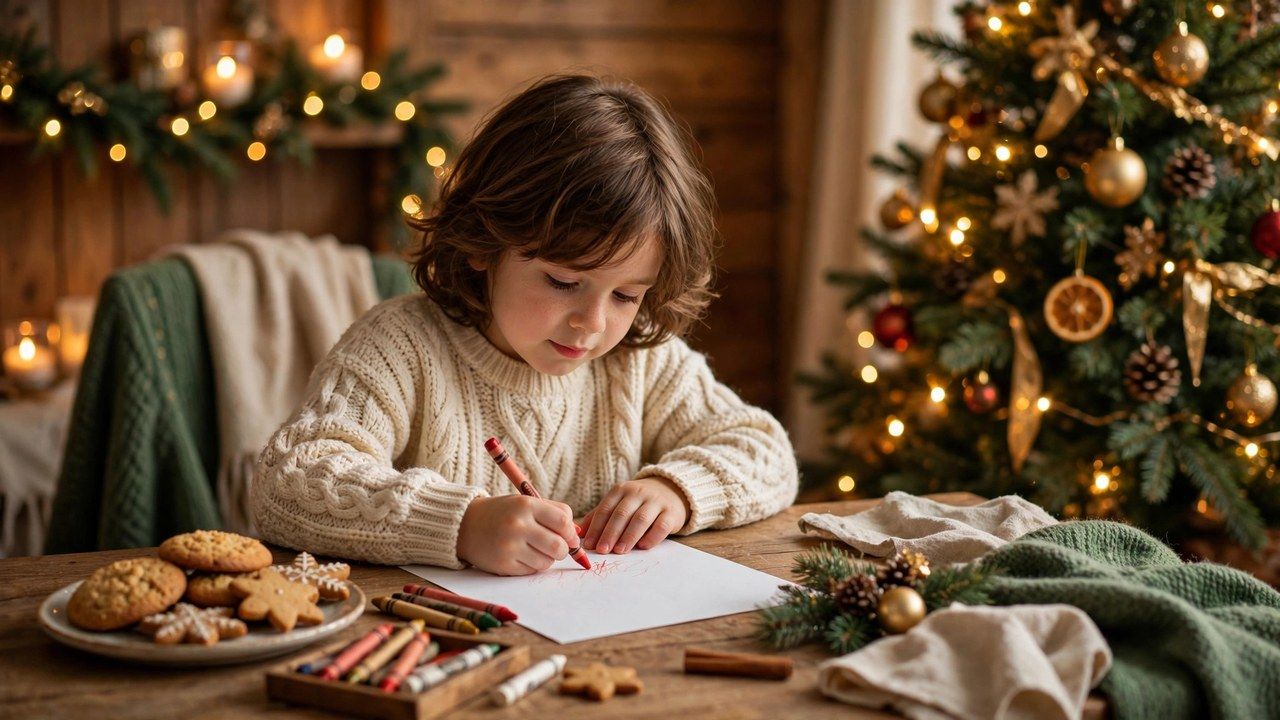
Set the scene like a tiny ceremony: the good paper, pencils and crayons laid out, hot chocolate within reach, Christmas music low, and enough unhurried time that nobody is dictating spelling against a clock. Younger children dictate while an adult writes in pencil beneath, then trace or copy what they can. Older children draft on scrap paper first if the fear of mistakes threatens the fun, which it does for more children than adults realize.
Siblings writing together produce natural peer review of the most honest kind, and a family letter writing afternoon pairs well with cards for relatives, using our Christmas wishes for kids for wording help. Photograph each child holding their finished letter before it is sealed. In ten years, that photograph and the letter copy will be argued over as family treasure, in the best way.
Letters Beyond Wish Lists: Thanks and Thoughtfulness
Some of the finest Santa letters ask for things no shop sells: snow on Christmas morning, a grandparent to feel better, a new friend at school, peace and quiet for a tired parent, faithfully reported by the child who noticed. Do not steer children away from these wishes toward more purchasable ones. A letter is one of the few places a child can state their real December hopes at full size.
Thank you letters after Christmas are the tradition’s underused second half. A short note from a child to Santa, and separate notes to grandparents and gift givers, closes the season with gratitude and doubles the writing practice. Our Christmas crafts and activities for kids guide includes paper crafts that turn thank you notes into a January afternoon activity rather than a chore.
Keeping the Letters: A Small Archive of Childhood
Before any letter leaves the house, copy it. A phone photograph is enough; a scan in a folder named by year is better. Parents who keep the sequence own something irreplaceable: the handwriting improving, the wishes changing from toys to experiences to wishes for other people, the spelling of reindeer evolving through heroic stages. Some families bind the copies into a book presented when the child is grown, which reliably produces the happiest tears in the family archive.
Store originals that stay home, drafts, replies and drawings together, away from damp and daylight. And when an older child graduates from writing to helping answer a younger sibling’s letter, the tradition has completed its quiet masterpiece: the magic, handed on by the person who received it.
Conclusion
Give the letter its full shape, greeting, news, wishes and thanks; balance the list; and check the official USPS Operation Santa page for this year’s address and dates before anything goes in the mail. Then copy everything and keep it forever. The wishes will date. The handwriting will break your heart, in the good way, every time you read it.