A house in December needs a stack of stories the way it needs a tree. christmas books for kids are the quiet engine of the season: the board book a toddler demands nightly, the picture book that still silences a room of cousins, the chapter book read a few pages at a time until Christmas Eve arrives exactly on schedule. This guide chooses by age and by use, because the right book at the right December moment becomes a tradition disguised as a paperback.
You will find the beloved classics every family should meet, modern picture book joys, and practical advice on building a December book basket, rotating titles, and giving books as gifts that get read rather than shelved. For screen based storytelling to balance the stack, our Christmas movies for kids guide curates the gentle end of the film shelf, while our letters to Santa guide covers December’s other great reading and writing ritual.
First Books: Board Books for Babies and Toddlers
For the youngest readers, a Christmas book is an object first and a story second: something to hold, chew slightly, and hear in a beloved voice while turning thick pages at their own speed. Choose board books with one clear image per page, simple festive vocabulary, tree, star, snow, reindeer, and textures or flaps that survive enthusiastic handling. Repetition is not a flaw at this age; it is the entire learning mechanism, so a book you can bear to read fourteen times in a row is the correct technical specification.
Read these in laps, not across rooms, and let the toddler control the pace, including the page skipped and the page demanded again. A first Christmas book often becomes a keepsake by accident, especially if someone writes the year and a line inside the cover, a habit this guide recommends for every book in this article. Pair the stack with the keepsakes in our baby’s first Christmas gifts guide.
Picture Books: The Heart of the December Shelf
Ages three to seven are the picture book golden years, and Christmas owns some of the form’s greatest titles. The Polar Express, with its train journey and its bell that only believers can hear, remains the season’s defining read aloud for atmosphere. How the Grinch Stole Christmas endures because its heart growing moral is carried entirely by rhythm and jokes. The classic poem A Visit from St. Nicholas, known to most families as The Night Before Christmas, is the one book that should be read on Christmas Eve itself, in whatever illustrated edition your family loves most.
Around those anchors, build variety: a funny book where Santa’s plans go wrong, a gentle book about giving rather than getting, a snowy wordless or nearly wordless book a pre reader can narrate alone, and one beautiful book about winter itself. Read picture books slowly, with the pictures given time to work; a child studies an illustration the way adults study a painting, and December’s best books repay the staring.
Early Readers and Chapter Books for Ages Seven to Ten
Once children read independently, Christmas books change job: from lap ritual to private world. Short chapter books and story collections set at Christmas let a young reader carry the season into bed with a torch, which is where lifelong reading habits are actually formed. Look for stories with warmth and momentum in equal measure, humor that respects the reader, and chapters short enough to end on a promise rather than a battle.
This is also the age for the great family read aloud chapter book, read a chapter a night across December so the story’s calendar and the family’s calendar run together. A Christmas Carol, in an edition suited to your listener, belongs to slightly older children and repays families for years; its ghosts need a parent’s judgment about readiness, and its ending lands like nothing else in children’s December literature. Our Christmas family activities guide builds other nightly rituals that pair with a chapter a night.
Books for Older Kids and Family Shelves
Tweens may roll their eyes at picture books and then listen from the doorway, a posture parents should accept as full participation. For their own reading, choose Christmas stories with genuine stakes, humor with an edge, and seasonal anthologies that mix ghost stories, winter tales and festive comedy. The Christmas ghost story is an old and honorable tradition, and older children who are ready for atmosphere rather than fright often treasure it most of all.
Keep the family shelf mixed on purpose: the toddler’s board book, the seven year old’s picture book, the tween’s anthology and the adults’ own seasonal reading in one basket tells every child that books are not something you age out of at Christmas. That quiet message may be the most valuable thing the December shelf teaches all year. Gift buyers for this age will also find angles in our Christmas gifts for tweens guide.
Building the December Book Basket
The simplest system that works: gather every Christmas book you own in late November, wrap or simply basket them together in the living room, and let one be chosen each night. Some families wrap twenty four books as a book advent, which is magical and also a great deal of wrapping; the basket achieves ninety percent of the effect with none of the paper, and children police the rotation with democratic enthusiasm.
Add one new book per child per year, inscribed with the year, and retire nothing. Within a few seasons the basket becomes a family archive: the chewed board book, the year of the Grinch obsession, the first chapter book. Store the collection with the decorations in January so it returns each year as an event in itself, greeted like an old friend walking back through the door. Our Christmas countdown ideas offer other nightly rituals to rotate with story time.
Giving Books: Making Them Feel Like Presents
Books given at Christmas compete with toys at maximum sparkle, so present them with intent. Inscribe them, because an inscription turns a book into a letter from this year’s you. Pair them with the reading experience: a book with hot chocolate supplies, a torch for a chapter book, a small stuffed character for a picture book. Give the first book of December early, at the month’s start, so it is enjoyed all season rather than discovered in January’s wreckage.
Choose for the child in front of you, not the child in the catalogue: the dinosaur obsessive gets the dinosaur Christmas story, the new reader gets chapters she can conquer, the child who was read to less gets the irresistible funny one. A book matched to an obsession is a door; a book matched to an aspiration is often a wall. Our Christmas gifts for kids guide covers the wider list by age if you are balancing books against toys.
Reading Aloud: Small Techniques, Huge Difference
Great December reading is mostly great pacing. Slow down for the pictures and the jokes, let children predict and interrupt, and do the voices at whatever standard you can sustain, because a wobbly reindeer voice remembered for decades beats a perfect one forgotten by January. Stop at the exciting place on chapter book nights, even when begged, especially when begged; anticipation is tomorrow’s enthusiasm arriving early.
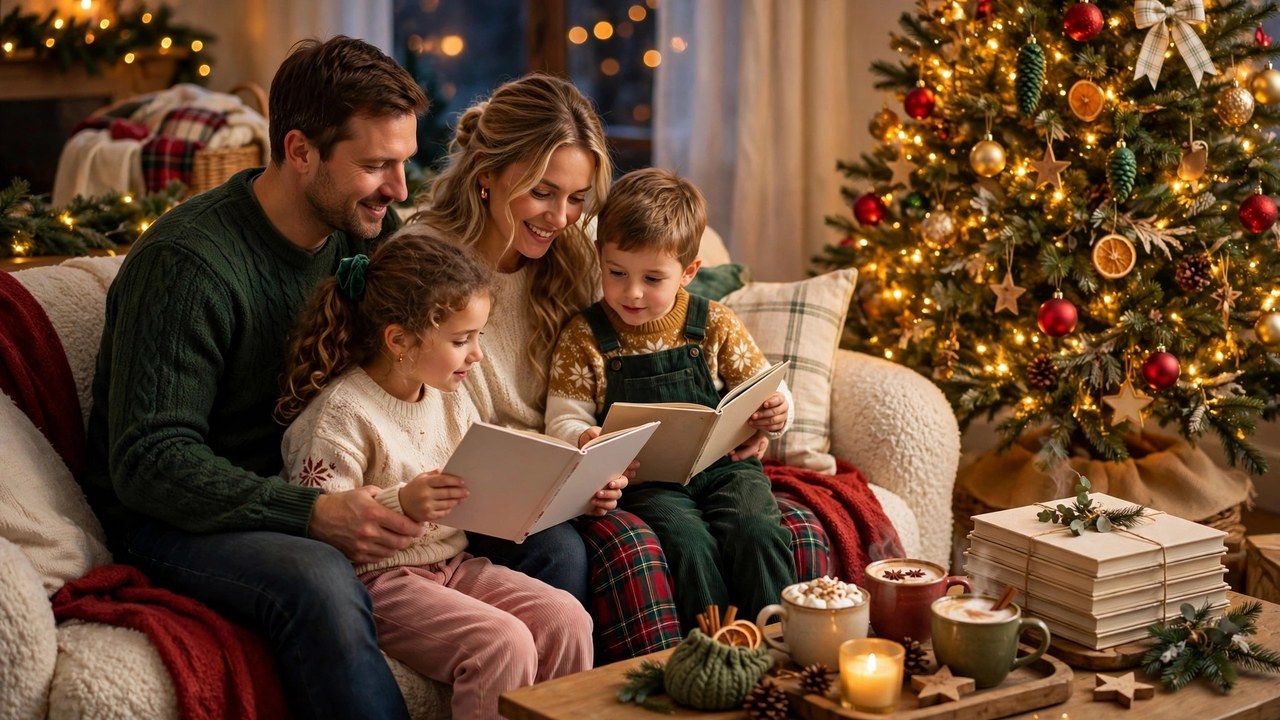
Protect the ritual’s edges: same chair, same blanket, phones elsewhere, younger children with a quiet toy in hand if sitting still is still a developing skill. Ten good minutes outrank thirty distracted ones at every age. And let children read to you as soon as they can, haltingly and proudly; being the audience is also a way of loving a book together, as any parent who has heard The Night Before Christmas performed by a seven year old in full ceremonial gravity can confirm.
Honest Pros and Cons of a Book Heavy December
Pros: books build the season’s calmest ritual, cost little per hour of joy, become keepsakes with inscriptions, and suit every age in one shared basket. Cons: storage grows yearly, tastes differ between siblings, and a wrapped book advent is real work if you choose that route. The basket system, one new inscribed book per child per year, and a protected nightly ten minutes capture nearly all the upside at almost none of the cost.
Conclusion
Build the basket, inscribe the new books, read the poem on Christmas Eve, and let one story a night pace the whole month. Long after the toys of 2026 are forgotten, your children will remember being read to in the glow of the tree, and they will do the voices for their own children, wobbles and all.