The living room is where Christmas actually happens: the tree, the morning, the guests, the photographs. Good christmas living room decor is not about buying a theme in a box. It is about layering, zone by zone, until the room feels warm from every chair in it. This guide builds the room the way designers do, in layers of light, textile, greenery and glow, and you will find ready to use layer pieces in the living room picks section below.
We will work the room in order: the layout first, then the tree zone, the sofa, the mantel and screen wall, and finally the light, because a camera-ready room is just a comfortable room whose layers agree with each other. For the adjoining spaces, our kitchen decor guide and bedroom decor guide use the same layering logic at different scales.
Start With Zones, Not Decorations
Before buying anything, name the zones: the tree corner, the seating group, the mantel or media wall, and the in-between surfaces like side tables and shelves. Most living rooms fail at Christmas not because the pieces are wrong but because one zone is loaded and the rest are bare, so the eye keeps returning to the tree while the sofa feels undecorated three feet away. Give every zone at least one festive signal and the whole room reads as finished.
Layout comes before decoration. Pull seating slightly toward the tree and the fire if you can, keep walkways to the kitchen clear for drinks and plates, and angle the best chair toward the room rather than the screen for the season. A room arranged for conversation photographs beautifully almost by accident, because cameras love what people love: faces, light and depth.
The Tree Zone: Anchor and Backdrop
The tree is the anchor, and its styling rules are covered in depth in our tree decorating ideas. The living room specific job is the frame around it: a tree skirt or basket collar that matches your palette, a cluster of wrapped or empty gift boxes at the base in your scheme’s papers, and one low companion, a lantern, a small stack of books or a basket of pinecones, to stop the tree floating in an empty corner.
Light discipline matters here. Warm white tree lights are the room’s main light source in the evening, so every other light you add should match their warmth. Mixed color temperatures are the single biggest reason decorated rooms look better in person than in photos: the camera exaggerates every cool bulb fighting the tree’s glow.
The Sofa Layer: Cushions and Throws That Earn Their Place
The sofa is where guests actually touch your decor, so textiles carry the season here. Work in odd numbers: two festive cushion covers flanking one everyday cushion reads designed, while four matching holiday cushions read like a display. A single generous throw, draped over the arm nearest the tree, gives you pattern, warmth and the invitation to stay awhile, all in one move.
Fabric choice decides whether the layer feels cozy or costume. Wool, flannel, brushed cotton and velvet photograph with depth and feel good against skin; shiny synthetics flatten under both camera and lamplight. The picks in our shop section were matched to this exact job: cushion covers to switch the sofa’s season in minutes, and a thick flannel throw that works from the first cold night to the last guest. If your style runs rustic or farmhouse, the same layer works with different patterns; see the companion style guides in this series.
Mantel and Media Wall: The Second Focal Point
A mantel is a gift: garland, stockings and candlelight in one ready-made composition, and our mantel decor guide styles it step by step. If your room centers on a television instead, borrow the same grammar at lower height: a garland run along the console, two lanterns or candle groups at the ends, and the screen itself showing a fireplace video or a still festive image when guests arrive.
Balance the two focal points rather than letting them compete. If the tree is tall and bright, keep the mantel quieter; if the tree is minimal, let the mantel carry more. Rooms photograph best with one hero and one supporting act, and living rooms are lived in best the same way.
Candlelight: The Layer That Changes Everything After Dark
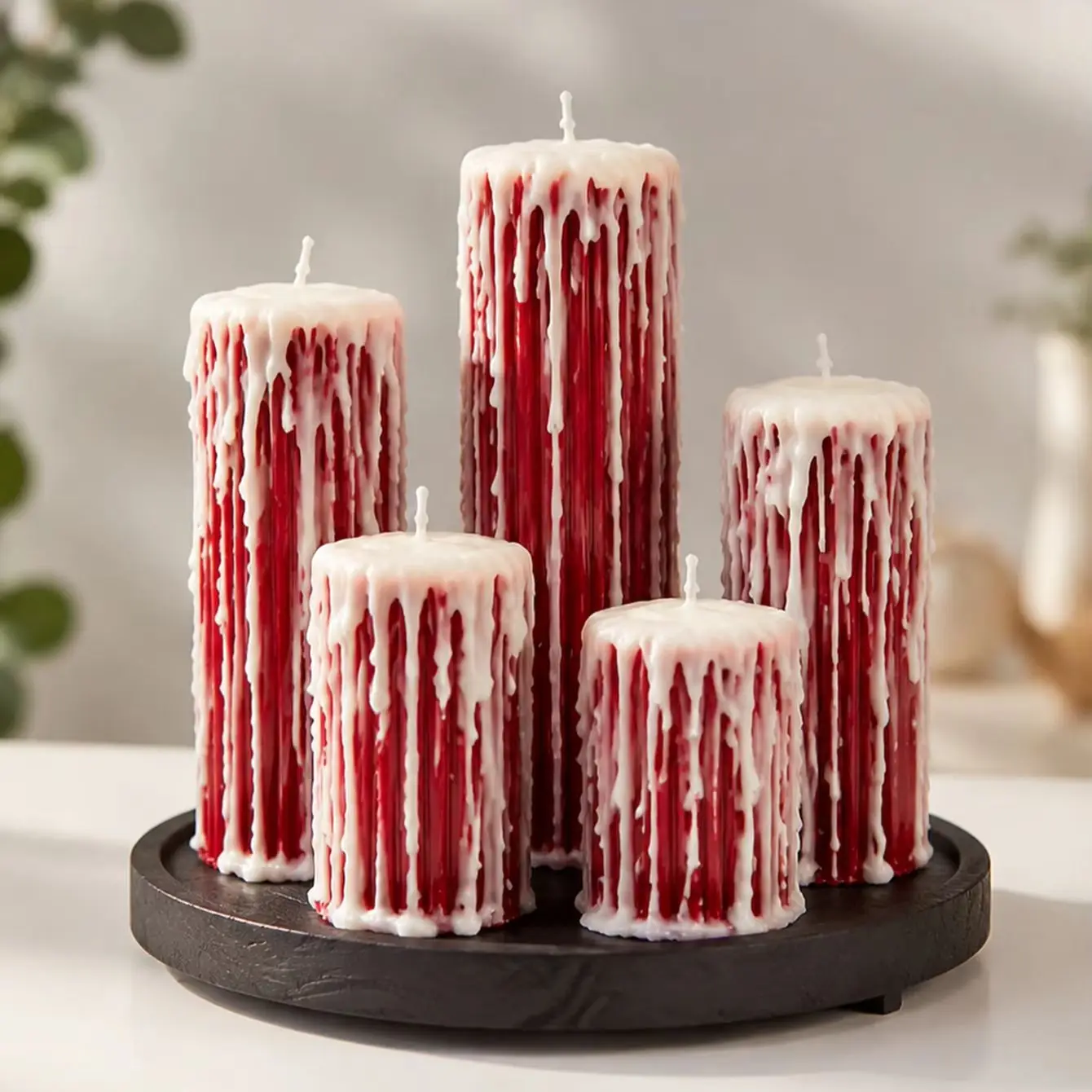
Every stylist’s secret is that Christmas rooms are really lighting designs. Group candles in threes at different heights: on the coffee table inside a tray, at the mantel ends, and on a side table where their light reaches faces. White and cream candles suit almost every palette and read elegant rather than themed, which is why a clean white candle set anchors the picks below.
Safety shapes the styling, always. Keep real flames inside holders, away from garland, curtains and the tree, and never leave them unattended; use quality LED candles in the risky spots, near textiles and where children or pets pass. A flameless candle in a good holder, in warm light, is nearly indistinguishable in photos and completely indistinguishable in peace of mind. Scent belongs here too: one candle scent per room, not three competing ones.
Choosing a Palette and Sticking to It
| Palette | Colors | Best textiles | Feels like |
|---|---|---|---|
| Classic warm | Red, forest green, cream, gold | Plaid, velvet, wool | The traditional family Christmas |
| Calm neutral | White, beige, soft grey, pale wood | Linen, flannel, knit | A quiet, bright winter room |
| Rich jewel | Burgundy, navy, emerald, brass | Velvet, leather accents | Evening, firelight, grown-up |
| Icy blue | Navy, silver, white, pale blue | Faux fur, sequin touches | A frosted, elegant night |
Pick the palette from what the room already owns: your sofa color, your rug and your curtains are the fixed cast, and Christmas is costume. If the room is mid-renovation or deliberately mixed, the classic warm palette forgives the most. For single-color deep dives, compare our burgundy decor guide and the blue Christmas decor guide in this series before committing.
Camera-Ready: The Five-Minute Photo Pass
Photograph the room the night before guests arrive, from the doorway and from the tree looking back. The camera will show you what eyes forgive: a stray cable, one bare corner, a cushion pile slumping, glare on the screen. Fix in this order: straighten textiles, add one candle group where the photo looks dark, move one object from the busiest surface to the emptiest, and hide cords. Five minutes, four fixes, and the room is ready for both guests and the family photo.
For the family photo itself, seat people on and around the sofa with the tree behind a shoulder, not dead center, and shoot while the candles and tree lights are the main light. It is the same composition every beloved Christmas photo uses, because it puts the people in the warmest light in the house.
Honest Pros and Cons of the Full Layered Look
Pros: layering uses mostly textiles and light, so it is reversible, storable and largely renter friendly; the room feels finished from every seat; and pieces migrate to other rooms in January. Cons: layers cost more in total than a single theme set, even bought gradually; textiles need storage space; and over-layering tips into clutter fast. The discipline is one layer at a time, photographed, before the next is allowed in.
Conclusion
A great Christmas living room is built, not bought: zones balanced, tree framed, sofa layered with cushions and a real throw, candles grouped where faces gather, and one palette holding it all together. Decorate it in that order and the room will feel as good as it photographs, which is the whole point.