Every party ends up in the kitchen, and every December morning starts there, which makes the kitchen the hardest working festive room in the house. Yet most decorating energy goes to the living room, leaving the kitchen with a lone scented candle. This guide to christmas kitchen decor for 2026 fixes that with touches designed for a real working kitchen: festive where you look, invisible where you cook, and food safe everywhere it matters.
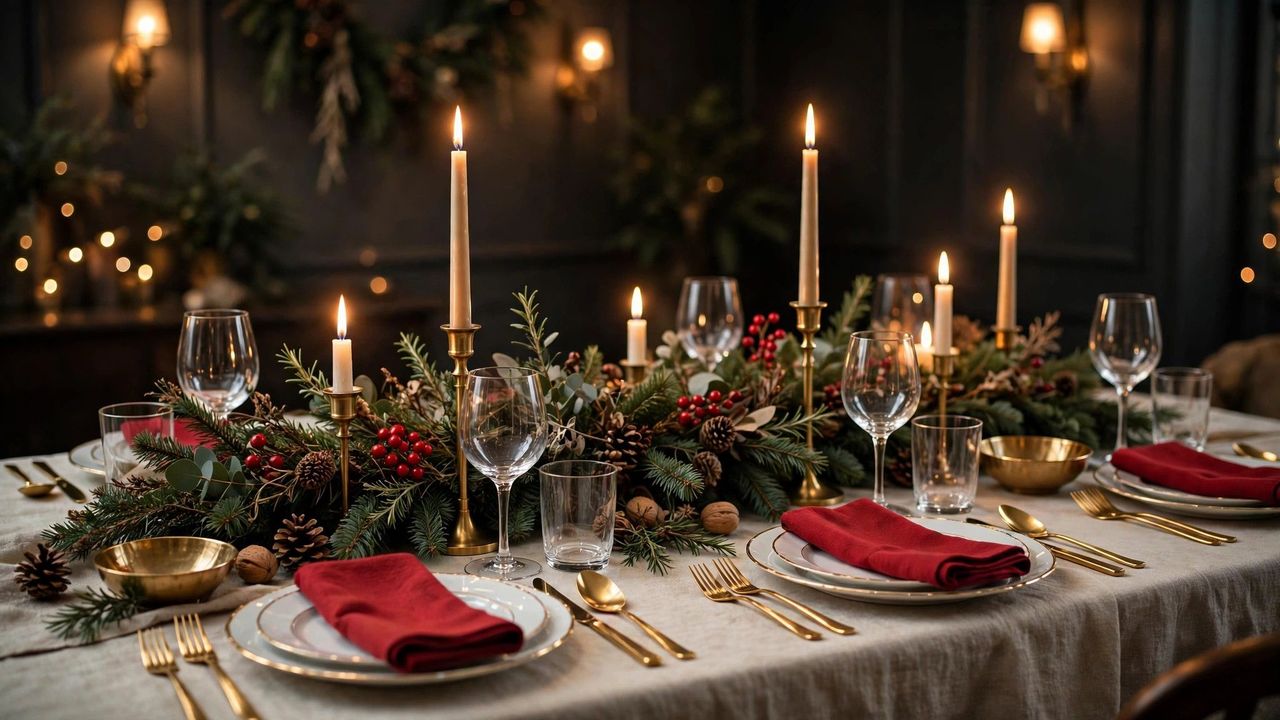
The kitchen has rules other rooms do not. Heat, steam, grease and constant cleaning punish delicate decor, and anything near food must be washable, sealed or edible. Work within those rules rather than against them and the kitchen becomes the warmest room of the season. For the table it all leads to, see our table settings guide, and for the baking that fills it, our cookie recipes.
The Kitchen Decor Rule: Decorate the Perimeter, Free the Counters
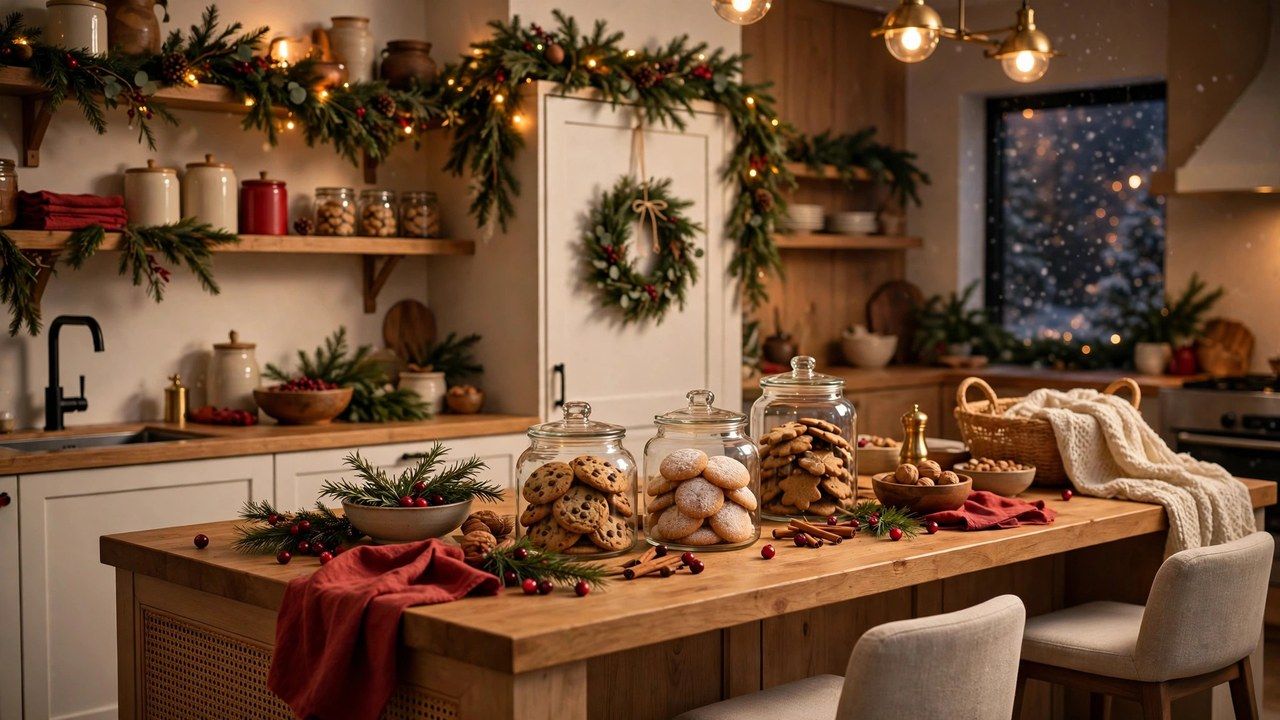
Professional looking kitchen decor obeys one law: the perimeter gets festive, the work triangle stays clear. Counters between sink, stove and fridge are production space during the heaviest cooking month of the year, and decor that migrates into them gets moved, splashed and resented. Instead, decorate cabinet faces, open shelves, windows, the range hood, the island’s guest side and the tops of cabinets, the high band where greenery and lights live happily out of the splash zone.
Walk your kitchen and mark three zones honestly: display zones that rarely get touched, working zones that must stay naked, and hybrid zones like the island end or a breakfast nook where one tray of decor can sit and be lifted away in seconds. Every idea in this guide belongs to a display or hybrid zone; if a suggestion needs a working counter, redesign it upward onto a shelf or a wall.
Cabinet Wreaths, Garland and the Range Hood Moment
Small wreaths hung on cabinet doors with ribbon are the signature kitchen look of recent seasons, and they earn it: instant festivity, zero counter cost, and a rhythm of green circles that reads beautifully in the room’s hard, straight lines. Hang them on upper cabinets or a pantry door, keep them clear of the stove’s heat plume, and use ribbon in your scheme color so the kitchen joins the rest of the house. One or two feature cabinets beat a wreath on every door, which tips into novelty.
Garland belongs along the tops of cabinets, across a window or swagged under open shelves, always secured and always away from open flame and burner heat. The range hood, if you have one, is the kitchen’s mantel: a garland across its face with a bow at center gives the room a focal point that survives every cooking session. Battery lights woven through solve the outlet problem and keep cords away from water and heat.
Open Shelves and Windows: The Display Stage
Open shelves are a stage that changes with effort measured in minutes. Swap everyday items for the festive bench: red and green ceramics, glass jars of ornaments or cranberries, a small stack of holiday cookbooks, copper or brass pieces for warmth, and one piece of greenery laid along the shelf edge. Edit harder than feels natural; shelves photograph and read best with air between groups. Closed cabinet kitchens can borrow the trick with a single floating shelf or the top of the fridge, styled the same way.
The kitchen window above the sink is where you stand most, so dress it for yourself: a small wreath hung from the frame, paper stars, or a sill line of tiny potted herbs and a candle in a jar. Rosemary plants deserve special mention; they look like miniature trees, survive the season with water, scent the room when brushed, and end January as an ingredient rather than storage. Our scented home guide covers the fragrance layer that completes the window moment.
Textiles: The Fastest Kitchen Transformation
Tea towels, oven mitts, a runner and chair cushions in festive colors change the kitchen’s palette in five minutes, wash clean, and store in a drawer. This is the highest value decor in the room, especially in classic schemes: tartan or burgundy textiles pull a white kitchen straight into the heritage mood of our tartan decor guide, while blush towels and a pink runner deliver the season’s bold color at rental friendly commitment, as shown in our pink decor guide.
Keep working textiles practical: dark colors hide the season’s stains, cotton and linen outlast novelty synthetics at the stove, and anything with dangling embellishments stays off the oven door handle, where towels meet flame risk. A festive apron hung on a hook counts as decor and gets used, which is the kitchen standard in one object.
The Island and Breakfast Nook: Where Guests Actually Sit
The island’s guest side is the social center of the modern kitchen, so give it the centerpiece treatment: a tray carrying a small arrangement of greenery, candles in jars and a bowl of oranges or ornaments, liftable in one motion when baking takes over. Stools take a cushion or a small wreath on the back for the dressed look in photos. Pendant lights above the island accept mini wreaths or ribbon bows, hung securely and well clear of heat.
The breakfast nook, if you have one, is the kitchen zone that can carry a fuller scheme: a table runner, a small tree or a vase of branches on the table, and cushions in the palette. Morning coffee in a dressed nook is the daily dividend of kitchen decorating, worth more than any single party moment. Our Christmas morning breakfast guide shows the nook at its one big annual performance.
Food as Decor: Beautiful, Edible and Honest
The kitchen is the one room where decor can be eaten. Glass jars of homemade biscuits, a tiered stand of iced cookies, bowls of clementines, pomegranates and nuts in shells, and a gingerbread house built to be admired then demolished all decorate truthfully: they look abundant because they are. Label jars with dates, keep display food sealed or whole where possible, and rotate anything perishable into meals before quality fades.
A hot chocolate or coffee station is the functional crown of this approach: mugs on hooks, jars of cocoa and marshmallows, a small tray and a festive sign or garland above. It decorates, it serves every guest without effort, and it anchors the kitchen’s hospitality. Keep the station on a hybrid zone tray, sugar and cocoa in sealed jars away from steam, and let it run all season.
Safety and Practicality: The Non Negotiables
Kitchen decor answers to safety rules living room decor never meets. Keep all greenery, ribbon and paper away from burners, toasters and open flame; never drape anything over the stove or oven door. Use battery candles near anything flammable and reserve real candles for supervised island moments in stable jars. Secure garlands so nothing can fall into food or onto a hot surface, keep cords clear of sinks and kettles, and choose washable or wipeable materials anywhere steam and splashes reach.
Hygiene draws the second line: no loose glitter, flocking or tinsel anywhere near food preparation, no scented decor so strong it fights the cooking, and nothing porous stored above the stove where grease settles. Decor styled with these rules disappears into the room’s life instead of becoming one more job, which is the difference between a kitchen that hosts December and one that merely survives it.
Honest Pros and Cons of Kitchen Decorating
Pros: the kitchen is where people actually gather, so decor here is seen and enjoyed more hours than anywhere else; textiles and food displays make it cheap and storage light; and a dressed kitchen makes hosting feel effortless. Cons: heat, steam and grease limit materials and placements, counters defend themselves against clutter, and overdone kitchen decor becomes cleaning debt. Perimeter styling, washable textiles and edible displays keep the balance firmly positive.
Conclusion
Decorate the kitchen like a cook, not a showroom: festivity on the perimeter, freedom at the counters, textiles for color, food for abundance and safety rules honored without exception. Do that and the room where everyone gathers becomes the room that feels most like Christmas, from the first morning coffee to the last midnight snack of the season.