Gift cards are among the most given and most requested presents of the season, and also the most carelessly given. The difference between a card that feels like a thoughtful gift and one that feels like a errand you outsourced is never the amount. It is the choosing, the pairing and the presentation. This guide to christmas gift card ideas for 2026 covers all three: how to pick a card the person will genuinely enjoy spending, how to present it so the unwrapping has a moment in it, and how to pair it with a small physical gift so it lands as a complete present.
If your recipient would honestly rather have an object, our best Christmas gifts guide and Christmas gift ideas guide cover the classic categories, and our last-minute gifts guide is honest about which rushed gifts beat a card and which do not. This page makes the case for the card done properly, because done properly, it is one of the most respectful gifts there is: it hands the choosing to the expert on the recipient’s taste, who is the recipient.
Why Gift Cards Deserve a Better Reputation
Gift cards sit near the top of most requested gift lists year after year, and surveys this season again place them among the very top gift categories Americans plan to give. The reason is not laziness on either side. Recipients like the freedom to choose exactly right, to combine a card with January sales, or to fund something bigger than any single giver would buy. Givers like the certainty that the money becomes something wanted. The card’s bad reputation comes entirely from presentation: a bare card in a bare envelope announces that no thought survived the transaction.
The fix costs almost nothing and this guide is built around it. A card chosen for a specific store the person loves, paired with a small related physical gift, and presented in a real card with two personal sentences, is experienced by recipients as a thoughtful present with a flexible core. Every section below is one layer of that transformation.
Choosing the Right Card: Specific Beats General
The single biggest quality decision is specificity. A card for the exact coffee shop on their commute, the bookstore they browse, the game platform they play on, or the craft store behind their hobby says you know their life. A general purpose card says you know gift cards exist. Both spend the same; only one communicates. Match the card to an observed habit: where do they actually go, order from, or talk about? That habit, not a category guess, is your answer.
Amounts deserve the same thoughtfulness. A card should cover one complete, satisfying purchase at that store, a real book haul, a full game, a proper meal for the setting, rather than a fraction that forces the recipient to top it up to use it. When the budget is small, choose a smaller venue where the amount is complete, a local bakery or coffee shop beats a token sum at a department store every time. For group giving, one substantial card to one loved place beats several small cards scattered across stores.
Pairing: The Small Gift That Makes It a Present
Pairing is the professional technique that converts a card into a gift experience. The formula is a small physical item that belongs to the same world as the card, wrapped together or presented as one package. A coffee card with a small bag of good beans or a festive mug. A bookstore card tucked inside a beautiful bookmark or the first volume of a series. A garden center card with a pair of gardening gloves. A gaming card with the snack they always play with. The pair does not need to be expensive; it needs to be related.
The pairing also solves the unwrapping problem for children and for anyone who loves the ceremony of Christmas morning, because there is now an object to open, hold and use while the card promises a second pleasure later. Grandparents giving to teens, the classic card scenario, should treat pairing as mandatory: the card funds what the teen truly wants, and the small paired gift proves grandma was paying attention. Our gifts for teens guide lists the current favorites to pair with.
Presentation Ideas That Take Five Minutes
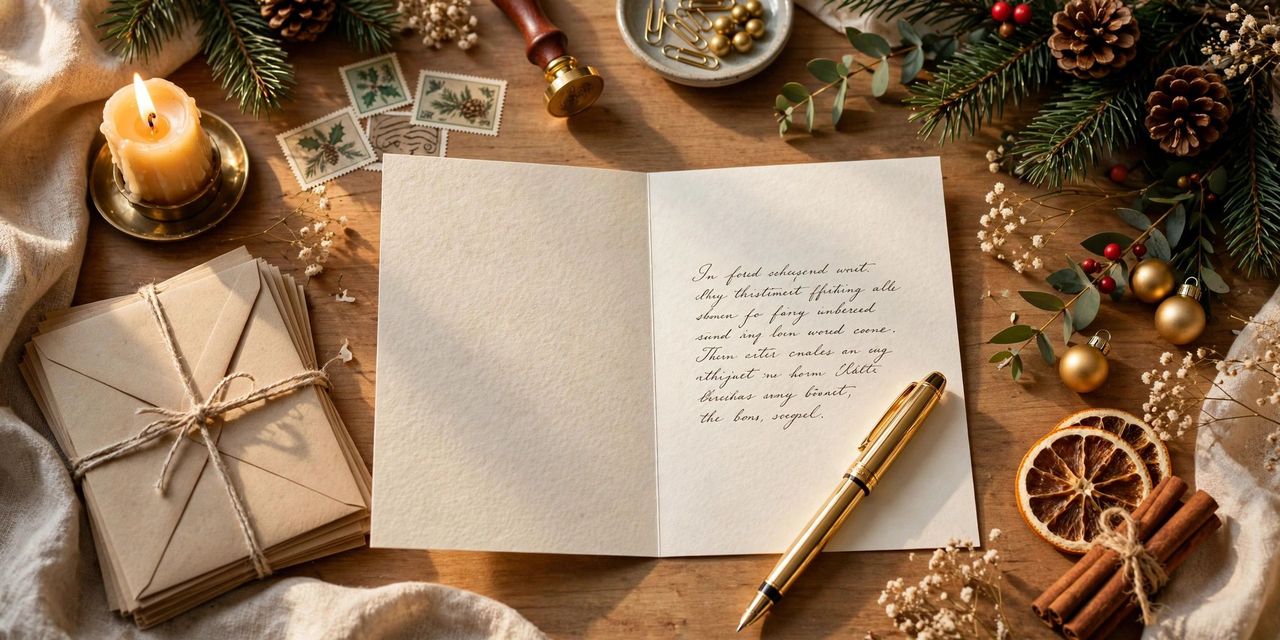
Never hand over the store’s own flimsy sleeve alone. Better options, in rising order of charm: the card inside a real Christmas card with a personal message, using the wording structures from our card message guide; the card in a small gift box with tissue, so it unwraps like a jewel; the card hidden inside the paired gift itself, a mug, a book, a pair of gloves; the card as the finale of a stocking, saved for last among the fillers from our stocking stuffers guide; or the card attached to a small ornament they keep after the money is spent.
For mailed cards, presentation matters even more, because the envelope is the whole event. Choose a real card, write more than a signature, and mail early enough that it arrives inside the season rather than in the January lull. If distance is the whole problem, a thoughtfully chosen digital card sent with a proper personal message still beats a physical card sent with none.
Gift Cards by Recipient: A Practical Map
For teens: platform and store cards for the games, music and clothes they actually use, plus a paired snack or accessory. For parents and grandparents: a favorite restaurant, garden center or bookstore, ideally paired and ideally with an invitation to go together. For coworkers: coffee and lunch cards are the universally safe professional choice, presented evenly across a team. For teachers: bookstore, coffee or classroom supply cards, paired with a note from the student, are consistently the most appreciated.
For the person who has everything: an experience flavored card, a class, a tasting, a streaming or audiobook service, extends the gift beyond objects entirely; compare the philosophy in our experience gifts guide. For long distance family: a card to a store local to them, not to you, with the paired gift being the card and message itself, sent early.
Etiquette and Practical Checks Before You Buy
A few unglamorous checks protect the gift’s value. Buy cards directly from the retailer or a reputable seller, never from discount resale listings, which carry real fraud and drained balance risk. Keep the receipt with the card until it is given; if a card fails at the till, the receipt is the fix. Check that the store has a location or delivery the recipient can actually use, and avoid cards for businesses in visible trouble, since an unspendable card is worse than no card.
Etiquette in brief: never regift a card you received without checking its balance and being certain it suits the new recipient; never mention what the card cost beyond its face value, which is printed on it anyway; and when you receive a card, spend it and, if the relationship suits it, tell the giver what it became. That small report is the giver’s only unwrapping moment, and generous recipients never skip it. For more on the wrapping around all of this, our gift wrapping guide treats small items with the respect they deserve.
When a Gift Card Is the Wrong Gift
Honesty requires the exceptions. A card is the wrong gift when the relationship calls for personal effort the card cannot fake: a romantic partner in a year when you have time to do better, a child young enough that money has no meaning, or anyone who has told you, in words or in last year’s reaction, that cards disappoint them. It is also wrong as the only gift at a Secret Santa style exchange with a physical gift tradition, where it breaks the game’s spirit even when it fits the budget.
In each of those cases the alternative is not necessarily expensive. It is specific: a chosen object from our unique gifts guide, a handmade piece from the DIY gifts guide, or an experience you will share. The card’s great virtue is respecting the recipient’s choice; its great limit is that sometimes the gift is supposed to be proof of yours.
Honest Pros and Cons of Gift Cards
Pros: near zero risk of the wrong size, color or duplicate; the recipient converts the money into something certainly wanted; perfect for distance, deadlines and difficult tastes; and consistently among the most requested gifts of the season. Cons: bare cards feel impersonal, small amounts at big stores can feel fractional, unused balances quietly waste value, and the unwrapping moment needs deliberate help. Every con on that list is answered by one section of this guide: choose specifically, size the amount to a complete treat, pair it, present it, and write the card like you mean it.
Conclusion
A Christmas gift card becomes a real gift through five small acts of thought: choose the store from the recipient’s actual habits, size the amount to one complete pleasure, pair it with a small related object, present it with ceremony, and write two sentences that prove the choosing was personal. Do those five things and the card stops being the easy option and becomes what recipients keep asking for it to be, freedom, gift wrapped.