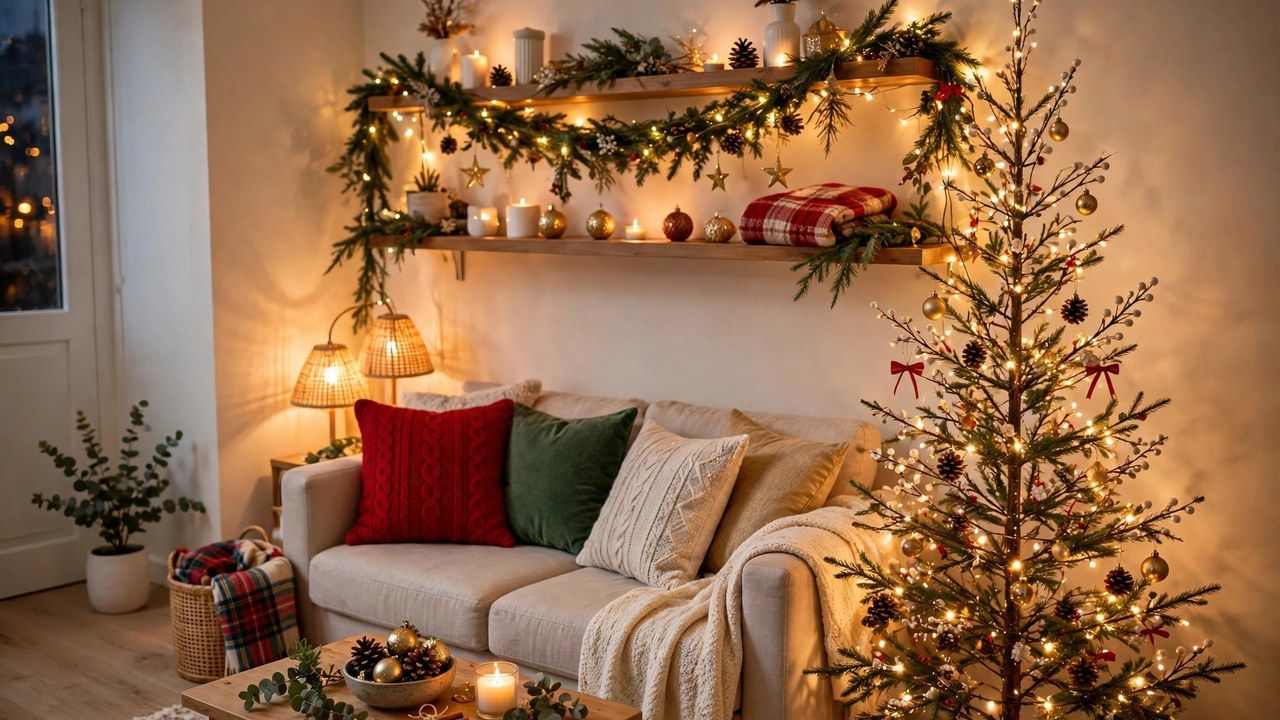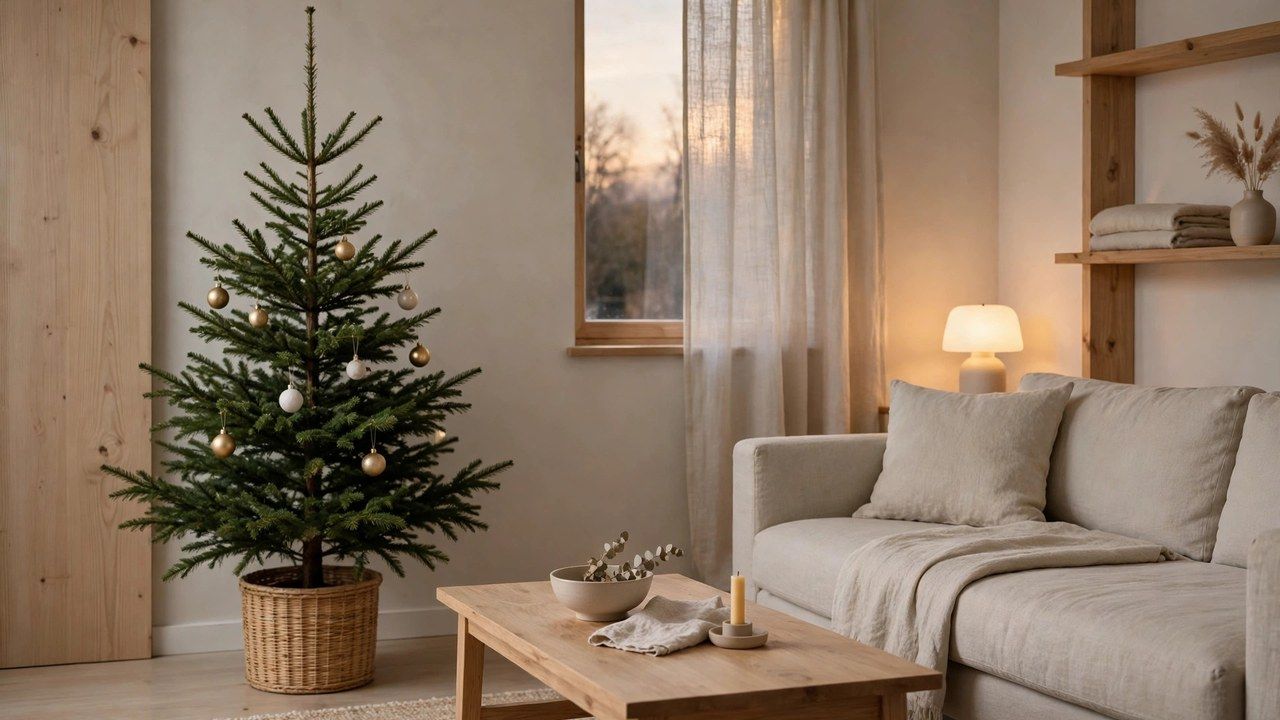
Not everyone wants December to arrive with boxes. Minimalist christmas decor is for the households that love the season but want their home to stay calm while it happens: fewer decorations, chosen carefully, with space left around them so each one can actually be seen. Done badly, minimalism at Christmas can feel like forgetting to decorate. Done well, it feels like a deep breath: a beautiful tree with breathing room, one wreath that earns its wall, candlelight instead of clutter.
This guide gives you the working rules behind the look, a room by room plan that stays festive rather than bare, and the honest trade offs of decorating with less. It pairs naturally with our general decoration ideas if you are editing down from a fuller scheme, and with small apartment Christmas decor if space as well as calm is the constraint.
The Core Rule: Fewer Pieces, Each One Visible
Minimalist decorating is not about owning almost nothing; it is about sight lines. In a maximal room, decorations layer until individual pieces disappear into a general sparkle. In a minimalist room, each piece stands alone with empty space around it, so quality and shape matter far more than quantity. A single branch in a tall vase can be the whole hallway statement, but it has to be a good branch, well placed, because there is nothing to hide behind.
A practical test helps while you work: step back and name what you see. If you can list the pieces easily, tree, wreath, candles, garland, the room is in minimalist territory. If the list blurs into a general impression of stuff, keep editing. The editing is the skill, and it is easier than it sounds because every removal makes the remaining pieces look more expensive and more intentional.
A Minimalist Palette That Still Feels Like Christmas
Color discipline does most of the visual quieting. Most calm schemes pick one green, one metallic or warm accent, and let whites, creams and natural wood carry the rest. Deep green foliage against warm white walls with brass or gold details is the classic 2026 version; it reads unmistakably festive in person and in photos, without a single red item in the room. Households that miss red can use it once, deeply: a single burgundy cushion or a bowl of red ornaments as a centerpiece, a trick our burgundy decor guide develops further.
Light is the other half of the palette. Warm white lights only, and fewer of them than instinct suggests, keep the mood soft. Cool blue white strands are the fastest way to make a calm room feel like a shop window, so check the color temperature of anything you buy and keep it consistent across tree, garland and candles, real or battery.
The Minimalist Tree: Less, But Better
The tree is where minimalism is won or lost, because it is the one piece nobody skips. Start with the shape: a tree with a natural, slightly sparse silhouette suits this style better than a perfectly dense cone, and a real tree's irregularity is a feature here. Our artificial tree buying guide explains shape and fullness if you are choosing a lasting tree, and our slim and pencil tree guide covers narrow profiles that suit calm, space conscious rooms.
Decorate in three layers at most: lights, one ornament family in one or two finishes, and one textural element such as a linen ribbon, dried orange slices or pinecones. Stop before the tree looks full; negative space between ornaments is the signature. A woven collar or a simple linen skirt finishes the base more quietly than a pile of wrapped empty boxes, though a few real gifts, plainly wrapped in kraft and string, suit the look perfectly.
Room by Room Minimalist Plan
- Living room: Tree, one garland or one mantel arrangement, candles in a group of three. Choose the garland or the mantel styling, not both at full strength; our mantel guide shows focal arrangements that stand alone.
- Entryway: One wreath, plain or nearly plain, hung with a linen or velvet ribbon. Nothing else needs to compete at the door.
- Dining table: A low line of greenery or a row of candles down the center, plain dishes, linen napkins. Borrow the restraint from our table settings guide and skip the place card extras.
- Kitchen: A small potted herb or miniature tree, one seasonal towel, and clear counters. Our kitchen decor guide has small footprint ideas that translate well.
- Bedroom: A single strand of warm lights or a candle and a sprig of greenery on the dresser. The bedroom is where calm pays off most directly in sleep.
Natural Materials Do the Heavy Lifting
| Material | Why it works | Simple use |
|---|---|---|
| Fresh or faux greenery | Festive by itself, no ornaments needed | Loose branches in a vase, one garland |
| Wood | Warmth without color noise | Bead garlands, candle holders, stars |
| Linen and wool | Soft texture that reads cozy, not busy | Tree skirt, stockings, cushion covers |
| Paper | Matte, light and recyclable | Folded stars, plain wrapping, garlands |
| Glass and brass | Quiet shine for evening light | Hurricane lanterns, simple baubles |
Natural materials share a useful property: they age gracefully and mix across years, so a minimalist collection grows by replacement rather than accumulation. Buy the real branch, the linen stocking and the brass holder once, and they will still look current in five seasons, which is more than most novelty decor can claim.
What to Skip, and What to Keep From Your Old Boxes
Editing an existing collection is how most people arrive at this style. Keep the pieces with memory attached, the handmade ornament, the inherited figure, regardless of palette; a minimalist room with a few personal exceptions feels human. Keep plain baubles in your chosen finish, simple candle holders and anything natural. Let go of tinsel and lametta, novelty items that never matched anything, sets bought for rooms you no longer decorate, and anything you have not used in two seasons.
Store what remains in one or two boxes, labeled by room. The small storage footprint is one of the style's genuine practical rewards, a point our Christmas storage and organization guide builds into a full January system.
Honest Pros and Cons of Decorating With Less
Pros: the house feels calm during the busiest social month of the year; decorating and packing away take hours instead of days; money concentrates on a few lasting pieces; and guests consistently describe these rooms as elegant. Cons: children and committed maximalists in the household may negotiate hard; the look depends on tidy everyday living, since there is no festive clutter to hide ordinary clutter; and each visible piece must earn its place, which can make choosing slower at first.
A common compromise is a split household: minimalist shared rooms, full expression in children's bedrooms and on their own small tree. The season stays joyful for everyone, and the calm core of the house survives.
A Seven Day Path From Full to Calm
If your current December style is full traditional, do not attempt the minimalist conversion in one ruthless afternoon; you will rebuy half of it by the second week. Instead, edit in passes across a week. On day one, pack away anything broken, tired or disliked, which most households find is already a fifth of their boxes. On day two, choose the palette and set aside everything outside it. On day three, decorate only the tree and the front door, the two signals that carry the season. Live with that for two evenings.
Then add back, one piece at a time and only where the room asks for it, the mantel arrangement, the table centerpiece, the candles. Each returning piece has to argue for its place against the calm you have just experienced, and most candidate pieces lose the argument happily. What survives this process is a personal minimalist collection rather than a copied showroom look, because every object in it defeated an easier alternative. Photograph the finished rooms, and next year's setup becomes a half hour of placing familiar pieces in familiar spots.
Families converting together do well to give every member one non negotiable piece that stays regardless of palette. A calm room that still holds the ornament someone loves most is a compromise nobody resents by Christmas Eve.
One last encouragement for the hesitant: minimalism at Christmas is reversible within the season. If, after a week of calm, the house genuinely misses a particular piece, bring that piece back and enjoy it with the knowledge that it earned its return. The style is not a rule imposed on the household; it is a filter that leaves behind only what the household actually loves. Many families find that one or two beloved exceptions are exactly what make their version of the look theirs, rather than a copy of someone else's serene photograph.
Conclusion
Minimalist Christmas decor is not the absence of Christmas; it is Christmas with the volume turned to a level you can hear yourself think at. Choose one palette, decorate the tree in three layers, give each room one clear statement, and let warm light and natural materials supply the festivity. If the result feels almost too simple on day one, live with it for an evening of candlelight before adding anything back. Most people find the calm is the point, and it was festive all along.