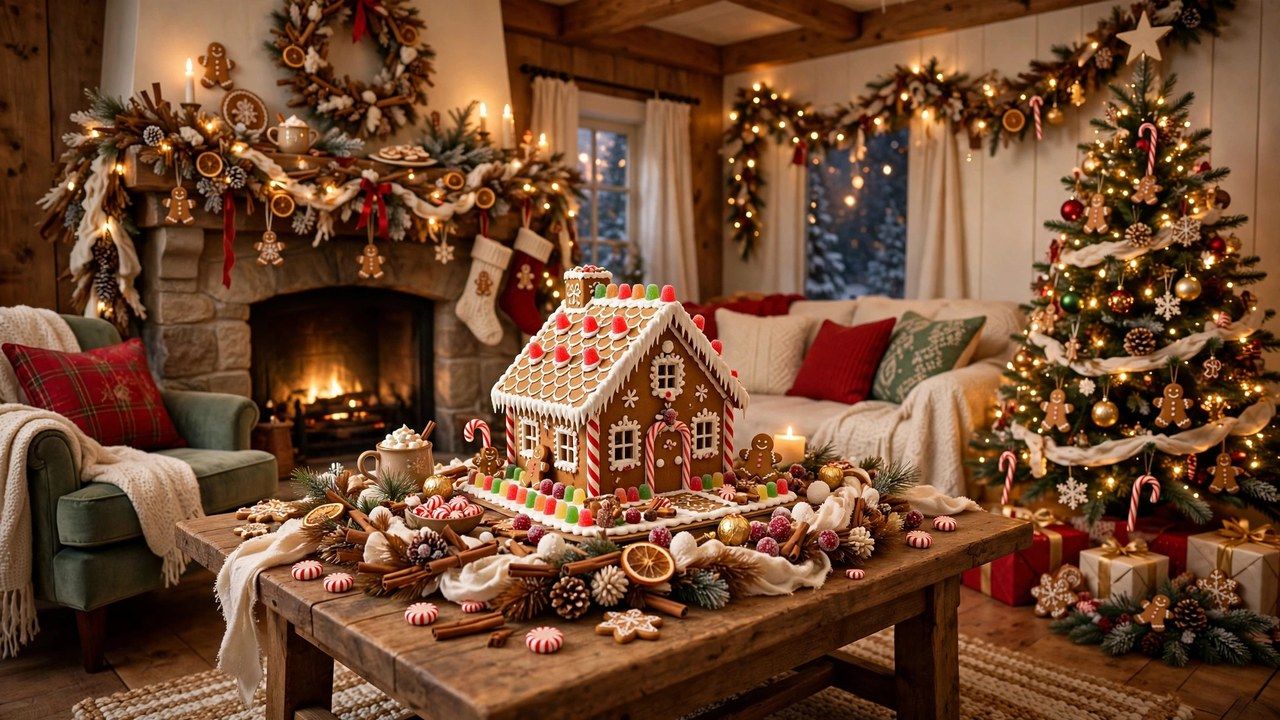
Some Christmas themes are elegant, some are glamorous, and then there is the one that makes everyone who walks in smile before they have even taken their coat off. Gingerbread christmas decor builds a whole room around the colors and shapes of a decorated cookie house: warm spiced browns, piped white icing lines, candy reds and peppermint stripes, and little houses, figures and garlands that look good enough to eat. For 2026 the look sits right at the heart of the sweet, nostalgic direction retailers are calling the storybook Christmas.
This guide shows how to build the theme room by room without tipping into a children's party, how to mix real baking with decor you keep, and where to spend on pieces you will reuse for years. If a full theme feels like a lot, start with the kitchen and the tree, and borrow supporting basics from our Christmas decoration ideas guide and Christmas tree themes.
The Gingerbread Palette, Decoded
Every successful themed room starts with a disciplined palette, and gingerbread is unusually specific. The base is baked brown in several depths: the mid brown of cookie walls, darker chocolate tones for contrast, and warm tan for textiles and wood. On top of that sits icing white, which is doing the same job white does in baking: outlining shapes, edging textiles and drawing the eye along garlands and mantels the way piped icing draws it along a roofline.
Accents come from the candy jar: true red, peppermint red and white stripes, and small pops of gumdrop colors used sparingly, the way a decorator places a few bright sweets on an otherwise classic house. Warm metallics are optional; a little antique gold in candle holders or ribbon edges keeps the room grown up. The palette to avoid is pastel. Pale pinks and mint can wander into a spring bakery look and break the cozy, fireside spell the theme depends on.
The Anchor Piece: A House That Is Not for Eating
Every gingerbread room needs one hero house. It might be a large decorative house on the mantel, a ceramic or wooden house on the table, or a real baked house built early in the season as a display first and a dessert later. What matters is placement: give it the spot normally reserved for the best decoration in the room, style a small scene around it with bottle brush trees, faux snow and warm light, and let everything else support it.
Real houses smell wonderful and carry the theme scent as well as sight, but they have a season measured in weeks, they attract curious fingers, and in humid homes they soften. Decorative houses last for years and can be lit from inside. Many households do both: one lasting hero house for the whole season, and a real build as a scheduled family event, which our gingerbread house kits guide covers in detail.
Room by Room: Where the Theme Works Hardest
- Kitchen: The natural home of the theme. Gingerbread figures on open shelves, a house shaped cookie jar, striped towels, and a small garland over the window. Keep work surfaces clear; let shelves and the table carry the story.
- Living room: The hero house, gingerbread ornaments on the tree, brown and cream cushions with white piping or stitching, and a mantel garland dotted with felt or wooden cookie shapes.
- Dining room: A runner in warm brown linen, white dishes that echo icing, candy striped napkins, and a low centerpiece of houses and candlelight drawn from our table settings guide.
- Entryway: A wreath with small gingerbread figures and a striped bow sets expectations at the door; see our wreath ideas for bases.
- Kids' spaces: Here the theme can go fully playful: plush gingerbread figures, house shaped cushions and a small tree of cookie ornaments they decorate themselves.
Textures That Sell the Storybook Feel
| Element | Gingerbread translation | Where it works |
|---|---|---|
| Walls of the house | Warm browns: wood, leather tones, tan textiles | Cushions, throws, table runners |
| Piped icing | White trim, scalloped edges, stitched details | Garland edging, stockings, napkin borders |
| Candy | Red accents, stripes, clear jars of real sweets | Ornaments, ribbons, table jars |
| The bakery window | Warm low light, amber glass, candle glow | Mantel, shelves, window ledges |
| Snow on the roof | Faux snow, white flocked sprigs, cotton batting | House scenes, village style displays |
Notice that most of the theme is texture and color, not novelty items. A brown cushion with white piping reads gingerbread next to the hero house, but returns to normal service in January. That is the secret to a themed room that does not require a themed storage unit: buy the story in a handful of unmistakable pieces, and let ordinary warm basics do the rest.
Mixing Real Baking With Lasting Decor
The smell of real gingerbread is the theme's invisible decoration, and you do not need a construction project to get it. A tray of gingerbread figures baked for the tree, a simmering pot of spices on a party day, or cookies displayed under a glass dome for a weekend all perfume the house. Our Christmas cookie recipes include the sturdy, bake ahead styles that hold their shape for decorating and hanging.
Be honest about the division of labor, though. Anything edible is temporary by definition, and anything near heat, sunlight or pets has a shorter life still. Plan the room so it looks complete without the edible pieces, then let baking be the delicious garnish rather than the structure. Households with small children often learn this the first year a tree cookie collection quietly shrinks.
Gingerbread on the Tree
A gingerbread tree leans into repetition: sets of cookie style ornaments, candy shapes, striped ribbon used like icing lines, and warm white lights that flatter brown tones better than icy blue white strands. Keep some plain red and gold baubles in the mix for depth, the way a real house uses plain icing alongside bright sweets. If you are also building a miniature scene, our Christmas village display ideas translate well: swap the snowy town palette for bakery browns and the village becomes a gingerbread street.
Top the tree with a star or a bow rather than a figure that competes with the hero house across the room. Two competing focal points split the theme; one hero, echoed at smaller scale everywhere else, keeps it storybook rather than novelty shop.
Keeping It Grown Up: Honest Pros and Cons
Pros: the theme is warm, welcoming and instantly understood by guests of every age; it photographs in a nostalgic way phones love; and much of it can be built from browns, whites and reds you may already own. Cons: it can tip childish if novelty items outnumber classic materials; brown heavy rooms need good warm lighting or they go flat by day; and edible elements demand a refresh schedule.
The grown up levers are restraint and material quality. Choose wood, felt, ceramic and fabric figures over shiny plastic where you can, keep gumdrop colors to accents, and light the room warmly. A gingerbread theme done with real textures reads as a European Christmas market stall: sweet, but crafted.
Small Touches That Complete the Illusion
Once the big pieces are placed, the theme is finished by details at hand height. Swap everyday hand towels for striped or stitched white trimmed versions, put real candy in clear jars at exactly the spots a bakery would, and choose gift wrap for presents under the tree in browns, creams and reds so the parcels join the scheme instead of interrupting it. Scent is a detail too: a gingerbread or spiced candle near the entry, used on guest nights, completes the story the eyes have been telling. Finally, repeat one motif, a simple gingerbread figure shape, at three scales across the house: on the tree, on the wreath and on the table. Repetition at different scales is what separates a collected theme from a random set of cute objects, and it costs almost nothing once you start noticing the shape while you shop.
Lighting checks matter in brown rooms. Walk the room at midday and again at night in the week you decorate, and add a lamp or candle where a corner has gone muddy rather than cozy. The theme should feel like late afternoon in a bakery window, warm and golden, never like a room with the lights off.
One last practical note: photograph your gingerbread room in the first week it is finished, while every textile is fresh and every candle is new. If you host later in the season, a quick fifteen minute reset, shaking cushions, replacing tired candles, refreshing the real candy in the jars and wiping the hero house's display surface, returns the room to that photographed state far more easily than a mid December redesign, and guests will meet the best version of the theme rather than its tired third week.
Conclusion
Build the gingerbread look the way you would build the house: strong brown walls, clean white icing lines, and candy placed with intention. Anchor the room with one hero house, carry the palette through textiles and the tree, let real baking add scent and weekends of activity, and the result is the coziest theme of 2026. Start in the kitchen, borrow basics from our Christmas kitchen decor guide, and add a house building afternoon from the kits guide to complete the story.