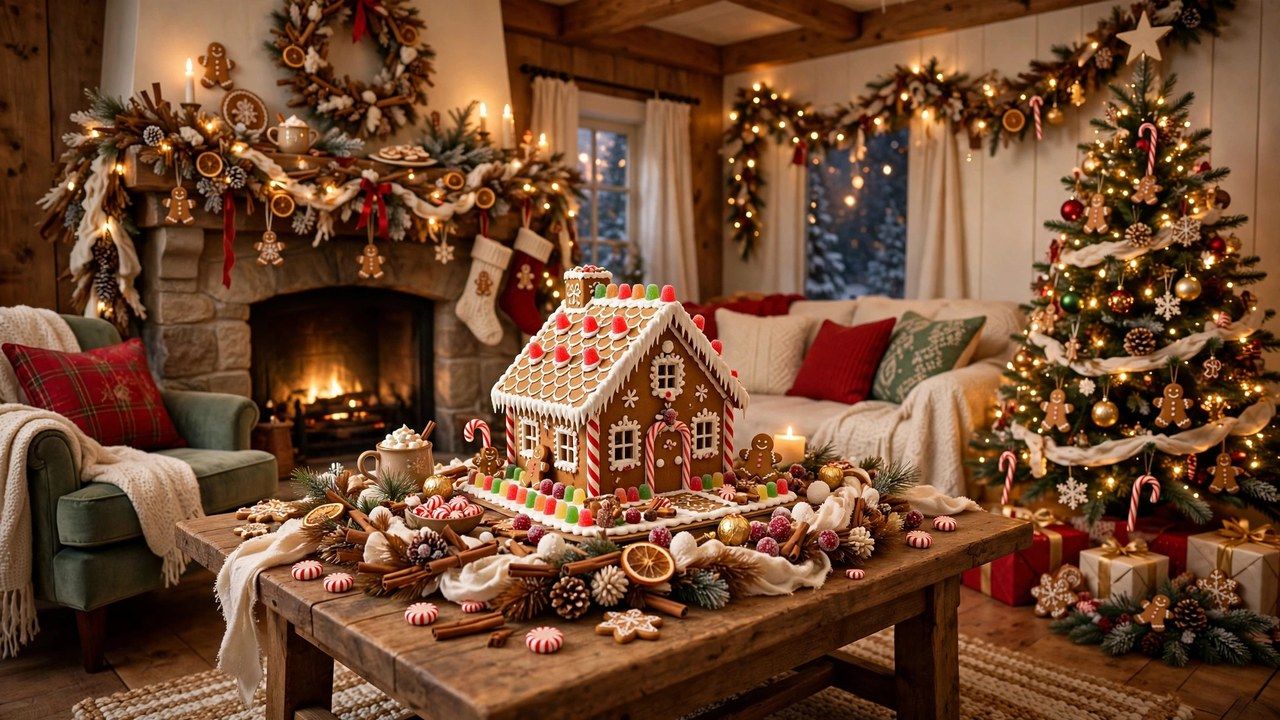
Building a gingerbread house is one of December's great promises, and one of its great ambushes: the box makes it look like an hour of fun, and the reality can be a collapsing wall, icing in the wrong places, and a family negotiating with gravity. The right gingerbread house kit removes most of that risk. Kits now come in three genuinely different formats, pre-built houses you simply decorate, classic kits with pre-baked panels you assemble, and giant kits for ambitious builders, and choosing the right format matters more than choosing the right brand.
This guide compares the formats honestly, walks through what should be in the box, and gives you the assembly and timing tactics that separate a house that stands until New Year from a delicious ruin. It pairs with our gingerbread decor theme guide if the house is part of a bigger look, and our cookie recipes if you graduate to fully homemade.
The Three Kit Formats, Compared
| Format | How it works | Best for | Trade off |
|---|---|---|---|
| Pre-built | House arrives assembled; you decorate only | Young children, parties, limited time, decorating contests | No building experience; house design is fixed |
| Classic kit | Pre-baked panels, icing and candy included; you assemble and decorate | Most families; the traditional full experience | Needs assembly patience and drying time between stages |
| Giant and village kits | Larger structures or multiple small houses | Confident builders, centerpieces, sibling projects | More time, more icing management, more storage space while on display |
| Mini house kits | Small individual houses, often mug sized or village pieces | Each child gets their own; gifts and place settings | Fiddly for very small hands despite the cute size |
Notice what no format does: bake. Even classic kits arrive with panels baked, which is the great time and skill saver, since gingerbread for building must be baked hard, flat and true in a way home ovens make surprisingly tricky. From-scratch baking is a different, rewarding project, covered later in this guide.
What Should Be in the Box: A Buyer's Checklist
- Panels: Complete, unbroken, and in classic kits with some shaping or scored guides. Check the box for breakage before the day you plan to build; a cracked roof panel discovered mid build is a December mood in miniature.
- Icing: Either a premixed bag or a mix, in enough quantity. Icing is the mortar and the decoration, and running short is the most common kit complaint; see the icing section below.
- Candy and decoration: A variety with enough of the headline items, not a photograph's worth and a bag of filler. Mini kits and village kits multiply this check by the number of houses.
- Base or board: A sturdy board to build and move the house on. If the kit lacks one, a foil covered tray or board from home does the job, decided in advance.
- Instructions with staging: Good kits tell you to assemble, wait, then decorate. That wait is structural, not a suggestion.
Icing: The Mortar That Decides Everything
Almost every gingerbread failure is an icing management failure. Royal icing, the stiff, fast drying kind, is the correct mortar; soft buttercream styles slump. In kits, icing usually arrives as a powder to mix or a ready bag. Mix it stiffer than feels natural for assembly, you can thin a separate portion later for decorative piping. Apply it generously at joints, hold panels for the count the instructions suggest, and use household engineering while it sets: cans or mugs propping walls, a box corner supporting a roof angle.
Above all, stage the work. Assemble the walls, let them set. Add the roof, let it set properly, ideally for hours rather than minutes. Then decorate, heavy candy last, because every gumdrop is weight a fresh joint does not need. This one discipline converts most would be collapses into houses, and it is the reason experienced builders start a day earlier than the party.
Choosing by Builder: Age and Ambition Guide
For children under about six, pre-built is the honest recommendation: all decorating joy, no structural heartbreak, and adults can pre-build a classic kit the night before to the same effect. For primary age builders, classic kits with an adult as site foreman deliver the real achievement, walls they raised themselves, with mini kits as the peace treaty when every child needs their own roof. Our kids' Christmas crafts guide places house building among the season's other projects.
For teens, adult beginners and competitive households, giant kits and multi house village kits offer genuine scope: landscaping, lighting from inside with a battery tealight, and the display potential our village display guide develops. Buy one size up in ambition only if you also have the display space; a giant house needs a board, a table corner and a safe route from kitchen to display that does not involve stairs and a dog.
Timing: When to Buy, Build and Display
Buy early in the season for choice, since popular formats sell through, but build on a schedule set by how long the house must live. A house built for display all season goes up early, built in stages over a weekend, and kept away from heat, steam and direct sun. A house built as a party activity or for eating should be built close to its moment: the experience is the point, and freshness matters more than longevity.
Edible houses are food, with a food's lifespan. Display life of a few weeks in a cool, dry room is realistic; beyond that the house is decor, not dessert, and households do well to be clear with children about which it is from the start. Photograph every house the day it is finished. The photograph reliably survives; the roof, eventually, does not.
From Scratch Builders: A Note and a Tool Pick
Some builders want the full craft: bake structural gingerbread from a template, cut panels true, and assemble a house that is entirely their own. This guide respects that ambition and points scratch builders to our cookie recipes for dough guidance and timing. In that spirit, the shop section below does not pretend to list a kit. It contains one honest tool pick for scratch builders: a cookie and baking cutter tool, useful for cutting clean shapes, figures and decorative elements for a homemade build and for the gingerbread cookies that surround it. It is a from-scratch builder's tool, labelled as exactly that, and kit buyers should use the format comparison above instead.
Troubleshooting the Classic Disasters
- Walls sliding: Icing too thin or joints loaded too soon. Re-mix stiffer, re-prop, and extend the setting time, not the pressure.
- Roof collapse: The roof went on before the walls truly set, or candy weight arrived early. Rebuild with a longer wall cure and decorate the roof panels flat on the table before final placement, a legitimate builder's technique.
- Cracked panel: Icing is also glue and grout. A crack repaired with a generous icing seam on the inside usually disappears under decoration on the outside.
- Running out of icing: A simple royal icing can be mixed at home from powdered sugar and egg white or meringue powder; keep the emergency ingredients in the house before build day.
Turning a Kit Build Into an Event
The kits that get remembered are rarely the most elaborate; they are the ones wrapped in a ritual. Successful households give the build a fixed place in the season: the first Sunday of December, the afternoon the tree goes up, or a standing date with the same friends every year. Add a few deliberate touches: aprons or matching shirts for the builders, a hot drink station within reach but safely away from the construction zone, Christmas music on, and a camera assigned to someone whose hands are not covered in royal icing.
For groups, set up a small decorating bar of extra candies beyond the kit's supply, since personal style lives in the extras, and let each builder claim a surface, one does the roof, one the garden, one the path. End with an official photograph and, for returning builders, a gentle annual prize or two, best roof, boldest candy use, most improved structure. The kit provides the house; the ritual is what turns a boxed product into a family institution.
Conclusion
Choose the format for the builders, not the photograph: pre-built for the youngest and for parties, classic for the true family build, giant and village kits for ambition with time to match. Check the box contents before build day, mix icing stiff, stage the assembly with real drying time, and decorate heavy last. Do those things and your 2026 house will stand, photograph beautifully, and anchor a display, especially inside the wider gingerbread theme. Scratch builders, your honestly labelled tool pick is below.