Diwali is a festival of light, warmth, and togetherness, and a few simple safety habits make sure it stays that way. Every year, hospitals see burns, eye injuries, and breathing problems that could have been avoided with a little care. Diwali falls on Sunday, 8 November 2026, with celebrations running from Dhanteras on Friday, 6 November to Bhai Dooj on Tuesday, 10 November, so the busiest nights for fireworks and diyas are close at hand. This guide covers the safety steps that matter most, for fireworks, diyas, children, pets, and the home itself.
Safety does not mean a dull Diwali. It means enjoying the lights, the food, and the fireworks with the confidence that comes from preparation. Read through these tips with your family before the festival, and make the safety plan part of the celebration itself.
Firework Safety: The Rules That Matter Most
Buy fireworks only from licensed sellers, and check that the packaging is intact and the fireworks are not damaged or damp. Avoid fireworks sold loose or without clear labelling, and never buy or make homemade fireworks. Keep fireworks in a closed box, away from any flame, until the moment of use, and light them one at a time.
Always light fireworks outdoors, in an open space away from houses, dry grass, parked cars, and overhead wires. An adult should light every firework, using a long sparkler or an incense stick held at arm's length, and should step back immediately to a safe distance. Never lean over a firework, never light one while holding it, and never relight a firework that failed to go off. Wait at least fifteen minutes, then douse it with water.
Wear sensible clothing while lighting fireworks: close-fitting cotton clothes, closed shoes, and tied-back hair. Avoid loose scarves, flowing sleeves, and synthetic fabrics, which catch fire easily. Keep a bucket of water and a bucket of sand nearby at all times, and make sure everyone knows where they are. After the fireworks, collect the spent casings and douse them with water before disposing of them.
Keeping Children Safe
Children should never light fireworks alone, and younger children should not handle fireworks at all. Sparklers, which many people think of as safe, burn at extremely high temperatures and cause a large share of children's injuries each year. If children use sparklers, an adult should supervise closely, children should hold them at arm's length, wear gloves if possible, and drop them into a bucket of water when finished.
Teach children the basic rules before the evening begins: stay behind the line an adult marks on the ground, never pick up a firework from the ground, never throw fireworks, and tell an adult immediately if something goes wrong. Give children safe alternatives to enjoy, such as LED diyas, glow sticks, and paper lanterns, so they feel part of the celebration without being near the fireworks.
Dress children in cotton clothes that fit well, and tie back long hair. Keep babies and toddlers indoors during the loudest fireworks, in a room with the windows closed and some music playing to soften the noise. Check on them often, and keep their routine as normal as possible so the festival feels exciting rather than frightening.
Diya and Candle Safety at Home
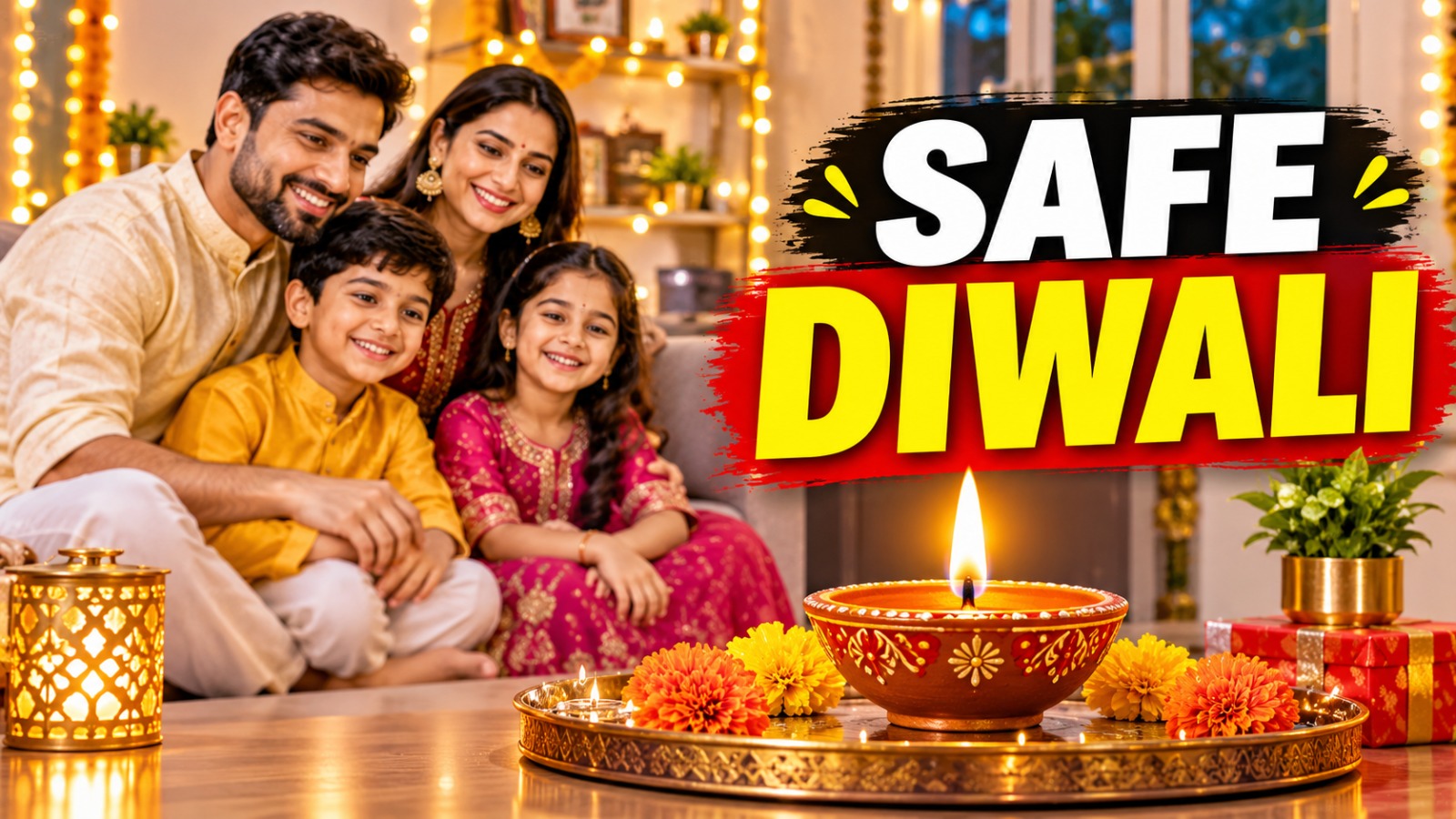
Diyas are the heart of Diwali, and they need the same respect as any open flame. Place diyas on stable, heat-proof surfaces, away from curtains, paper decorations, tablecloths, and anything else that can catch fire. Keep them out of the reach of small children and pets, and never leave a lit diya unattended in a room.
Use a limited number of diyas indoors, and put the most beautiful arrangements in places where you can enjoy them while staying nearby, such as the puja area and the entrance. In bedrooms and near beds, use LED diyas or battery candles instead of real flames, and turn off all diyas before going to sleep. Our guide to Diwali decoration ideas at home has safe ways to arrange lights around the house.
Keep matches and lighters out of children's reach, and store extra oil and candles away from heat. If a diya tips over, do not try to catch it; step back, let it fall, and smother any flame with a damp cloth or sand. Water can spread burning oil, so keep a damp cloth or sand nearby rather than relying on water alone for an oil fire.
Air Quality, Health and First Aid
Firework smoke can trouble anyone with asthma, allergies, or breathing problems. Keep windows closed during the heaviest fireworks, and consider a mask if you need to be outdoors. People with respiratory conditions should keep their inhalers and medicines close, and limit their time near smoke. A greener celebration, with fewer fireworks and more lights, is kinder to everyone's lungs, as our eco-friendly Diwali guide for 2026 explains.
Keep a first aid kit ready before the festival: clean water, burn cream or aloe gel, sterile gauze, bandages, and the phone number of the nearest hospital. For a minor burn, cool the area under running water for at least ten minutes, cover it loosely with a clean cloth, and do not apply toothpaste, oil, or ice directly. For an eye injury, do not rub the eye; rinse it gently with clean water and seek medical help immediately.
If a burn is large, deep, or on the face, hands, or a child's skin, go to a hospital without delay. Save the number of your nearest hospital and pharmacy in your phone before the festival, and make sure at least one adult in the house knows basic first aid.
Helpful Finds for a Safer Diwali
A few safe alternatives make the festival bright without the risks of open flames. - battery-operated candles give the warm glow of diyas with no flame at all, - solar fairy lights brighten balconies and gardens without mains wiring, and - LED strip lights add festive colour indoors with very little heat.
- Floral Battery Operated Candle Set Remote Timer Perfect
- Solar Fairy Light Strip Outdoor Garden Decoration Spherical
- Led Strip Lights Room
- 4/8/12pcs Clear Plastic Storage Bins, Pantry Organizers
As an affiliate, EventBuzz may earn a commission on qualifying purchases at no extra cost to you.
Conclusion
A safe Diwali is a happy Diwali. Buy licensed fireworks, light them outdoors with an adult present, keep children and pets at a safe distance, place diyas away from anything flammable, check your lights before use, and keep water and a first aid kit within reach. Share these tips with your family and neighbours before the festival, and enjoy the lights knowing you have done the simple things that keep everyone safe. Happy Diwali, and may the festival bring light to every home.
For the festival dates and timings, see the Diwali 2026 date and Lakshmi puja calendar, and for school celebrations, our Diwali celebration in school guide has safe, cracker-free ideas for children.