For us, Diwali is a festival of light and joy. For our pets, it is often the most frightening time of the year. Dogs hear sounds far more sharply than we do, cats are startled by sudden flashes and bangs, and birds and small animals feel the stress too. Diwali falls on Sunday, 8 November 2026, with celebrations running from Dhanteras on Friday, 6 November to Bhai Dooj on Tuesday, 10 November, and the loudest nights are the main Diwali night and the days around it. A little preparation makes the festival safe and calm for every member of the family, including the four-legged ones.
This guide covers everything pet owners need for Diwali: how to prepare in the days before, how to set up a safe room, what to do during the fireworks, which foods and decorations are dangerous, and when to ask a vet for help. It also covers street animals, because a kind Diwali reaches beyond our own homes.
Prepare in the Days Before Diwali
Start preparing a week before the festival. Make sure your pet's identification is up to date: a collar with a tag carrying your phone number, and a microchip with current contact details if your pet has one. Frightened pets that slip out are far more likely to come home if they can be identified quickly.
Visit the vet if your pet has shown severe anxiety during past festivals. A vet can advise on calming supplements, pheromone diffusers, or, in serious cases, prescribed medication for the worst nights. Do not give your pet any sedative or calming product without veterinary advice, and never give human medicines to animals.
Begin gentle sound desensitisation if you have time. Playing recordings of firework sounds at a very low volume, while your pet eats or plays, and increasing the volume slowly over several days, can reduce fear. This works best when started weeks ahead, but even a few short sessions help. If your pet shows distress, stop and try again later at a lower volume.
Create a Safe Room
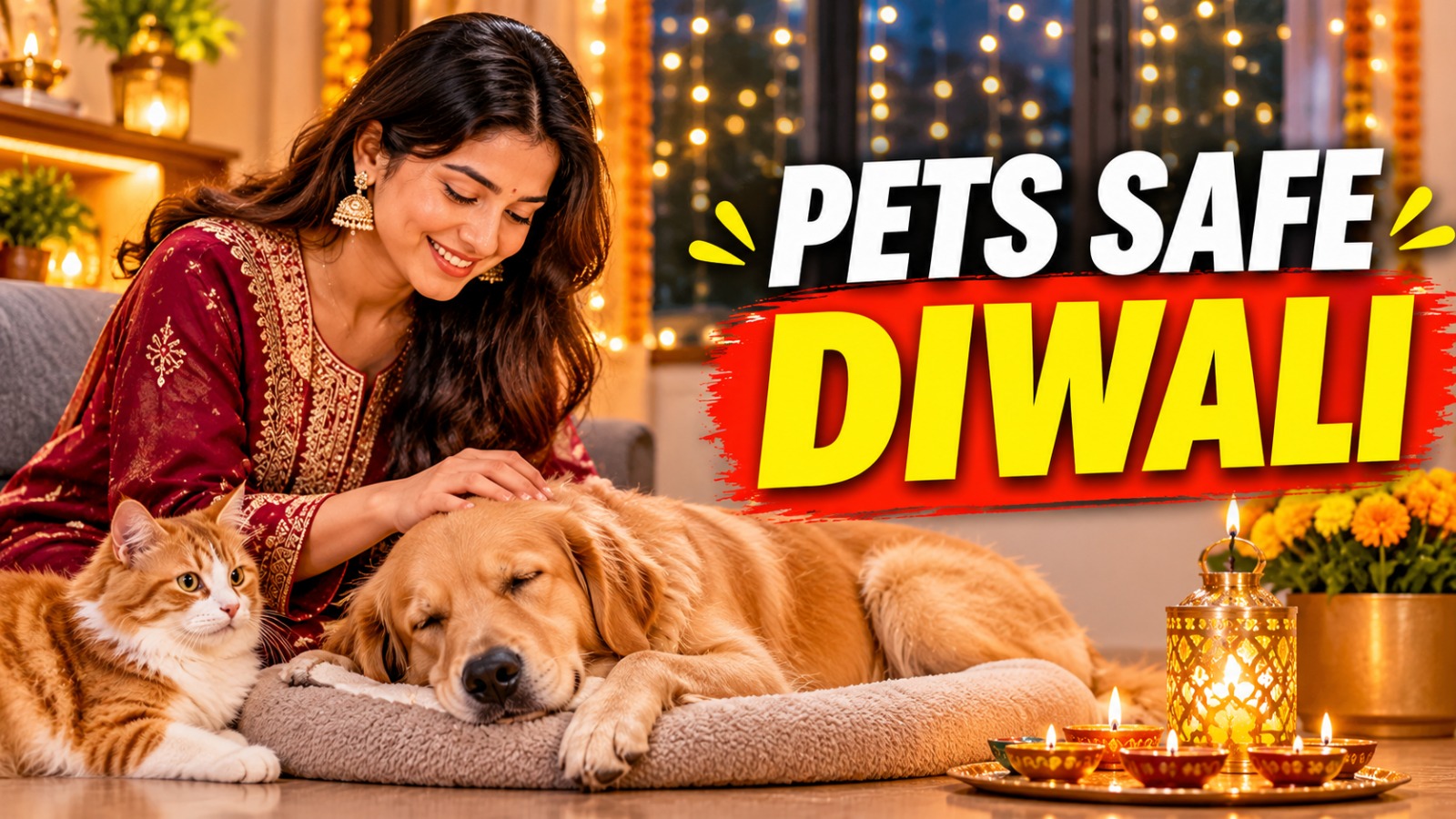
A safe room is the single most helpful thing you can do for your pet. Choose an interior room away from the street, ideally one your pet already likes. Set it up before the fireworks begin, with your pet's bed or crate, a familiar blanket, fresh water, a few favourite toys, and something that smells like you, such as a worn shirt.
Close the windows and curtains to muffle sound and block flashes of light. Play soft music or turn on the television at a normal volume, which helps mask the noise outside. Keep the room's lighting soft and warm, and avoid sudden changes in light. If your pet uses a crate, leave the door open so they can choose to go in or come out, and never force a frightened animal into a confined space.
Stay with your pet if you can, especially during the loudest hours. Your calm presence is the strongest reassurance there is. Sit quietly, speak in a low, steady voice, and let your pet come to you rather than picking them up or holding them tightly, which can increase their fear. If you must go out, leave the safe room set up and ask a family member to check on your pet.
During the Fireworks: What to Do and Avoid
On the main Diwali night, keep all pets indoors well before the fireworks begin, and do not take dogs for walks during the display hours. Feed your pet earlier in the evening, and take dogs out for their last walk in the late afternoon, before the noise starts. Keep doors and windows closed, and check that there are no gaps a frightened animal could squeeze through.
Do not punish a frightened pet for trembling, hiding, barking, or having an accident. Fear is not misbehaviour, and scolding only adds to the stress. Do not try to force your pet to face the noise or to comfort them with frantic cuddling either; a calm, matter-of-fact presence works best. Offer a long-lasting chew or a puzzle feeder as a distraction, which gives an anxious dog something to focus on.
After the fireworks end, keep your pet indoors for a while longer, since stray crackers and late displays are common. Check the garden or balcony for spent firework debris before letting your pet out, because burnt casings and chemicals can be harmful if chewed or eaten.
Foods and Decorations That Can Harm Pets
Diwali sweets are a serious risk for pets. Chocolate, xylitol, raisins, grapes, macadamia nuts, and large amounts of sugar or ghee can all make dogs and cats ill, and some are genuinely dangerous. Keep sweet boxes, gift hampers, and plates of food well out of reach, and ask guests, especially children, not to feed the pets from the table.
Diyas and candles are another hazard. A wagging tail or a curious cat can knock over a diya in a second, causing burns or a fire. Place diyas on high, stable surfaces away from pets, and use LED diyas or battery candles in rooms where pets roam. Keep fairy light wires out of reach, since chewing a live wire can injure a pet badly. For general home safety during the festival, see our Diwali safety tips for 2026.
Be careful with rangoli powders and flower petals too. Some coloured powders contain chemicals that irritate a pet's skin or stomach, so keep pets away from fresh rangoli, and clean up spills promptly. Marigold flowers are generally safe, but it is still best not to let pets eat large quantities of any decoration.
Helpful Finds for a Calm Pet Diwali
A cosy, calm space helps pets settle during the festival. - a soft fleece throw blanket makes a safe room feel familiar and warm, - a dimmable bedside lamp keeps the room softly lit without harsh light, and - soy wax candles in a safe spot add a gentle festive scent away from pets.
- Throw Blanket Fleece
- Elegant Control Bedside Lamp - Adjustable Led Light With Rechargeable Battery, Dimmable, Usb Charging, Indoor
- Candles Made Soy Wax in Scents Like Lavender Cedar
- Set of 2 Large 6.82-Gallon Collapsible Storage Containers with Handles, Sturdy Plastic Organizer
As an affiliate, EventBuzz may earn a commission on qualifying purchases at no extra cost to you.
Conclusion
Diwali with pets is about planning, patience, and presence. Prepare the identification and the safe room ahead of time, keep your pets indoors during the fireworks, stay calmly with them through the loudest hours, and keep sweets, diyas, and wires out of reach. A few small steps turn the most frightening week of the year into a manageable one, and your pets will thank you with their trust. Light the diyas, enjoy the festival, and make sure every member of your family, two-legged and four-legged, has a happy Diwali.
For more on keeping the whole household safe, read our Diwali safety tips for 2026, and for a gentler celebration overall, our eco-friendly Diwali guide explains how fewer fireworks help pets, children, and the air we all breathe.