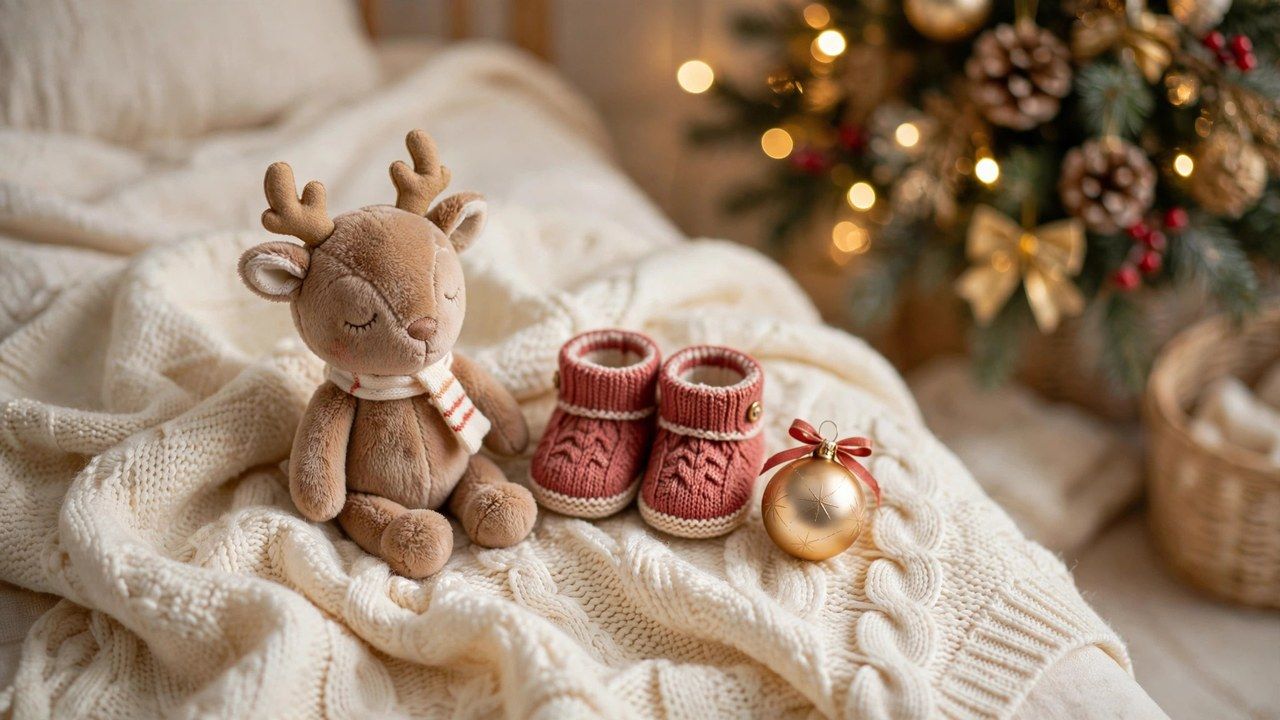
A baby's first Christmas is a strange and lovely shopping problem: the guest of honor will remember none of it, sleep through half of it, and be most interested in the wrapping paper. Yet baby's first christmas gifts matter enormously — to the parents, to the grandparents, and to the family story this baby will hear for decades. The secret is to shop for three audiences at once: the baby now (gentle, safe, sensory), the parents this winter (practical help and keepsakes), and the child years from now (the ornament, the photo, the blanket that survives). This guide separates those jobs so every gift you give does at least one of them well.
If you are also buying for older siblings or cousins, our Christmas gifts for kids by age covers toddlers through tweens — this guide stays strictly with the under-one crowd, where safety rules and gift logic are entirely different.
The Two Kinds of First-Christmas Gifts (Buy Both, on Purpose)
Every successful first-Christmas gift is either a keepsake — an ornament, a handprint kit, a first-stocking, a dated blanket — or a first toy — something soft, washable and interesting to a developing baby. Trouble starts when a gift tries to be neither: decorative items a baby cannot touch, or toys a baby will outgrow before the tree comes down with nothing lasting about them. Decide which job each gift is doing before you buy it, and aim for at least one true keepsake per baby. Keepsakes are the gifts families photograph, store carefully, and bring out every December for twenty years.
Keepsakes That Earn Their Storage Space
The strongest keepsakes share three traits: they carry the year, they carry the baby's identity (name, photo, handprint or footprint), and they are sturdy enough to survive being handled annually. A dated first-Christmas ornament is the classic for a reason — it joins the tree every year and grows more meaningful as the child does. Handprint and footprint kits turn a ten-minute activity into a permanent record of just how small those hands were. A personalized first stocking solves a real family problem too: the baby needs one hanging with everyone else's, and our stocking ideas guide shows how families coordinate them.
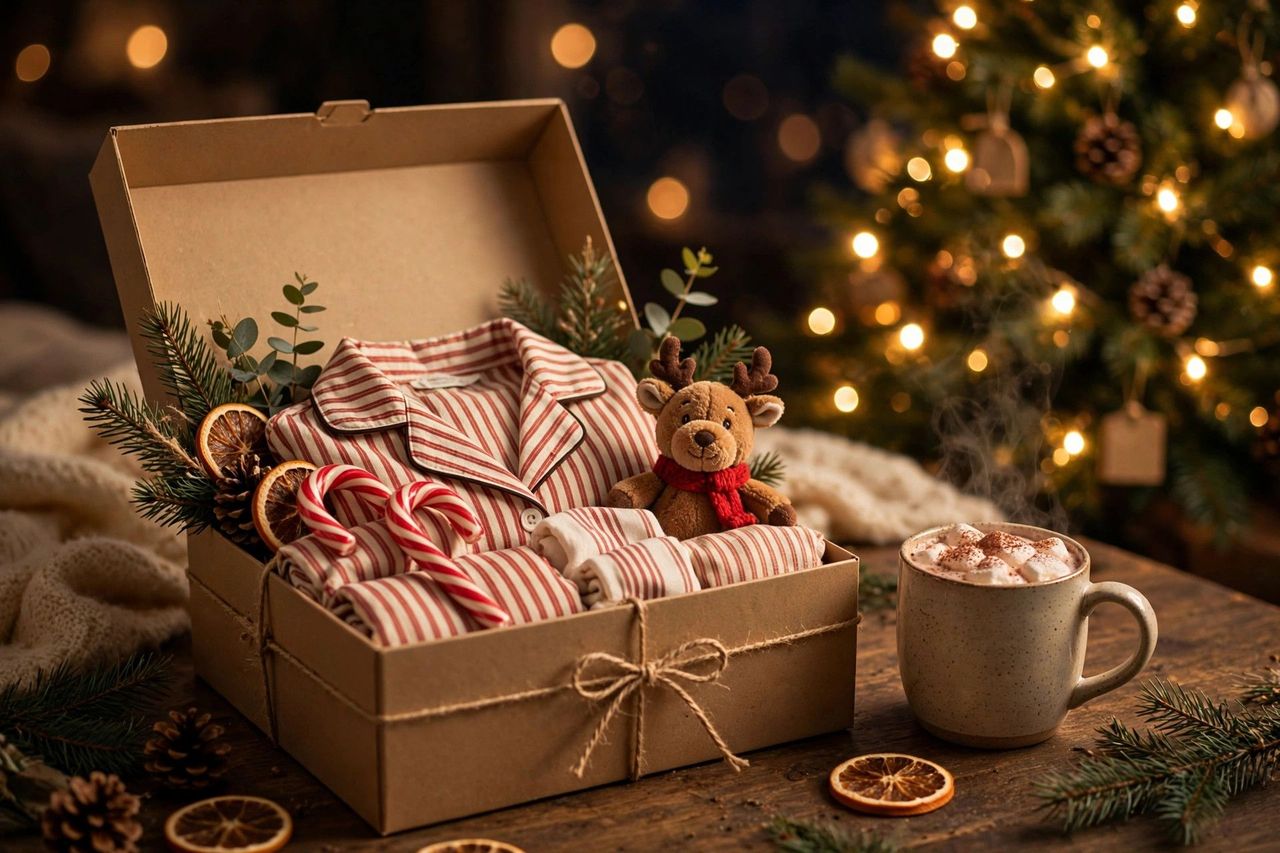
Photo-based keepsakes deserve a special note: a framed print of the baby's first meeting with Santa, or a small album of the first December, is really a gift to the parents — and often the one they treasure most. If you are the grandparent, aunt or uncle, offering to take and print the photo is itself the gift. Families building a first Christmas Eve box tradition often start it this year, with the baby's pajamas and a board book as the founding contents.
Gentle First Toys: What Babies Under One Actually Use
A newborn's world is contrast, sound and texture, in that order. The toys that earn their place in the first year are soft plush companions with stitched (not button) features, high-contrast black-and-white or bold-pattern play mats and cards for the youngest weeks, soft rattles and crinkle toys small hands can grip, and sturdy board books that survive being chewed, because they will be. Teething-appropriate toys matter from around the middle of the first year, when everything goes straight to the mouth.
What babies do not need: anything with small detachable parts, anything hard and heavy, anything electronic that performs instead of responding, and anything sized for a three-year-old with optimistic labeling. When in doubt, choose the toy that does less but is softer, washable and safe to mouth. Parents will quietly thank you every laundry day.
Safety Criteria: The Non-Negotiable Checklist
| Check | Why it matters | What to look for |
|---|---|---|
| No small parts | Everything goes to the mouth in year one | Stitched eyes and features; no buttons, beads or detachable pieces |
| Washable | Baby items need constant washing | Machine-washable fabrics or wipe-clean surfaces, stated on the label |
| Age grading | Manufacturer testing is age-specific | A 0+ or 0–12 month rating; ignore anything graded 3+ for a baby |
| Soft and light | Babies wave toys into their own faces | Plush or soft fabric construction with no hard edges |
| Simple sounds | Loud electronics startle and overstimulate | Gentle rattle, crinkle or chime rather than loud songs and lights |
When a product does not state its age grading or washing instructions clearly, treat that silence as your answer and choose a different one. Reputable baby brands put this information where you can find it.
Gifts by Who Is Giving
- From grandparents: The keepsake ornament, the handprint kit, or the savings gesture toward the baby's future — plus one soft toy so there is something to hold on the day.
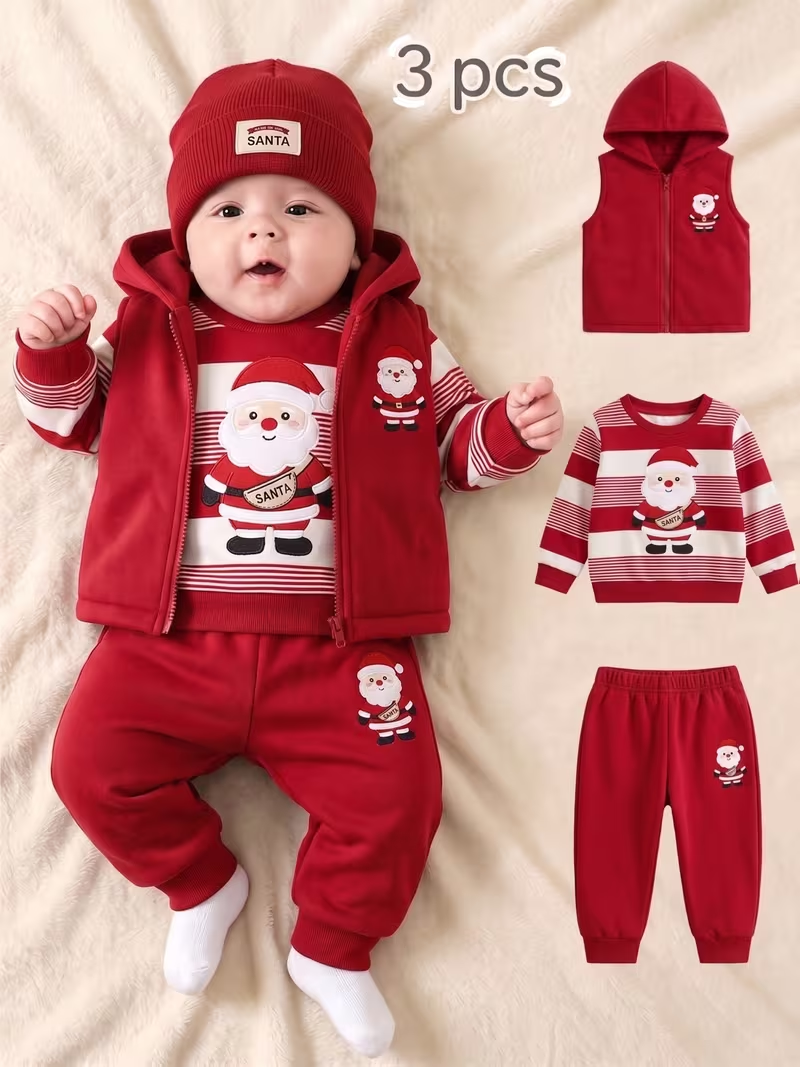
- From aunts and uncles: The fun-but-safe slot: a beautiful board book set, a plush with real character, or the baby's first festive outfit for photos (sized generously — babies grow fast).
- From friends of the parents: Practical kindness wins: diapers in the next size up, a meal delivery, or a small keepsake plus something for the parents themselves. New parents are running on very little sleep; gifts that help them are gifts to the baby too.
- From siblings: A small soft toy chosen by the older child builds the bond and the story. Let them present it themselves on Christmas morning.
What to Skip in the First Year
Skip shoes the baby cannot walk in (cute for one photo, then outgrown), large toy hauls that overwhelm tired parents, scented products and lotions not made for newborn skin, and anything noisy enough to become the household villain by Boxing Day. Also skip duplicates of the big items — most families already have the bouncer, the mat and the mountain of newborn clothes. If you are unsure what the household actually needs, ask the parents directly; for a first Christmas, a registry or a wishlist is a kindness, not a spoiler. Handmade gifts follow the same safety rules, and our DIY Christmas gifts guide includes gentle projects suited to new babies.
Honest Pros and Cons
Keepsakes — pros: last for decades, carry the date and the story, photograph beautifully. Cons: the baby gets nothing to play with today, so pair one with something soft. First toys — pros: used immediately, support early development, delight the parents watching. Cons: outgrown within months, which is exactly why washable quality matters more than quantity. Practical gifts — pros: genuinely helpful in an exhausting season. Cons: less magical to unwrap, so add one small keepsake touch — even a dated tag on the parcel.
Making Christmas Day Itself Work With a Baby
The gift is only half the assignment; the day itself needs designing around a very small person. Keep the baby's routine as the schedule's skeleton — feeds, naps and bedtime do not move for Christmas, and a gift-opening plan that respects them produces a calm baby and usable photos. Open the baby's gifts early in the day, when they are at their brightest, and expect the session to last about four minutes of genuine interest: that is normal, and it is enough. Dress the baby in the festive outfit for a short, cheerful photo window rather than all day — comfort outlasts costume in every family's album.
Designate one adult as the baby's person during the busy middle of the day, when kitchens get loud and visitors multiply. A quiet room, the familiar blanket from the gift pile, and a pram walk after lunch reset almost any overwhelmed first-Christmas baby. Finally, start the memory-keeping on the day itself: save one piece of the wrapping, write the date and one sentence on the ornament's box, and put the handprint kit to use while grandparents are still in the house to witness the tiny evidence. These five-minute rituals are what turn this year's gifts into next decade's family traditions.
A Note for Gift-Givers Far Away
If you are celebrating this first Christmas from another city, your gift carries an extra job: presence. The strongest long-distance move is the keepsake sent early enough to hang on the tree for the whole season, paired with a video call scheduled — not vaguely promised — during the family's own celebration window. Ask the parents what would help most before defaulting to a parcel: sometimes the answer is a contribution toward the big item they are saving for, given with a small keepsake so the baby still has your name under the tree. Distance done thoughtfully looks exactly like closeness, only with better postage planning.
Your First-Christmas Shopping Order
Buy in this order and the season stays calm: the keepsake first, because dated and personalized pieces have the longest lead times and sell out earliest; the soft toy second, while the best age-graded options are still in stock; any festive outfit third, sized generously; and the practical kindnesses for the parents last, because those can be arranged in any week of December. Keep every receipt in one envelope — baby gifts are the most exchanged category in Christmas, for the kindest reasons: duplicates, fast growth and changing needs. A calm order of buying turns the most emotional shopping on your list into the easiest.
Conclusion
Shop for the story and the senses: one keepsake with the year on it, one soft and safe thing for small hands, and, if you can, one kindness for the parents. That trio covers the baby now, the family this winter, and the child who will one day ask what their first Christmas was like. For the wider family list, our main Christmas gift ideas guide has everyone else covered.