Vintage christmas decor is having a genuine moment, and the 2026 trend reports noticed: handmade, thrifted and inherited pieces are in, matched plastic sets are out. But nostalgia is a powerful spice. A room of collected treasures feels like childhood remembered; a room of random old things feels like an estate sale. This guide is about staying on the right side of that line, with the sourcing, grouping and safety judgment vintage pieces deserve. One ready-made piece with authentic vintage character waits in the vintage picks section below.
Tasteful is the operating word. Vintage rooms work when they are edited like modern rooms, with a palette, breathing space and one era leading, and when the pieces look loved rather than merely old. Here is how collectors build them.
Choose a Lead Era Before You Buy Anything
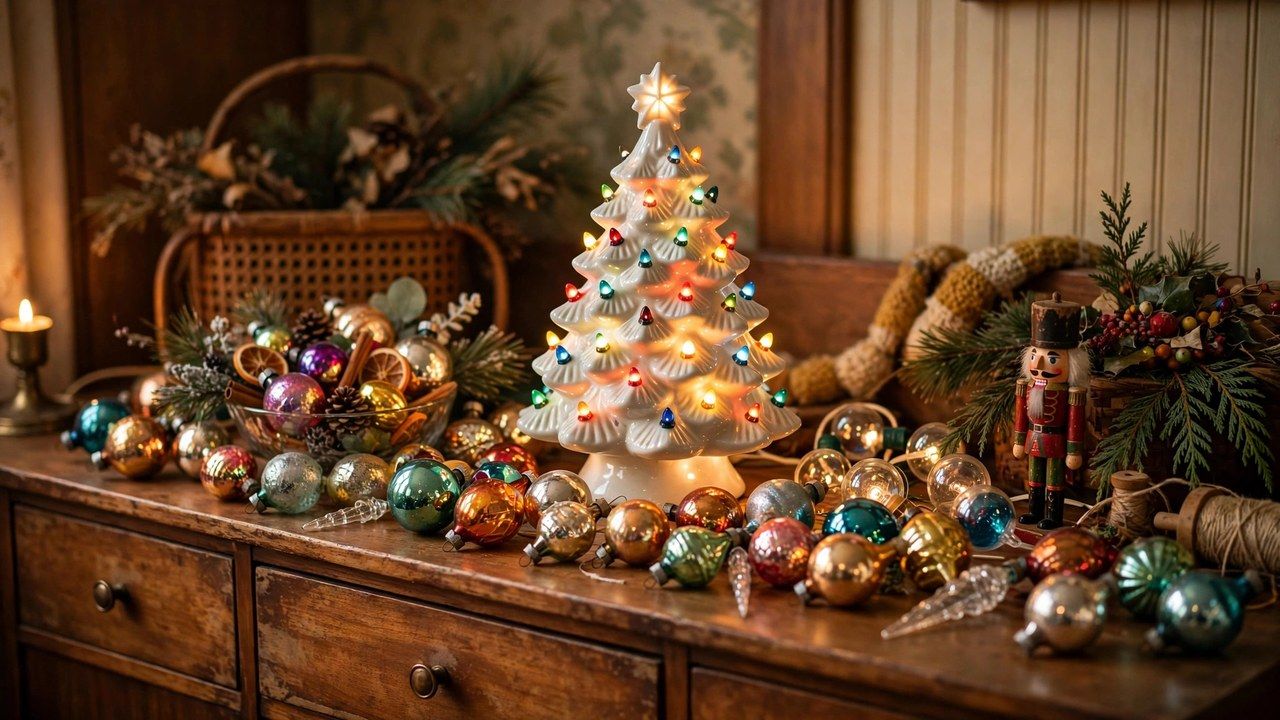
“Vintage” spans a century of very different Christmases. The 1940s and 50s give you shiny glass ball ornaments, ceramic trees with tiny peg lights, tinsel and paper garlands. The 1960s and 70s add aluminum trees, color wheels, flocked pieces and bold saturated colors. The 1980s and 90s bring country crafts, wooden figures and the first resin villages. A room led by one era, with guests from one other, reads curated; a room with all four at full strength reads confused.
Let your anchor pieces choose the era. If grandmother’s ceramic tree survives, you are decorating around the 50s and 60s whether you planned to or not, and that is a gift: inherited anchors carry the stories that make vintage decor more than a style. Build outward from the truest thing you own.
Where Vintage Treasures Actually Come From
The honest sources, in order of charm per dollar: your own family’s boxes first, then estate sales and thrift stores, then antique shops and online marketplaces for specific gaps. Estate sales are the vintage Christmas mother lode, because holiday collections were kept whole and sold whole. Shop them earlier in the year when you can; December prices know what month it is.
Buy for condition and completeness over rarity. A common ornament in beautiful condition displays better than a rare one with its paint flaking onto your hands, and a ceramic tree with its base and pegs intact is worth three charming fragments. Whatever you bring home, clean it gently, with a soft dry cloth for painted glass, and photograph collections before you pack them so next year’s setup has a map.
Safety First: Old Wiring, Old Paint, Old Flames
Vintage pieces predate modern safety standards, and three rules keep nostalgia safe. First, electrical items: have old light strings, color wheels and animated pieces inspected, or display them unplugged, because aged wiring is a genuine fire risk; modern LED strings give the glow without the hazard. Second, paint: very old painted items can contain lead paint, so keep flaking pieces decorative, out of children’s hands and away from food surfaces, and wash hands after handling fragile old paint.
Third, flame and heat: keep vintage paper, celluloid and dried materials far from candles and bulbs, and never leave a tree of mixed old materials lit and unattended. None of this should scare anyone off vintage decorating; it simply means the oldest treasures get the shelf and the spotlight, while modern reproductions do the hot, bright and handled work. Our storage and organization guide covers the padded, labeled packing these pieces need in January.
Styling Rule One: Group by Color, Not by Object
The trick that separates treasure rooms from clutter is grouping. Collect your vintage ornaments into color families, all the faded reds together, the aqua and silver together, the golds together, and display each family as a collection: in a bowl, on a small tree, along a shelf. A bowl of twenty mixed ornaments is a jumble; a bowl of twenty silver ones is a statement.
The same logic styles the tree. A vintage-led tree wears one era’s palette with modern lights and a few new ornaments filling gaps, and it can absolutely hold the family’s handmade pieces too, because mid-century trees did. Finish with tinsel placed strand by strand if you love the look, knowing it is a commitment, or skip it and let the glass do the shining. Our tree decorating guide covers the underlying balance.
The Icon Pieces and How to Use Them Well
| Icon | Era | Best use | Watch out for |
|---|---|---|---|
| Ceramic tree | 1950s to 70s | Sideboard or entry table, solo | Missing pegs and old cords |
| Glass ball ornaments | 1940s to 60s | Color-grouped bowls and the tree | Flaking paint, fragile caps |
| Aluminum tree | 1960s | One statement corner, unlit or LED lit | Never use plug-in lights on it |
| Paper garlands and honeycomb | 1950s onward | Mantels, doorways, party rooms | Keep far from flame and heat |
| Resin and ceramic villages | 1980s to 90s | One shelf or table, edited hard | Expansion: villages grow yearly |
| Bottle-brush trees | 1950s onward | Grouped in odd numbers with figures | Fading and shedding with age |
Notice the pattern: every icon looks best slightly alone, given a surface and a spotlight, rather than crowded into one nostalgic pile. Tasteful vintage is mostly spacing.
Mixing Vintage With New Without Breaking the Spell
No working vintage room is one hundred percent old, and it should not try to be. Modern pieces do the labor: LED lights, sturdy new garland as the base layer, fresh greenery, new textiles in period-friendly patterns. Vintage pieces do the talking: the ornaments, the ceramic tree, the figures. Keep new items quiet in color and matte in finish and they will support the treasures invisibly.
The pillow covers in our picks below are a model of the approach: a vintage snow scene print on a new, washable, everyday cover. You get the nostalgic image, red and storybook, with none of the fragility of a true antique textile, and the sofa gets its seasonal layer in minutes. Reproductions used this way, honestly and functionally, are how real homes sustain a vintage look through kids, pets and December itself. For the full sofa method, see our living room decor guide.
Honest Pros and Cons of Decorating With Treasures
Pros: no other style carries memory like this one; the sourcing is sustainable and often inexpensive; and the room is guaranteed to start conversations, because every piece has a provenance. Cons: true vintage needs gentler handling, smarter storage and the safety checks above; sets are incomplete by nature; and the hunt takes time that a one-trip theme purchase does not. Collectors consider that time the hobby itself, which is the honest dividing line: if the hunt sounds like work, buy a few reproduction icons instead and enjoy the look without the chase.
Conclusion
Vintage Christmas decor done tastefully is an edited collection, not an accumulation: one lead era, pieces grouped by color, old treasures given space and sensible safety respect, and new workhorses quietly holding the lights. Start with the truest thing your family owns and build outward, and the room will feel like memory, not merchandise.