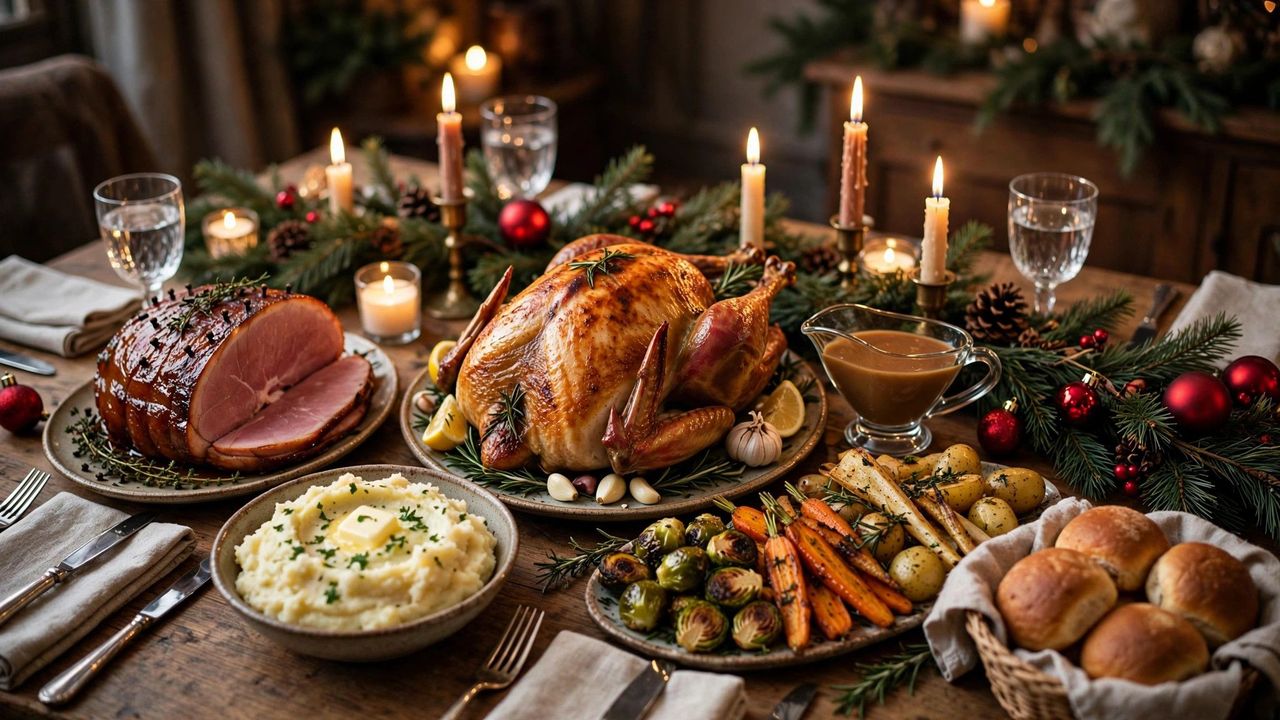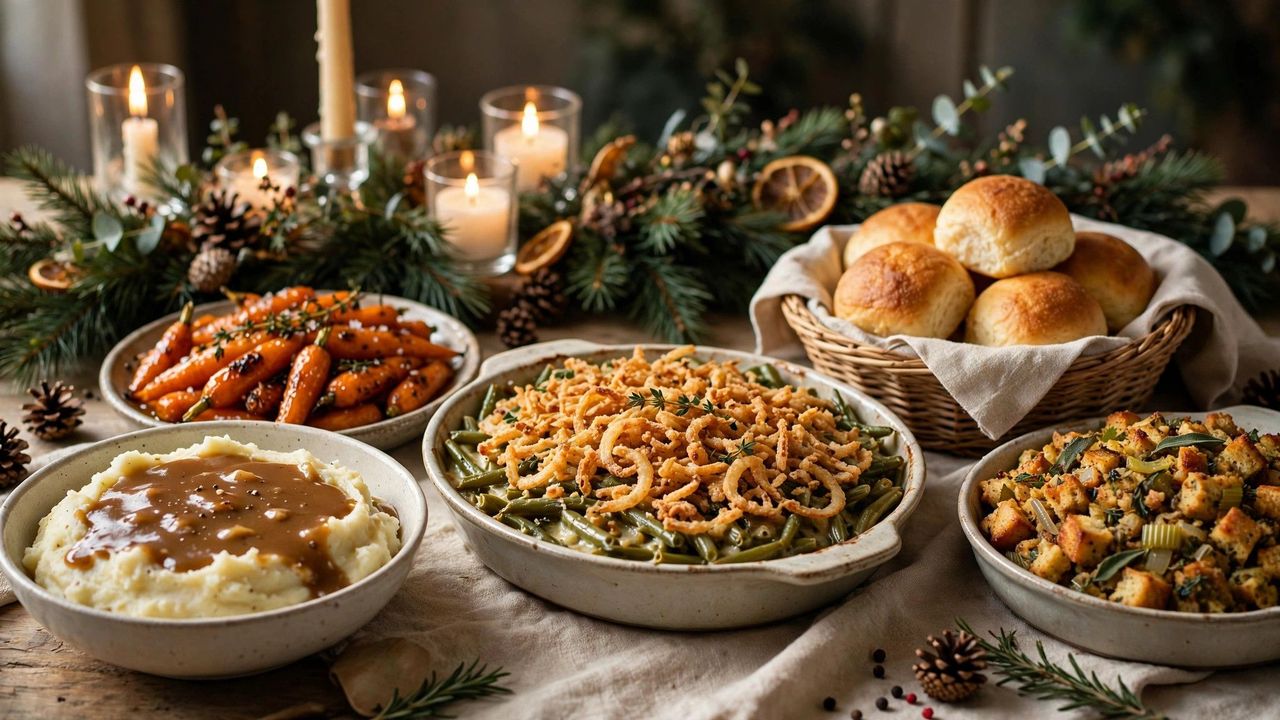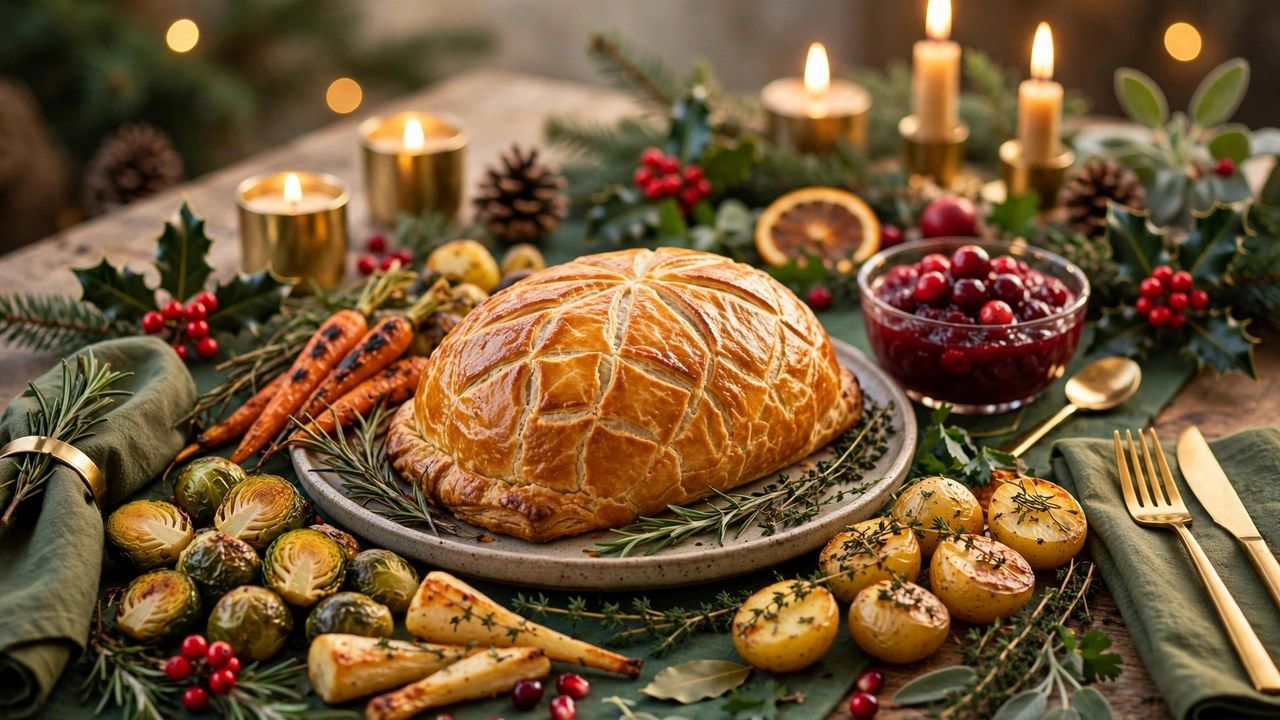
The test of a vegetarian Christmas dinner is simple: does the vegetarian main look like the event, or like an apology? This menu is built to pass that test. At its center sits a golden mushroom Wellington, sliced at the table like any roast, surrounded by the full classic supporting cast: roast potatoes, glazed carrots, Brussels sprouts, stuffing, bread sauce-style gravy made vegetarian, and cranberry sauce. Nobody at this table is eating around the edges of someone else menu.
Whether your whole table is vegetarian or you are cooking for a mixed group, the structure here works: most sides are shared by everyone, and the Wellington holds the center with the same ceremony as any bird. For the classic meat menu, see our Christmas dinner menu guide, and for two-person scaling, our Christmas dinner for two guide pairs well with this one.
The Complete Vegetarian Menu
| Course | Dish |
|---|---|
| Starter | Roasted tomato and red pepper soup with grilled bread |
| Main | Mushroom Wellington with spinach and chestnuts |
| Side | Crispy roast potatoes |
| Side | Honey or maple glazed carrots and parsnips |
| Side | Brussels sprouts with chestnuts and a citrus finish |
| Side | Sage and onion stuffing balls |
| Sauces | Vegetarian gravy and cranberry sauce |
| Dessert | Yule log or spiced poached pears |
The menu deliberately mirrors a traditional Christmas plate, because most vegetarians at Christmas do not want a different holiday; they want the same holiday, centered on something made for them. Familiarity is the hospitality.
The Centerpiece: Mushroom Wellington (Serves 6)
For the filling: 2 tablespoons olive oil; 1 large onion, finely chopped; 3 garlic cloves, minced; 2 pounds (900 g) mixed mushrooms (cremini, portobello, shiitake), finely chopped; 1 teaspoon soy sauce; 1 teaspoon thyme leaves; 7 ounces (200 g) cooked chestnuts, roughly chopped; 3 1/2 ounces (100 g) spinach, wilted and squeezed very dry; 1/2 cup (50 g) breadcrumbs; salt and plenty of black pepper. To wrap: a sheet of puff pastry, about 14 ounces (400 g), thawed if frozen; flour for rolling; and an egg wash or a little milk for a vegetarian glaze.
Cook the onion in the oil for 5 minutes, add the garlic and mushrooms, and cook on a high heat for 12 to 15 minutes, until every trace of mushroom liquid has evaporated and the mixture is dark and dry. This dryness is the whole secret: a wet filling makes soggy pastry no matter what else you do. Stir in the soy sauce, thyme, chestnuts, spinach and breadcrumbs, season boldly, and cool completely. The filling can be made a day ahead and refrigerated, which improves both flavor and your schedule.
Assembling and Baking the Wellington
Roll the pastry on a floured surface into a rectangle about 14 by 10 inches. Pile the cold filling in a firm log down the center, shaping it with your hands so it is compact with no air pockets. Fold the pastry over the filling, seal the seam and ends with a fork and a little water or wash, and place it seam side down on a lined baking sheet. Score a light crosshatch or leaf pattern on top with the back of a knife, brush all over with egg wash or milk, and chill for at least 20 minutes; cold pastry puffs best.
Bake at 400°F (200°C) for 35 to 45 minutes, until deep golden and crisp, and the center is hot through. Rest 10 minutes before slicing with a serrated knife. The slices should show a dark, savory filling in a clean spiral of pastry. Cooked in a reliable oven and rested properly, a Wellington carves at the table with exactly the ceremony a Christmas main deserves, and it reheats tolerably in slices the next day, though the pastry is at its peak on the day.
The Starter and the Sides
Soup: roast 2 pounds tomatoes, 2 red peppers, an onion and 4 garlic cloves at 400°F (200°C) for 30 minutes; blend with 2 cups vegetable stock, a pinch of sugar and salt, and warm through. Serve in small bowls with grilled bread; it can be made two days ahead and improves as it sits. Roast potatoes: 3 pounds floury potatoes, parboiled 8 minutes, roughed up, and roasted in hot oil at 425°F (220°C) for 45 to 55 minutes. Glazed roots: carrots and parsnips roasted with a honey or maple finish in the last 5 minutes.
Brussels sprouts: halve 1 pound sprouts, roast cut side down at 425°F (220°C) for 20 minutes until charred at the edges, then toss with cooked chestnuts and a squeeze of orange juice. Stuffing balls: the classic bread, onion and sage mixture rolled into balls and baked for 25 minutes, so they are crisp all over and entirely vegetarian. More options live in our Christmas side dishes collection, including gratins that can be made vegetarian with vegetable stock and vegetarian cheese.
Vegetarian Gravy That Actually Tastes Like Gravy
Weak gravy is where vegetarian Christmas dinners quietly fail, so give it the same respect as the main. Soften a finely chopped onion in 2 tablespoons butter or oil until deeply golden, about 10 minutes; that color is the flavor. Stir in 2 tablespoons flour and cook 1 minute. Whisk in 2 cups of strong vegetable stock, 1 teaspoon soy sauce, 1/2 teaspoon Marmite-style yeast extract if you use it, and a splash of the mushroom cooking juices if you saved them. Simmer 5 minutes until it coats a spoon, then season with black pepper and a pinch of thyme.
Make the gravy ahead and reheat it, whisking, while the Wellington rests. If the table is mixed, this gravy can serve everyone; a good vegetarian gravy built on browned onion and soy depth convinces meat eaters more reliably than any argument. Cranberry sauce needs no adaptation at all: simmer 12 ounces cranberries with 3/4 cup sugar and an orange worth of juice and zest for about 10 minutes.
Dessert and the Finish
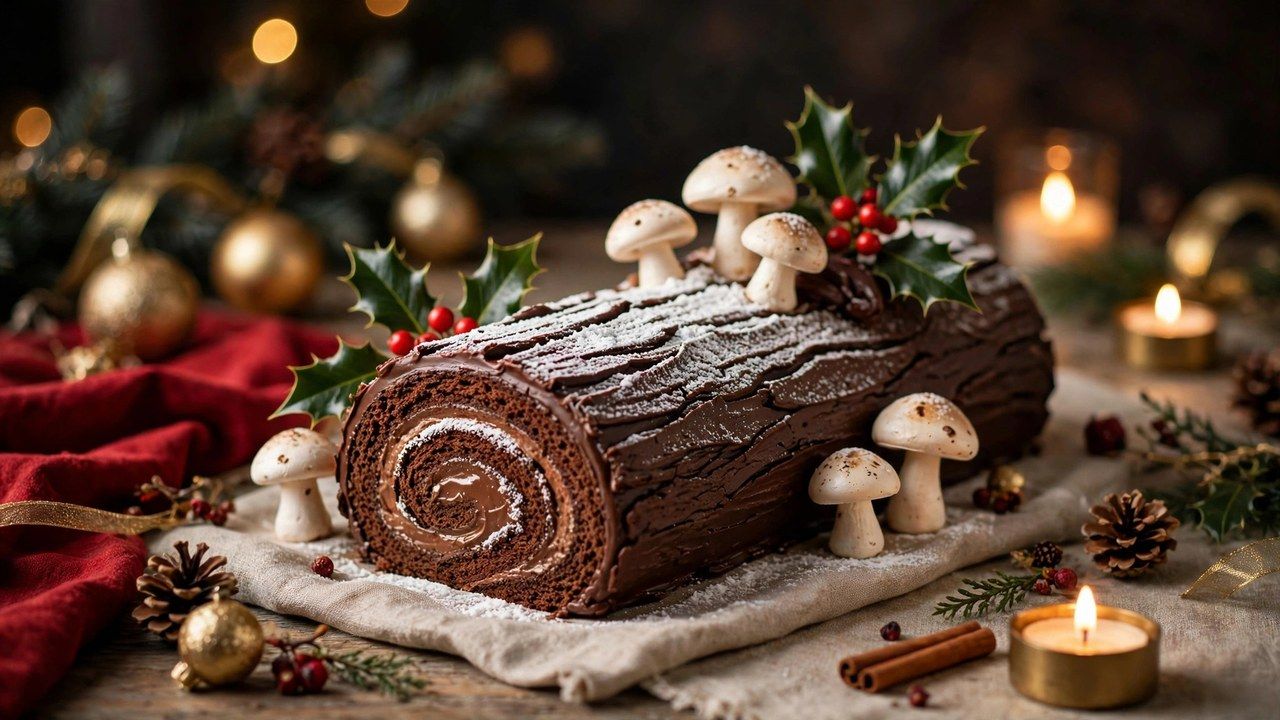
Close with a choice that needs no adaptation: our step-by-step yule log recipe is vegetarian as written, cream-filled and celebratory. For a lighter ending, poach pears in spiced red grape juice or mulled spices: peel 6 firm pears, simmer them in 3 cups juice with a cinnamon stick, star anise and strips of orange peel for about 25 minutes until tender, then reduce the liquid to a syrup and serve warm or chilled with cream or ice cream.
Either dessert can be finished well ahead, which returns us to the governing principle of this whole menu: the vegetarian cook, or the host cooking for vegetarians, should be sitting down when everyone else does. A menu that achieves that has done its real job.
Timeline for a Calm Christmas Day
| When | Task |
|---|---|
| 2 days before | Make the soup; make the cranberry sauce |
| Day before | Make the Wellington filling; assemble and refrigerate the Wellington unbaked; make the gravy |
| Morning | Poach the pears if serving; peel the potatoes and sprouts |
| About 1 1/2 hours before | Potatoes into the oven; Wellington out of the fridge |
| About 45 minutes before | Wellington bakes; roots and sprouts roast on the other shelf |
| While Wellington rests | Stuffing balls bake; gravy reheats; soup warms for the starter |
The starter being a reheated soup is a deliberate kindness to the cook: the first course takes five minutes, and the main course choreography stays simple.
Serving a Mixed Table, Honestly
Pros of this approach: one menu, mostly shared dishes, a centerpiece with genuine ceremony, and preparation that spreads across three days. Vegetarian guests get the full Christmas plate, and meat eaters historically eat more of the sides and Wellington than they predicted. Cons: the Wellington filling must be cooked truly dry or the pastry suffers, puff pastry timing needs a hot oven ready when the sides also want space, and a committed mushroom skeptic will not be converted by any recipe.
For a mixed table, the low-conflict solution is this menu plus, if you wish, a small roasted meat served as an extra rather than the center. The table stays unified, the vegetarian main stays the event, and nobody is negotiating identity over the gravy boat, which should always be vegetarian anyway.
Conclusion
A vegetarian Christmas dinner earns its place when the main is built like a main: a dry, deeply savory filling, crisp pastry, a proper gravy and the full classic sides around it. Follow the timeline, season boldly, and slice the Wellington at the table. Nobody misses out, and nobody is an afterthought.