The yule log, or buche de Noel, has a reputation as the Christmas cake only pastry chefs attempt. That reputation is undeserved. A yule log recipe is really three forgiving components in sequence: a thin chocolate sponge rolled while warm, a simple whipped cream filling, and a chocolate ganache you rough up with a fork to look like bark. None of the three is hard. The only real skill is timing, and this guide gives you the timing.
Plan this cake as the centerpiece among the wider sweets in our Christmas dessert recipes collection, and compare it with the other showpieces in our Christmas cake ideas guide if you are still deciding. Made a day ahead, a yule log actually improves overnight, which makes it one of the calmest showpiece desserts of the season.
The Three Components, and Why Each Is Forgiving
The sponge contains no butter and very little flour, so it stays flexible enough to roll without cracking, as long as you roll it warm. The filling is sweetened whipped cream, which cannot really fail if the cream is cold. The ganache is chocolate and cream in roughly equal parts; if it is too thin you chill it, too thick you warm it, and the fork-textured finish hides every imperfection by design. A cake whose decoration is meant to look like rough bark is a cake built for home bakers.
What can go wrong is almost entirely about sequence: rolling a cold sponge, filling before the roll has cooled, or rushing the chill before slicing. Follow the order below and the cake takes care of itself.
Ingredients (Serves 8 to 10)
For the sponge: 6 large eggs, separated, at room temperature; 3/4 cup (150 g) granulated sugar, divided; 1/3 cup (30 g) unsweetened cocoa powder, sifted; 1/4 cup (30 g) all-purpose flour; 1/4 teaspoon salt; 1 teaspoon vanilla extract; powdered sugar, for rolling.
For the filling: 1 1/2 cups (360 ml) cold heavy cream; 1/3 cup (40 g) powdered sugar; 1 teaspoon vanilla extract. For the ganache: 6 ounces (170 g) dark or semisweet chocolate, finely chopped; 3/4 cup (180 ml) heavy cream; 1 tablespoon unsalted butter. Optional decorations: extra powdered sugar for snow, fresh rosemary sprigs, sugared cranberries, or store-bought meringue mushrooms.
Step 1: Bake the Sponge (About 12 Minutes)
Heat the oven to 400°F (200°C). Line a 10 by 15 inch jelly roll pan with parchment, leaving an overhang, and lightly grease the parchment. Beat the egg yolks with 1/2 cup of the sugar for about 3 minutes, until pale, thick and ribbony, then beat in the vanilla. Sift the cocoa, flour and salt over the yolks and fold gently.
In a clean bowl, beat the egg whites to soft peaks, then gradually add the remaining 1/4 cup sugar and beat to glossy, just-firm peaks. Fold the whites into the yolk mixture in three additions, keeping as much air as possible. Spread the batter evenly to the corners and bake 10 to 12 minutes, until the top springs back lightly when touched. Do not overbake; a dry sponge is a cracking sponge.
Step 2: Roll It Warm, Every Time
While the sponge bakes, lay a clean kitchen towel on the counter and dust it generously with powdered sugar. The moment the sponge leaves the oven, run a knife around the edges, invert the pan onto the towel, and peel off the parchment. Starting from a short end, roll the sponge up inside the towel, snugly but not tightly. Leave it seam side down to cool completely, about 1 hour.
This warm roll is the entire secret. The sponge takes a rolled shape as it cools, like a memory, so when you unroll it to fill, it will roll back without fighting or cracking. Skipping this step, or letting the sponge cool flat, is the one mistake this recipe cannot absorb. Small surface cracks, if they appear, are not a crisis: the ganache covers everything, which is one more reason this cake suits real kitchens.
Step 3: Fill, Roll and Chill
Beat the cold cream, powdered sugar and vanilla to firm peaks that hold their shape but still look smooth. Carefully unroll the cooled sponge, leaving it on the towel. Spread the cream in an even layer, leaving a 1 inch border at the far short end, because the filling will push forward as you roll. Roll the cake back up, using the towel to help lift rather than squeeze, and place it seam side down on your serving plate or a board.
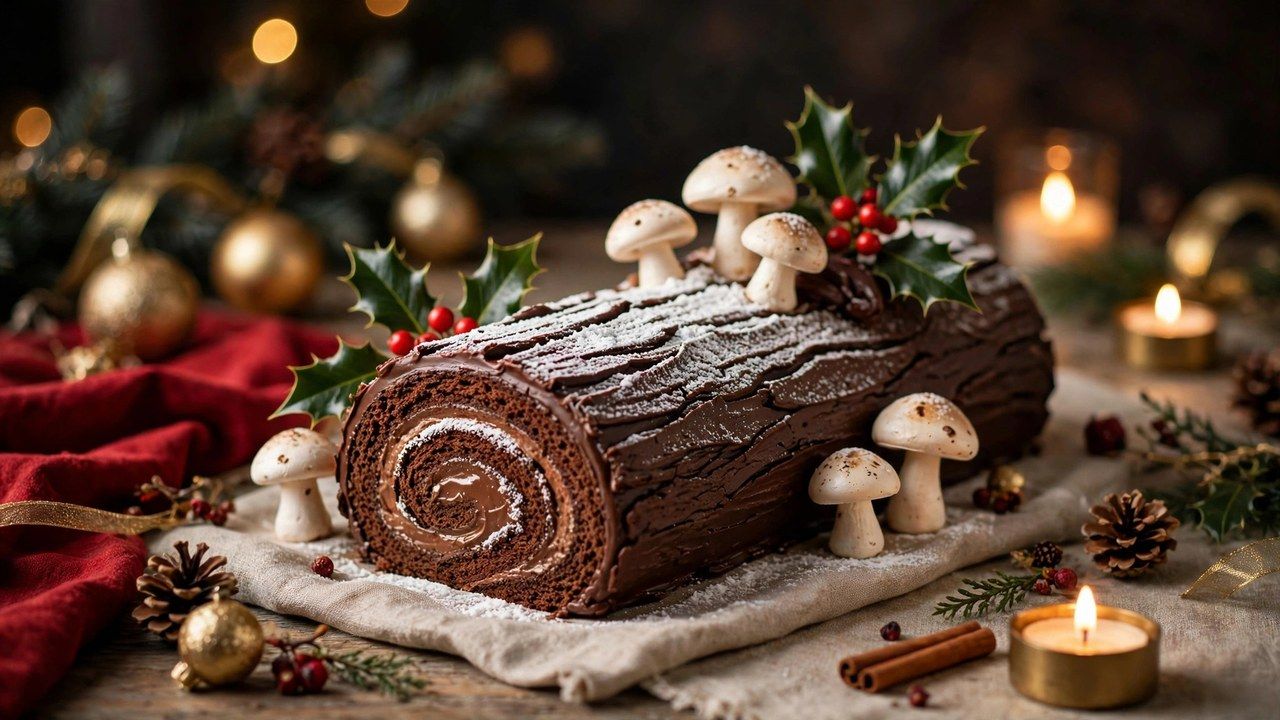
For the classic log shape, slice a short piece, about 2 inches, diagonally off one end and set it against the side of the log as a branch, held in place with a little ganache later. Wrap the log loosely and refrigerate at least 2 hours, or overnight, so the filling firms and the spiral sets. A chilled log slices cleanly; a rushed one squashes.
Step 4: Ganache and the Bark Finish
Heat the cream until it just begins to steam and bubble at the edges, pour it over the chopped chocolate, and let it stand 2 minutes. Stir slowly from the center until smooth and glossy, then stir in the butter. Let the ganache cool at room temperature until it reaches a thick, spreadable consistency, roughly like soft peanut butter; this can take 30 to 60 minutes, and a short chill speeds it up if you stir every few minutes.
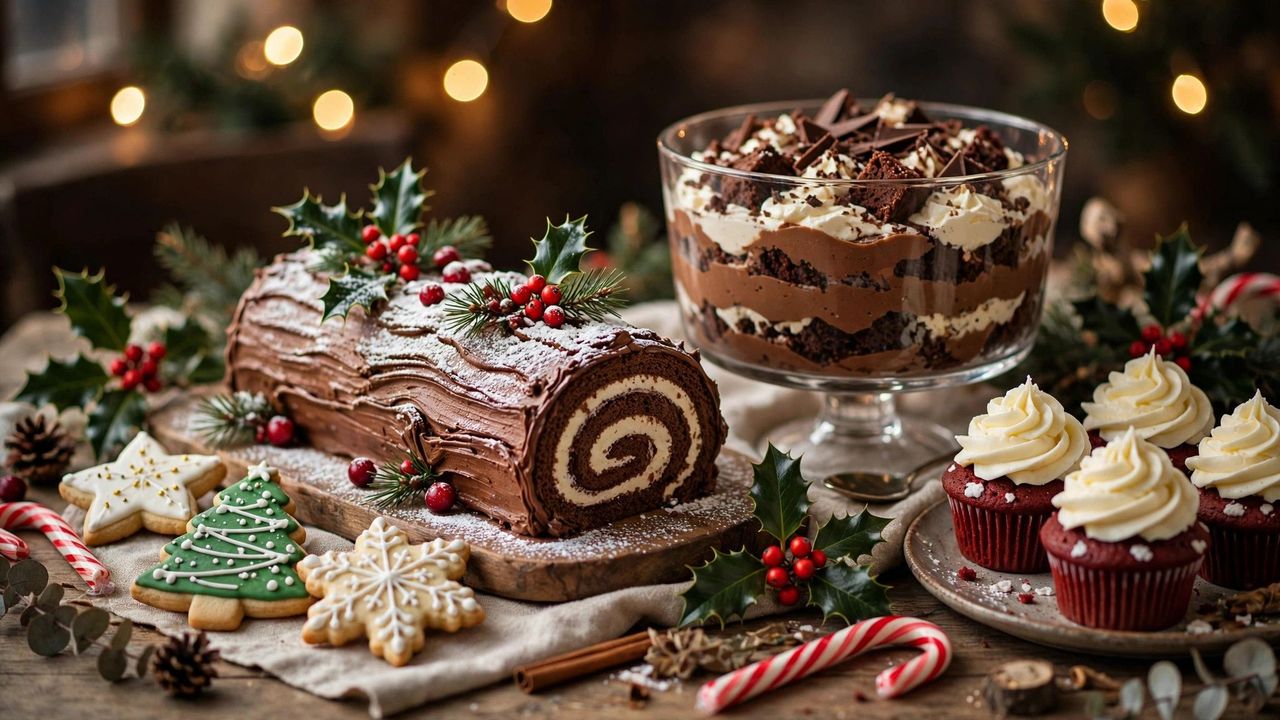
Spread the ganache over the whole log, including the branch, leaving the spiral ends bare so the swirl shows. Drag a fork lengthwise through the ganache in long, slightly wavy lines to mimic bark, and swirl a small spiral on each exposed end to suggest tree rings. Finish with a dusting of powdered sugar snow just before serving, plus rosemary, cranberries or meringue mushrooms if you like. For smaller individual desserts to serve beside it, see our dessert recipes collection.
Make-Ahead Timeline and Storage
| When | What to do |
|---|---|
| 2 days before | Bake, roll, fill and chill the log; keep wrapped in the refrigerator |
| 1 day before | Make and apply the ganache; return to the refrigerator uncovered once set |
| Serving day | Dust with powdered sugar, add decorations, slice with a warm knife |
The assembled log keeps in the refrigerator for up to 3 days. Bring slices to the table about 15 minutes after cutting so the ganache loses its hard chill. Freezing is possible for the unfilled sponge, rolled in its towel and well wrapped, for up to 1 month; the finished cream-filled cake does not freeze gracefully, so plan to fill fresh.
Variations and Honest Notes
Coffee: add 1 teaspoon instant espresso powder to the ganache and a tablespoon of strong coffee to the whipped cream for a mocha log. Peppermint: swap the vanilla in the filling for 1/2 teaspoon peppermint extract and scatter crushed candy cane over the ganache. Black forest leaning: brush the sponge with cherry jam before the cream and fold drained chopped cherries through the filling.
Pros of this cake: genuine showpiece looks, mostly make-ahead, and a finish that hides flaws. Cons: it uses a lot of eggs and bowls, the sponge waits for no one at rolling time, and slices are rich, so small pieces are the right serving. None of those should stop you; they should just shape your afternoon. If a full log feels like too much this year, the flavor combination also works as a simple chocolate roll without the branch and bark work.
Conclusion
A yule log is not a test; it is a sequence. Bake a flexible sponge, roll it warm, fill it cold, chill it properly, and let fork-dragged ganache do the theatrical work. Made a day ahead, it arrives at the table calmer than almost any other showpiece, and the first slice, with that clean spiral, earns its applause honestly.