Christmas dinner is the centerpiece of the holiday season, and a little planning turns a stressful scramble into a relaxed celebration. Whether you are hosting four guests or fourteen, the secret to a memorable 2026 Christmas dinner is building your menu around one showstopper main, balancing it with make-ahead sides, and writing a timeline you can actually follow. This guide walks you through every course, from the first appetizer to the last slice of dessert.
Choose Your Centerpiece Main
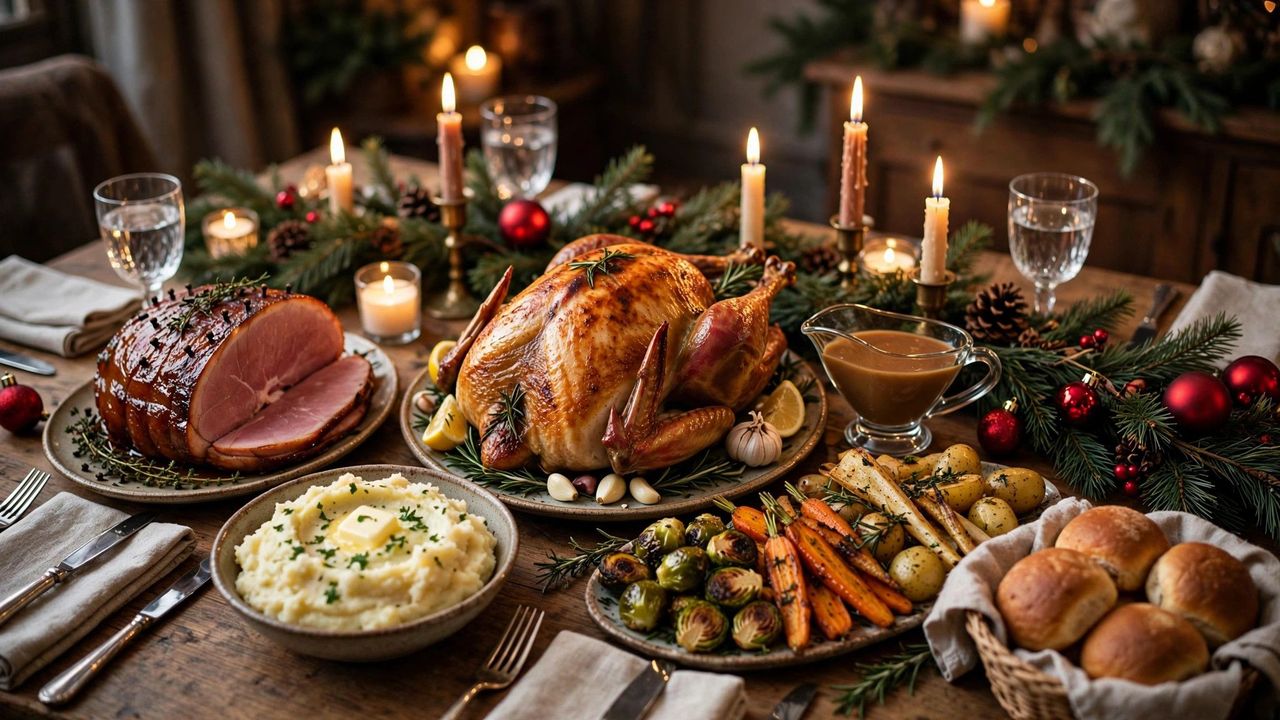
Start by picking one hero dish. The classics are classics for a reason: roast turkey feeds a crowd and fills the house with holiday aroma; glazed Christmas ham is nearly effortless and slices beautifully for a buffet; prime rib is the luxury choice that impresses with minimal hands-on time. If your guest list is small, consider a roasted duck, a beef tenderloin, or a stuffed pork loin instead.
Plan on roughly 1 to 1.25 pounds of bone-in meat per person, or about 1/2 pound per person for boneless cuts. For a crowd of 10, a 12 to 14 pound turkey or a 8 to 10 pound bone-in ham works well. Buy your main a week ahead: fresh turkeys are sold out by December 23 in many stores, and a frozen bird needs 3 to 4 days to thaw safely in the refrigerator.
Build the Sides and Starches
Sides are where Christmas dinner becomes a feast. Choose three to five: one creamy starch like mashed potatoes or a potato gratin, one roasted vegetable like honey-glazed carrots or Brussels sprouts with bacon, one green like garlicky green beans, and one bread, usually warm dinner rolls with butter. Stuffing or dressing is nearly mandatory in many households, so include it if your guests expect it.
Think in colors as well as flavors. A plate of turkey, mashed potatoes, and rolls is delicious but beige; add cranberry sauce for jewel-red brightness, roasted carrots for orange, and green beans for contrast. The meal photographs better, and guests eat with their eyes first.
Start with Festive Appetizers
Guests arrive hungry, and dinner rarely lands on the table exactly on time. Set out two or three simple appetizers that do not compete with the main event: a baked brie with cranberry sauce and crackers, a platter of shrimp cocktail, or a warm cheese ball with toasted baguette slices. Keep portions modest so nobody fills up before the turkey arrives.
Pair appetizers with a welcome drink. A sparkling cranberry punch or a pot of mulled cider takes five minutes to assemble and instantly signals that the party has started. If you serve wine, a chilled white for white meat or a medium-bodied red for prime rib covers most pairings.
Plan the Dessert Finale
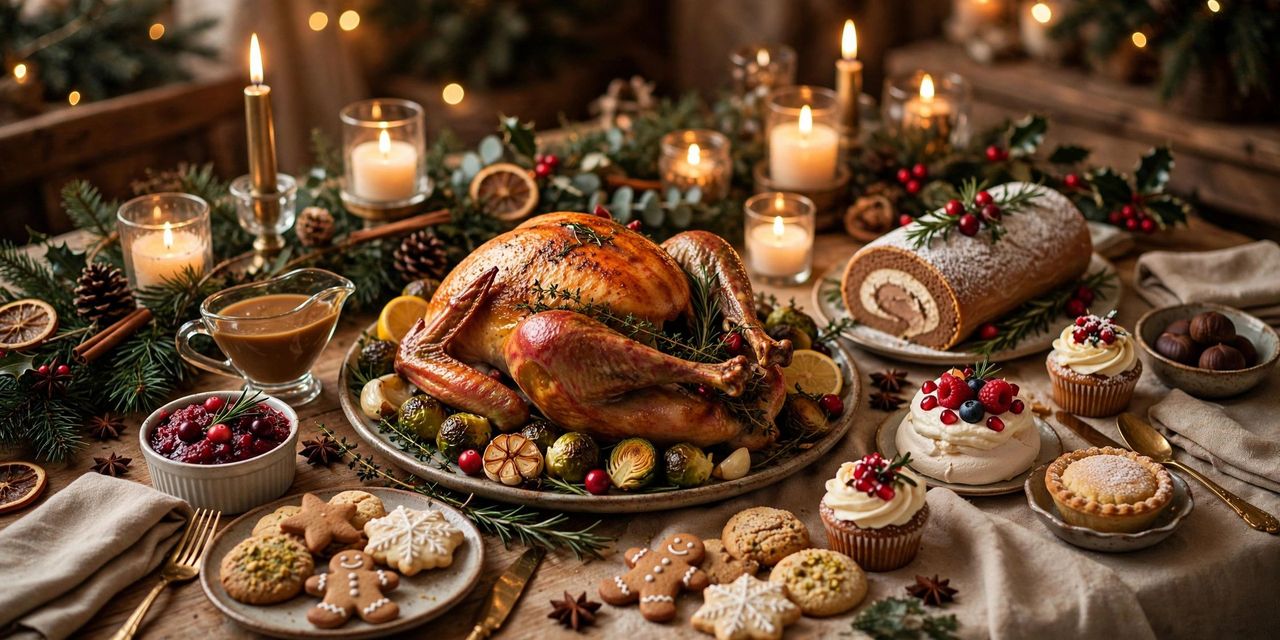
End the meal on a high note with one signature dessert plus a cookie platter. A yule log cake is the traditional showstopper, but a classic pecan pie, a chocolate trifle, or a spiced bread pudding all work beautifully. Add a tray of Christmas cookies for nibbling while the coffee brews, and offer coffee, tea, and a digestif.
Desserts are the easiest course to make ahead: pies and trifles improve after a night in the fridge, cookie dough can be frozen weeks ahead, and most cakes hold perfectly for a day or two under a dome. Doing dessert early frees your Christmas Day for the main event.
Your Stress-Free Cooking Timeline
The difference between a calm host and a frazzled one is the timeline. Work backward from your serving time and write every task down. A sample schedule for a 5:00 PM dinner looks like this:
- One week before: Order or buy the turkey or ham; confirm guest count and dietary needs; shop for non-perishables and wine.
- Two days before: Thaw frozen meat in the fridge; make pie dough, cookie dough, and cranberry sauce; set the table.
- Christmas Eve: Prep vegetables, assemble casseroles, bake desserts, chill drinks; lay out serving dishes and label them.
- Christmas morning: Get the main into the oven by late morning; assemble appetizers; prep sides for the oven.
- One hour before serving: Roast vegetables and rolls; warm bread; make gravy from pan drippings; set out appetizers.
- After dinner: Put leftovers away within two hours; dessert can wait 30 minutes so guests can digest.
The golden rule: everything that can be made ahead, is made ahead. Your future self, the one actually enjoying Christmas dinner with their guests, will thank you.