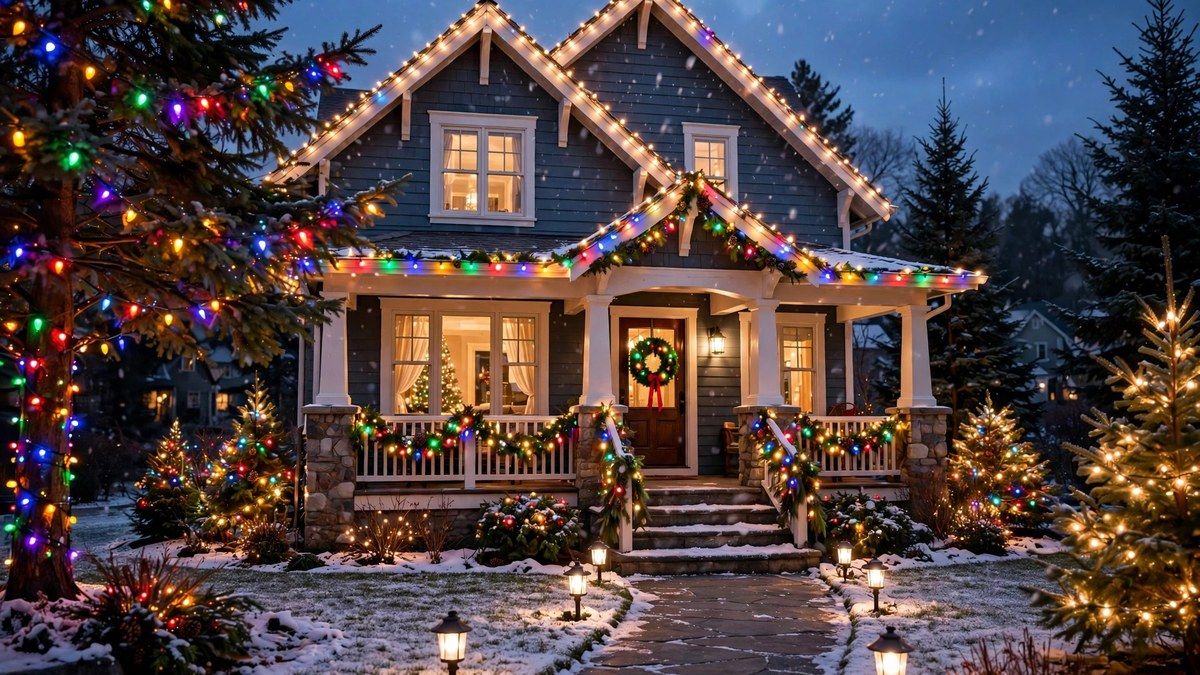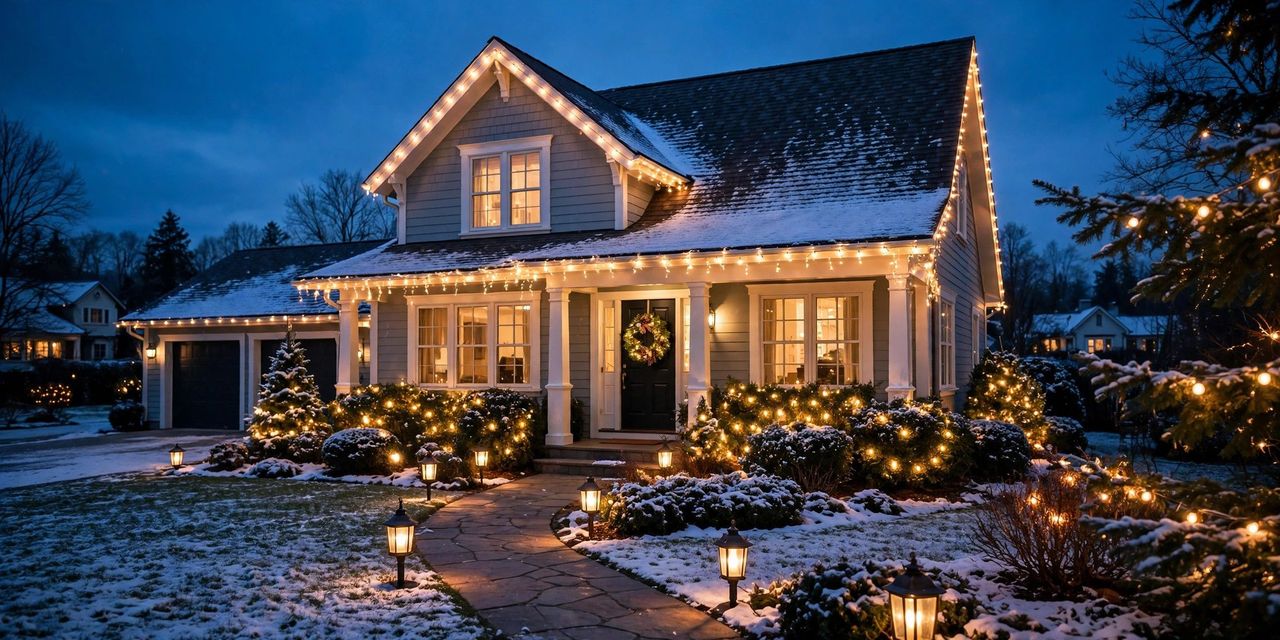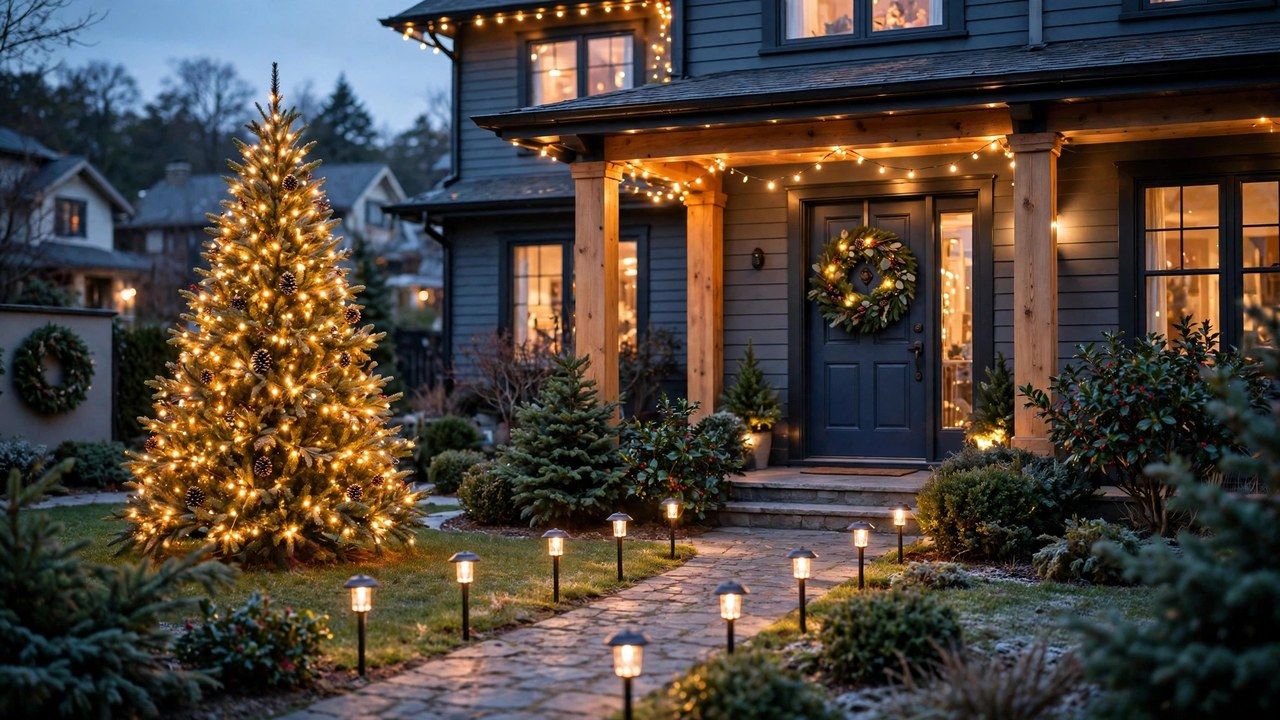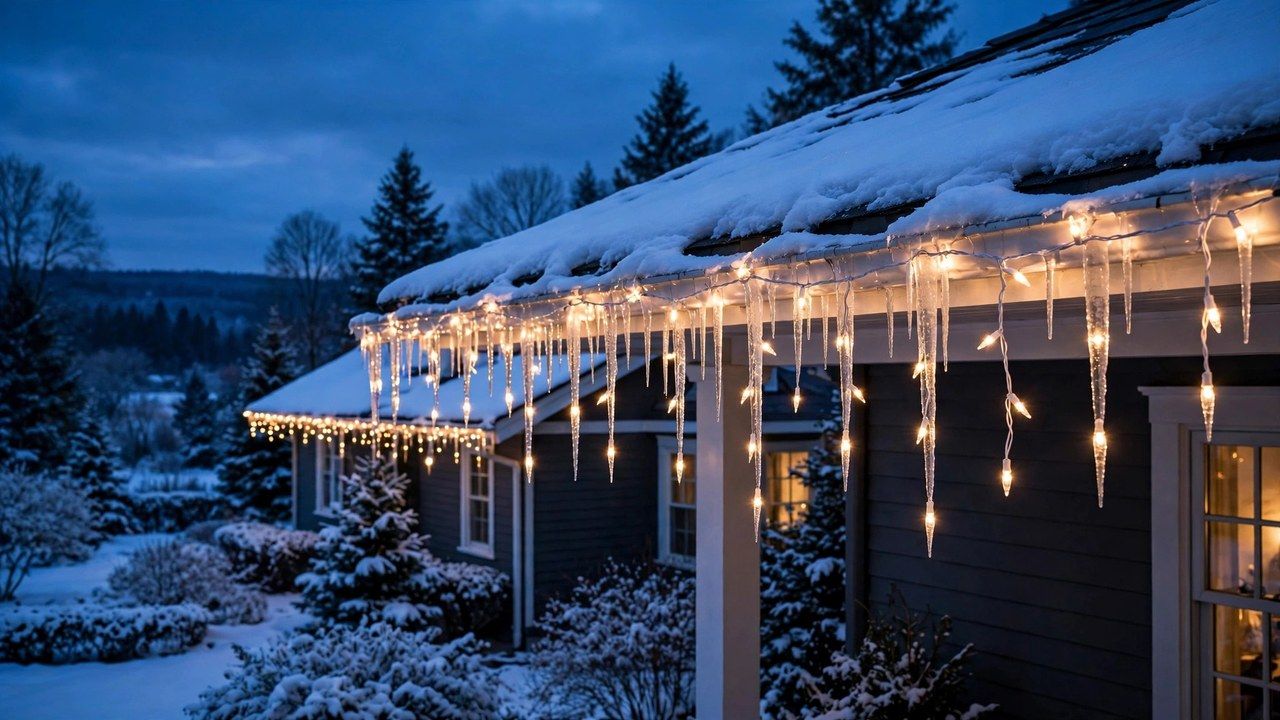
Icicle lights are the fastest route to a professionally finished roofline, because their hanging drops do the styling for you: straight lines of light look unfinished, but a fringe of varied drops reads as winter itself. Doing icicle christmas lights well is mostly measurement and method, choosing the right drop pattern and strand length for your roofline, hanging with proper clips rather than staples, and matching color temperature to the rest of your display. This guide covers buying, hanging and styling in that order.
Place icicles within your wider outdoor scheme using our outdoor lighting ideas guide, and compare strand types in our best Christmas lights guide. If you are also hanging standard strings outdoors, the ladder and safety method in how to hang Christmas lights outside applies to every word of the icicle job too.
What Icicle Lights Are and Why Drops Matter
An icicle strand is a main horizontal wire with vertical drops of varying lengths hanging from it, each drop carrying a small run of bulbs. The varied drop lengths, typically mixing short, medium and long within a set pattern, are what imitate real icicles; cheap strands with uniform drops look like a fringe curtain, which is why drop variety is the first quality to check when buying. Denser strands, with drops closer together along the wire, give the full frozen-waterfall look on large homes; lighter density suits small houses and porches.
Icicles belong on straight horizontal runs: rooflines, porch edges, fences, deck rails and window tops. They do not wrap, outline corners vertically, or climb gables gracefully, and forcing them around complex architecture is where displays turn messy. Pair them with standard string lights or clips for the vertical and angled work, and let icicles own the long straight edges where they are unmatched.
Measuring Your Roofline Honestly
| Run to cover | How to measure | Buying note |
|---|---|---|
| Front roofline | Ground-level tape along the facade plus corner allowances | Buy lit length, not box length; check the strand’s stated lit span |
| Porch edge | Edge length plus one drop past each end | Shorter strands avoid awkward mid-run joins |
| Fence or deck rail | Full run length; icicles forgive slight sag less than strings | Clip spacing matters; plan a clip every drop cluster |
| Second story | Same method, but measure twice and order once | Connectable strand limits decide your run plan |
Measure each straight run separately and note where your outlets are, because strands must start where power is or reach it with an extension rated for outdoor use. Check the packaging for two numbers people confuse: total strand length including lead wire, and lit length, which is what actually covers your roofline. Respect the manufacturer’s connectable limit, the maximum number of strands joined end to end, and plan multiple runs from multiple starting points on big houses rather than one heroic chain.
LED Versus Incandescent, and Color Temperature
LED icicles have effectively won the argument: they use a fraction of the power, run cool, last for seasons, and allow far longer connected runs within safe limits. Incandescent strands give a slightly softer traditional glow and cost less up front, but they draw heavily, fail bulb by bulb, and restrict how many strands you may connect. For a whole roofline, LED is the sensible default in 2026 and the only practical choice for two-story coverage.
Color temperature is where displays quietly fail. Warm white icicles over cool white everything else makes the roofline look yellow and tired by comparison. Choose one white for the whole house, warm white for classic and cozy schemes, pure or cool white for icy modern ones, and match new strands against your existing lights at home before hanging day, in the evening, because store lighting lies. Multicolor icicles are a deliberate theme choice; commit fully or not at all.
Clips, Not Staples: The Hanging Method
Hang icicles with purpose-made clips that grip the gutter edge or slide under shingles, spaced regularly so the main wire runs level and taut. Staples and nails pierce the wire’s insulation, invite corrosion and short circuits, damage shingles and gutters, and void warranties; clips cost little, remove cleanly and let you adjust spacing as you go. On gutters, all-in-one clips that hold the wire at a consistent height give the straightest top line, which is the line the whole display is judged by.
Work from the ladder safely and patiently: set the ladder on firm ground, keep three points of contact, move the ladder rather than leaning, and hang in daylight even though the results show at night. Attach clips to the wire on the ground in their spacing pattern where the system allows it, then lift and seat them run by run. A helper feeding strand and watching the line from the street below will straighten your work more than any tool.
Styling: Icicles With the Rest of the Display
Icicles are a top-line treatment, so the styling rule is hierarchy: roofline icicles first and brightest, then the door wreath and window lights, then ground-level features like pathway lights, each layer slightly quieter than the one above. Mixing icicle styles, warm drops on the house and cool on the garage, splits the display’s voice; one drop pattern and one white across every run is what makes a house look professionally done. Our yard decorations guide shows how the layers combine into a full display.
Twinkle and chasing icicle variants add gentle motion at the roofline and suit playful schemes, while steady-burn suits classic ones. Avoid running motion at every level of the house at once; one moving layer is atmosphere, three are a carnival. If your roofline has a gable, end the icicle runs cleanly at the gable’s edges and light the gable’s angle with a standard strand instead of forcing drops around the peak.
Troubleshooting the Half-Lit Strand
When a section of icicles goes dark, work in order: check the outlet and any timer or GFCI first, then the strand’s own fuse in the plug, then look for the physical insult, a pinched wire at a clip, a connection pulled apart by wind, water in a socket. LED strands usually fail by section where a connection has loosened or corroded, while incandescent strands fail bulb by bulb and take their series section with them. Keep spare fuses and a few spare strands from the same purchase; matching a discontinued strand’s exact white next season is harder than any repair.
Prevention beats repair at height. Seat every connection firmly, keep plugs and junctions off the roof surface and out of gutter water, and give connections a drip loop so rain runs off rather than in. Never climb to troubleshoot in wet or icy conditions; a dark section until a dry day is a cosmetic problem, while a ladder on ice is not.
Takedown and Tangle-Free Storage
Icicles tangle more enthusiastically than any other light because their drops snag each other. The fix is winding each strand around a flat reel, a light storage frame or even a sturdy piece of cardboard as it comes down, drop side neat, and storing reels upright in a dry box. Label each reel with its run, front roofline, porch, garage, so next year’s hanging starts with a map rather than a guess.
Test every strand indoors before it goes back on the ladder next season, replace suspect sections at ground level, and retire strands with cracked insulation without nostalgia. Stored dry, coiled kindly and tested early, a good LED icicle set serves for many seasons, which is the final argument for buying quality drops and density in the first place.
Honest Pros and Cons of Icicle Lights
Pros: the most polished roofline per hour of hanging, graceful on any straight edge, and LED sets are economical to run on timers all season. Cons: they only suit straight runs, cheap uniform-drop sets look like fringe, and takedown without reels creates the worst tangle in the Christmas storage box. For most houses, icicles on the main roofline plus standard strings for gables and trees is the combination professionals reach for, and it is hard to argue with the result from the street.
Icicles Beyond the Roofline
The same strands earn their keep on other straight edges once the roofline is done: along a porch rail they turn an ordinary porch into the display’s warm foreground, across a fence they define the yard’s boundary in light, and over a garage door they rescue the house’s largest blank surface. Match drop pattern and white to the roofline set exactly, ideally from the same purchase, because the eye compares adjacent runs mercilessly.
Indoors, a short run above a wide window or along a mantel shelf gives the icicle effect at close range, but only use strands rated for indoor use there and keep drops clear of curtains and stockings. Most households find one location beyond the roof is enough; icicles are a strong graphic, and like any strong graphic they lose power with repetition. Choose the edge your street actually sees and let the rest of the house use other lights.
Conclusion
Measure each run, buy varied drops in one matched white, hang level with clips and a helper’s eye from the street, and wind them onto reels in January. Icicle lights reward method more than money: a careful mid-range set, hung straight, beats an expensive set hung crooked every time. This season, let your roofline be the straight, bright sentence the rest of the display hangs from.