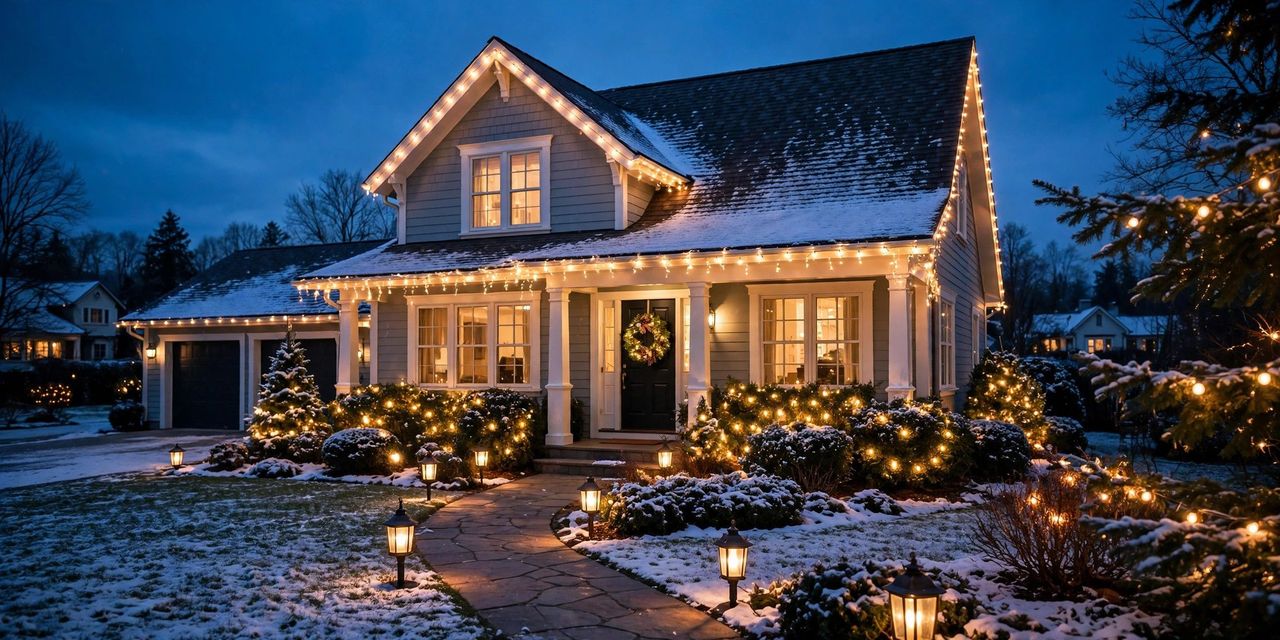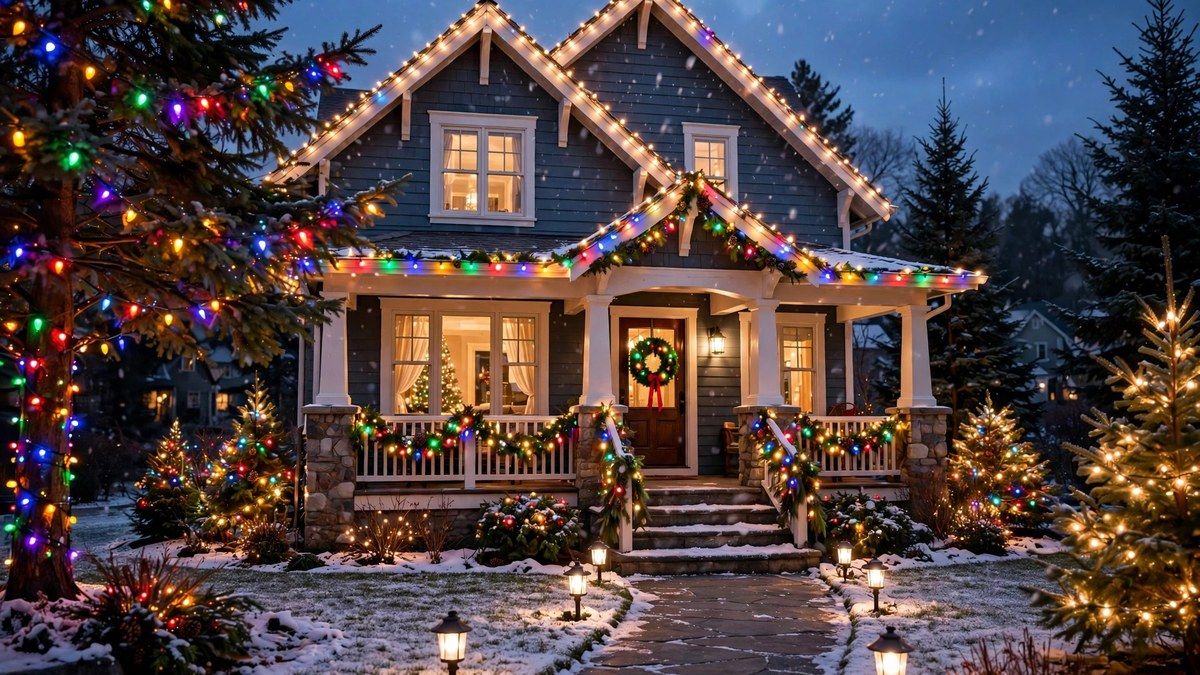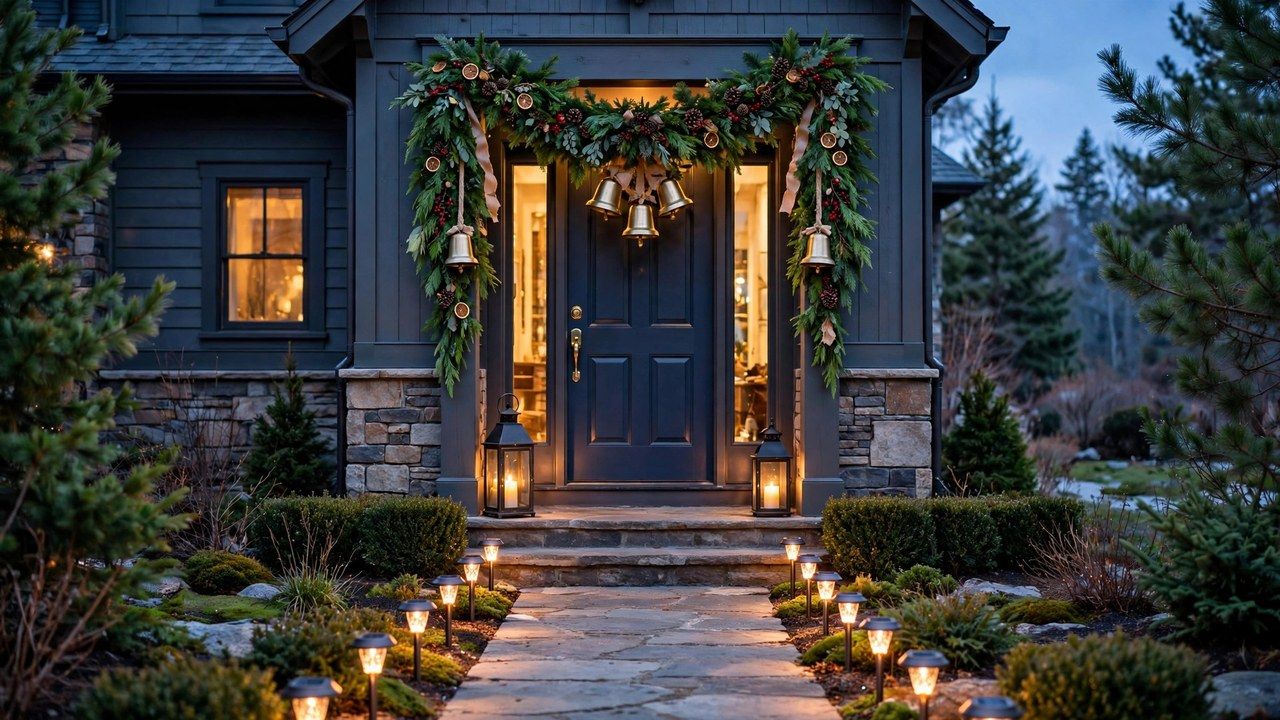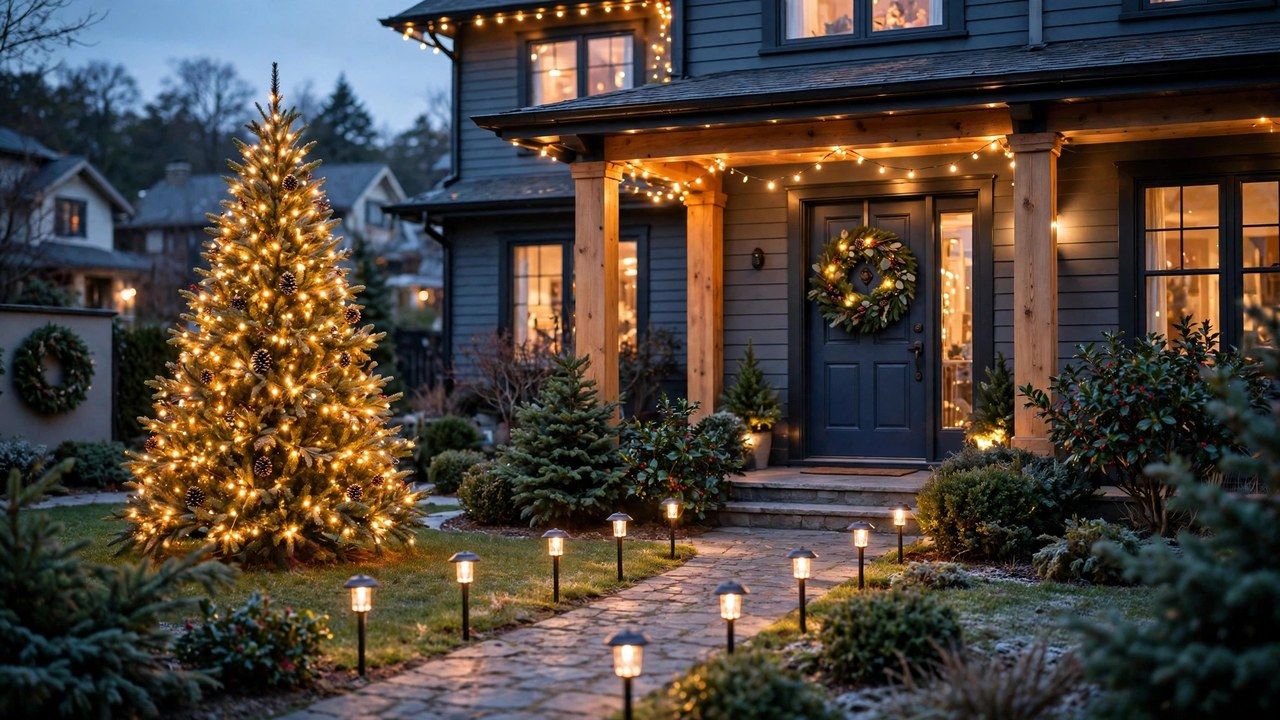
The yards people slow down for are never the ones with the most stuff; they are the ones with a plan. Great christmas yard decorations are built like a stage set: one clear focal point, layers of light at different heights, and clean edges that tell the eye where the display ends and the lawn begins. This guide covers planning, lighting layers and inflatables, with two ready-to-order lighting picks in the yard picks section, plus the neighbor etiquette that keeps a big display beloved rather than tolerated.
Coordinate the yard with the house itself; our outdoor lighting ideas guide covers the roofline and tree lighting in depth, and front door decor finishes the entry the yard leads to. Sketch first, buy second: the plan below will save you money and a December weekend.
Plan in Zones Before You Buy Anything
Divide the yard into zones on paper: the house facade, the entry path, the lawn’s center, the trees and shrubs, and the edges. Assign each zone one job. The facade carries roofline light and wreaths, the path carries guidance light, the lawn center carries the focal display, trees carry their own wrapped or hung light, and the edges carry definition, a lit border or a simple fence line. Zones with no job stay dark, which is what makes the lit zones read as design instead of spill.
Walk the plan at dusk with a flashlight and stand where your audience stands: the sidewalk and the street. Note what the eye hits first, where the dark holes are, and which neighbor windows your brightest pieces will face for a month. Most yards need less than their owners fear; a strong focal point, a lit path and a dressed facade outperform a lawn crowded with competing pieces every single time.
The Focal Point Rule
Every display needs one hero: a beautifully lit tree in the yard, a nativity or Santa scene, a large wreath-centered facade, or a single impressive inflatable. Choose the hero first, light it best, and let everything else support it at lower brightness and smaller scale. Two heroes of equal weight split attention and halve the effect, which is why the most-photographed yards are usually remembered for exactly one thing.
Place the hero where the sightline from the street is longest and cleanest, usually offset from center rather than dead middle, and frame it with darker space around it. If your yard has a mature tree, it is almost always the hero candidate: wrapped trunk, lit canopy, and the rest of the display becomes supporting cast. Our best Christmas lights guide covers the light types each hero needs.
Lighting Layers: Path, Projection and Glow
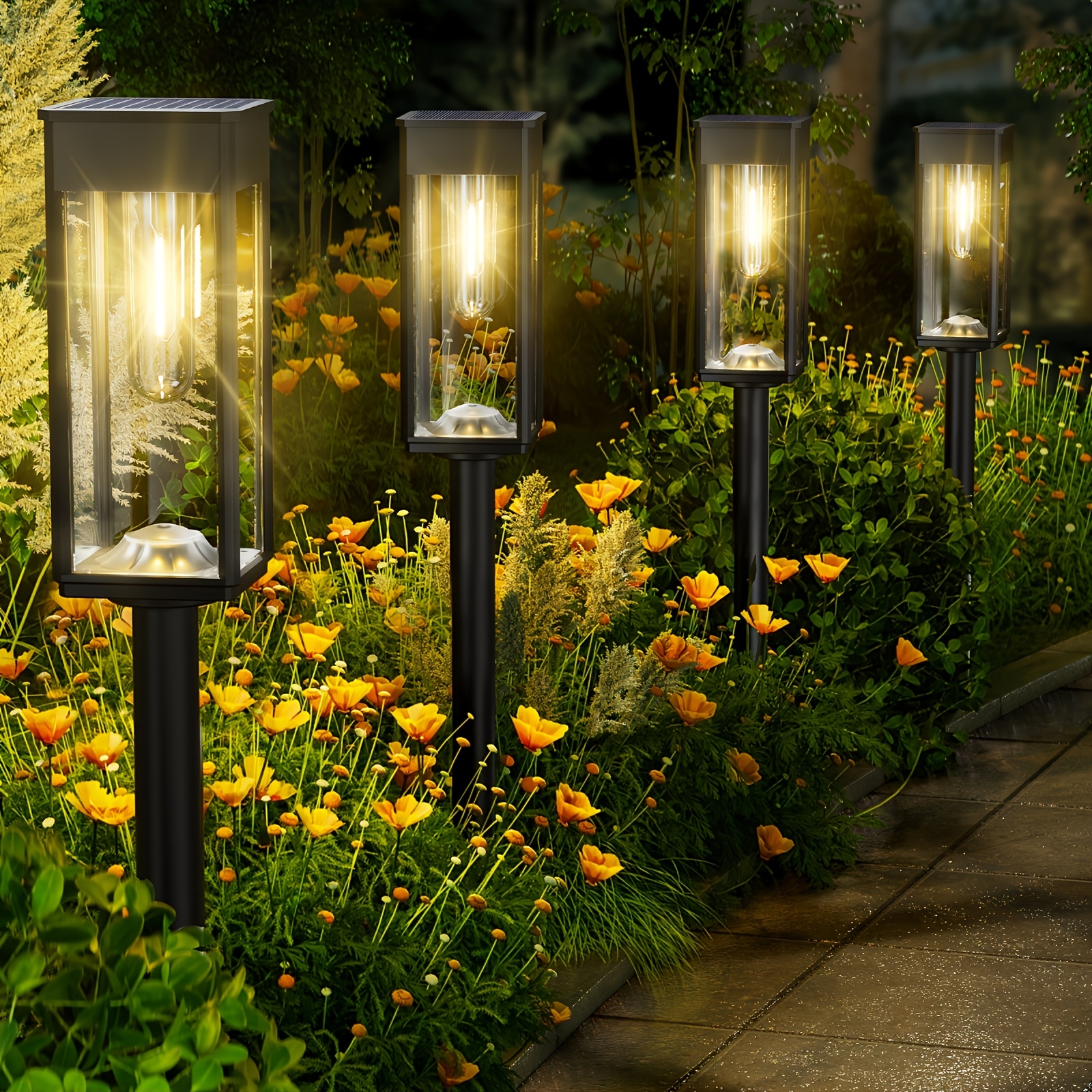
After the hero, layer light at three heights. Ground level: pathway lights and stake lights that define the walk and the display’s edge, which is where our solar pathway pick in the picks section earns its keep, charging by day and outlining the entry by night with no wiring at all. Middle level: shrub nets, wrapped trunks and lit figures. High level: roofline, wreaths and the hero tree’s canopy. A display lit at three heights looks three times its budget.
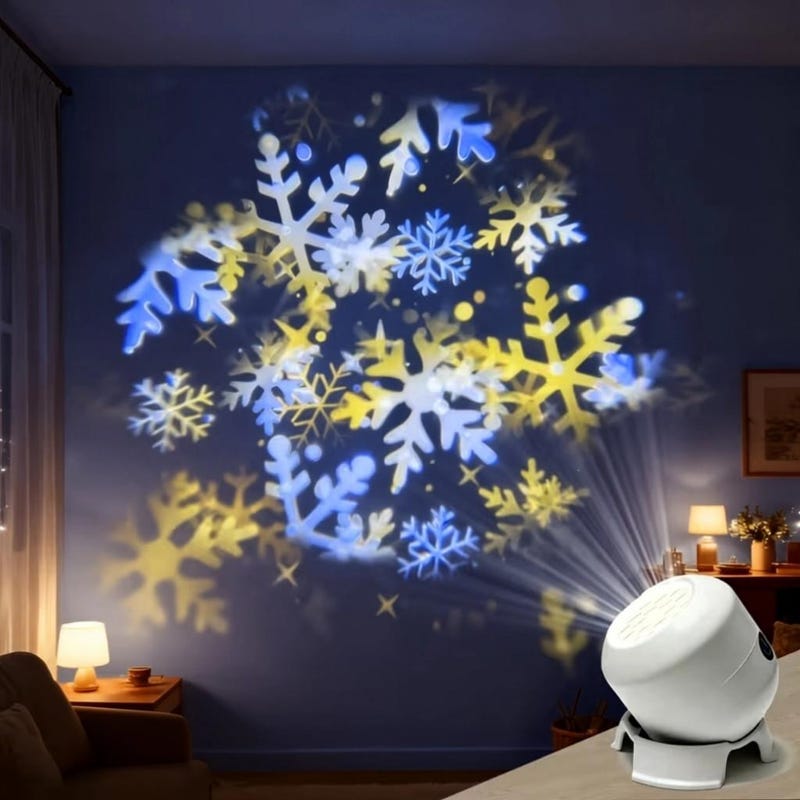
A light projector is the hardest-working single purchase in the modern yard: one unit washes a whole facade or lawn in moving snowflakes or stars, filling the big dark areas that would otherwise need hundreds of individual lights. Our second pick below is a snowflake projector suited to exactly that job. Use one projector per facade, aim it to avoid shining into neighbors’ windows and passing drivers’ eyes, and let it support the hero rather than compete with it; motion everywhere is motion nowhere.
Inflatables: Use Them Like Exclamation Points
Inflatables are punctuation, not paragraphs. One large or two smaller inflatables, chosen in the display’s palette and theme, delight every child on the street; a lawn of nine deflating characters reads as storage. Anchor them properly against wind, run their fans on the same timer as the lights so they rise and rest together, and give them dark space around them like any focal piece. Our dedicated outdoor Christmas inflatables guide covers sizing, anchoring and care in full.
Be honest about their daytime look: an inflatable at noon is a colorful puddle, so place them where their deflated state bothers you least, ideally among shrubs or beside the facade rather than center lawn. Families with young children rightly forgive inflatables everything; displays aiming at elegance should let light, not nylon, do the talking after the hero.
Greenery, Figures and the Non-Light Layer
Light is only half a display; daylight hours need a yard that still looks dressed. Real or faux garlands on the fence and porch rail, wreaths on the door and gate, red bows at the mailbox, and a few weatherproof figures give the yard its daytime face. Choose pieces rated for outdoor use and accept that red fades fastest in sun; north-facing and shaded placements keep colors true through the season.
Group figures in scenes rather than scattering solo characters across the lawn: a pair of deer by the hero tree, carolers by the lit path, a sled by the door. Scenes create the storytelling that makes people slow down, and they photograph as moments instead of inventory. Keep walkways completely clear of figures, cords and stakes, because your guests at night are navigating by display light and holiday cheer, not by survey map.
Power, Timers and Weatherproofing
| Display element | Power approach | Weather note |
|---|---|---|
| Pathway lights | Solar, no wiring | Charge drops on short cloudy days; place for maximum sun |
| Projector | One outdoor-rated outlet, timer controlled | Stake firmly; recheck aim after storms |
| Roofline and facade | Outdoor circuits within rated load, timer | Connections off the ground, drip loops at plugs |
| Inflatables | Fan per unit on the main timer | Deflate and secure ahead of high wind warnings |
Put the entire display on timers set to a courteous window, typically dusk to ten or eleven at night, both for your power bill and your neighbors’ bedrooms. Use only outdoor-rated cords and connections, keep plugs off wet ground with drip loops, and never run a cord across a walkway without a proper cover. After storms, walk the display before switching on; December weather tests every connection you made in November optimism.
Neighbor-Friendly: Bright, Not Blinding
The displays neighborhoods love share three courtesies: timers that end the show at a civilized hour, brightness aimed at the owner’s own house and yard rather than across the street, and music, if any, kept inside the owner’s own space rather than broadcast. Animated and flashing elements deserve the most restraint; a gentle twinkle reads festive from the street while rapid flashing reads as an alarm. If your street has a decorating tradition, join its rhythm on timing and takedown.
Takedown is part of the display’s reputation. A yard cleared in the first half of January, with cords coiled and stakes pulled, is remembered fondly; the sun-bleached inflatable presiding over February is not. Label cords and zones as you remove them and next year’s setup halves in time, which is the real reward for planning in zones from the start.
Honest Pros and Cons of Going Big
Pros: a planned display becomes a street’s shared pleasure, delights children for a month, and costs less per evening of joy than almost any other holiday spending. Cons: setup and takedown take real weekends, weather and power need managing, and an unplanned big display tips into clutter that even its owner stops seeing kindly. The sweet spot for most homes is a strong hero, three lighting layers, one inflatable at most, and rigorous timers: maximum magic, minimum menace.
Small Yards and Townhouse Fronts
A small frontage is an advantage disguised as a limit: the door, one window and a few feet of path can be dressed completely, and a complete small display beats a sprawling unfinished one every time. Concentrate everything, the wreath, the lit path, a projector washing the facade or a pair of planters flanking the door with lit branches, and let density at the entry replace acreage you do not have. Townhouse displays win their street precisely because nothing is spread thin.
Shared walls and close neighbors raise the courtesy stakes: aim projectors and spotlights strictly at your own facade, keep animated elements gentle, and end the show on the earlier side. A compact display done with this precision tends to be the one photographed on the street, because viewers read intention instantly, and intention, not square footage, is what makes a yard feel generous.
Conclusion
Plan in zones, crown one hero, layer light at three heights, and run it all on courteous timers. That formula turns any yard, large or small, into the display the street slows down for, and lets you be the neighbor everyone hopes decorates again next year. Start with the path and the hero this season, and build outward one zone at a time.