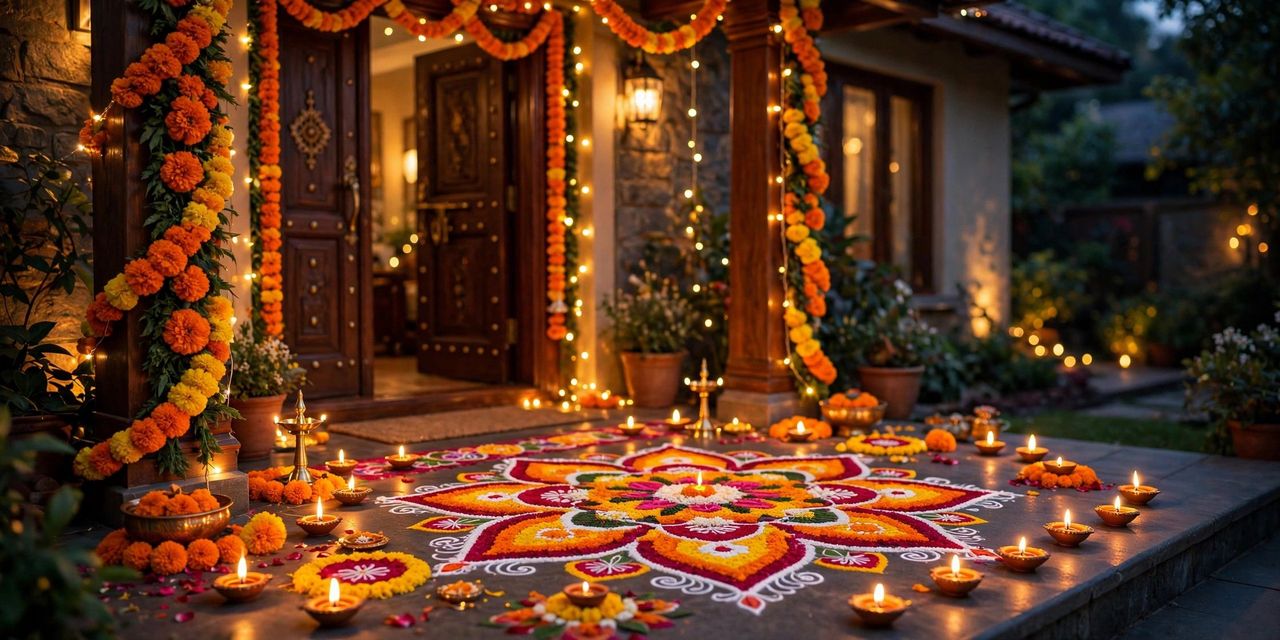
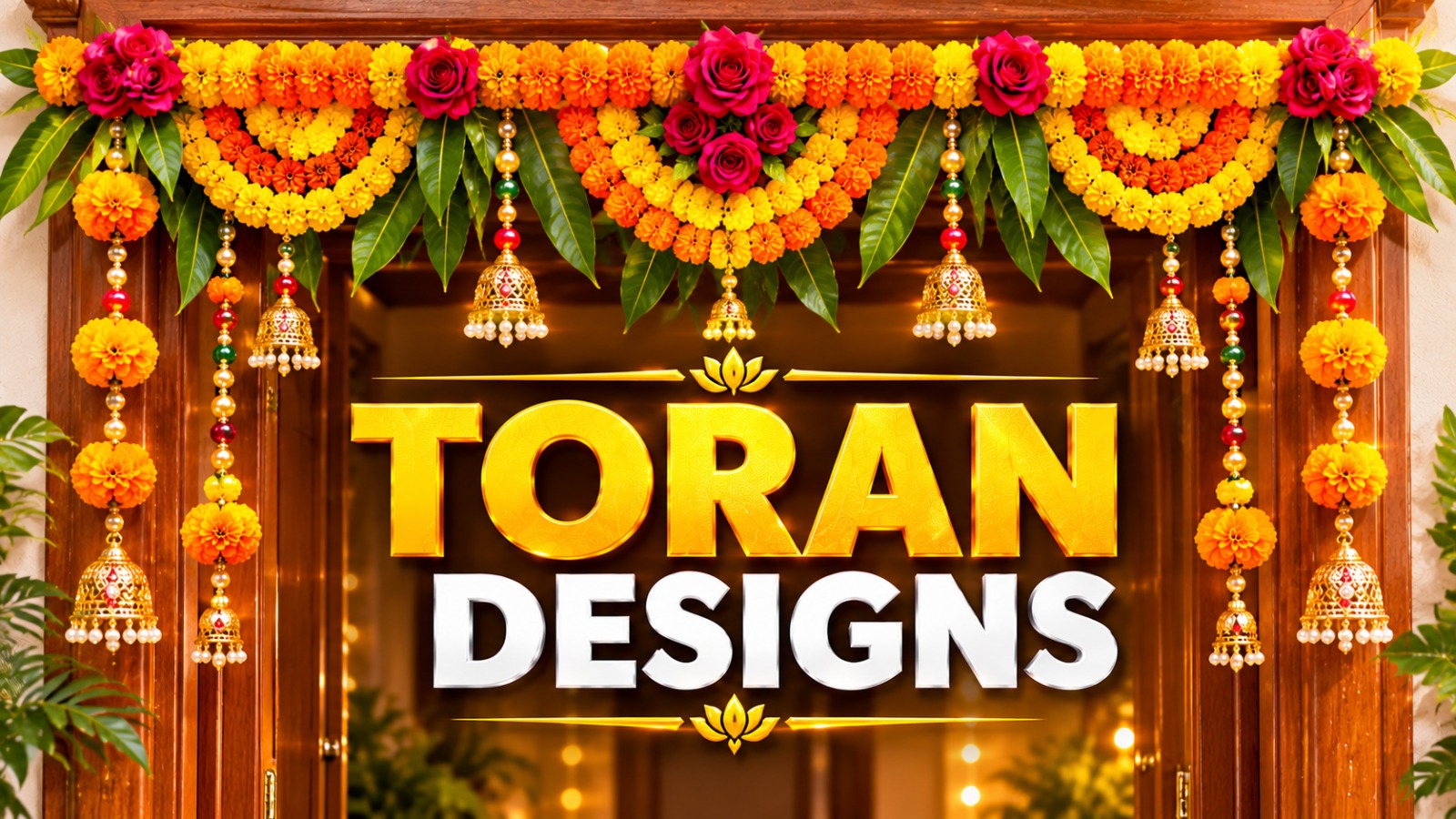
The toran is the first decoration anyone notices on Diwali, because it hangs at eye level, right above the door, framing every person who walks in. Long before guests see the rangoli or the diyas, they see the toran, and it tells them the house is ready for the festival. A good toran does not need to be expensive or elaborate. Fresh marigolds, a string of mango leaves, and a few small bells can transform a plain doorway in ten minutes.
For Diwali 2026, which falls on Sunday 8 November, toran designs range from the traditional marigold-and-mango-leaf garland to fabric hangings, beaded curtains, and long side drapes that run down both sides of the door. This guide covers the main toran designs, how to make one at home, how to hang it properly, and how to pair it with the rangoli and lights at the entrance. Pair your toran with the patterns in our Diwali rangoli designs for door entrance 2026 and the wider look in Diwali decoration ideas at home.
What Is a Toran and Why It Matters
A toran, also called a bandanwar, is a hanging placed above the entrance of a home during festivals. Traditionally it is made of mango leaves and marigold flowers, both considered auspicious. Mango leaves are believed to purify the air and invite positive energy, while marigolds are associated with prosperity and the goddess Lakshmi. Hanging a toran is therefore both decoration and ritual: it marks the home as open to blessings for the new year.
Classic Marigold and Mango Leaf Toran Designs
The classic toran is a single garland strung across the top of the door, with mango leaves tucked between the flowers. To make one, thread marigold heads onto a strong cotton string with a needle, alternating orange and yellow, and tie a mango leaf between every third flower. The finished garland should be about 15 cm longer than the door frame on each side, so it drapes slightly downward at the ends.
Fresh Flower Toran Tips
Fresh torans should be made on the morning of Diwali or the evening before, and kept in a cool place until hanging. Marigolds last well, but they dry out in direct sun, so hang the toran on the shaded side of the door if possible, or hang it in the late afternoon. Spray the flowers lightly with water before hanging to keep them fresh through the evening. If your door faces west and catches the afternoon sun, choose a fabric or artificial toran for the outside and keep the fresh flowers just inside the door.
Fabric, Bead and Artificial Toran Designs
Fabric torans are the best choice when you want a decoration that lasts the whole five-day festival, from Dhanteras on Friday 6 November through Bhai Dooj on Tuesday 10 November. A fabric toran is usually a band of silk or brocade in red, orange, or gold, with embroidered motifs, mirror work, or hanging tassels. It can be folded and stored for next year, which makes it good value over time.
Beaded torans use strings of wooden, glass, or plastic beads, sometimes mixed with small mirrors and shells. They suit modern interiors and apartment doors, because they are light and easy to hang with a hook. Artificial flower torans, made from silk or fabric marigolds, look surprisingly close to fresh ones in evening light and survive the whole festival without wilting. They are the practical choice for a door that gets strong sun or for a family that is away during the day.
Choosing Colours and Length
Measure the door frame before buying or making a toran. A toran for a standard single door is usually 90 to 100 cm wide; a double door needs 150 to 180 cm. The hanging drops at the sides should be short enough not to catch on the door as it opens, usually no more than 30 cm for a side drape. Colour-wise, match the toran to your rangoli: if the rangoli is red and orange, a yellow and orange toran balances it; if the rangoli is multicoloured, a single-colour toran in deep red or gold keeps the entrance from looking busy.
DIY Toran Ideas You Can Make at Home
A homemade toran is a lovely family activity for Choti Diwali, on Saturday 7 November, the day before the main festival. Children can thread marigolds, tie tassels, and paint small paper flowers, while adults handle the measuring and hanging. A paper toran, made from coloured paper cut into leaf and flower shapes and strung together, is a fun project for children and looks charming on an interior door.
- Marigold and mango leaf garland: thread flowers and leaves onto cotton string.
- Fabric scrap toran: knot strips of red, orange, and gold fabric onto a cord.
- Paper flower toran: cut and fold paper flowers, string them with beads.
- Citrus and flower toran: alternate marigolds with small oranges or lemons on a string.
- Bell toran: hang small brass bells at intervals along a marigold garland.
How to Hang a Toran So It Stays Put
The most common toran failure is the garland sliding down on one side. Fix it with two small nails or adhesive hooks placed at the top corners of the door frame, and tie the toran firmly to both. For a heavy fabric or beaded toran, use three hooks: one at each end and one in the middle. Test the door after hanging: open and close it fully to make sure the toran does not catch or drag.
For apartment doors, adhesive hooks are the safest option, because they leave no marks. For a rented home, use removable hooks and avoid nails in the frame. If the toran is long and heavy, support its middle with a small hook or a loop of thread tied to a nail above the frame. Check the toran once in the evening: fresh flowers lose weight as they dry and can shift, so a quick adjustment keeps it level for photographs.
Pairing the Toran with Rangoli and Lights
The toran, the rangoli, and the diyas should feel like one design, not three separate ones. Use the same dominant colour in all three: marigold orange is the natural choice, with red as the second colour. Keep the fairy lights on the door frame rather than across the toran itself, where they can tangle with the flowers. A pair of diyas on either side of the threshold completes the frame, with the toran above and the rangoli below.
If your entrance is small, choose a short toran and a compact rangoli, and let the diyas do the work. If the entrance is large, a long toran with side drapes and a big rangoli balance each other. The goal is a doorway that looks welcoming from the street and warm from inside, and a toran is the piece that ties it all together. For the full festival calendar, see our Diwali 2026 date and Lakshmi Puja calendar.
Helpful Finds for Your Entrance
Warm lights make a toran glow after dark. - a battery-powered fairy string light can be draped along the door frame above the toran, - a solar fairy light strip suits an outdoor entrance or garden gate, and - a warm white LED fairy light adds a soft glow to the doorway without overpowering the flowers.
- Battery Powered Fairy String Lights Silver Wire In
- Solar Fairy Light Strip Outdoor Garden Decoration Spherical
- 1pc 30 Warm White Led Fairy Lights Glowing Shaped
- Led Strip Lights Room
As an affiliate, EventBuzz may earn a commission on qualifying purchases at no extra cost to you.
Conclusion
A Diwali toran is a small decoration with a big effect. Measure your door, choose a design that suits your home, fresh marigolds and mango leaves for tradition, fabric or beads for a longer-lasting look, and hang it firmly with two or three hooks so it stays level all evening. Pair it with a rangoli below and diyas on the sides, and the entrance will feel complete the moment guests arrive. Hang it on the afternoon of Sunday 8 November, check it once before the puja, and let it welcome the festival in.
For more entrance ideas, see our Diwali rangoli designs for door entrance 2026, Diwali rangoli designs with flowers 2026, and Diwali decoration ideas at home.