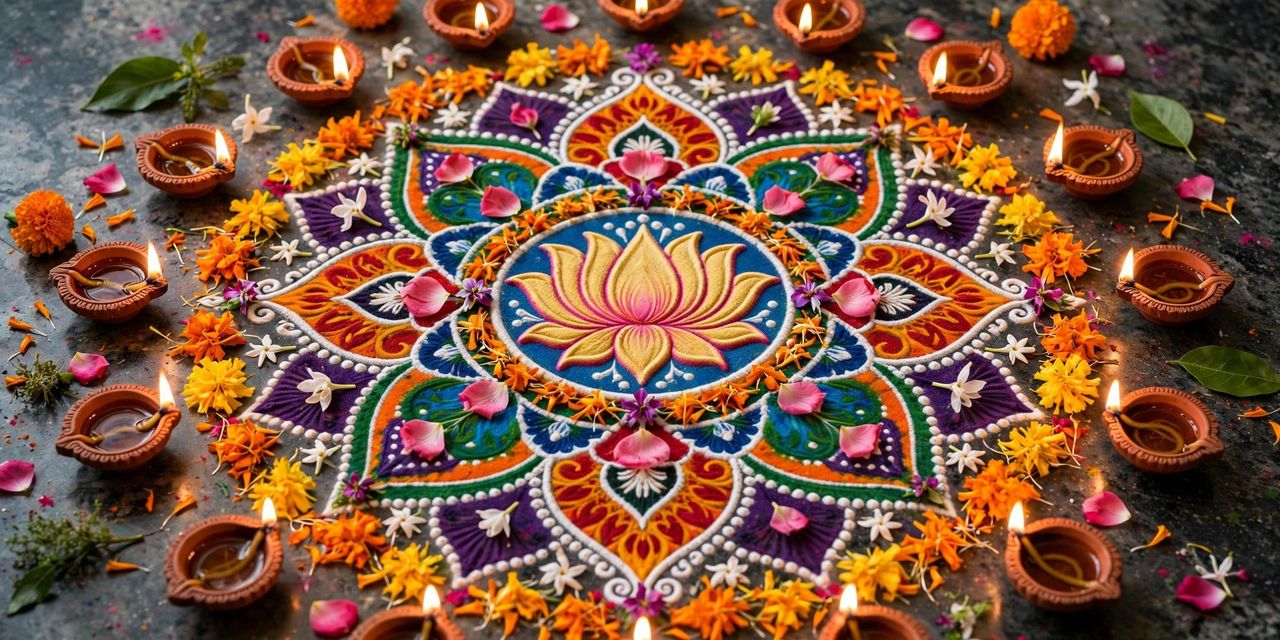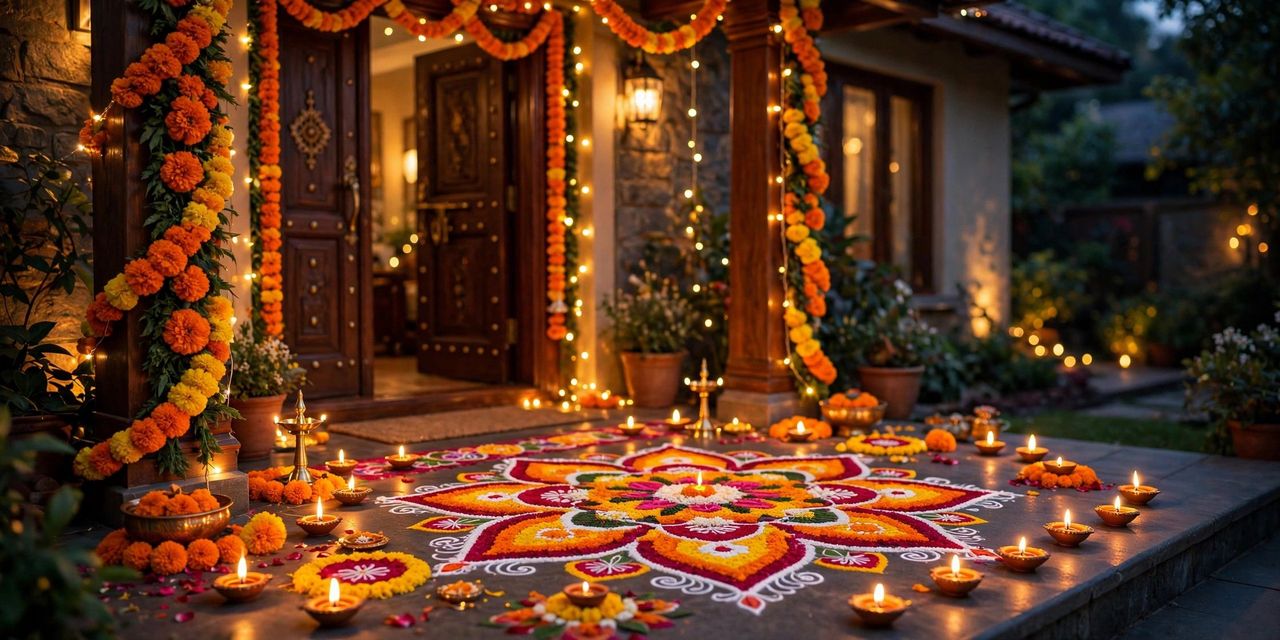
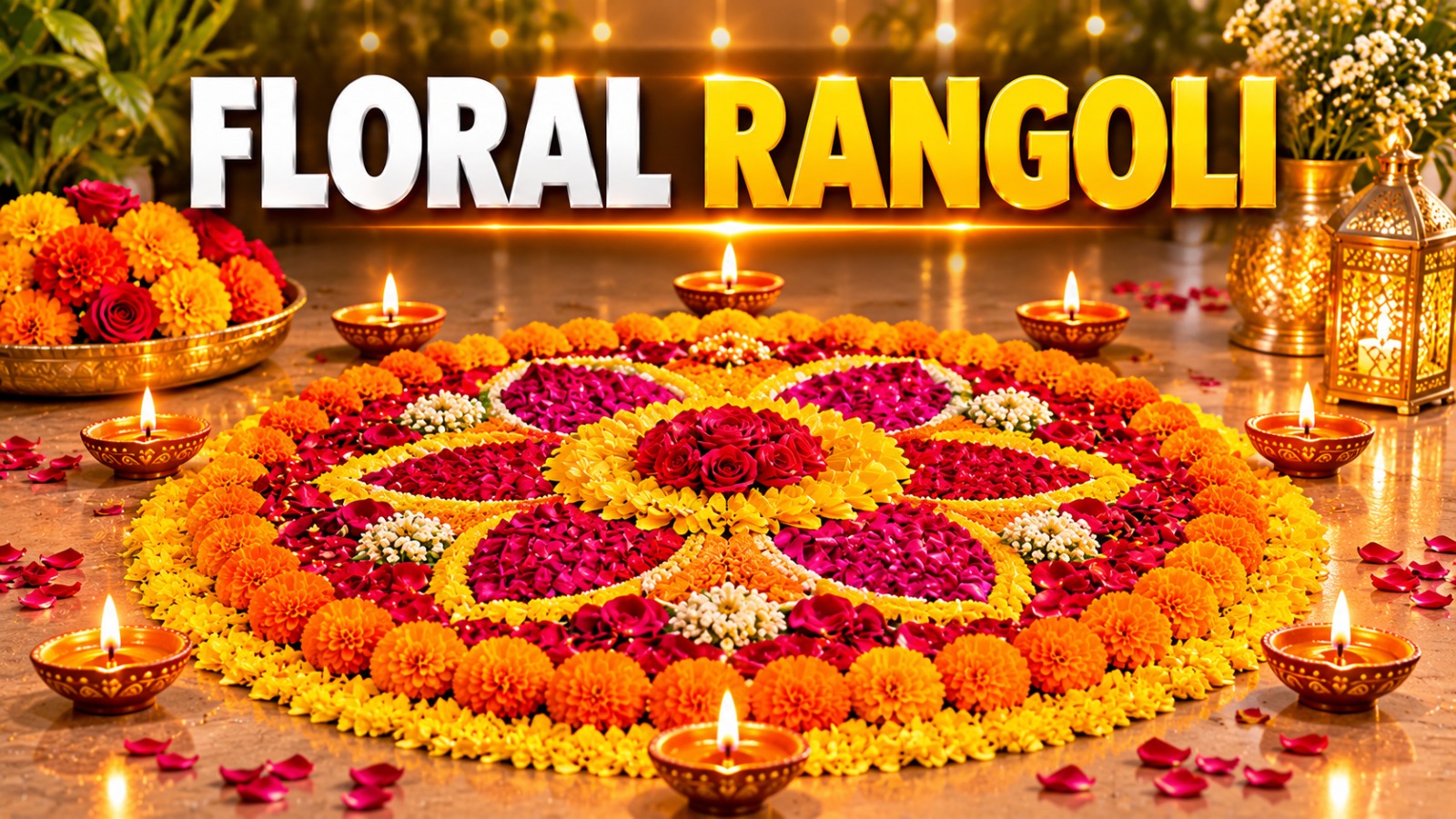
A floral rangoli is the warmest way to welcome Diwali. Where powder rangoli can feel fussy and smudge at the first footstep, a flower rangoli stays put, smells wonderful, and looks rich even when the pattern is simple. Fresh petals catch the light of the diyas around them, and the colours stay vivid all evening. For Diwali 2026, which falls on Sunday 8 November, flower rangoli designs are the natural choice for the entrance, the pooja room, and the courtyard.
The tradition behind rangoli is simple and old: a beautiful pattern at the threshold invites Goddess Lakshmi into the home and marks the house as ready for the festival. Flowers suit that purpose perfectly, because they are fresh, fragrant, and alive. This guide covers the best flower rangoli designs for 2026, which flowers to buy, how much you need, and how to lay a pattern that looks professional even if you have never made a rangoli before. If you are planning the whole look, pair your rangoli with our Diwali decoration ideas at home and the classic patterns in rangoli designs for Diwali 2026.
Why Choose Floral Rangoli Designs This Diwali
Flower rangoli designs have one big advantage over powder: they are forgiving. A petal placed in the wrong spot can be picked up and moved, while a powder line once smudged has to be redrawn. That makes floral rangoli the best option for families with children, for first-timers, and for anyone decorating in a hurry on the morning of Diwali. They are also safer around small children and pets, since there is no loose powder to be inhaled or tracked through the house.
Fresh flowers also bring a fragrance that powder never can. Marigolds have a warm, earthy scent, roses are sweet, and jasmine adds a soft evening perfume as the diyas are lit.
Best Flowers for a Diwali Rangoli
Not every flower suits a rangoli. The best choices are hardy, brightly coloured, and easy to separate into petals. Marigolds are the classic base flower for a reason: they are cheap, they come in orange and yellow, their petals are sturdy, and they hold their colour for hours. Whole marigold heads work beautifully as the outer ring of a circular design.
Marigolds, Roses and Jasmine
Marigolds should make up about half of your rangoli. Use orange marigolds for the main pattern and yellow ones for contrast rings or dots. Red rose petals are the second essential: scatter them in a ring, use them to fill a petal shape, or place single petals as dots between marigold circles. Pink and white roses add a softer tone when you want a pastel design.
Jasmine is best used sparingly, as small white accents or as a garland around the centre diya, because its flowers are tiny and delicate. Chrysanthemums, in white, yellow, or purple, are a good substitute when marigolds run short in the market. Lotus petals, when available, make a stunning centre for a large rangoli, but they are expensive, so save them for the focal point only.
Leaves and Greenery for Contrast
Green leaves are the secret ingredient that makes a flower rangoli look finished. Mango leaves, tulsi leaves, and even simple green leaves from the garden break up the warm colours and give the design its outlines. Lay leaves in a ring around the edge, or use them as the stems of a floral pattern. A thin line of green between an orange ring and a red ring makes both colours look brighter.
Easy Floral Rangoli Designs for Beginners
The simplest beautiful design is the concentric circle. Mark a small circle in the centre with chalk, then lay rings outward: a ring of red rose petals, a ring of orange marigolds, a ring of yellow marigolds, and a final ring of green leaves. Place a diya or a small brass bowl of water with floating flowers in the centre. The whole design takes about twenty minutes and looks complete from every angle.
Small Rangoli Ideas for Apartments and Balconies
Small spaces need small designs, and flower rangoli adapts well. A dinner-plate-sized circle on a tray or a large thali works on a balcony or a small landing: fill the plate with marigold petals, place a diya in the middle, and set it by the door. A single row of marigold heads along the balcony railing, with a few diyas, gives the same festive feeling without needing floor space.
If your building does not allow rangoli in the corridor, make the design just inside your own doorway, on a mat or a wooden board that can be moved.
How to Make a Flower Rangoli Step by Step
Start by buying flowers the morning of Diwali, or the evening before, and keep them in a cool place sprinkled with water. Separate the petals into bowls by colour before you begin, so you are not sorting while you lay the design. Sweep and mop the floor where the rangoli will go, and let it dry completely, because petals slide on a damp floor.
- Mark the outline lightly with chalk or a white thread laid on the floor.
- Lay the outer ring first, using whole marigold heads or large petals.
- Fill the inner rings with rose petals, working from the outside in.
- Add leaf accents and small dots of contrasting colour last.
- Place the centre diya or urli, then light the diyas around the edge.
- Step back and check the design from standing height before finishing.
Floral Rangoli for the Pooja Room and Courtyard
The pooja room deserves a smaller, more delicate flower rangoli. A small circle of rose petals and jasmine in front of the mandir, with a single diya, is enough, and it will not compete with the idols and the puja thali. Keep the design low and flat so nothing tips over during aarti.
A courtyard or garden rangoli can be much larger. Here you can build a big lotus design, with marigold petals forming the outer petals and rose petals the inner ones, and a ring of diyas around the edge. Large outdoor designs also suit a mix of flowers and powder: use powder for the fine lines and flowers for the filled areas, which gives you the detail of powder with the richness of flowers. For the rest of the home, see our Diwali 2026 date and Lakshmi Puja calendar so your rangoli is ready before the evening puja.
Keeping Your Flower Rangoli Fresh All Evening
Petals dry out fastest in direct sun and wind, so lay the rangoli in the shade or indoors during the day and move it only if needed. A light sprinkle of water from a spray bottle, applied an hour before guests arrive, revives marigolds and rose petals without making the floor wet. Avoid soaking the design, because wet petals stick together and lose their shape.
Diyas placed directly on petals can scorch them, so set each diya on a small leaf or a coin. Battery-operated candles are a good alternative for the centre of the design, where a real flame might be knocked over. The next morning, gather the petals and float them in a bowl of water as a simple decoration, or compost them. Never throw flower offerings into a drain.
Helpful Finds for Your Floral Rangoli
A few small additions make a flower rangoli glow after dark. - a floral battery-operated candle set can sit safely in the centre of a petal design, - a peony-shaped scented candle gift box adds fragrance beside the rangoli, and - star fairy lights strung along the entrance frame the design beautifully.
- Floral Battery Operated Candle Set Remote Timer Perfect
- 4pcs Peony Shaped Rose Scented Candle Gift Box Valentines
- 1pc Star Fairy Lights 40 Led Star String Lights
- Battery Powered Fairy String Lights Silver Wire In
As an affiliate, EventBuzz may earn a commission on qualifying purchases at no extra cost to you.
Conclusion
A Diwali rangoli with flowers is the easiest way to make your home feel festive, fragrant, and welcoming. Buy marigolds and rose petals on the day, lay a simple circle or mandala, add green leaves for contrast, and finish with a diya in the centre. The design does not need to be complicated to be beautiful: fresh flowers and warm light do most of the work. Make it in the late afternoon of Sunday 8 November, photograph it before the puja, and enjoy a threshold that truly welcomes the festival in.
For more festive ideas, try our Diwali decoration ideas at home, rangoli designs for Diwali 2026, and the Diwali 2026 date and Lakshmi Puja calendar.