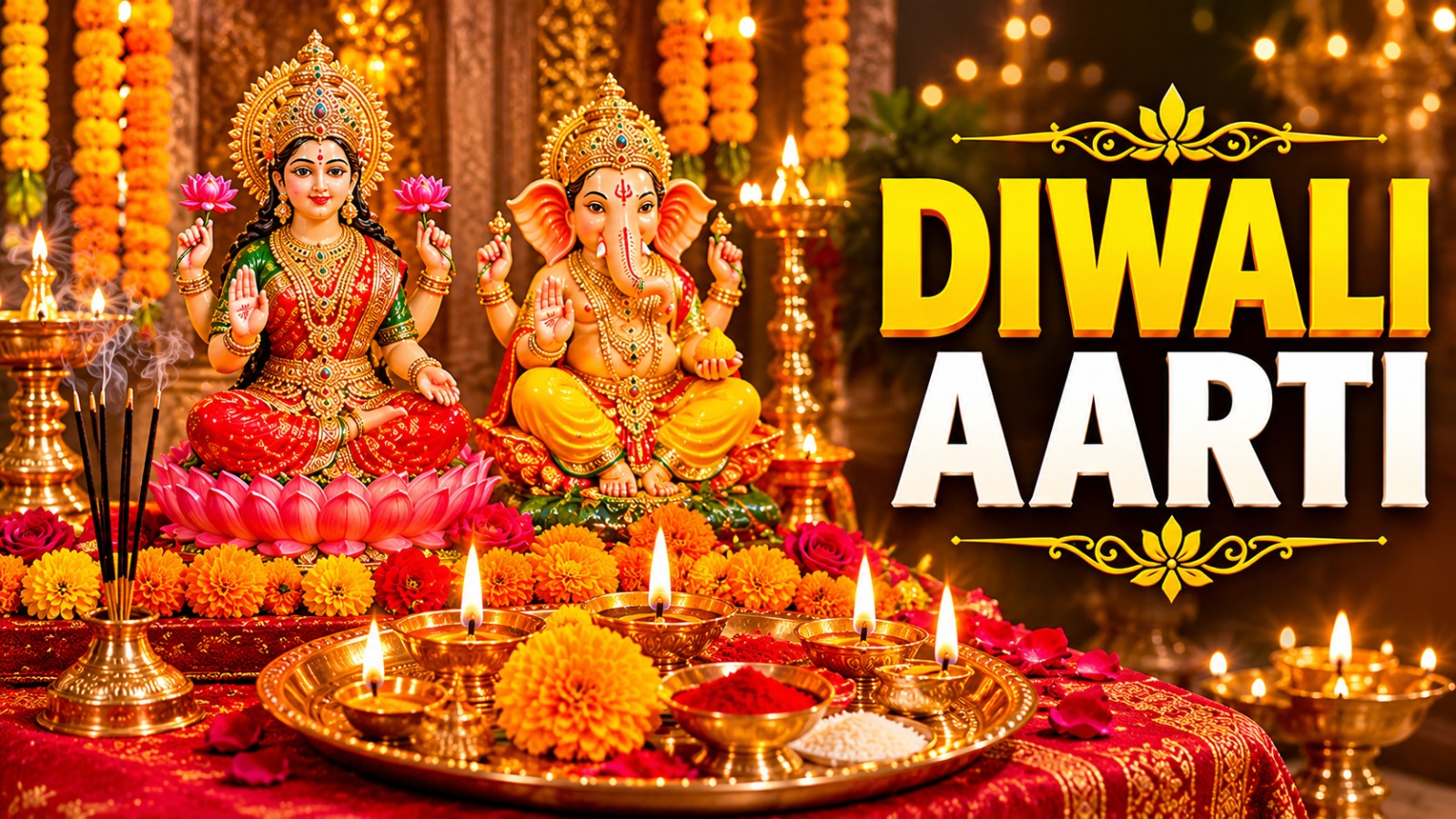
The aarti is the moment Diwali puja turns into music. After the offerings are made and the mantras are chanted, the family stands together, the camphor flame is lit, and the aarti is sung. On Diwali night, Sunday 8 November 2026, the Lakshmi aarti and the Ganesh aarti are the two songs almost every home will sing, whether the family knows them by heart or reads them from a book.
This guide brings together the most loved Diwali aarti lyrics, simple mantras you can chant at home, and the practical steps for performing aarti well. You do not need a trained voice or perfect pronunciation. A steady flame, a clear intention and a family singing together are what make the aarti beautiful.
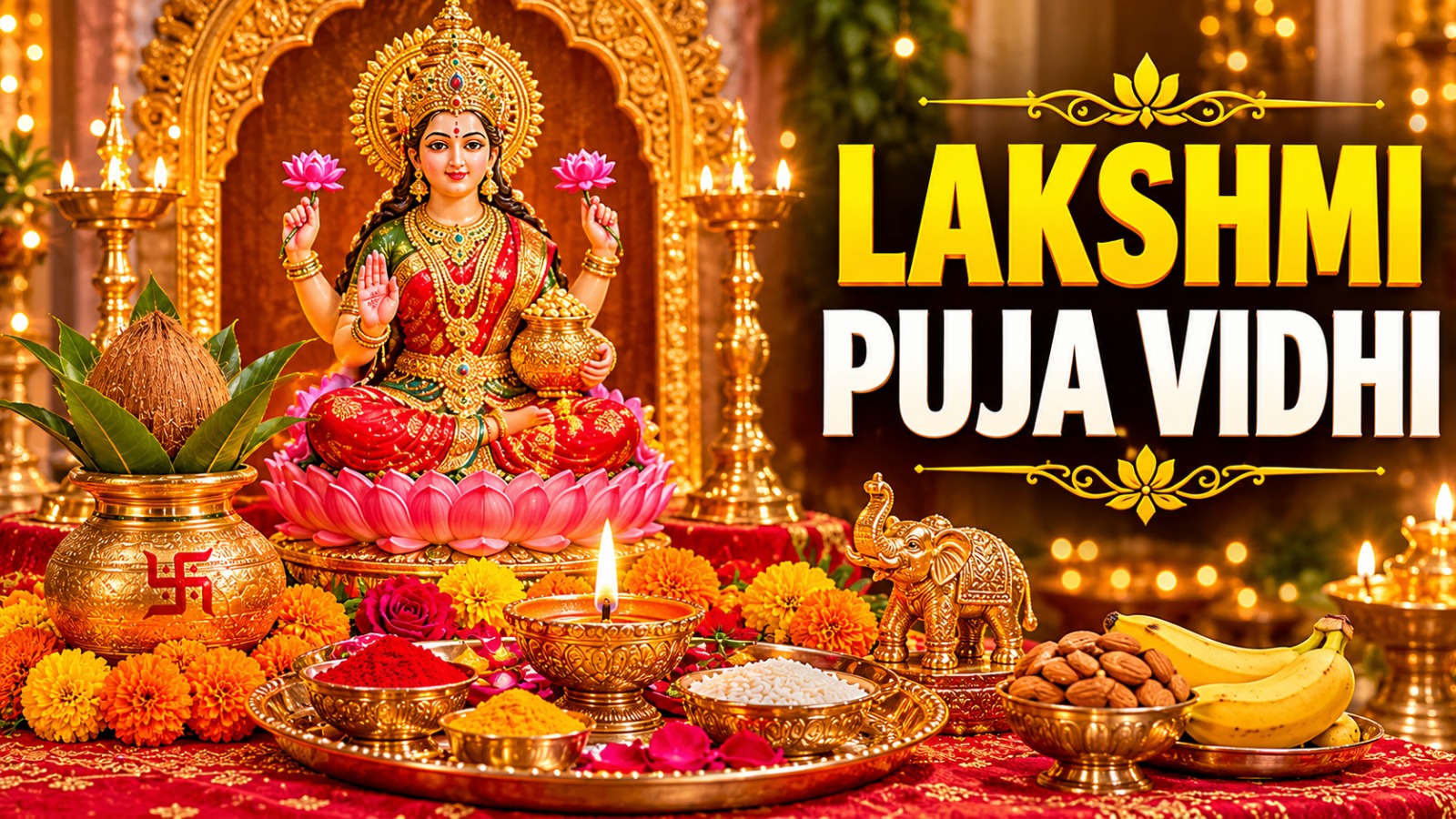
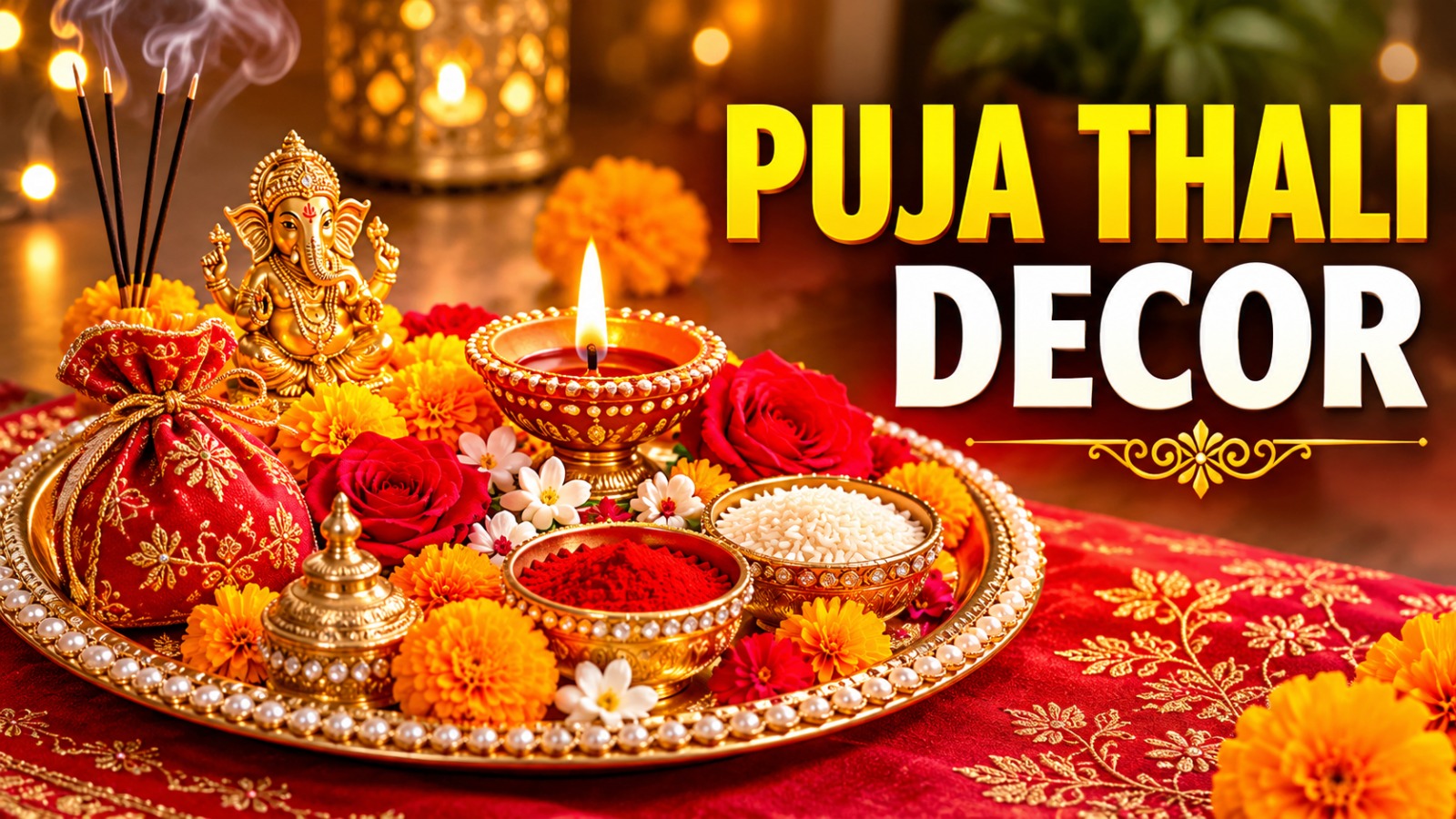
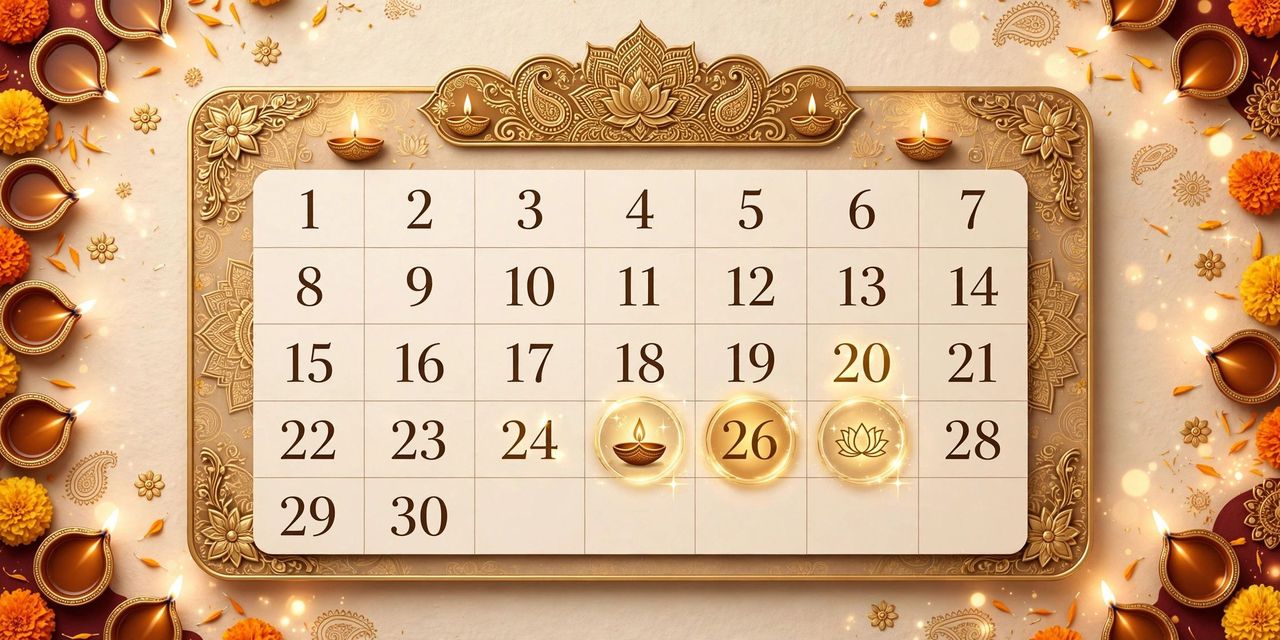
For the wider festival, see our Lakshmi Puja vidhi step-by-step guide, the puja thali decoration ideas, and our guide to Diwali 2026 date and Lakshmi Puja calendar.
How to Perform Aarti at Home
Aarti is performed after the main offerings of the puja. Place camphor or a small ghee diya in the aarti plate, along with flowers and a little kumkum. Light the camphor, ring the bell gently, and move the plate in slow clockwise circles before the deity. The movement should be calm and steady, not hurried.
Everyone present should stand or sit facing the idols, with hands folded or clapping softly to the rhythm. After the song ends, pass the aarti plate around so each person can cup their hands over the flame and touch their forehead, receiving the blessing. Then place the plate down safely and let the camphor burn out under watch.
Ganesh Aarti: Jai Ganesh, Jai Ganesh, Jai Ganesh Deva
Ganesha is worshipped first in every puja, so his aarti is sung first. The most widely sung Ganesh aarti begins with the lines Jai Ganesh, Jai Ganesh, Jai Ganesh Deva, Mata Jaki Parvati, Pita Mahadeva. The song praises Ganesha as the remover of obstacles and the giver of wisdom, and asks for his blessing before the main puja begins.
The aarti continues with verses describing Ganesha's form, his love of modak, and his power to remove sorrow. Families usually sing it together, with children joining in on the repeated refrain. If you are learning it for the first time, practise the first verse before Diwali night, and keep a printed copy nearby so nobody feels nervous about the words.
Lakshmi Aarti: Om Jai Lakshmi Mata
The Lakshmi aarti, Om Jai Lakshmi Mata, is the best-known song of Diwali night. It opens with Om Jai Lakshmi Mata, Maiya Jai Lakshmi Mata, Tumko Nis Din Sevat, Hari Vishnu Vidhata. The verses praise the goddess as the giver of prosperity, the one who removes poverty and sorrow, and the mother who protects her devotees day and night.
As the aarti is sung, offer flowers after each verse if your family follows that custom, and keep the flame steady. The song is usually sung twice, once with full devotion and once as the aarti is passed around. Its simple, repeated lines make it easy for children and elders to join in, which is exactly why it has stayed the Diwali favourite for generations.
Simple Lakshmi Mantras for Diwali Night
Mantras are chanted during the puja, before the aarti. The simplest and most widely used Lakshmi mantra is Om Shree Mahalakshmyai Namah, repeated eleven, twenty-one or one hundred and eight times with a mala or on the fingers. It is short, easy to remember, and suitable for the whole family.
Another common mantra is Om Hreem Shreem Lakshmibhyo Namah, chanted with focus on prosperity and wellbeing. If long mantras feel difficult, chanting the goddess's name, Jai Maa Lakshmi, with sincerity is also accepted in home puja. What matters is attention and devotion, not speed or volume. Chant slowly, breathe evenly, and let the family chant together.
Other Aartis and Prayers of Diwali
Many families also sing the aarti of Lord Rama, since Diwali marks his return to Ayodhya, or a short Vishnu aarti, as Lakshmi is the consort of Vishnu. A simple Om Jai Jagdish Hare is sung in some homes as a closing prayer. You can include whichever aartis your family has always sung, and skip those that are new to you.
For Choti Diwali on Saturday 7 November and Govardhan Puja on Monday 9 November, shorter prayers and a simple diya aarti are enough. The full Lakshmi and Ganesh aartis belong to Diwali night itself. Keeping the other days simpler helps the main night stay special, and it keeps the festival week from feeling like a long list of duties.
Tips for a Peaceful Aarti
Keep the aarti area safe. Camphor flames can flare, so hold the plate steady, keep it away from curtains and loose clothing, and have water nearby. Children should hold the bell or flowers rather than the flame, and elders should be seated comfortably where they can see the idols.
Print the aarti lyrics in large letters, or open them on a phone kept at a distance from the flame. Sing at a comfortable pace so everyone can follow, and do not worry if someone misses a line. The aarti is a prayer, not a performance, and a calm, together song is worth more than a perfect one.
Helpful Finds for the Festival
Soft candlelight around the puja area helps the aarti feel calm and focused. These candle sets suit a home altar and can be reused for evenings after Diwali.
- Mindful Relaxation Scented Candles Natural Soy Wax
- 9 heart shaped scented candles burn 3 hours wedding supplies
- 12-Pack Women's Candle Set, Small Soy Candles
- Floral Battery Operated Candle Set Remote Timer Perfect
As an affiliate, EventBuzz may earn a commission on qualifying purchases at no extra cost to you.
Conclusion
The Diwali aarti is simple: light the flame, sing together, and pass the blessing around. The Ganesh aarti opens the puja, the Lakshmi aarti fills the heart of the night, and a short mantra chanted with focus ties them together. Keep the lyrics ready, keep the flame safe, and let the family sing at its own pace.
When the last verse ends and the prasad is shared, the song stays in the air a little longer. That is the real gift of the aarti: a prayer the whole family carries together into the new year.