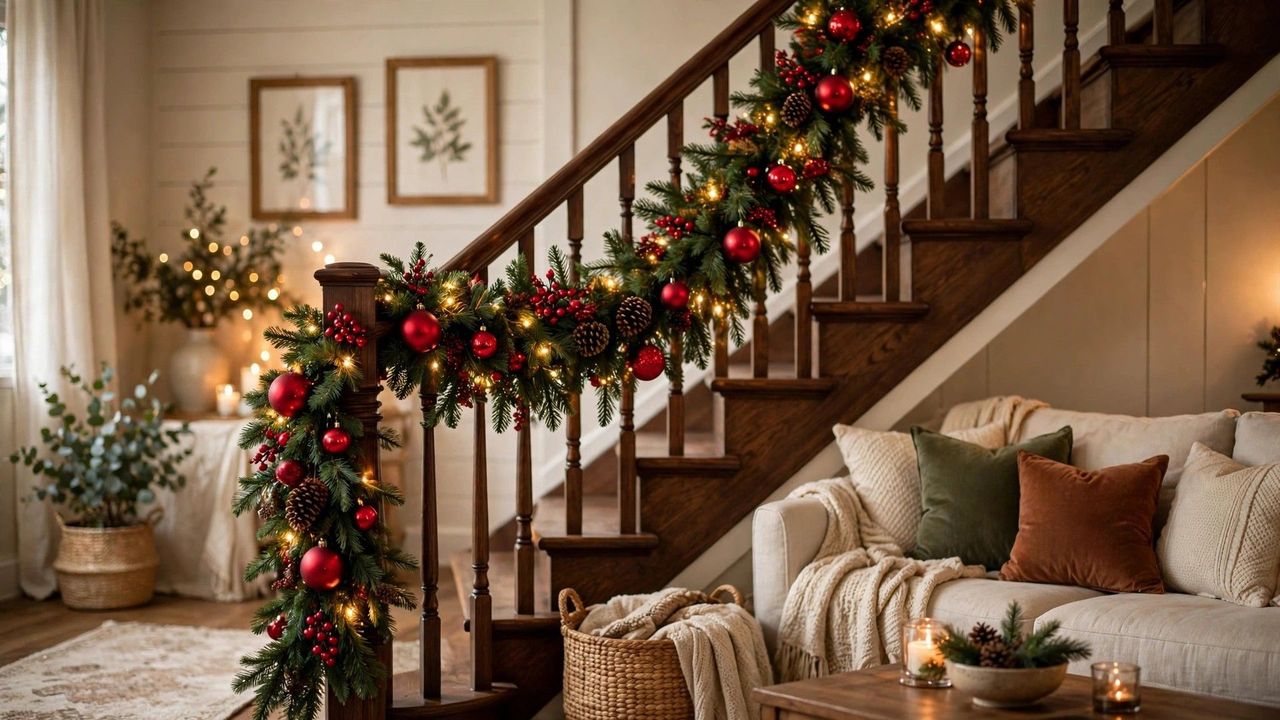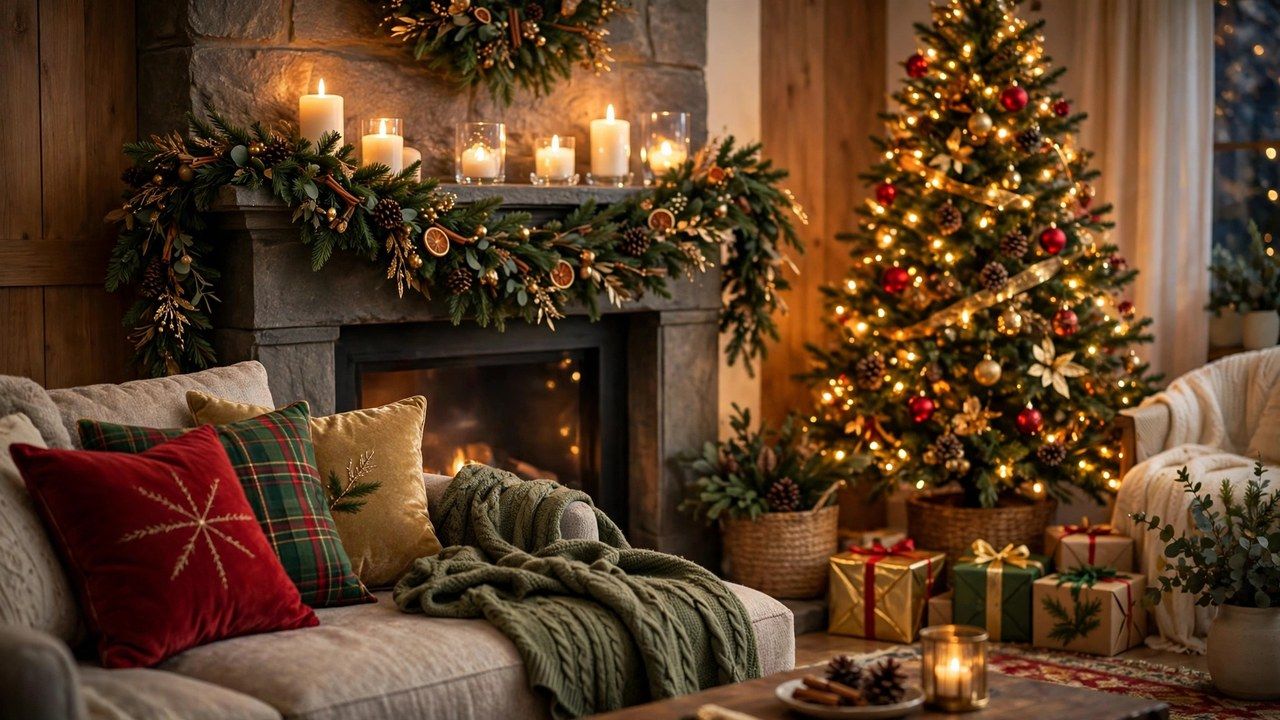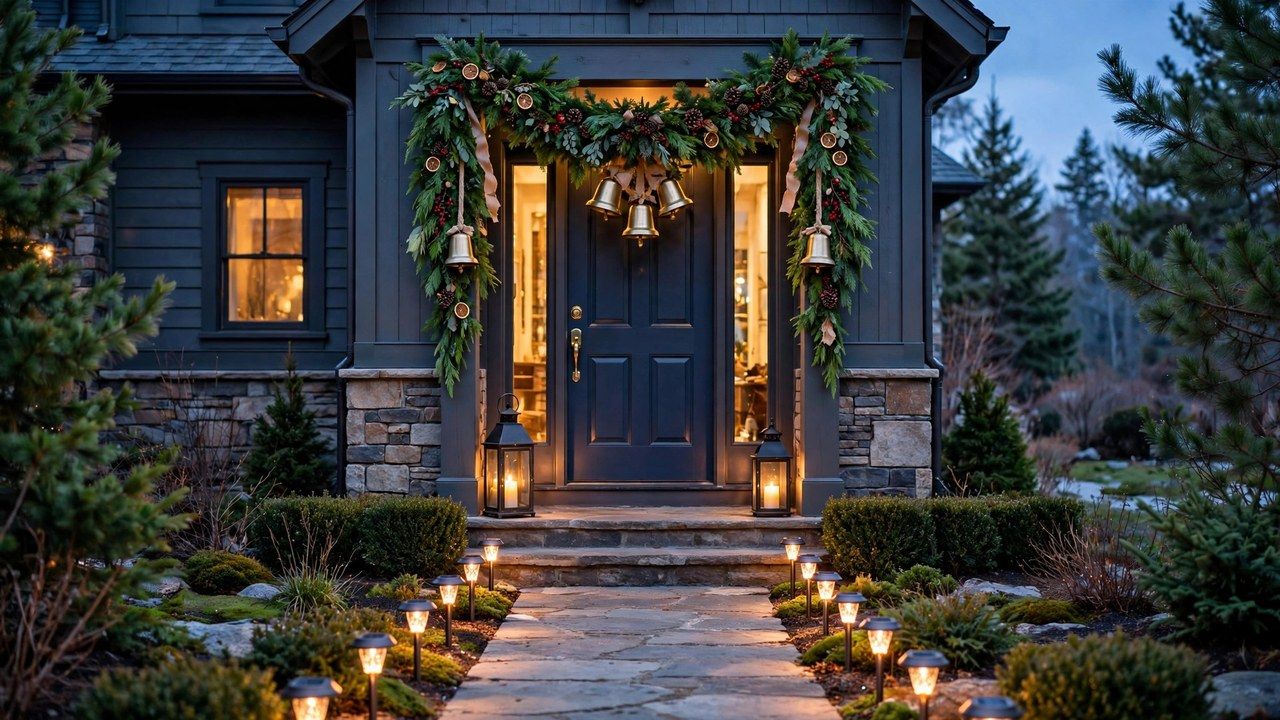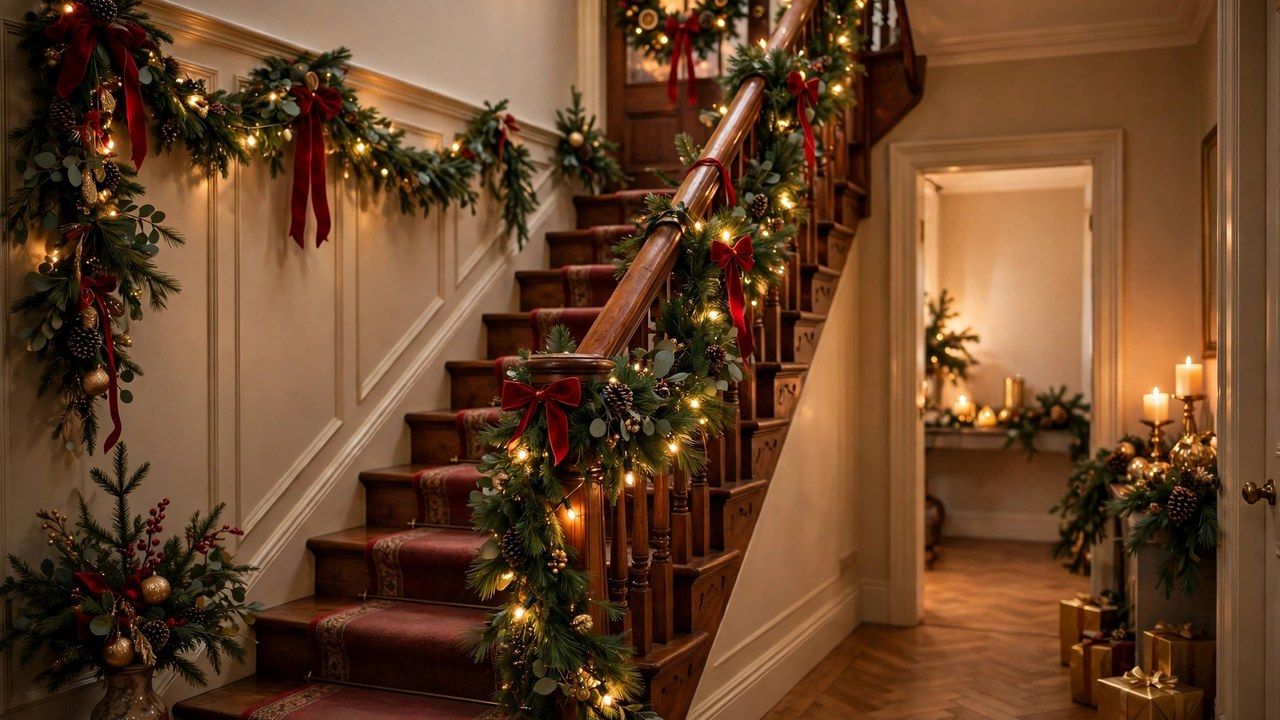
A decorated staircase is the most theatrical surface in a house: it is the backdrop to Christmas morning descents, the frame of the hallway, and the first thing guests see through the front door. Christmas staircase decor also sits on the one structure in the home designed for people to hold onto while moving, which means beauty here must negotiate with safety from the first swag of garland. This guide does both, in that order of priority, beautifully.
The components are simple: garland along the banister, ribbon for structure and color, lights for the evening, and a landing treated as a small stage. Our garland ideas guide covers garland types and styling across the home; this guide is specifically about stairs, their measurements, their fixings and their rules.
The Safety Rules That Come Before Style
Rule one: the handrail must remain a handrail. Guests, children, older relatives and anyone carrying plates in the dark need to grip it, so garland should wrap or swag beneath and beside the rail’s gripping surface, never building a thick padded layer over the top where hands slide. Rule two: nothing on the treads. No garland tails, no ornaments, no lantern on a step, ever; decorations live on the banister, the newel post and the landing, not underfoot.
Rule three: fixings must hold without damage or surprise. Use soft ties, ribbon, floral wire padded with fabric, or banister garland ties made for the job, spaced closely enough that a caught sleeve or an excited child cannot pull a length loose. Rule four: keep the route lit and the cords out of it. Battery lights remove the cord problem entirely, which is why they headline the lighting section below. Style happens inside these four rules, and there is plenty of room.
Measuring: How Much Garland a Staircase Actually Needs
Measure the banister’s full length, including the landing run, then decide your style, because swags eat length. A straight, tight wrap uses roughly the rail’s own length. Classic swags, where the garland dips between fixing points, typically need about one and a half times the rail length. Deep, luxurious swags can take twice the length. Buying to the tight measurement for a swagged look is the classic December disappointment, so measure, choose, then add a little spare for the newel post.
Work in sections rather than one heroic length where you can: individual swags tied between balusters or at intervals are easier to hang straight, easier to fix when one sags, and easier to store labeled in January. Mark your fixing rhythm with small pieces of tape on the rail before the garland goes up, and the whole job becomes assembly instead of improvisation.
Three Garland Styles, From Classic to Modern
| Style | Look | Effort | Best for |
|---|---|---|---|
| Classic swag | Greenery dipping in even scallops, bows at each peak | Medium | Traditional halls, family homes |
| Full wrap | Garland wound continuously around the rail | Higher | Short rails, cottage stairs |
| Asymmetric cascade | One lush run along the base or one side, tapering off | Lower | Modern and minimalist homes |
| Baseboard run | Garland along the stair stringer at ankle height, rail left bare | Lowest | Homes where the rail must stay fully clear |
The baseboard run deserves special mention: it keeps the handrail completely untouched while still giving the staircase its greenery, and it is the right answer for households with anyone unsteady on stairs. Decorating the structure beside the rail instead of the rail itself is a legitimate, handsome style, not a compromise.
Ribbon: Structure, Color and the Bow Rhythm
Ribbon does three jobs on a staircase. Structurally, wide ribbon ties are the softest, safest fixings you can use. Visually, it carries your palette up the stairs in a single confident line: classic red velvet, burgundy, plaid, or the blue of a color-themed hall. Rhythmically, bows at each swag peak create the pattern the eye reads as “decorated” from the front door.
Choose wired ribbon for bows that hold their shape and unwired for flowing tails, and keep tails short on stairs: a long ribbon tail is a snag looking for a passerby. Mix ribbon with the garland rather than layering it on top afterward; weaving a ribbon run through the swags as you hang them locks the composition together and hides your ties inside the design. Our front door decor guide uses the same ribbon logic for the welcome on the other side of the hall door.
Safe Lighting for Stairs
Battery-operated LED string lights are the staircase standard for good reasons: no cord crossing the landing, no plug hunt, timers that switch the stairs on for the evening and off at bedtime, and cool bulbs beside greenery and ribbon. Weave them through the garland as you hang it, battery pack tucked and tied at the bottom or top end, reachable for the timer but invisible in the composition.
Keep light levels honest. Stair lights are decoration, not task lighting: the staircase still needs its real light for safe use, especially for guests. If your garland lights tempt anyone to skip the hall light, they are too dim a promise for a moving route. Candles belong on the landing in stable lanterns if anywhere, never on steps, and never left burning when the house sleeps.
The Landing and the Newel Post: Small Stages
The newel post at the bottom of the stairs is the staircase’s exclamation point: a wreath hung on it, a big bow, a finial wrapped in garland, or a lantern at its base on the floor beside, not on, the first step. The landing, if you have one, takes a small tree, a basket of pinecones and blankets, or a console with candles in lanterns and a mirror that doubles every light you place near it.
Stockings have a staircase tradition too, hung along the banister where a mantel is missing, and they work beautifully provided they hang on the room side of the rail, tied securely, and do not narrow the walking route. In a household that uses the stairs at speed, and most do in December, place them on the upper stretch where traffic is calmest.
Keeping It Beautiful All Season
Staircase decor lives a harder life than mantel decor: it is brushed past, gripped around and vacuumed under daily. Real greenery on stairs dries and sheds faster with the passing traffic, so many households choose quality faux garland here even when the mantel wears real, and no guest has ever detected the strategy. Check ties weekly, re-fluff swags after parties, and keep a small brush for needle patrol if real garland is shedding near the treads.
Honest pros and cons: pros are impact, the staircase transforms the whole hall, photographs love it, and the materials redeploy to mantels and doors in future years. Cons are the measuring, the ladder work on upper stretches, and the discipline the safety rules demand. If the full treatment is too much this year, the baseboard run plus a dressed newel post delivers most of the effect at a fraction of the effort. When the season ends, our storage guide shows how to coil and label garland sections so next December starts at the tape marks.
Conclusion
A great Christmas staircase is a safe one wearing beautiful clothes: rail kept grippable, treads kept clear, garland measured generously and tied softly, ribbon setting the rhythm, and battery lights doing the evening glow. Build it in that order and the most theatrical surface in your home will also be one of its most welcoming.