A dog in a well fitted Christmas costume can be the photograph of the year, but the emphasis belongs on well fitted, and on a dog who is genuinely fine about it. This guide to christmas costumes for dogs for 2026 puts fit, comfort and safety first and cuteness second, in that order, on every page: how to measure your dog, the safety checks no costume should fail, which styles suit which temperaments, and the honest alternatives for dogs who would rather wear a bandana and their dignity.
Costumes are one chapter of a dog friendly Christmas; our Christmas gifts for dogs guide covers the treats and toys side with the same safety first approach, and our Christmas photo outfits guide shows how a dog’s festive piece coordinates with the whole family’s look. Read the fit and safety sections before you fall for any product photograph, because a costume is only cute on a dog who is comfortable in it.
First Principle: Your Dog’s Comfort Outranks Every Photograph
Dogs cannot tell you a costume pinches, overheats or frightens them in words, but they tell you plainly in behavior: freezing in place, tucked tail, ears pinned back, yawning, lip licking, shaking off repeatedly, scratching or biting at the fabric, trying to roll it off, or going unusually still and quiet. Those are not funny photo opportunities; they are a dog asking for the outfit to come off, and the correct response is to take it off, reward the dog, and choose a lower key option or none at all.
Plenty of dogs genuinely enjoy dressing up, especially when outfits arrive gradually, paired with treats, and worn briefly at first. The difference between a happy costumed dog and a miserable one is almost always the process: measured fit, short first wear, constant supervision, and an owner ready to abandon the whole idea without disappointment. Decide before you shop that the dog’s verdict is final, and every choice below gets easier and kinder.
How to Measure: Neck, Chest and Length
Costume sizing fails more often than costume quality, so measure your dog rather than trusting breed size labels. You need three measurements, taken with a soft tape over the coat while the dog stands: neck, loosely around where a collar sits, with room for two fingers; chest, around the widest part of the ribcage just behind the front legs, which is the measurement that decides most costumes; and length, from the base of the neck to the base of the tail. Weigh your dog too, since many size charts break ties by weight.
When your dog falls between sizes, size up and adjust with the costume’s own straps rather than squeezing into the smaller one. Check the fit dynamically, not on a statue: your dog should be able to walk, sit, lie down, turn their head and breathe with an open, relaxed mouth while wearing it. Any costume that restricts the neck, rides over the eyes, covers the ears tightly, or requires the tail to be threaded or bent is a fail, however adorable the listing looked.
The Safety Checklist No Costume Should Fail
Run every costume, bought or homemade, through this filter before it touches your dog. No choke hazards: nothing tight around the neck, no ties or ribbons that can tighten, and collars stay underneath, never replaced by costume fastenings. No small detachable parts: bells, buttons, glued eyes, pompoms and plastic holly that a dog can chew off and swallow turn a photo prop into a vet visit, so inspect stitching and remove or avoid weak parts. No overheating: full body suits plus central heating plus excitement is a real risk, covered in the next section.
Supervision, always: a costumed dog is never left alone, not for a minute, because fabric tangles, parts get chewed and stress escalates unwatched. Freedom to move and toilet: the costume must not block walking, sitting or a toilet break. Safe materials: avoid anything with dangling strings, tinsel like strands, or strong chemical smells, and keep costumes away from candles, heaters and the kitchen. Our dog gifts guide applies the same checklist thinking to holiday treats and toys around the house.
Overheating, Breathing and the Dogs Who Need Extra Care
Dogs regulate heat mainly by panting, and a costume adds insulation precisely when a December house is at its warmest and most exciting. Watch for heavy panting, drooling, restlessness or a dog seeking cool floors, and remove the costume at the first sign, moving to a cool room with water. Keep costume sessions short indoors, and save full outfits for brief photo moments or cool outdoor wear rather than a whole party evening.
Some dogs need a default no or extra caution: flat faced breeds, whose breathing is already compromised; thick double coated breeds in heated rooms; puppies, whose temperature regulation and stress tolerance are immature; senior dogs and any dog with breathing, heart or mobility conditions. For these dogs, the festive bandana or a lightweight festive collar cover is not a compromise; it is the correct costume. When in doubt, ask your vet, not the internet, and let a plain happy dog be the photo.
Costume Styles Compared: Suits, Capes, Sweaters and Bandanas
| Style | Comfort | Photo impact | Best for |
|---|---|---|---|
| Full Santa or elf suit | Lowest: warm, complex fit | Highest | Calm, costume tolerant dogs, brief sessions |
| Cape or harness style | Good: attaches over a harness, body stays free | High | Most dogs; easy on, easy off |
| Festive sweater | Good if breathable and correctly sized | Medium | Lean or short coated dogs who feel the cold anyway |
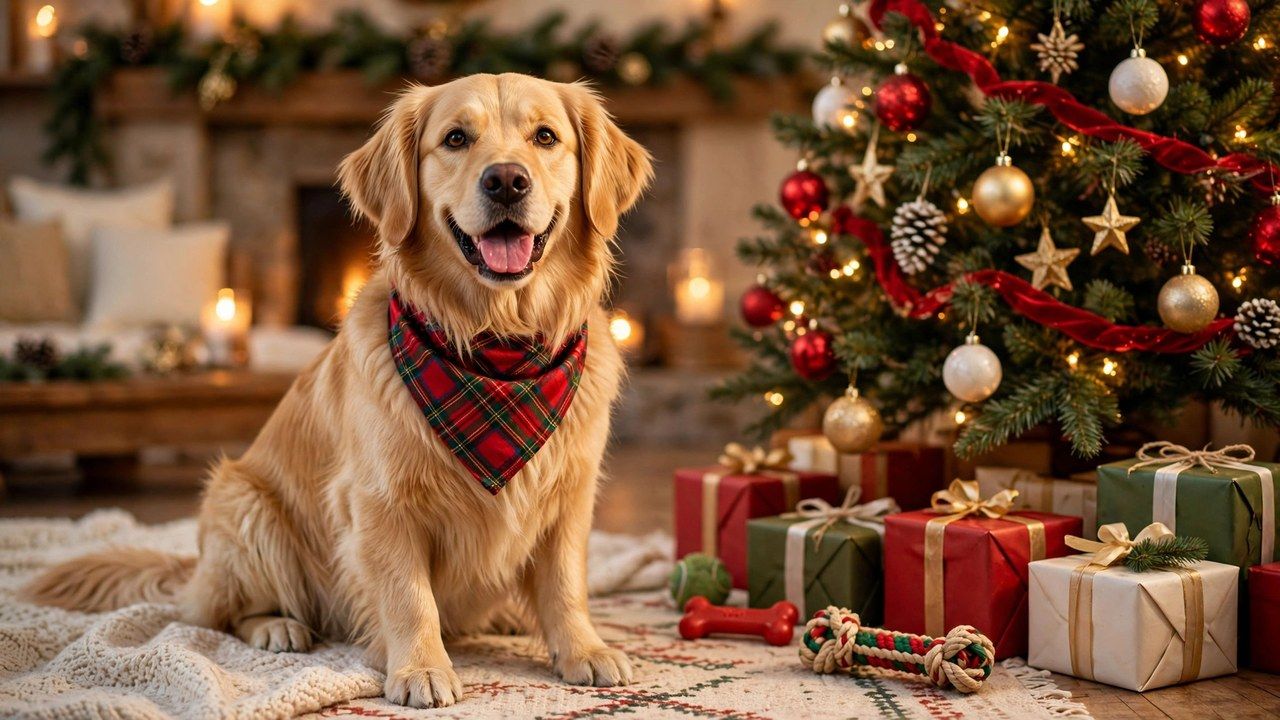
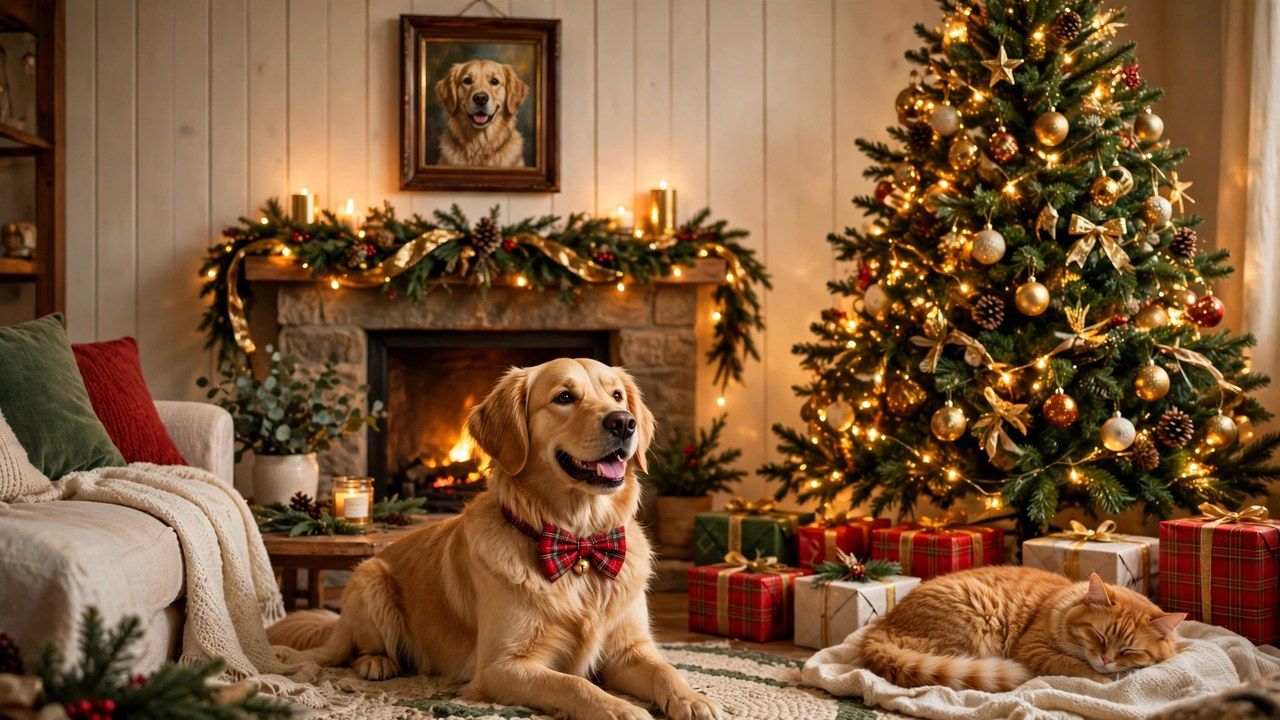
| Bandana or bow tie collar | Excellent: seconds to wear | Charming rather than dramatic | Every dog, including costume refusers |
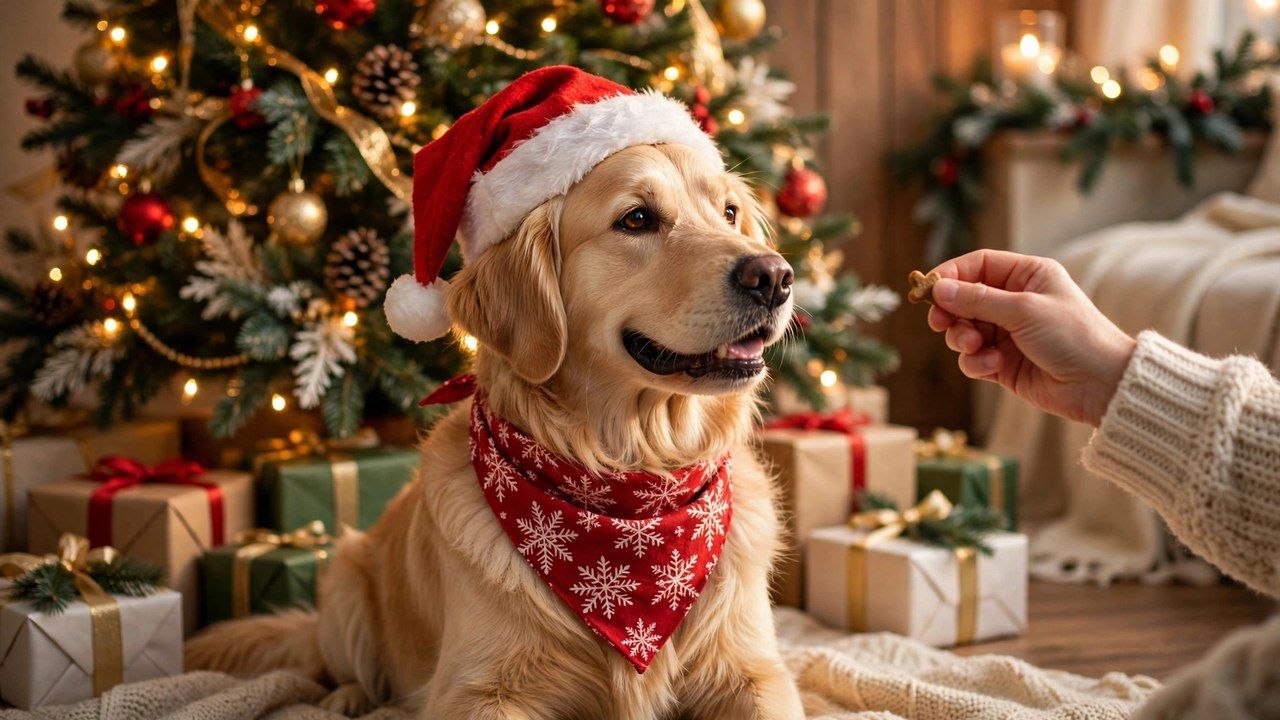
| Hat or antler headband | Lowest tolerance item on most dogs | High for ten seconds | A single quick photo on a dog who accepts it, then off |
The harness attached cape deserves its reputation as the best all rounder: it carries the visual joke, a rider, a cape, a festive saddle, while the dog’s body, legs and head stay completely free, and it removes in one clip when the session ends. Sweaters double as genuine warmth for small, lean or elderly dogs on winter walks, provided they are breathable and not worn indoors for hours. Whatever the style, our gifts for pet lovers guide can help the humans match the enthusiasm appropriately.
Getting the Photo: Short Sessions and Honest Tricks
Plan the photograph like a training session, not an ambush. Dress the dog after they have been walked and toileted, in the room where the photo happens, with treats ready and the camera already set. Take the picture in the first minute or two, while the costume is a novelty rather than an irritation, use a helper to hold attention with a toy or treat above the lens, and shoot in bursts. Ten good seconds is a triumph; a twenty minute session is a welfare issue wearing a party hat.
Coordinate the dog into the family picture using the palette method in our photo outfits guide: one red bandana on the dog echoes the family’s red accents without a full costume at all. And build the dog’s payment into the plan: a favorite treat, a game, or one of the safe festive treats from our dog gifts guide the moment the costume comes off, so December dressing up predicts good things in your dog’s mind.
For Dogs Who Hate Costumes: The Respectful Alternatives
Some dogs hate costumes, fully and permanently, and the loving answer is a festive bandana for thirty seconds, a bow tie clipped to their normal collar, or nothing but a well brushed coat and a place in the photo as themselves. A dog’s plain presence in the family picture is not a missing costume; it is the dog, which was always the point. Forcing a stressed dog through a session for social media is the one genuinely bad outcome in this entire topic, and no photograph is worth it.
You can still include a reluctant dog festively: pose them beside a wrapped gift or a safe, dog proof decoration, photograph them mid play with a new Christmas toy, or catch the natural portrait that experienced owners know beats staging anyway. Our Christmas photo ideas guide is full of pet inclusive compositions that require nothing worn at all. Honest pros and cons close the case: costumes offer a joyful photo and family fun, at the cost of fit risk, heat risk and stress risk, all of which shrink to near zero when you measure properly, choose light styles, supervise constantly and stop the moment your dog votes no.
Conclusion
The best Christmas dog costume is measured, light, briefly worn, constantly supervised and removed the second your dog objects, and on a dog who enjoys the game it produces the photograph of the year. Measure the chest, skip small parts and neck ties, watch for heat and stress, and keep the bandana ready as the honorable alternative. Cute is easy; cute and kind is the standard worth keeping.