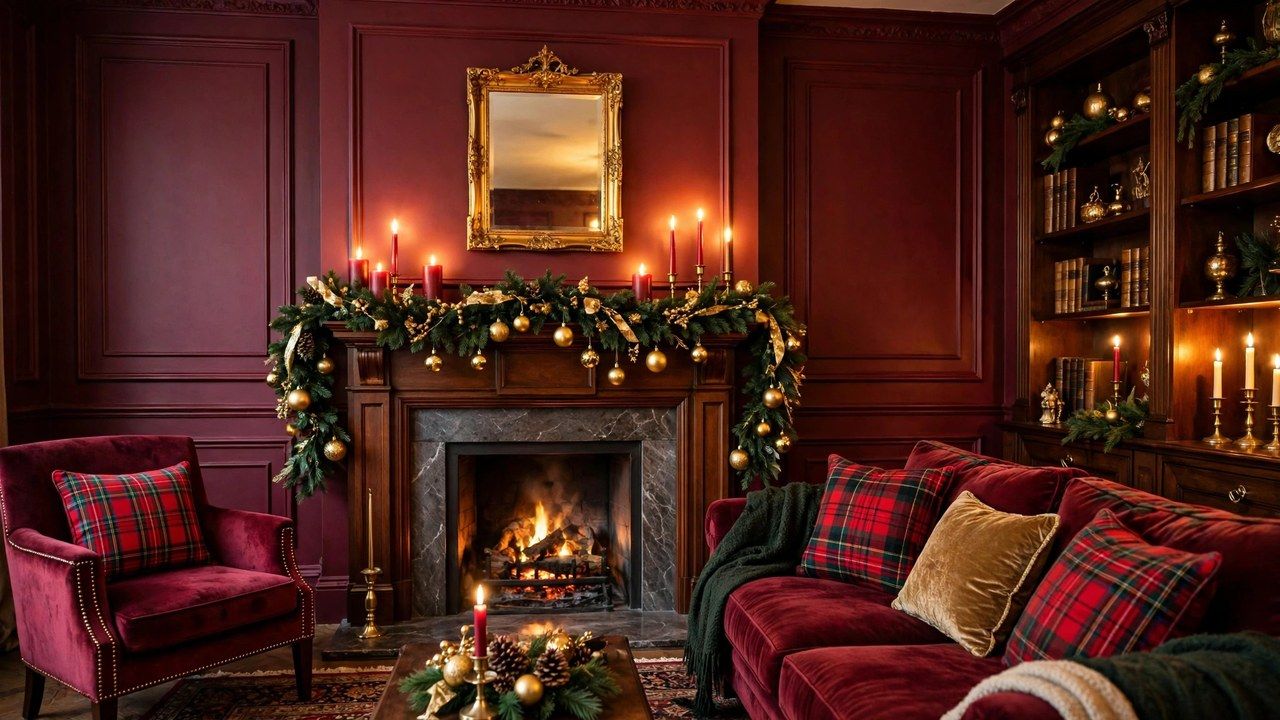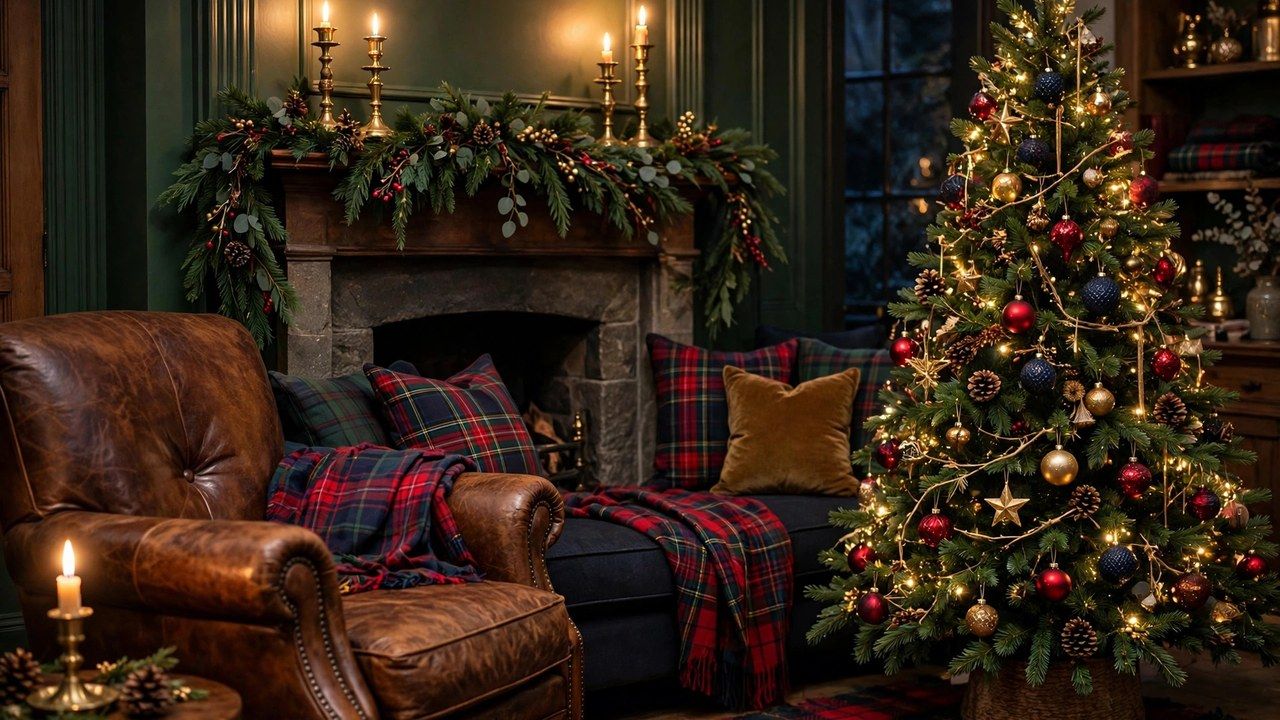
Few holiday looks have been talked about as much this year as the heritage tartan aesthetic widely associated with Ralph Lauren Christmas decor. It is the opposite of a passing novelty: deep greens, rich reds, navy and gold, layered plaid, worn leather, brass and candlelight, a room that feels like a country house library dressed for the season. This guide explains what the ralph lauren christmas decor look actually consists of, why it reads as luxury, and how to interpret it in your own home using generic tartan, plaid and heritage style pieces.
A note on approach before we begin: this is an editorial guide to a style, written descriptively. Nothing here is an official product, no logos or branded designs are needed, and the look has always been bigger than any single label, because it borrows from much older British and American country traditions. If you love the mood but want a softer palette, compare it with our burgundy Christmas decor guide, and see the broader context in our Christmas decoration ideas.
What the Heritage Tartan Look Actually Is
Strip the look down and it is a formula: a dark, saturated base, one or two classic plaids, natural materials with visible texture, metallic warmth from brass rather than chrome, and lighting kept low and golden. The tree is full and traditional rather than themed, dressed in red, gold and deep green with ribbon instead of tinsel. Rooms feel collected over decades, not bought in an afternoon, which is why the style mixes patterns, eras and finishes on purpose.
The emotional register matters as much as the objects. This is Christmas as heritage: equestrian hints, hunting lodge warmth, library coziness, silver serving pieces next to knitted throws. It photographs beautifully because every surface has depth, but it also works in real life because it forgives imperfection. A slightly worn leather chair does not break this look; it completes it.
The Color Palette, Decoded
The palette is disciplined: forest and hunter green as the foundation, true red and burgundy as the warmth, navy as the quiet anchor, and camel, cream and gold as relief. Black Watch style tartan, the deep green and navy plaid, is the signature pattern because it is dark enough to act as a neutral. Royal Stewart style red tartan plays the accent role on ribbons, cushions and table linen. Everything else, the tree, the garland, the walls of the scheme, stays solid and dark so the plaids can perform.
The common mistake is adding a bright modern color or a pastel and wondering why the mood collapsed. This palette works because it is drawn from natural dyes and old textiles; keep saturation deep and finishes matte or softly worn, and even inexpensive pieces will sit convincingly inside the scheme. For a full room by room application, our table settings guide shows the same palette at the dining table.
Tartan and Plaid: How Much, and Where
Plaid is the headline, but restraint is the technique. Aim for tartan in about a third of your visible textiles: a throw over the sofa arm, two cushions among solid velvet and leather ones, ribbon woven through the tree and wreath, and perhaps a table runner or napkins in the dining space. Mix scales deliberately, one large check and one smaller one, and keep both inside the same color family so they converse rather than compete.
Where plaid should not go is everywhere at once. Tartan wallpaper, tartan curtains and a tartan sofa together tip the room from heritage into theme park. If you fall in love with a big piece, let it be the only loud voice in that sightline. Generic wool and wool blend throws in classic tartan patterns are widely available from many makers, which is exactly the point: the pattern tradition predates and outlives any one brand.
Textures That Sell the Look: Leather, Brass, Wood and Wool
Texture does the quiet luxury work in this style. Leather, even a single chair, a stack of old books with leather bindings, or leather handled baskets, brings the equestrian note. Brass and antique gold bring warmth in candlesticks, picture frames, bells and serving trays; avoid bright chrome and mirror polish, which read modern. Dark wood, whether furniture, frames or a mantel dressed with wooden nutcrackers, grounds the scheme, and wool in throws, cushions and stockings keeps it human rather than showroom stiff.
Layer these textures at different heights: wool and leather low, wood through the middle of the room, brass catching light at mantel and table height. Our mantel decor guide is a good companion for the brass and garland layer in particular. If a surface looks flat, the heritage answer is rarely a new object; it is a textile, a stack of books, or a tray corralling what is already there.
The Tree, the Mantel and the Table
The tree in this look is generous and classic: a full green tree, flocked only lightly if at all, dressed in deep red and gold ornaments, tartan or velvet ribbon worked vertically or as bows, warm white lights, and a traditional topper. No color themes, no novelty characters, no tinsel. Underneath, wrapped gifts in kraft, deep red and tartan paper with real ribbon extend the scheme to the floor, and our gift wrapping guide covers those papers and finishes.
On the mantel, a thick natural garland, brass candlesticks at varied heights, and stockings in wool, velvet or tartan create the postcard shot. At the table, the formula repeats: tartan runner or napkins, brass or gold toned flatware if you have it, cream china, crystal or cut glass, and low greenery with candles. Nothing needs to match perfectly; in this style, inherited and mismatched is the aesthetic, provided palette and materials stay in family.
Room by Room: Where the Look Works Best
The living room carries it best because it already holds the leather, books and fireplace the style wants. The dining room is a close second, since table linen and candlelight do most of the work. A hallway takes a tartan runner, a wreath and a bowl of pinecones beautifully and sets the tone at the door; see our front door decor guide for the exterior version of the same welcome. Bedrooms take a lighter dose: a plaid throw at the foot of the bed and a small wreath, as styled in our bedroom decor guide.
Small spaces need editing rather than more objects. In an apartment, choose three signatures only: one tartan textile, brass candlesticks, and a classically dressed tree or wreath, and let dark green do the rest. Our small apartment decor guide shows how to scale heritage styling down without losing its warmth.
Interpreting the Look on a Normal Budget
Here is the honest secret of this aesthetic: it is one of the most budget tolerant luxury looks, because it values age, weight and texture over newness. Thrift stores and estate sales are full of brass candlesticks, leather bound books, tartan throws and dark wood frames, often for less than new novelty decor. Start with textiles, which change a room fastest: one good plaid throw and two cushions will move a neutral sofa most of the way there.
Spend in the order of visual impact: textiles first, ribbon second because it threads the whole scheme together, candles and holders third, and ornaments last because a classic tree mostly needs color discipline. Skip anything with logos or novelty branding; the look depends on pieces that feel inherited, and a logo instantly dates and cheapens the illusion. Pros: timeless, thrift friendly, forgiving of wear. Cons: it can go dark and heavy in small or north facing rooms, and it asks for discipline, because one off palette item stands out loudly.
What to Avoid: Keeping It Heritage, Not Costume
The failure mode of this style is costume: too many themed novelties, every surface plaid, faux antiques with distressing so theatrical it reads as prop. Avoid decorating with brand references, monograms that are not your family’s, or sporting motifs you have no connection to; borrow the palette and the materials, not someone else’s identity. One or two equestrian or lodge notes, a leather strap, a brass bell, a stack of bound books, suggest the world without reenacting it.
Also respect light. Heritage rooms are moody, but a real home still needs to function. Keep warm white lighting layered, lamps plus candles plus tree lights, rather than relying on a single dim source, and open the palette with cream textiles where a room threatens to go cave like. The goal is a room that feels like Christmas has always been celebrated there.
Conclusion
The heritage tartan look endures because it is built from things that do not date: dark green, deep red, honest plaid, leather, brass, wool and candlelight. Interpret it with generic classic pieces, thrifted where you can, keep plaid to a confident third, and let texture do the luxury work. No logos required; this Christmas style belongs to anyone willing to layer it with patience.