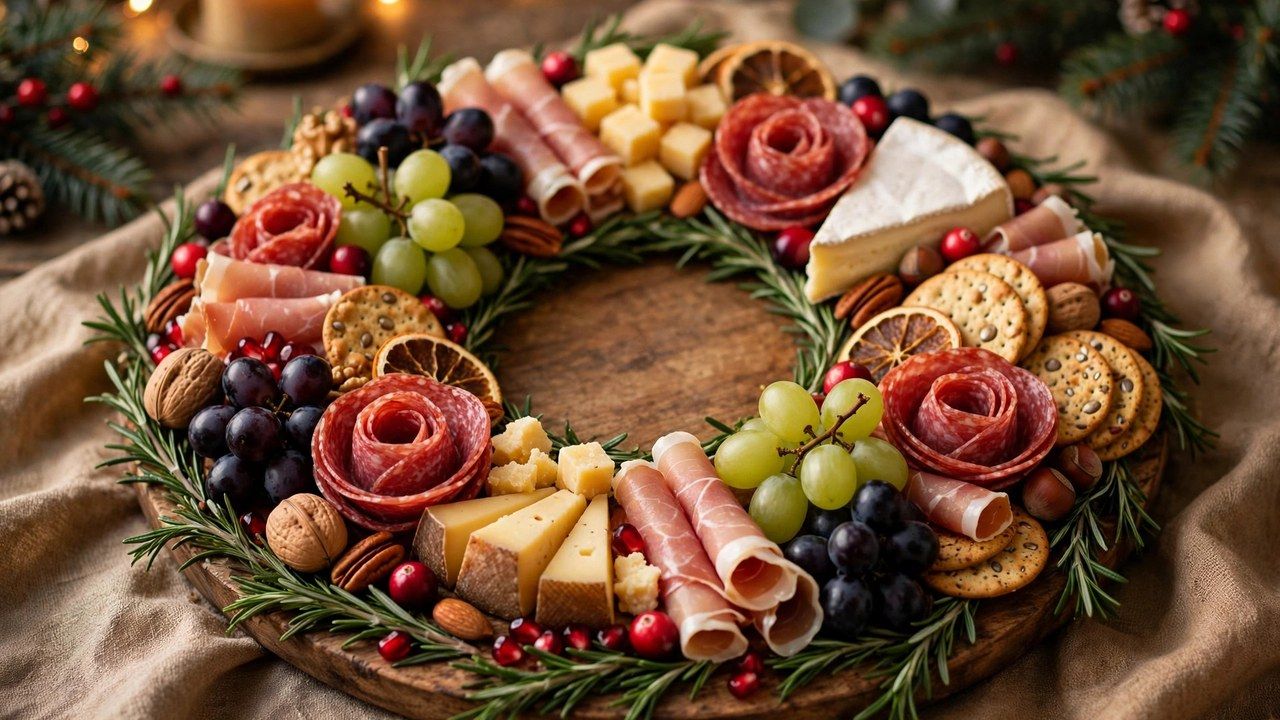
A Christmas charcuterie board arranged as a wreath is the appetizer that does double duty as the centerpiece. The ring shape is not a gimmick; it is simply the easiest attractive structure a home host can build, because a circle forgives gaps, guides placement and leaves the middle free for a small bowl, a candle beside the board or a pile of greenery. This guide gives you the shopping framework, the exact order of assembly and the safety timing that keeps a beautiful board safe to eat.
A board also solves a hosting problem: it feeds early arrivals while the kitchen finishes dinner, which is why boards pair so well with the schedules in our Christmas dinner menu guide. For hot starters instead, see our Christmas appetizers collection. Here, everything is cold, make-ahead friendly and assembled in about twenty minutes once the shopping is done.
What to Buy: The Board Framework
Work in categories, not specific brands. Cheeses, three to five: one soft (brie or camembert), one firm (aged cheddar or manchego), one bold (blue or smoked gouda), and optionally one festive cranberry-coated goat cheese. Meats, two to three: salami for folding into roses and ribbons, prosciutto for soft piles, and perhaps a sliced cured sausage. Crunch: two kinds of crackers plus sliced baguette or breadsticks. Fresh: grapes on the stem, apple or pear slices, and pomegranate sections for color. Briny and sweet: olives, cornichons, honey or fig jam, and a handful each of nuts and dried fruit.
As a working guide, plan roughly 3 ounces of cheese and 2 to 3 ounces of meat per person when the board is the appetizer before dinner, and about double that if the board is the meal. Buy the best cheese you can manage and let the crackers be simple; on a board, the cheese carries the quality and plain crackers carry the cheese.
Building the Wreath, Step by Step
1. Choose the board. A round board or tray, roughly 14 to 16 inches across, makes the wreath shape easiest, though a ring can be drawn on a rectangle too. 2. Place the anchors. Set small bowls for olives, jam and nuts around the ring first, evenly spaced; they divide the circle into sections you can fill. 3. Lay the greenery line. Tuck fresh rosemary sprigs around the outer and inner edges to sketch the wreath. Wash and dry the rosemary, and treat it as garnish rather than an ingredient.
4. Add the cheeses in their sections, cutting a few slices from each wedge or wheel so guests are not the first to cut. 5. Add the meats: salami folded in quarters and shingled in curves, salami roses made by folding slices over a glass rim, and prosciutto in loose, airy piles. 6. Fill with crackers in fans and stacks, 7. then fill every gap with grapes, nuts, dried fruit and pomegranate. A full-looking board is simply a board with no visible board left.
The Techniques That Make It Photogenic
Three small habits separate a photographed board from a platter of snacks. Odd numbers: groups of three and five look natural where even groups look arranged by a machine. Movement: curve your salami rivers and cracker fans around the ring so the eye travels. Color spacing: never let the two red elements sit together; spread the pomegranate, cranberries and meats around the circle so red, green, cream and brown repeat in rhythm.
Height matters too. A completely flat board looks skimpy even when it is generous. Pile grapes high, stand crackers upright in their fans, and let the prosciutto keep its folds. Photograph the board where you will serve it, in natural light if you can, before the first guest takes a slice and the spell breaks. For more table styling, our appetizers collection covers hot and cold starters that can surround the board.
Cheese and Meat Choices, Compared
| Slot | Safe crowd choice | Adventurous choice |
|---|---|---|
| Soft cheese | Brie | Baked camembert with honey |
| Firm cheese | Aged cheddar | Smoked gouda |
| Bold cheese | Cranberry goat cheese | Blue cheese with honey |
| Meat 1 | Italian salami | Spicy soppressata |
| Meat 2 | Prosciutto | Coppa or bresaola |
One adventurous choice per board is the right dose for a mixed crowd. Go further and the board becomes a challenge; go safer and it becomes forgettable. Always include one mild cheese in generous quantity, because every group contains a cautious eater who deserves more than crackers.
Make-Ahead and Serving Timing
Almost everything can be prepared the day before: wash and dry the fruit, portion the nuts and olives, slice the firm cheeses and wrap them, and crush nothing, because crackers stale the moment they leave their package. On the day, assemble the board up to 2 hours ahead, cover it loosely and refrigerate. The non-negotiable step is the counter rest: cheeses taste muted straight from the fridge, so set the board out 30 to 45 minutes before guests eat, topped up with the crackers at the last moment.
That rest also starts the safety clock, which brings us to the rule hosts must respect even at Christmas.
Food Safety, Stated Plainly
Perishable foods like sliced meats and soft cheeses should not sit at room temperature for more than about 2 hours in total, including the rest before serving and the grazing during the party. In a warm room, be more conservative. The practical solution is the refill strategy: build a slightly smaller board, keep backup portions refrigerated, and top up with fresh product as the party goes, rather than leaving one huge board out all evening.
Provide a small knife or spreader for each cheese and tongs or picks for the meats, so guests are not handling shared food. Keep a vegetarian corner free of meat contact for guests who need it, and label anything spicy or containing nuts with a small tent card. These are quiet courtesies that guests notice more than any decoration.
Variations: Dessert Boards and Small Boards
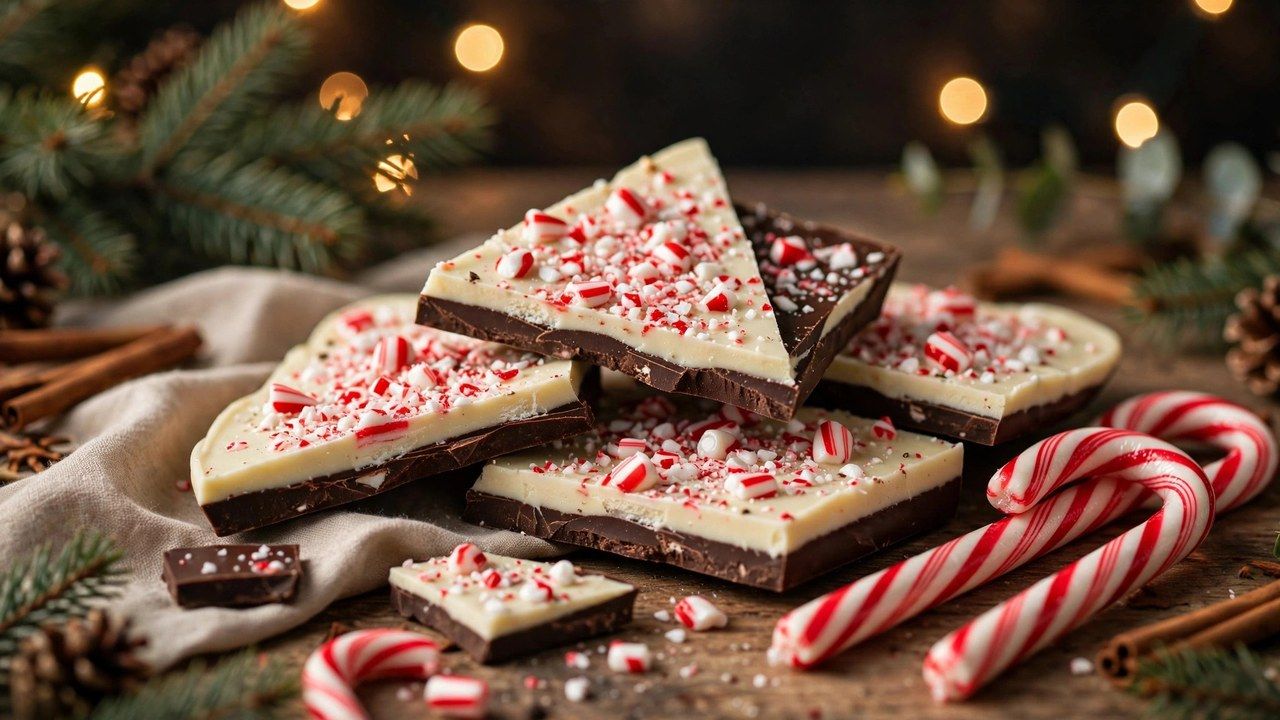
The wreath structure adapts easily. A dessert board rings cookies, chocolate bark, fresh berries and small pastries around a center bowl of whipped cream or chocolate sauce; our peppermint bark recipe was practically designed to be broken over such a board. A small board for two to four shrinks to two cheeses, one meat, one cracker and the same wreath discipline at half the diameter; the shape scales, the rules do not. A brunch board swaps meats for smoked salmon, cheeses for cream cheese and fruit spreads, and adds mini pastries.
Whatever the variation, keep the same order of operations: bowls, greenery, stars, structure, fill. It is a system, and systems are what let a host enjoy their own party.
Honest Pros and Cons of the Big Board
Pros: no cooking, most of the work happens the day before, guests serve themselves at their own pace, and dietary variety is built in because everyone composes their own plate. Cons: quality cheese and cured meats add up quickly, a board ties up your largest tray and fridge space, and an over-long party tests the safety window. The refill strategy and one adventurous cheese rather than five are how experienced hosts manage all three cons at once.
If a full board is more than the evening needs, a single baked brie with crackers and jam delivers eighty percent of the pleasure at a fraction of the cost and effort. Knowing when to scale down is part of hosting well, a theme that runs through our dinner menu planning guide as well.
Conclusion
Build the wreath in order, bowls, greenery, cheeses, meats, crackers, fill, and any home host can produce the board everyone photographs. Respect the two-hour clock, rest the cheese before serving, and refill from the fridge instead of overbuilding. The board will do the hosting for you while the kitchen finishes the main event.