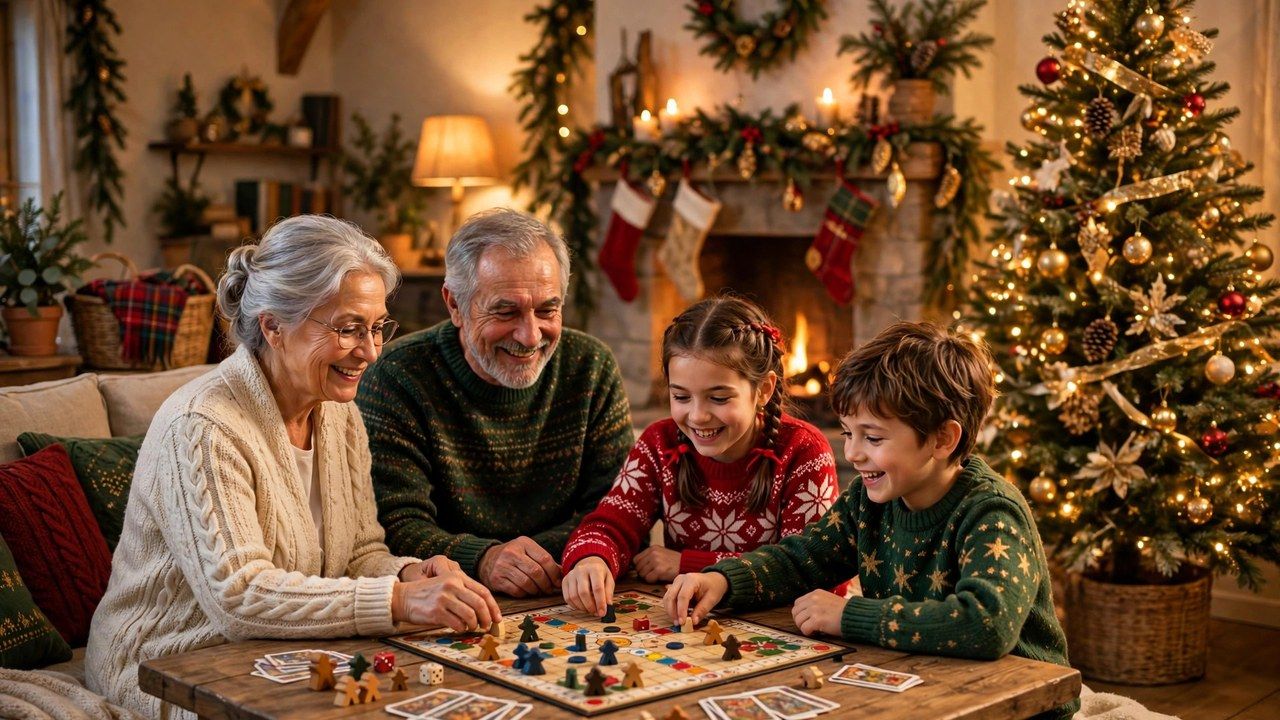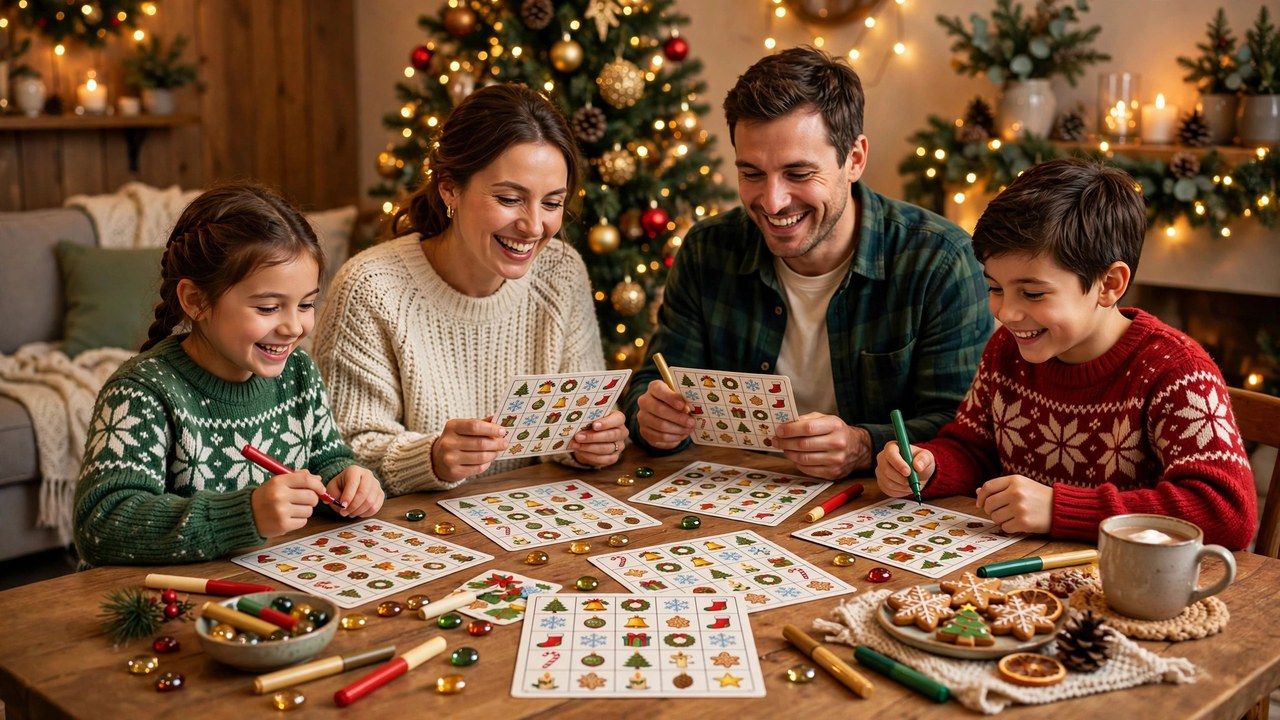
Christmas bingo is the rare party game that a five year old, a teenager and a grandparent can all win at the same table, with zero skill gap and almost zero explaining. You hand out cards covered in festive pictures or words, call items one by one, and watch the whole room lean in over their markers. This guide to christmas bingo for 2026 covers exactly how to play, what you need, card ideas for every age, and the variations that keep the game fresh across a whole party season.
Bingo works beautifully as one act in a bigger game night. Pair it with the all ages ideas in our Christmas games for families guide on Christmas Day, or run it as the warm up before the livelier rounds in our minute to win it Christmas games. If your crowd is adults only, the pacing tips here combine well with our Christmas games for adults for a full evening program.
What Christmas Bingo Is, and Why It Works for Mixed Ages
Christmas bingo replaces the numbers on a standard bingo card with holiday images or words: a reindeer, a candy cane, a stocking, a snowman, a star. Players mark each item as it is called, and the first to complete the agreed pattern, usually a line, calls out and wins the round. Because every card is different and the draw is pure chance, nobody needs trivia knowledge, athletic ability or even the ability to read, which is exactly why it survives at gatherings where the ages span sixty years.
The festive version has one more advantage over number bingo: it is visual. Young children who cannot yet follow fast number calls can match a picture of a gingerbread man to the picture on their card, and adults enjoy the small nostalgia of the imagery. A round takes ten to twenty minutes, attention holds because every call might matter, and the reset between rounds is instant. Few games in our Christmas party ideas collection deliver that much engagement for that little preparation.
What You Need: Cards, Markers, Calling Slips and Prizes
The kit is short. You need one bingo card per player, with enough unique cards that no two players share an identical layout, or ties become common and anticlimactic. You need markers that will not damage the cards if you plan to reuse them: coins, buttons, dried beans, small candies or erasable chips all work, and chunky markers are kinder for small hands and older fingers. You need a calling set, either slips of paper with each item written or drawn, a matching master list, or a phone used simply as a random caller list you read aloud.
| Card type | Best for | How it plays | Good to know |
|---|---|---|---|
| Picture cards | Ages 3 to 7, mixed family groups | Match the image shown or named | No reading needed; keep images bold and clearly different from each other |
| Word cards | Older kids, teens, adults | Match the word as it is read aloud | Great for classrooms and vocabulary style play; words must be read slowly and repeated |
| Photo or personal cards | Family reunions, office parties | Squares hold family photos, coworker facts or inside jokes | The funniest version of all, but allow the most preparation time |
| Number hybrid cards | Players who know classic bingo | Holiday art around a traditional numbered grid | Familiar rules; fastest to explain to traditional bingo fans |
Prizes deserve a sentence of their own: keep them small, lighthearted and numerous rather than one grand prize. A round every fifteen minutes with a tiny prize, a chocolate, a scratch style novelty, the honor of calling the next round, keeps far more people happy than a single big win at the end of the night.
How to Play, Step by Step
- Agree the winning pattern before you start. A single line across, down or diagonal is fastest. Announce it clearly and point at an example card.
- Hand out one card and a pile of markers per player. The center square is traditionally a free space; mark it before play begins.
- The caller draws or picks one item at a time and announces it twice, showing the picture to the room if you are playing the picture version.
- Players cover the matching square if it appears on their card. Not every call appears on every card, which is what keeps everyone listening.
- The first player to complete the pattern calls out. Play pauses while the caller checks their squares against the master list of called items.
- Award the prize, clear the cards, and start the next round with a harder pattern if energy is high.
Two housekeeping rules prevent almost every dispute. First, the caller keeps every called slip in a neat row, in order, so any winning card can be verified in seconds. Second, once the next item has been called, missed squares from earlier calls cannot be marked retroactively in strict games, though with young children most families wisely ignore that rule and let late markers land. Decide which style your table is playing before round one, not during round three.
Card Ideas: Picture Sets and Word Lists That Play Well
A good calling pool holds around thirty to forty items: enough that cards overlap only partly, not so many that rounds drag. For picture cards aimed at young children, choose instantly recognizable, visually distinct images: Santa, reindeer, snowman, Christmas tree, star, stocking, candy cane, gingerbread figure, bell, wreath, gift, candle, robin, penguin, sleigh, elf hat, mitten, hot cocoa, fireplace and snowflake. Avoid pairing similar images, like two kinds of tree, which cause genuine confusion at speed.
Word cards for older players can be more playful: mistletoe, tinsel, figgy pudding, nutcracker, carolers, eggnog, partridge, frankincense, blizzard, chimney, reindeer names like Dasher and Blitzen, and phrases from famous carols all work. If you are making cards yourself, a five by five grid with a free center square is the classic layout, and every card must shuffle the same pool into a different arrangement. Families who enjoy paper activities will also like the design and printing guidance in our Christmas coloring pages guide, since the same card stock and printer settings serve both projects.
Calling Tips From People Who Host Every Year
The caller sets the pace of the whole game. Call steadily, roughly every ten to fifteen seconds, slower when children are playing, faster once adults are warm. Announce each item, pause, then repeat it once, because half the room is always mid conversation when the first call lands. Keeping a running written list matters more than any other habit: it settles disputes, and it lets latecomers check a card without stopping play.
Make the caller a role worth having. Rotate it between rounds, let winners call the next game, and give confident older kids the job, since calling is the best seat in the house for a child who does not want to compete. In a classroom or office, one trusted caller plus a projected or displayed running list keeps thirty players honest with no extra effort. Teachers planning a whole festive week will find more ready formats in our Christmas family activities guide to run alongside bingo sessions.
Party Variations That Keep Bingo Fresh
Blackout bingo: the whole card must be covered. Rounds run long and tense, so save this for the final game or for patient adult groups. Four corners and postage stamp: only the corners, or a two by two block in one corner, wins, which produces quick rounds perfect for young children. Speed bingo: the caller speeds up steadily and the first full line wins, a natural closer when energy peaks. Gift swap bingo: winners choose or steal a small wrapped prize from a central pile, borrowing the beloved mechanic from gift exchange games.
Music bingo swaps called words for short bursts of Christmas songs that players identify on cards printed with song titles, a superb fit for adult parties. Human bingo is the mixer version: squares hold experiences like has visited a Christmas market or can name all the reindeer, and players collect signatures from guests who match. It is less a card game and more an icebreaker, which is precisely why party hosts love opening with it before the seated rounds begin.
Bingo for Classrooms, Offices and Virtual Parties
In classrooms, picture bingo doubles as gentle seasonal learning, and the caller role is a prized job to award. Keep rounds short, play in small groups if attention is thin, and let everyone who completes a line across the session leave with the same small reward, so the game celebrates participation over a single winner. Teachers should also pre check imagery for their setting, choosing winter scenes alongside Christmas symbols where that better fits their class.
Office and virtual versions need one adjustment: distribution. Send each player a different card in advance, by printout in the room or by individual message online, and have the caller share their screen or hold each drawn item to the camera. Virtual blackout rounds run long on video calls, so lines and corners play best. End firmly on time; a game that respects the schedule gets invited back next year, a point our office party ideas make about every workplace format.
Honest Pros and Cons of Bingo as Your Party Game
Pros: almost no learning curve, genuinely all ages, cheap to stage, easy to scale from six players to sixty, and rounds slot flexibly between courses, carols or other games. Cons: pure chance means no strategy for competitive guests to chew on, identical or too similar cards cause anticlimactic ties, and long blackout rounds can stall a lively room. The fixes are all in this guide: unique cards, short patterns early, small frequent prizes, and a caller who keeps the pace bright.
Conclusion
Christmas bingo earns its place at the party because it asks so little and gives so much: one stack of cards, a caller with a steady voice, and a room full of people listening together. Start with picture cards and quick lines for mixed ages, layer in blackout or music variations as the night builds, and keep prizes small and frequent. Set up well, and it will quietly become the game your family asks for by name.