A deep-fried turkey cooks in under an hour, comes out impossibly juicy, and has shatteringly crisp skin. It is the fastest route to a spectacular Thanksgiving bird. It also involves several gallons of 350-degree oil and an open flame, which is why fire departments issue warnings about it every November. Done right, frying a turkey is perfectly safe. Done wrong, it is genuinely dangerous. This guide walks you through every step, with the safety rules first, because they are the whole point.
The Non-Negotiable Safety Rules
- Fry outside only, at least 10 feet from your house, deck, garage, or any structure. Never fry in a garage, even with the door open.
- The turkey must be completely thawed and bone dry. Ice or water hitting hot oil is the number one cause of fryer fires. Pat the bird dry inside and out, and let it sit at room temperature for 30 minutes so no ice crystals remain.
- Never stuff a turkey you plan to fry. Stuffing will not cook through and blocks heat circulation.
- Measure your oil level first: put the turkey in the cold pot, fill with water until the bird is covered, remove the turkey, and mark the water line. That is your oil fill line. Overfilling is the second biggest cause of accidents.
- Keep a fire extinguisher nearby (a dry chemical one, not water) and never leave the fryer unattended. Wear long sleeves, closed shoes, and heat-safe gloves.
- Turn off the burner before lowering the turkey in, then relight once it is submerged. This prevents boil-over flare-ups at the critical moment.
Equipment and Oil
You need a turkey fryer kit: a 30-quart stockpot with a basket or hook, a propane burner, a long-stem fry thermometer, and a lifting hook. Use peanut oil, which has a high smoke point around 450 degrees Fahrenheit and adds a subtle nutty flavor. You will need 3 to 5 gallons depending on your pot and bird size, which is the most expensive part of the operation; strain and reuse the oil within a month for a second fry. Keep the bird between 12 and 14 pounds. Bigger turkeys fry unevenly and are harder to handle safely.
Prep: Inject and Season
Because the cook is so fast, surface seasoning alone will not flavor the meat deeply. Inject the turkey with a marinade: melted butter mixed with chicken broth, garlic powder, onion powder, paprika, cayenne, and salt works beautifully. Inject into the breasts, thighs, and drumsticks in several spots. Rub the outside with a spice blend of paprika, garlic powder, onion powder, salt, and black pepper. If you brined the bird, skip extra salt in the injection. Let the seasoned turkey rest while the oil heats.
Step-by-Step Frying
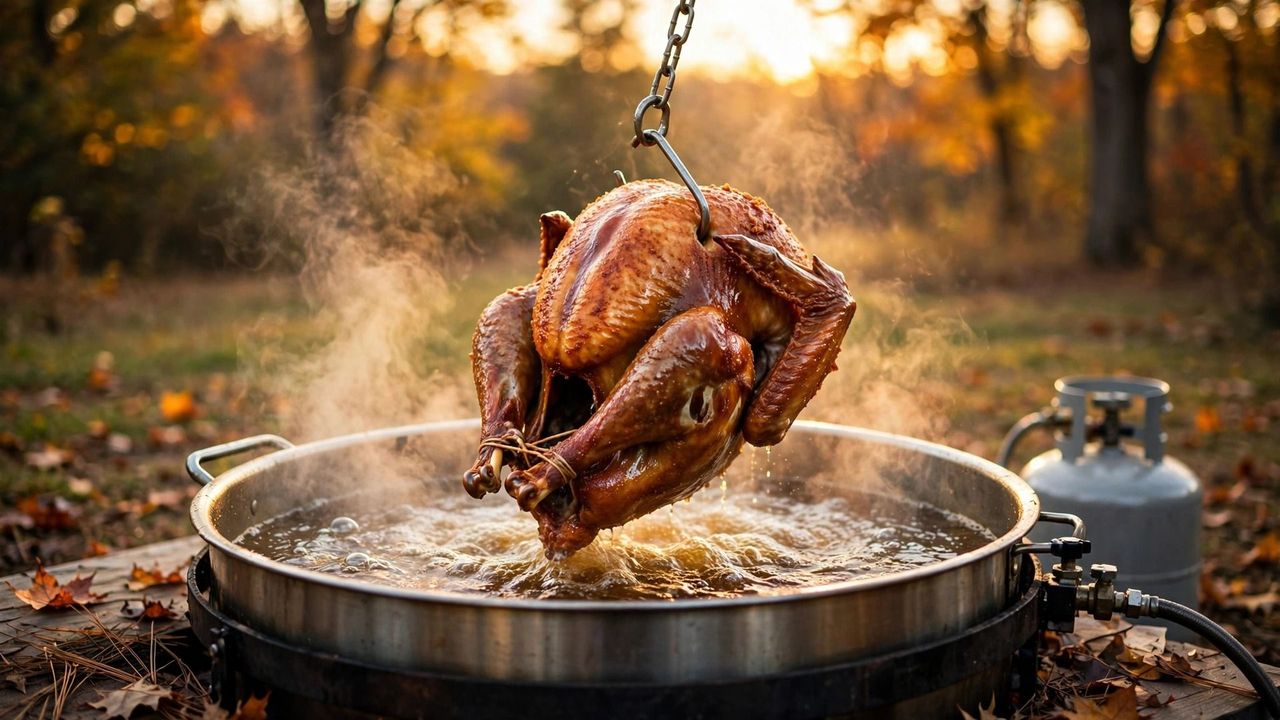
Heat the oil to 375 degrees Fahrenheit; it will drop to around 350 when the turkey goes in. With the burner OFF, slowly lower the turkey into the oil using the hook, breast side up, easing it in over about a minute so the oil does not surge. Once submerged and steady, relight the burner. Maintain the oil at 350 degrees, adjusting the flame as needed. Fry for 3 to 3.5 minutes per pound: a 12-pound turkey takes about 40 minutes, a 14-pounder about 48. Check the temperature in the thickest part of the thigh and breast. When both read 165 degrees Fahrenheit, lift the turkey out slowly, let it drain over the pot for a few minutes, and rest it 20 to 30 minutes before carving. The skin will be deep mahogany and the meat remarkably moist.
Oil Disposal and Leftovers
Let the oil cool completely, ideally overnight, before handling it. Strain it through cheesecloth into its original containers for reuse, or pour it into a sealed container and take it to a cooking-oil recycling drop-off; many auto shops and municipal sites accept it. Never pour oil down the drain. Leftover fried turkey is phenomenal: the crispy skin stays interesting even cold, and the meat shines in sandwiches, tacos, and fried rice.