Too few lights and a tree looks like it is wearing someone else's outfit: pretty ornaments, no glow. Too many bought blindly and you are returning boxes in January. Knowing how many lights for a christmas tree your specific tree needs takes one rule of thumb, one honest look at the look you want, and two minutes of strand math. This guide gives you all three, with counts by tree size for minimal, classic and full looks.
One clarification before the numbers: the counts here are widely used rules of thumb, shared by lighting retailers and decorators, not engineering standards, and your tree's width and your own taste get the final vote. When you are ready to hang them, our step by step decorating guide shows where lights sit in the order of operations, and our Christmas lights guide covers choosing the strands themselves.
The Rule of Thumb Everyone Quotes, and What It Means
The common rule of thumb is about 100 lights per foot of tree height for a full, richly lit look. A six foot tree at that rate wears roughly 600 lights, a seven and a half foot tree around 750. Treat that as the full look benchmark rather than a requirement, because the same sources and decorators happily use half as much for a classic, softer glow and less again for a minimal Scandinavian feel. The rule's real value is giving you a scale to adjust from instead of a guess to regret.
Why per foot works at all: taller trees are also wider and deeper, so light needs grow faster than height alone suggests, and a per foot count quietly builds that in. It is not perfect, a pencil tree needs less than a full tree of the same height, which the table in the next section corrects for, but as a first estimate it has survived decades of decorating arguments because it is roughly right.
Light Counts by Tree Size and Look
| Tree height | Minimal look | Classic look | Full look |
|---|---|---|---|
| 4 ft tabletop | 50 to 100 | 100 to 150 | 200 to 300 |
| 5 ft | 100 to 150 | 200 to 300 | 350 to 450 |
| 6 ft | 150 to 200 | 300 to 400 | 500 to 600 |
| 7 ft | 200 to 250 | 400 to 500 | 650 to 750 |
| 7.5 ft | 250 to 300 | 450 to 600 | 750 to 900 |
| 9 ft | 300 to 400 | 600 to 800 | 950 to 1,200 |
| 12 ft | 500 to 600 | 900 to 1,200 | 1,500 to 2,000 |
These counts assume a standard full profile tree. For a slim tree, aim toward the lower end of each range; for a pencil tree, drop roughly a third. For an extra wide, dense tree or one you decorate in the round to be seen from all sides, aim at the top of the range or beyond. Ranges exist because trees, rooms and tastes differ; choose your number, then buy strands to match it using the math below.
Decide Your Look Before You Count
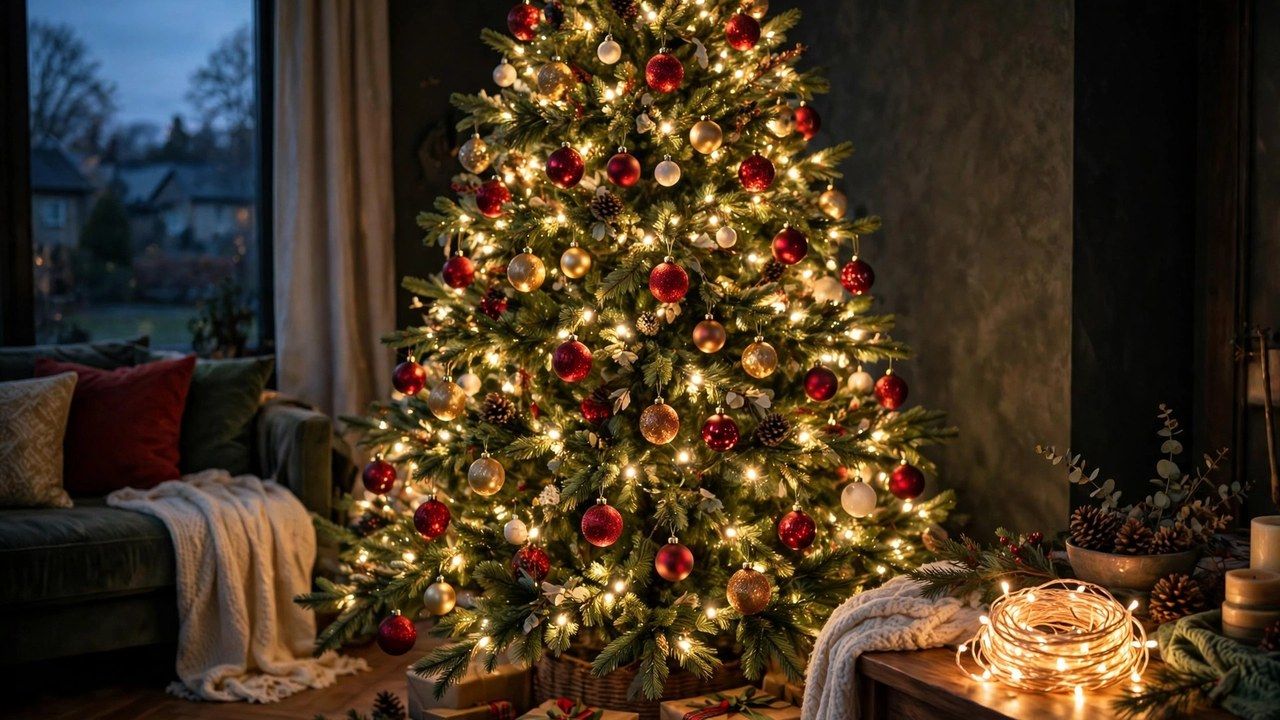
Minimal lighting is a deliberate style, not a shortage: a light scatter that lets dark green branches and a few ornaments carry the tree, common in Scandinavian and modern looks. Classic is the family album tree, evenly glowing, bright enough to read as festive from the street, ornaments clearly lit. Full is the showpiece, dense light at every depth so the tree seems to glow from inside, the look in most magazine photography.
Your room votes too. A tree in a bright, lamp lit living room needs more light to register than the same tree in a dim corner. A tree facing a street window is often lit for two audiences. And ornaments matter: shiny, pale ornaments reflect and multiply light, while dark matte ornaments absorb it, so a burgundy and forest scheme may need the full count where a silver and white scheme glows at classic.
Bulb Size and Type Change the Count
A hundred mini lights and a hundred large bulbs are not the same light. Mini lights are the standard the counts in this guide assume: small, numerous and woven through branches for an even glow. Larger bulbs, like retro C7 and C9 styles, are individually brighter and are used far more sparingly and mostly on the tree's outer surface, so their counts run much lower and spacing does the work. Fairy and micro LED strings pack many tiny points of light on thin wire, which threads deep into branches beautifully for the interior glow layer.
LED versus incandescent matters for logistics more than looks. LED strands use far less power, run cool against needles, and typically allow many more strands to be connected end to end, always within the manufacturer's stated limit. Incandescent strands have stricter connection limits and run warm, which a real tree appreciates not at all. Whatever you choose, the packaging's connect limit is a safety instruction, not a suggestion, and mixing types on one run is a job for the manufacturer's guidance, not optimism.
Strand Math: Turning a Count Into Boxes to Buy
Work backwards from your target count. Strands are sold by bulb count and lit length, commonly in 50, 100 and 150 light strands. If your classic seven foot tree wants about 450 lights, that is five 100 count strands, or three 150s, or a mix, and buying one strand beyond your count is the cheapest insurance in all of decorating: strands fail, sections grow, and a spare in the box ends arguments. Check the lit length too, because a 100 count strand with tight spacing covers less branch than the same count spaced wider.
Plan the electrical run while you count. Decide where the plug starts, usually at the back bottom near the outlet, and confirm the total connected strands stay within the limit printed on the box and on the strand's tag. If your count exceeds one run's limit, split the tree into two runs, lower and upper, each plugged separately or into a suitable outlet strip as directed. Testing every strand on the floor before it goes on the tree takes ten minutes and saves the worst hour in decorating: the finished tree with one dark section.
Placement: Why Where Beats How Many
Two trees with identical light counts can look completely different, because distribution beats quantity. The professional pattern is a zigzag that travels in toward the trunk and back out along branches, so light exists at three depths: deep interior glow, mid branch illumination and surface sparkle. A tree lit only on its surface looks flat and decorated; a tree lit at depth looks alive. Spend your count accordingly, roughly a third of your lights belong in the tree's interior third.
Work in a spiral or in vertical sections, keep spacing rhythmic rather than clustered, and step back with the room lights off to judge. Dark patches are fixed by redistribution more often than by addition, so adjust before you open the spare strand. On slim and pencil trees, tighter wrapping suits the narrow profile; on full trees, generous zigzags prevent the striped look of lights following only branch tips.
Pre-Lit Trees: Counting What You Already Have
If your tree is pre lit, the count question becomes an adequacy question. Check the manufacturer's stated light count against the table above for your height and preferred look: many pre lit trees sit at the classic level, some at minimal, and knowing that in advance explains a tree that has always felt slightly dim. You can supplement a pre lit tree with one or two added strands woven deeper for interior glow, matching color temperature so the added lights do not read as a different white.
Color temperature is the quiet detail behind most light disappointment. Warm white, soft white and cool white strands mixed on one tree look like a mistake even at the right count. Check every box for the same description before buying, and photograph your existing strands lit if you need to match them in store. Consistency of color does more for the finished tree than an extra hundred bulbs of the wrong white.
Common Light Count Mistakes
Counting by height alone and forgetting width, depth and whether the tree is seen in the round. Buying to the bulb count and ignoring lit length and spacing, so the strands run out halfway up a tall tree. Mixing color temperatures between old and new strands. Connecting beyond the rated limit because the plugs physically fit, which they do right up until they should not. And the classic: finishing the tree, then discovering a dead section, preventable by the ten minute floor test nobody wants to do and everybody wishes they had.
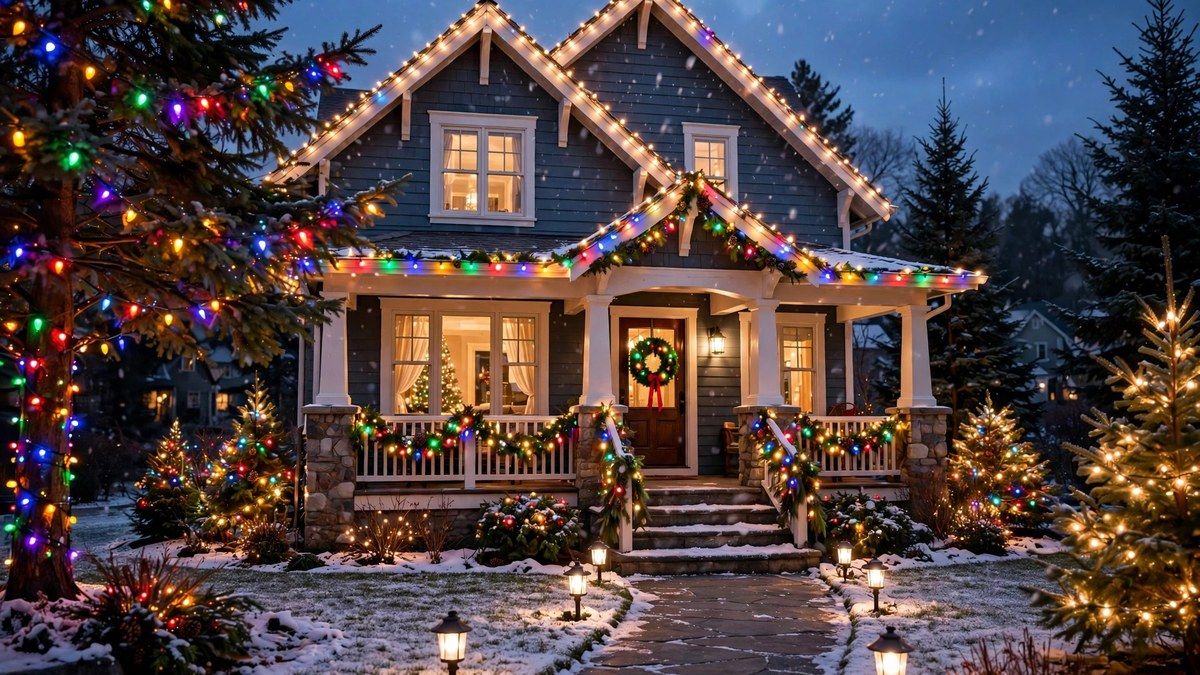
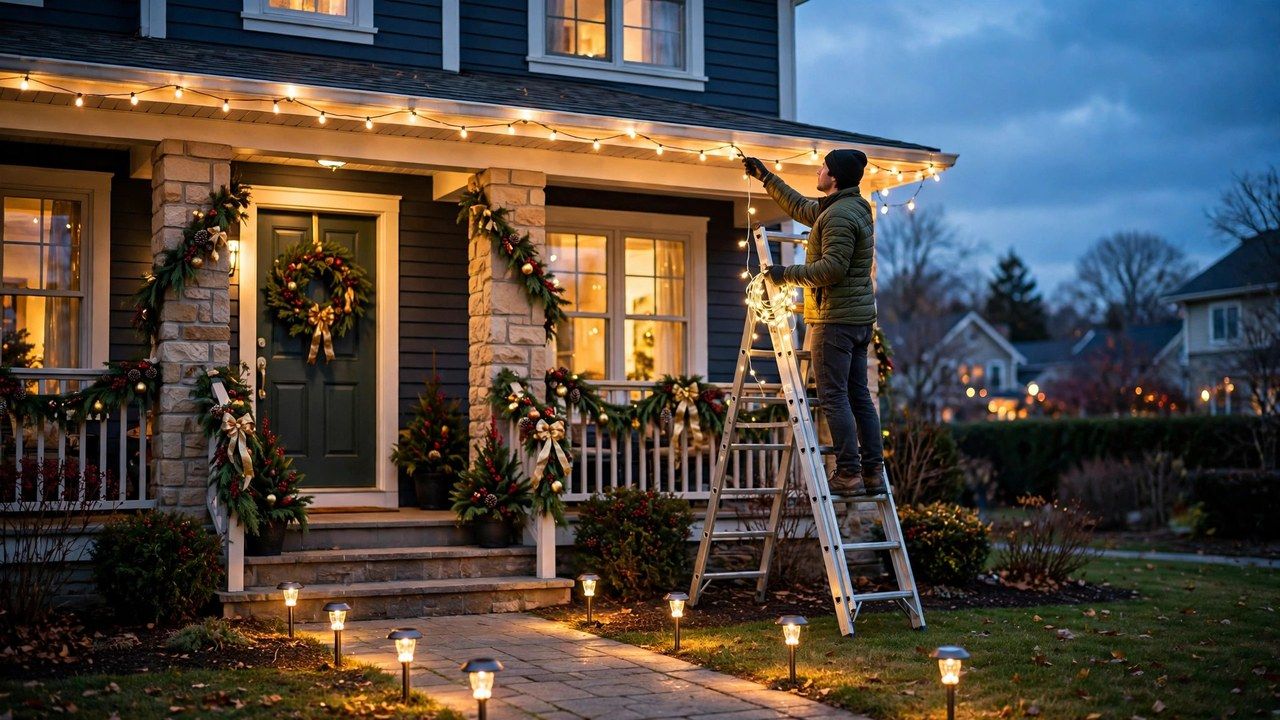
One more honest note: more is not automatically better. Past the full look, extra light starts washing out ornaments and turning the tree into a lamp. The goal is a tree that glows, not a tree that glares, and the counts above exist to land you in that window the first time, whether your tree stands indoors or inspires the display outside, where our outdoor hanging walkthrough takes over.
Conclusion
Start with the rule of thumb, roughly 100 lights per foot for a full look, half to two thirds of that for a classic glow, then adjust for your tree's width, your ornaments and your room. Convert the count into strands, respect the connection limits, weave light at three depths, and your tree will glow like you meant it, because this time you did the math first.