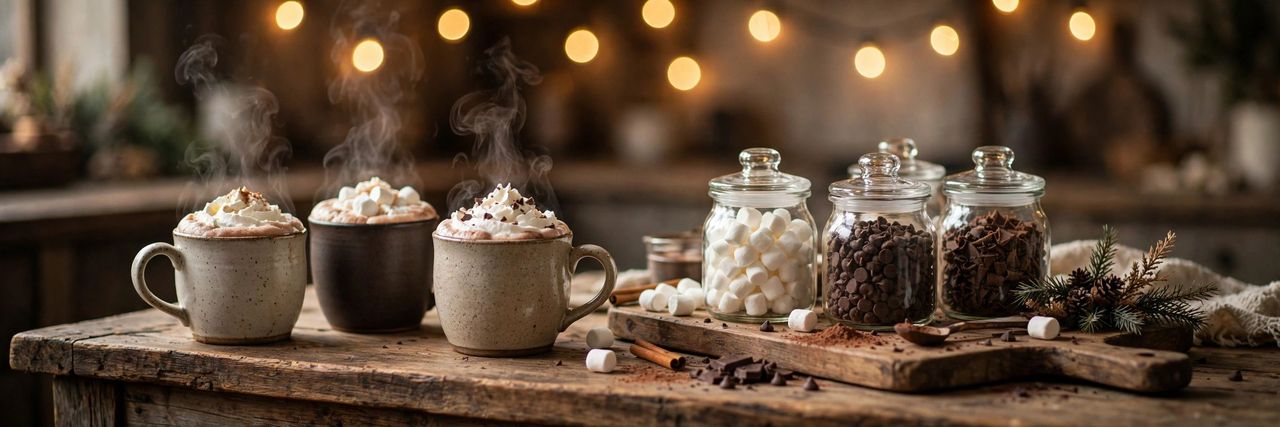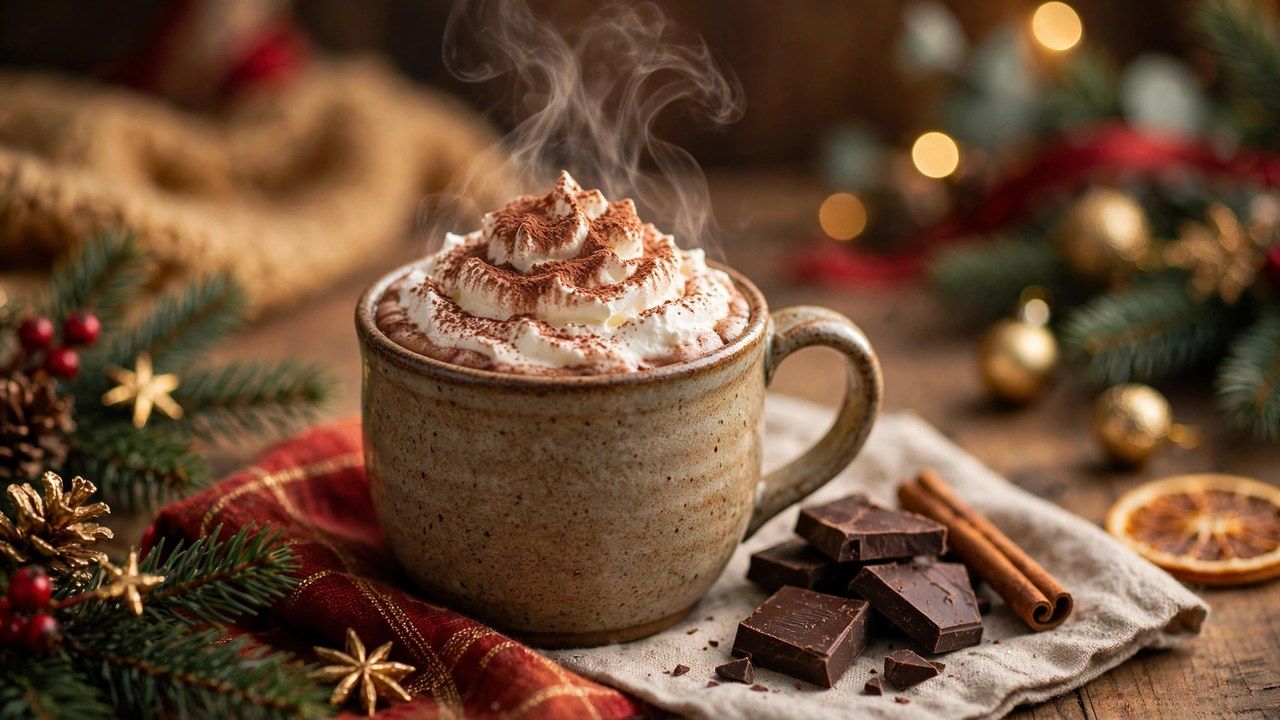
There is a wide gap between a packet stirred into water and a real homemade hot chocolate, and this recipe lives on the right side of it. Real chocolate melted into milk, deepened with cocoa and finished with vanilla makes a drink that is rich without being heavy, in about ten minutes on the stovetop. This article is strictly the recipe itself; if you want the full station with toppings and signage for a party, our hot chocolate bar ideas guide covers that setup separately.
The method below makes four generous mugs and scales cleanly up for a crowd or down for one quiet evening. It also explains the few small decisions, chocolate choice, heat level and the pinch of salt, that separate a good mug from a memorable one, plus variations from Mexican spiced to dairy-free.
Hot Chocolate vs Hot Cocoa: The Difference That Matters
Hot cocoa is made from cocoa powder alone: lighter, quicker and a little thinner. Hot chocolate is made with melted chocolate, which brings cocoa butter, and cocoa butter brings body. The best homemade version uses both: cocoa for deep, dark flavor intensity and chopped chocolate for richness and a silky texture that coats the spoon. Neither ingredient is expensive or exotic; the technique is simply combining them in the right order and never letting the pot boil.
Boiling is the one real enemy. A boiled pot can turn grainy, form a skin and mute the chocolate flavor you paid for. Gentle heat, steady whisking and serving as soon as the chocolate melts will beat any complicated method.
Ingredients (Serves 4)
- 4 cups (960 ml) whole milk
- 1/4 cup (25 g) unsweetened cocoa powder
- 1/4 cup (50 g) granulated sugar, plus more to taste
- 1/2 cup (85 g) chopped dark or semisweet chocolate, or good chocolate chips
- Pinch of fine salt
- 1 teaspoon vanilla extract
- Optional: 1/2 cup (120 ml) heavy cream, for extra richness
Chocolate choice sets the ceiling. A dark chocolate around the middle of the range gives a balanced drink that is chocolatey without bitterness; milk chocolate makes a sweeter, milder mug that children often prefer; very dark chocolate needs an extra spoon of sugar. The salt is not a typo: a pinch suppresses bitterness and makes the chocolate taste more like itself.
Step-by-Step Stovetop Method
1. Make a cocoa paste. In a medium saucepan, whisk the cocoa, sugar and salt with about 1/2 cup of the milk until smooth and glossy, with no dry pockets. This paste step is what prevents the dusty lumps that plague rushed mugs. 2. Add the rest of the milk and the cream, if using, and set over medium heat. 3. Warm gently, whisking often, until the milk is steaming and small bubbles gather at the edges, about 5 to 7 minutes. Do not let it boil.
4. Add the chopped chocolate, remove the pan from the heat, and let it stand 1 minute so the chocolate begins to melt. 5. Whisk until fully smooth and slightly thickened, then whisk in the vanilla. Taste and adjust sugar. Serve at once, topped as you like. If a skin forms while you fetch the mugs, a brisk whisk makes it disappear.
Variations for Every Table
| Variation | Change | Finish |
|---|---|---|
| Mexican spiced | Add 1/2 tsp cinnamon and a pinch of cayenne | Cinnamon stick |
| Peppermint | Swap vanilla for 1/4 tsp peppermint extract | Crushed candy cane rim |
| White chocolate | Use white chocolate, reduce sugar by half | Fresh raspberries |
| Dairy-free | Use oat milk and dairy-free chocolate | Coconut whipped topping |
| Mocha | Replace 1 cup milk with strong coffee | Cocoa dusting |
For children, the classic finish is marshmallows, mini ones melt into a floating layer, or a modest swirl of whipped cream. For adults, a pinch of flaky salt or a cinnamon stick stirrer elevates the same base recipe without extra work. Keep the variations in the mug rather than the pot when a group has mixed tastes.
Slow Cooker Method for a Crowd
For a party or a long open-house afternoon, double the recipe in a slow cooker: whisk everything except the vanilla together, cook on low for about 2 hours, whisking well every 30 minutes, then stir in the vanilla and hold on the warm setting. The chocolate stays smooth for hours this way, and guests serve themselves. This is the cooking method to pair with the serving display in our hot chocolate bar guide, which handles the toppings bar, labels and layout.
Watch the edges: slow cookers run hotter at the sides, so the regular whisking is not optional, and a batch held longer than about 3 hours can thicken too far. A splash of warm milk whisked in restores the texture. Never leave the cooker on high to speed things up; chocolate rewards patience and punishes haste.
Toppings and Serving, Kept Sensible
A short toppings list beats a long one: whipped cream, mini marshmallows, shaved chocolate and one fun extra such as crushed peppermint or caramel sauce. Warm the mugs with hot water while the chocolate finishes, because a cold mug steals the first ten degrees of warmth. Fill three-quarters full so the topping has room and the first sip is not a spill.
Serve hot chocolate as its own small event rather than an afterthought: with a plate of plain cookies for dunking, like the cut-outs in our Christmas sugar cookies recipe, or after an outdoor walk, when a steaming mug is practically medicinal. Leftovers refrigerate for up to 3 days and reheat gently on the stove with a whisk; chilled leftover hot chocolate also makes an excellent base for chocolate milkshakes in the quiet week after Christmas.
Troubleshooting and Honest Notes
Grainy texture: the pot boiled, or the chocolate was added to milk that was too hot and seized into flecks. Lower heat and the one-minute standing step fix it. Too thin: simmer one minute longer off the boil, or whisk in another ounce of chocolate. Too thick: it is essentially drinking chocolate; whisk in warm milk a splash at a time. Bland: it needs salt or vanilla, which most people forget before they reach for more sugar.
Pros of the real recipe: dramatically better flavor and texture than a mix, ten minutes of work, and endlessly variable. Cons: it uses a pan and a whisk rather than a kettle, and real chocolate costs more per mug than a packet. For an everyday Tuesday in January, a mix has its place; for Christmas, make the real one.
Single Mug and Small Batches
Not every hot chocolate occasion involves four people, and this recipe divides as cleanly as it multiplies. For a single generous mug, use 1 cup of milk, 1 tablespoon of cocoa, 1 tablespoon of sugar, 2 tablespoons of chopped chocolate, the smallest pinch of salt and a drop of vanilla, and follow the same paste, warm, melt and whisk sequence in a small pan. The method does not change, only the washing up shrinks. For two mugs, halve everything and use the small saucepan you would choose for warming milk.
One small-batch caution: a tiny quantity heats fast, so the no-boil rule needs more attention, not less. Keep the heat at medium-low and whisk steadily, because a single mug can go from steaming to boiling while you reach for the marshmallows. If you are making hot chocolate for one regularly, mix a small jar of the dry ingredients, cocoa, sugar and salt in the recipe proportions, in advance. On the night, you only need to whisk the mix into hot milk with the chopped chocolate, and a weeknight mug takes five minutes without measuring anything.
Conclusion
Homemade hot chocolate asks for so little: milk, cocoa, real chocolate, a pinch of salt and ten gentle minutes without a boil. In return it gives you the mug people remember. Make the base recipe once, learn its thickness, then let the variations carry it through the whole season.