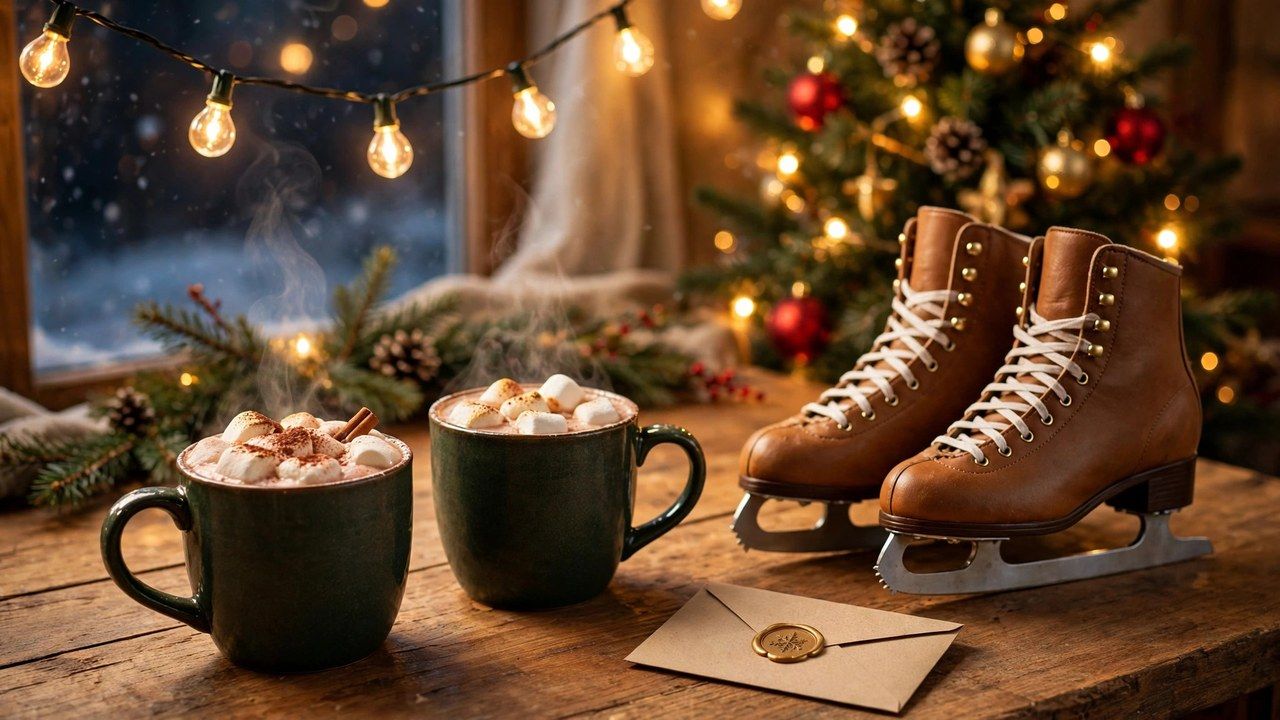
Some people on your list genuinely do not want another object. Their shelves are full, their tastes are exact, or what they actually miss is time — with you, or doing the thing they keep postponing. That is why experience gifts christmas shopping has grown so quickly: surveys this season suggest roughly half of holiday shoppers now plan to give at least one experience. This guide covers the full landscape — classes, days out, food experiences, at-home experiences, and experiences for kids and grandparents — plus the part most people get wrong: how to present an intangible gift so Christmas morning still has something to unwrap.
Experience gifts pair beautifully with a small physical token, and our gifts for couples guide explores the shared-experience angle for partners, while this guide covers every relationship on your list.
Why Experiences Win (and When They Do Not)
An experience gift succeeds on three counts: it creates a memory instead of clutter, it often includes the giver (which makes it a gift of time, the scarcest thing adults have), and it can be perfectly personal — matched to a hobby, a curiosity or a long-postponed wish. It fails when it is vague ("we should do something sometime"), when it secretly serves the giver's interests more than the recipient's, or when it creates work — an unbooked voucher for a busy person is homework disguised as generosity. The fix for all three is the same: book the real thing, on a real date or with a simple path to one, and present it properly.
The Experience Landscape, Compared
| Type | Examples | Best for | Good to know |
|---|---|---|---|
| Learn something | Cooking, pottery, photography, dance or language classes | Curious adults, couples, teens | Beginner-friendly sessions gift best; check what is included |
| Go somewhere | Shows, matches, exhibitions, day trips, winter markets | Couples, families, grandparents | Travel and timing matter — pick venues they can actually reach |
| Taste something | Chef's tables, tastings, bakery tours, a special restaurant | Food lovers, hosts, hard-to-shop-for adults | Book the table or slot; a plan beats a promise |
| Relax properly | Spa sessions, massage, a reading afternoon with full cover | Parents, caregivers, anyone exhausted | Cover the logistics — childcare, transport — or the gift creates work |
| At home | Movie-night builds, game tournaments, a chef-at-home evening | Homebodies, families with young kids | You supply everything; the gift is the production, not just the idea |
Experience Gifts by Recipient
- For your partner: The shared experience is the point — a class you take together, the show she mentioned, the weekend away. See our gifts for wives guide for how to frame it romantically.
- For parents and grandparents: Time with family is the luxury. A planned outing with grandchildren, a special meal where nobody cooks or washes up, or tickets that come with a driver (you) attached.
- For kids: Experiences beat toys faster than most adults expect: the zoo or aquarium trip, the baking afternoon, the first movie outing — especially when the experience comes with one small related object to unwrap. Our kids' gift guide balances objects and experiences by age.
- For teens: Autonomy-flavored experiences win: the concert with a friend (and a trusted adult plan), the workshop in their actual hobby, the day built around their interest rather than the family's.
- For the person who has everything: This is their category entirely — our dedicated guide is built on experiences, consumables and time.
How to Present an Experience (So There Is Something to Unwrap)
Never hand over a printout and call it done. Build a small reveal: a beautiful card that describes the plan in inviting detail, an envelope with the date circled, and ideally one small physical token connected to the experience — the cookbook for the cooking class, the scarf for the skating trip, the ornament for the family outing. The token becomes the keepsake of the memory, which solves the one real weakness of experience gifts: nothing remains afterward. Our card message guide helps with the words, and a Christmas Eve box makes a charming container for the reveal.
Planning Rules That Protect the Gift
Book early — popular classes, shows and tables fill for the season weeks ahead. Choose dates with a reschedule path, because December and January calendars are chaos. Do the homework your recipient would otherwise face: venue, timing, what to bring, where to park. If the experience is a surprise, clear the date through a co-conspirator rather than risking a clash. And keep the budget honest: an experience gift includes its real costs — tickets, travel, the meal around it — so plan the whole shape, not just the headline item.
Honest Pros and Cons
Pros: zero clutter, memories that appreciate rather than depreciate, perfect for minimalists and the fully-stocked, and often shared — multiplying the joy across the giver and the group. Cons: nothing to keep unless you add a token; scheduling can slip if you leave booking vague; weather and health can interfere with outdoor plans; and some recipients simply love objects, for whom an experience should complement rather than replace a physical gift. Know your person, book it properly, and the pros dominate.
Experiences for People You Do Not Know Well (and Other Hard Cases)
The hardest experience gifts are for recipients whose tastes you cannot read: the new in-law, the colleague drawn in a work exchange, the teenager passing through a phase-per-month era. The solution is the open-format experience — a gift structured as a choice rather than a booking. Present two or three curated options in the card ("pick your adventure: the pottery afternoon, the match tickets, or the chef's table") and let the recipient select; you keep the thoughtfulness, they keep the control, and the shared choosing conversation becomes part of the gift. For teenagers, pair the choice with a friend-included format, since autonomy plus company is the exact recipe that age group values most.
Two more hard cases deserve a sentence each. Long-distance recipients: choose experiences local to them, booked by you, with confirmations sent digitally and a token posted to arrive for Christmas morning — distance is a logistics problem, not a reason to default to a parcel. Recipients with limited mobility or energy: bring the experience to them — the chef-at-home evening, the garden concert setup, the film afternoon you produce in their living room — because a gift that requires stamina from someone who has little is a burden wearing a bow. In every hard case, the principle holds: the more exactly the experience fits the person's real life, the more luxurious it feels, whatever it cost.
Building an Experience From Scratch (When Nothing Bookable Fits)
Sometimes the right experience does not exist as a product — you have to produce it. The home chef's evening, the guided family history walk, the star-gazing night with borrowed blankets and a thermos plan, the "first Saturday of every month" breakfast you commit to for a year. Homemade experiences succeed on production values: a printed invitation or card that treats the plan as real, the supplies gathered in advance, and a date defended like a booking. Write the plan down in the card in concrete detail — where, when, what you have arranged — because concreteness is what separates a produced experience from a vague intention. Then keep the date. An experience gift is a promise with decorations, and the keeping of it is the part the recipient will describe to other people.
Experiences as a Family Tradition
The most durable version of this idea repeats. Many families now anchor Christmas with one annual experience — the same market, the same baking day, the same winter walk ending at the same cocoa — gifted anew each year and deepening with every repetition. A tradition experience removes the annual invention pressure, gives children a fixed point of seasonal joy to anticipate, and turns the gift into the family's own private holiday inside the holiday. If this year's experience lands well, name it in the card as the first edition. Next December, you will not be shopping for an idea at all — you will be renewing the best one you ever had.
One practical closing note: keep a simple folder — digital or paper — with every booking confirmation, ticket and voucher in it, and share the key details with the recipient right after they open the gift. Experiences generate paperwork across weeks, and the giver who stays organized stays generous; a lost confirmation is the only truly forgettable experience gift. File it, forward it, and then go enjoy the memory you bought.
Conclusion
Give the memory, but engineer it like a gift: a real booking, a thoughtful reveal, a small token to keep. Done that way, an experience is not the absence of a present — it is frequently the present they talk about all year. For the rest of your list, our main Christmas gift ideas guide and our luxury gifts guide cover the object-based splurges just as carefully.
Note on products: experience gifts are booked services rather than shippable products, and no verified converted product in our pool genuinely matches this topic, so this guide is covered editorially; the dependency is recorded for the site owner.