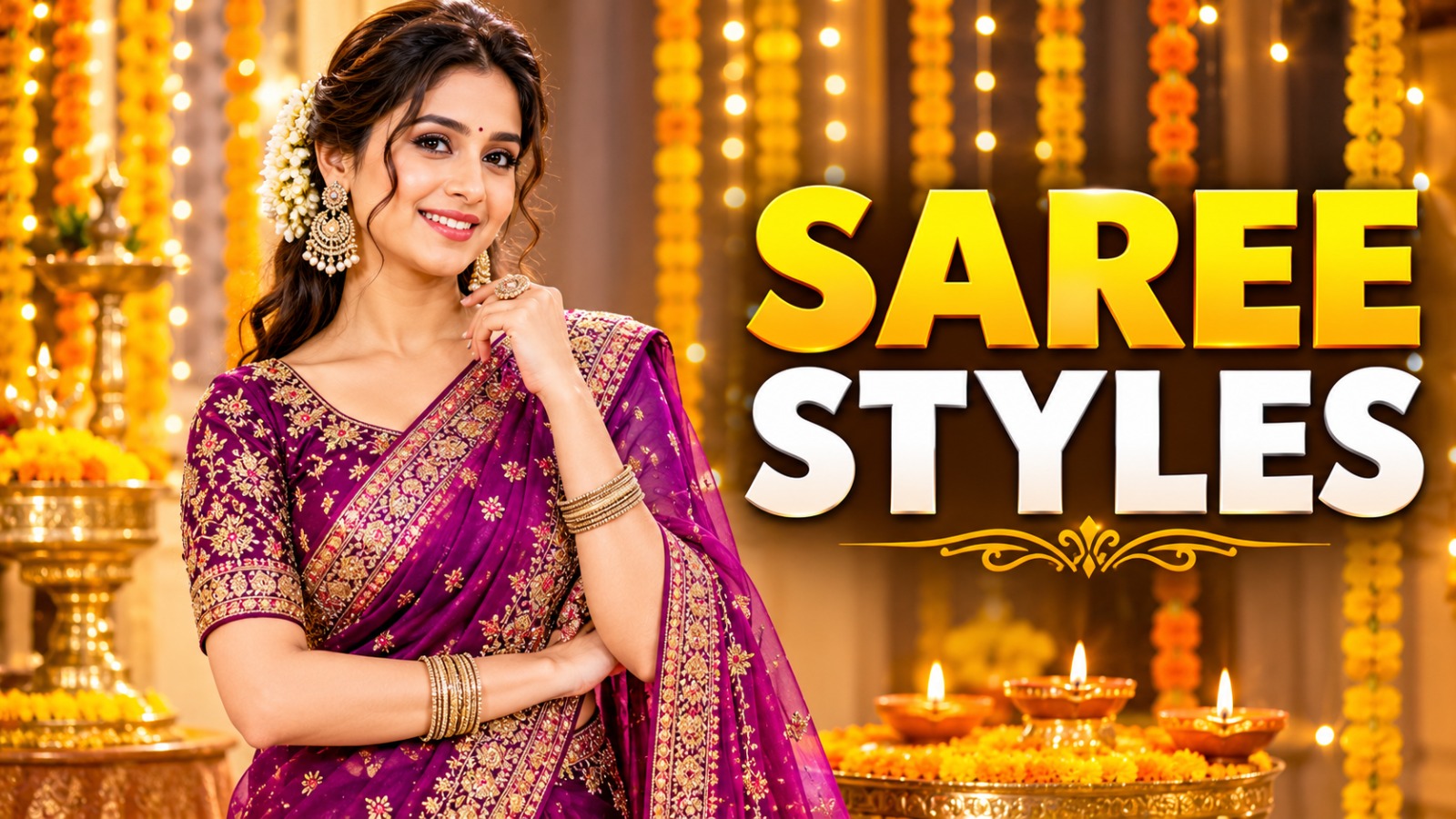
Few outfits suit Diwali as naturally as a saree. The silk, the gold border, the glow of the diyas and the warmth of the evening all come together in a well-draped saree. For Diwali 2026, on Sunday 8 November, saree draping styles range from the timeless Nivi drape to modern, party-ready looks, and each one suits a different part of the festival.
This guide explains the most elegant ways to wear a saree for Diwali, in plain steps. Whether you are dressing for the Lakshmi Puja, a family dinner or a Diwali party, you will find a drape that looks beautiful, stays comfortable, and photographs well in the evening light.
For the wider festival, see our Diwali outfits 2026 ethnic wear ideas, the Diwali jewellery ideas, and our guide to Diwali hairstyles 2026.
The Classic Nivi Drape
The Nivi drape is the most widely worn saree style in India, and it is the safest choice for Diwali. Tuck one end at the waist, wrap the fabric around once, make neat pleats of about five inches each, tuck them at the centre, and bring the pallu over the left shoulder. The pleats should fall straight and the pallu should sit just below the knee or at the waist.
For the puja, pin the pallu at the shoulder so it stays in place while you sit and offer flowers. A silk saree in red, maroon, green or gold with a zari border is the classic Diwali choice for this drape. Pair it with a well-fitted blouse, and the look is complete, elegant and completely traditional.
Seedha Pallu and Gujarati Drape
The seedha pallu, also called the Gujarati drape, brings the pallu over the right shoulder and across the front, showing off the pallu design and any embroidery on it. This style is lovely for Diwali because the front of the saree becomes a display of its best work, and the pallu can hold a small flower or a brooch at the shoulder.
The Gujarati drape suits heavier silks and bandhani sarees, and it is comfortable for long evenings because the pallu stays in front where you can manage it. It is a good choice for older women and for anyone who wants a traditional look with the pallu as the centrepiece. Pin the pallu at the waist as well as the shoulder for extra security.
Bengali and Other Regional Drapes
The Bengali drape, with its two pallus and the box pleats at the front, is a striking Diwali choice. The fabric is wrapped twice around the waist, the pleats are tucked at the front, and the pallu is brought over both shoulders, often with a decorative key bunch or a tassel at the end. It suits cotton and silk sarees alike, and it looks wonderful in photos.
Other regional drapes add variety to the festival. The Maharashtrian nauvari, worn with a nine-yard saree, is graceful and historic. The Kodagu drape from Karnataka, with the pleats at the back and the pallu pinned at the right shoulder, is elegant and practical. If your family follows a regional style, Diwali is the perfect occasion to wear it with pride.
Modern Drapes for Diwali Parties
For a Diwali party, modern drapes add a fresh twist. The belt drape, where a slim metallic belt holds the pallu at the waist, gives a structured, contemporary look. The lehenga-style drape, with the pleats spread wide and the pallu worn like a dupatta, feels like a gown and suits younger women who want to dance and move freely.
A pre-stitched or ready-to-wear saree is a practical modern option, especially if you are new to draping. It gives the saree silhouette without the pleating, and it stays neat all evening. Pair modern drapes with a stylish blouse, a halter, a sleeveless or a high-neck design, and keep the jewellery bold but simple.
Choosing the Right Saree and Blouse
The fabric matters as much as the drape. Silk, chiffon and georgette drape beautifully and fall well, while cotton is comfortable for a long puja day. For Diwali evening, a silk saree with a gold or copper border catches the diya light and looks rich in photos. Avoid very stiff fabrics, which are hard to pleat and uncomfortable to sit in.
The blouse completes the look. A well-fitted blouse in a contrasting colour, with a simple neckline and sleeves you can move in, is better than an elaborate blouse that pinches. Check the blouse fit a day before Diwali, and keep a safety pin or two in your bag for emergencies. A good drape depends on a blouse that fits.
Styling, Comfort and Photos
Style the saree with jewellery that matches the drape. A classic Nivi drape suits temple jewellery or gold, while a modern drape suits a statement necklace or bold earrings. Keep the bindi, the hair and the footwear in harmony with the saree, and carry a small clutch for the evening.
For comfort, practise the drape once before Diwali night, and walk around the house in it. Check that you can sit cross-legged for the puja, climb stairs, and move between rooms without the pleats coming loose. For photos, stand near the diyas so the silk catches the warm light, and let the pallu fall naturally over one arm.
Helpful Finds for the Festival
A saree look starts with the right base layers and colours. These ethnic pieces in rich festive tones pair well with a Diwali saree wardrobe and family photos.
- Burgundy Ethnic Print Maxi Dress
- Middle Eastern Embroidered Bohemian Style Dress Ethnic
- Navy Blue Embroidered Bohemian Blouse
- White Embroidered Bohemian Blouse
As an affiliate, EventBuzz may earn a commission on qualifying purchases at no extra cost to you.
Conclusion
The best Diwali saree drape is the one you feel confident in. The Nivi drape is timeless, the seedha pallu shows off your saree's best work, regional drapes honour your roots, and modern drapes bring a party sparkle. Choose the drape that suits your evening, practise it once, and pin it well.
When the diyas are lit on Sunday 8 November 2026, a beautifully draped saree, in silk and gold, will carry the whole festival with it. Wear it with ease, and let the light do the rest.