Jewellery is what turns a Diwali outfit into a celebration. A simple saree becomes festive with a gold necklace, a plain kurta glows with jhumkas, and a temple jewellery set can carry an entire traditional look on its own. For Diwali 2026, on Sunday 8 November, the three looks every woman reaches for are gold, temple and oxidised, and each one suits a different outfit and a different part of the evening.
This guide explains Diwali jewellery ideas in practical terms: which style to choose, how to match it to your saree or kurta, how to balance a necklace with earrings and bangles, and how to care for your pieces after the festival. Whether you wear real gold, imitation sets or a mix of both, the aim is a look that feels festive, comfortable and completely yours.
For the wider festival, see our Diwali saree draping styles, the Diwali outfits 2026 ethnic wear ideas, and our guide to Diwali gift ideas 2026.
Gold Jewellery: The Diwali Classic
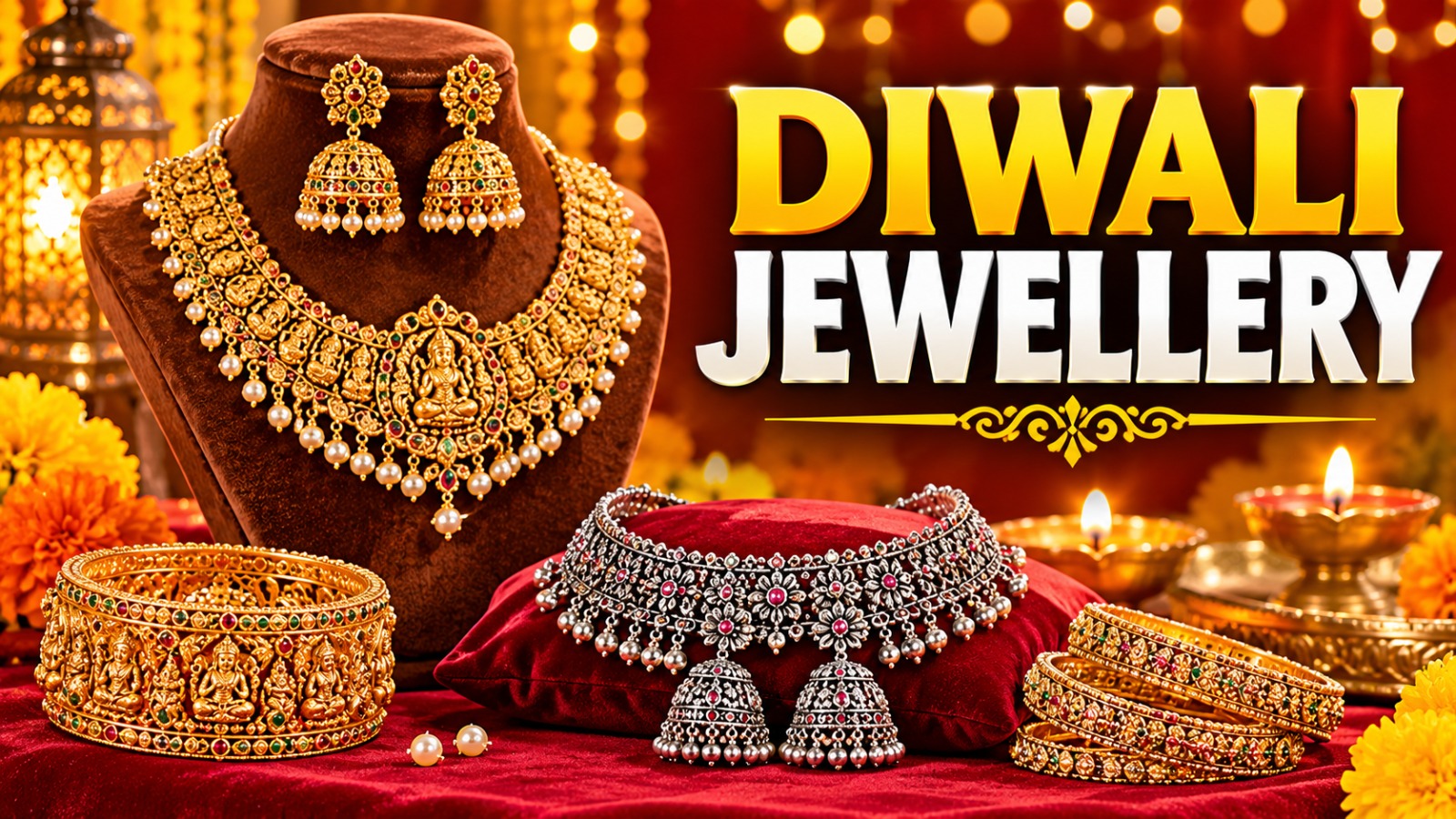
Gold is the first choice for Diwali, and for good reason. It matches the diya light, suits silk sarees, and carries the prosperity the festival celebrates. A gold necklace, whether a short choker, a long haram or a simple chain with a pendant, is the centrepiece of the look. Pair it with matching jhumkas and a few bangles, and the outfit is complete.
If you own one gold set, wear it for the Lakshmi Puja and the main evening. Keep the rest of the jewellery minimal so the gold stands out. A gold waist belt or kamarbandh adds a traditional touch to a saree, and a small nose pin suits the festive mood. Clean gold gently with warm water and a soft cloth before Diwali so it shines at its best.
Temple Jewellery: Heritage and Grace
Temple jewellery, with its motifs of gods, goddesses, lotus flowers and peacocks, is the most traditional Diwali look. Originating in South Indian temple traditions, these pieces are usually made in gold or gold-plated metal, with red and green stones, pearls and intricate work. A temple necklace with a matching oddiyanam and jhumkas is a complete festive statement.
Temple jewellery suits silk sarees, especially Kanjivaram and Banarasi, and the classic Nivi drape. It is also the right choice for the puja itself, when tradition matters most. Because temple pieces are detailed and bold, keep the blouse simple and let the jewellery carry the look. One strong temple set is better than several competing pieces.
Oxidised Jewellery: Modern and Versatile
Oxidised silver jewellery is the modern Diwali favourite. Its dark, antique finish suits cotton sarees, Indo-western outfits, kurtas and even a simple black or deep-coloured dress. Large oxidised jhumkas, a chunky necklace, stacked bangles and a statement ring give a bohemian festive look that is comfortable and affordable.
Oxidised jewellery is also the easiest to wear all day, because it is light and does not demand a silk saree. It suits younger women, Diwali parties and casual family gatherings. Pair it with a bindi, a simple hairstyle and a bold lip colour, and the look feels fresh and festive without trying too hard.
Matching Jewellery to Your Outfit
The rule is simple: match the jewellery to the outfit's tone and fabric. Gold and temple jewellery suit silk, brocade and rich colours such as red, maroon, green and gold. Oxidised silver suits cotton, linen, pastels and Indo-western looks. Pearl sets suit chiffon and lighter sarees, while kundan and polki suit deep colours and evening parties.
Balance is everything. If the necklace is heavy, keep the earrings light, and if the earrings are large jhumkas, choose a simpler necklace. Bangles should match the necklace tone, and the bindi should echo the jewellery colour. Try the full set with the outfit a day before Diwali, and look at it in warm light, not just daylight, since Diwali evenings are lit by diyas.
Jewellery for Different Diwali Moments
Diwali is a long festival, and one set rarely suits every moment. For the morning and the puja, choose traditional gold or temple jewellery with a silk saree. For the afternoon family lunch, a lighter set with small earrings and a few bangles is more comfortable. For the evening party, bring out the statement pieces, a bold necklace, large earrings or a layered set.
Children and teenagers can join the fun with light imitation sets, small jhumkas and colourful bangles. Keep their jewellery simple and safe, with no sharp edges or loose stones. For men, a simple gold chain, a brooch on a Nehru jacket, or a ring is enough. The whole family can shine without anyone feeling weighed down.
Caring for Your Jewellery After Diwali
After the festival, clean each piece gently and store it properly. Wipe gold with a soft cloth, keep temple jewellery in a soft pouch away from moisture, and store oxidised silver separately so it does not scratch other pieces. Keep imitation sets in airtight boxes with a small silica pouch to prevent tarnish.
Check clasps, stones and hooks after Diwali, and repair anything loose before storing it away. A little care now means the set is ready for the next festival, and for weddings and family occasions through the year. Good jewellery, cared for well, becomes part of the family's festive tradition.
Helpful Finds for the Festival
A complete jewellery set takes the guesswork out of festive styling. These golden-toned sets suit silk sarees and Diwali evening looks, and they arrive ready to wear.
- Sophisticated Jewelry Set — Rhinestone Necklace & Earrings, Vintage Luxe Style
- 3-Piece Layered Golden Necklace Set
- Luxury Women's Jewelry Bundle with Gift Box
- Elegant Women's Jewelry Set - Chic Square Pendant Necklace & Teardrop Earrings, Golden-Tone
As an affiliate, EventBuzz may earn a commission on qualifying purchases at no extra cost to you.
Conclusion
Gold, temple and oxidised jewellery each have their Diwali moment. Gold brings prosperity and warmth, temple jewellery brings heritage and grace, and oxidised silver brings a modern, easy charm. Choose the style that matches your outfit, balance the pieces, and wear the set that makes you feel festive.
Try the full look before Diwali night, keep the jewellery comfortable, and let the diya light do the rest. When the photos come out, the jewellery will be what everyone remembers, after the smile.