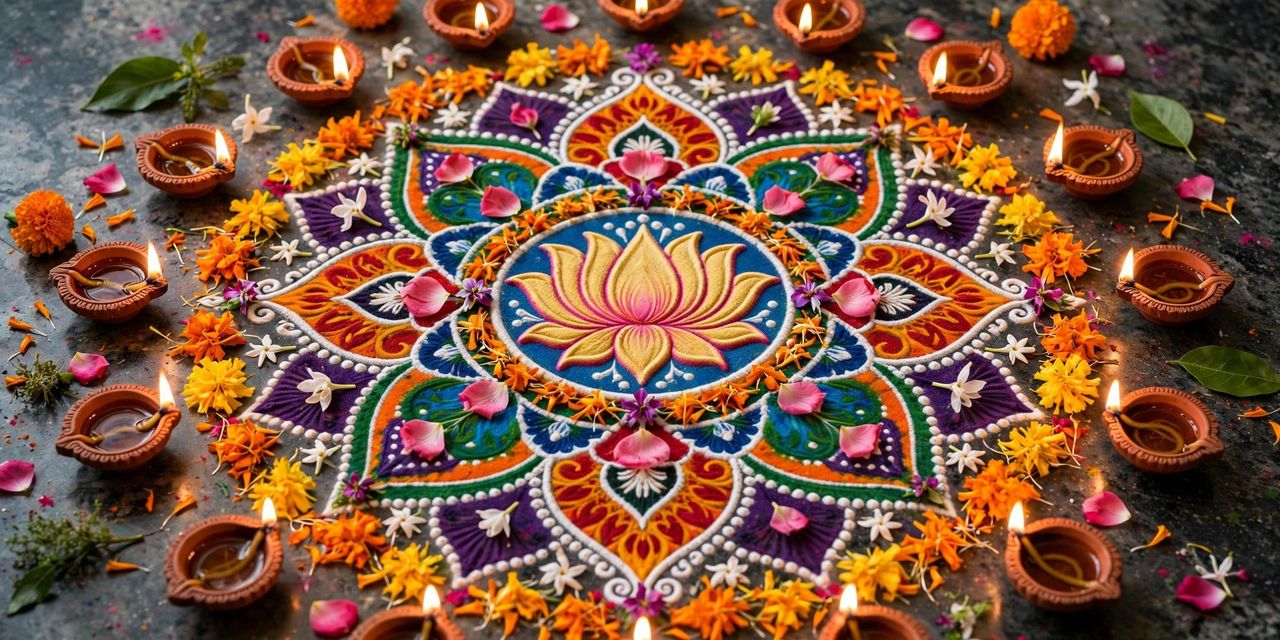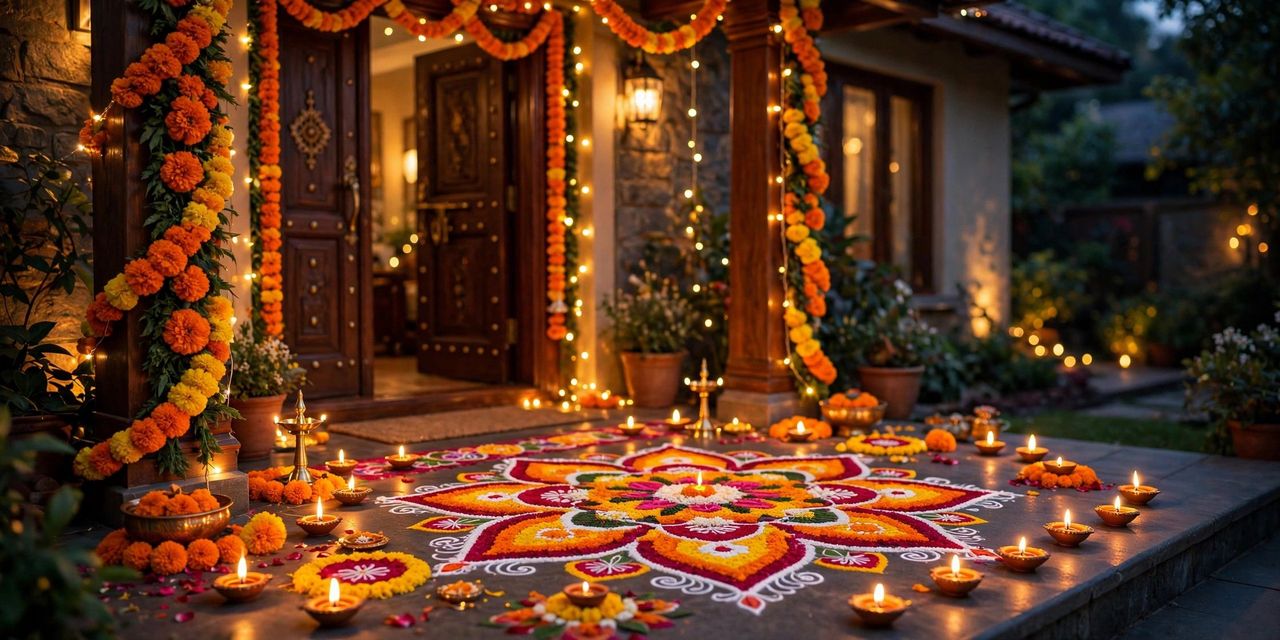
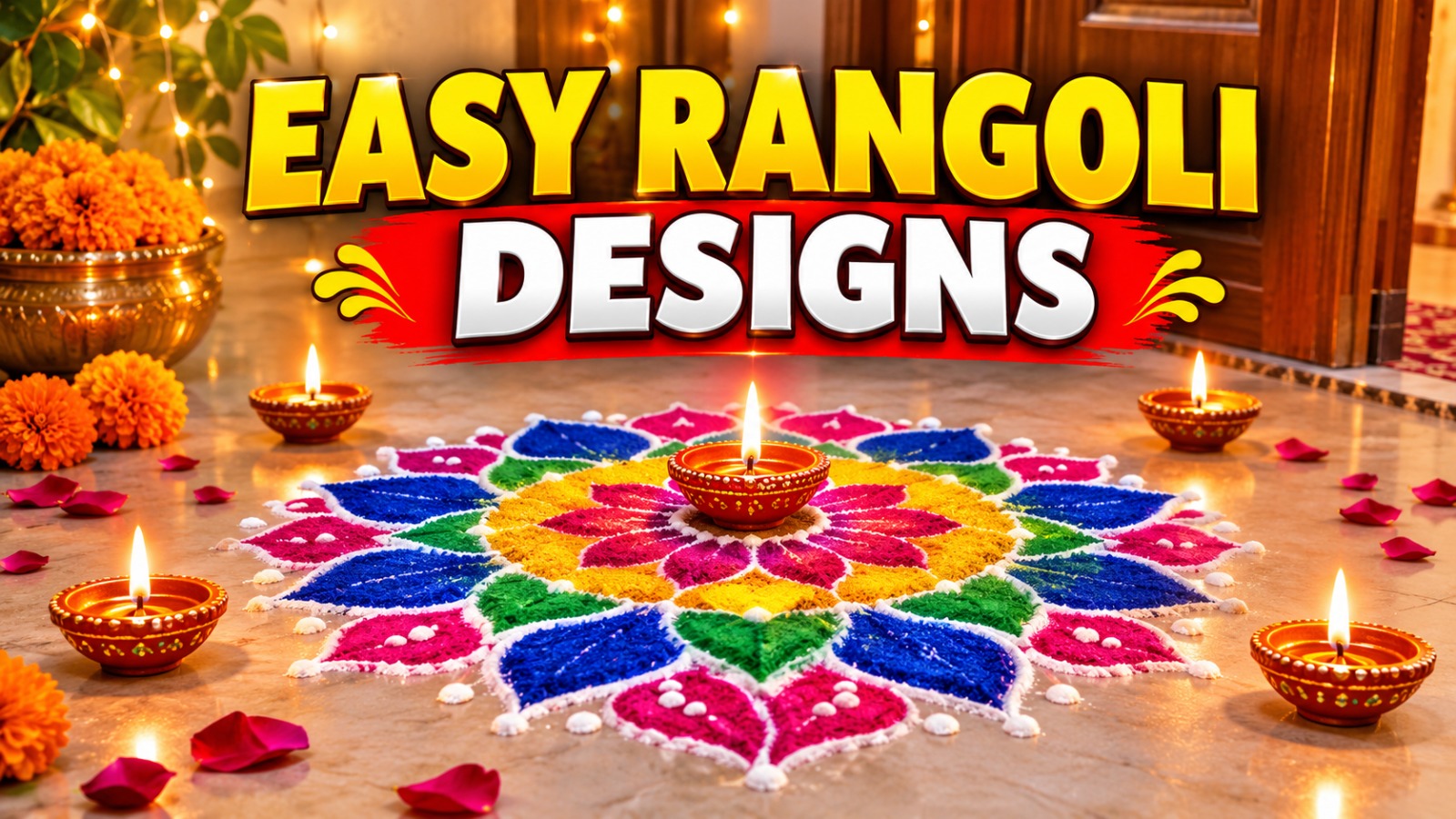
Rangoli looks difficult until you try it. Those perfect, symmetrical patterns on social media can make a first-timer give up before starting. The truth is simpler: a beautiful rangoli needs only a clear shape, two or three colours, and a steady hand for a few minutes. Nobody at your door will measure your circles. They will see colour, light and effort, and that is exactly what rangoli is meant to be.
Rangoli is traditionally drawn at the entrance of the home to welcome guests and Goddess Lakshmi during Diwali. The word comes from Sanskrit, and the art is made with coloured powders, rice flour, flower petals or a mix of all three. This year Diwali falls on Sunday 8 November 2026, with the five-day festival running from Dhanteras on Friday 6 November through Bhai Dooj on Tuesday 10 November. Most families draw their main rangoli on Diwali morning or the evening before.
This guide is written for complete beginners. It covers the tools you need, the easiest simple rangoli designs for Diwali, step-by-step methods, colour ideas, and the common mistakes that ruin a first rangoli. No experience is needed, and no expensive materials either.
What You Need Before You Start
Keep your kit simple. You need coloured rangoli powder in three or four colours, white powder or rice flour for outlines, a piece of chalk, a small sieve or a tea strainer for even spreading, and a plate or a lid to trace circles. A stencil, if you have one, makes the first attempt much easier, and a small bowl of water helps you clean mistakes without starting over.
Easy Rangoli Designs for Beginners
These five patterns are the best starting point. Each one uses basic shapes, needs only two or three colours, and can be finished in under an hour.
1. The Simple Flower Rangoli
Draw a small circle in the centre with chalk, then draw six or eight petals around it, like a daisy. Fill the centre with yellow or orange powder and the petals with pink or red, then outline everything in white. Place a diya in the middle. This is the classic beginner rangoli, and it looks good at any size.
2. The Diya Rangoli
Draw a large diya shape, a rounded bowl with a small flame on top, in the centre of your space. Fill the bowl with orange and yellow, the flame with red and yellow, and add a few small dots around it. Add two or three small diyas beside it. This design is perfect for Diwali because the shape itself is the festival.
3. The Circle Border Rangoli
Trace two or three concentric circles using plates of different sizes. Fill the rings with alternating colours, red, yellow, green, and add white dots along the edges. Put a diya or a small flower arrangement in the centre. It looks impressive and it is almost impossible to get wrong, because circles forgive small wobbles.
Step-by-Step: How to Make Your First Rangoli
Follow these steps in order and your first rangoli will turn out far better than you expect. The secret is drawing before colouring, and colouring before decorating.
- Step 1: Clean and dry the floor, then mark the centre of your design with a small chalk dot.
- Step 2: Draw the whole outline in chalk first. Use plates and lids for circles, and keep the lines light so you can correct them.
- Step 3: Fill the largest areas first, using your fingers or a small sieve, and work from the centre outward so you do not lean on finished parts.
- Step 4: Add the second colour, then the third. Keep the colours separate and clean up the edges with a dry cloth or a soft brush.
- Step 5: Outline the shapes in white powder. This one step makes the whole design look sharp and finished.
- Step 6: Add the finishing touches: flower petals, a diya in the centre, or a few LED or battery candles around the edge for the evening.
Colours That Work Best for Beginners
Beginners do best with three colours plus white. A good combination is red, yellow and green with white outlines, or pink, orange and yellow with white outlines. These are traditional Diwali colours, they look bright against a dark floor, and they photograph beautifully in the evening light.
Avoid using too many colours in your first rangoli. Five or six colours in one small design look busy rather than beautiful, and they are harder to keep separate. Start with three, and add a fourth only when you are confident. Dark colours like deep blue and maroon work well as accents, but use them sparingly, because they can overpower the lighter shades.
Common Beginner Mistakes and How to Avoid Them
The most common mistake is starting too big. A rangoli that covers the whole entrance sounds grand, but it takes hours and the edges get smudged by feet before evening. Start with a design about two feet wide. You can always make a bigger one next year.
The second mistake is colouring before outlining. Without a chalk guide, the shapes drift and the symmetry fails. Always draw first. The third mistake is working on a damp floor, which makes powder clump and colours bleed into each other. Dry the floor properly and wait a few minutes after wiping.
Keeping Your Rangoli Beautiful All Evening
A rangoli made in the morning has to survive a full day of feet, pets and wind. A light spray of water from a distance can help settle the powder, but do not soak it. Place a small barrier, such as a row of diyas or a low flower border, to guide guests around the design rather than through it.
In the evening, light matters more than detail. A few candles or fairy lights around the rangoli make the colours glow. For more festival ideas, see our rangoli designs for Diwali 2026 and our Diwali decoration ideas at home.
Helpful Finds for Your Rangoli Evening
A few simple additions make a beginner rangoli glow after dark. - battery-operated candles are safe to place beside or inside a rangoli without scorching the powder, - heart-shaped scented candles add fragrance to the entrance, - LED strip lights can frame a doorway or a rangoli area, and - a bohemian table runner dresses the table where guests gather after admiring your work.
- Floral Battery Operated Candle Set Remote Timer Perfect
- 9 heart shaped scented candles burn 3 hours wedding supplies
- Led Strip Lights Room
- 1pc Bohemian Style Table Runner
As an affiliate, EventBuzz may earn a commission on qualifying purchases at no extra cost to you.
Conclusion
Simple rangoli designs for Diwali are within reach of anyone willing to sit down for an hour with chalk and colour. Start with a flower, a diya or a circle, use three colours plus white, outline before you fill, and finish with a diya in the centre. Your first rangoli will not be perfect, and it does not need to be. It will be colourful, it will be yours, and it will welcome everyone who walks through your door on Sunday 8 November 2026. Next year, you will make a bigger one, and you will wonder why you ever thought it was hard.
For more Diwali decoration, try our Diwali decoration ideas at home, Diwali lights decoration 2026, and eco-friendly Diwali 2026.