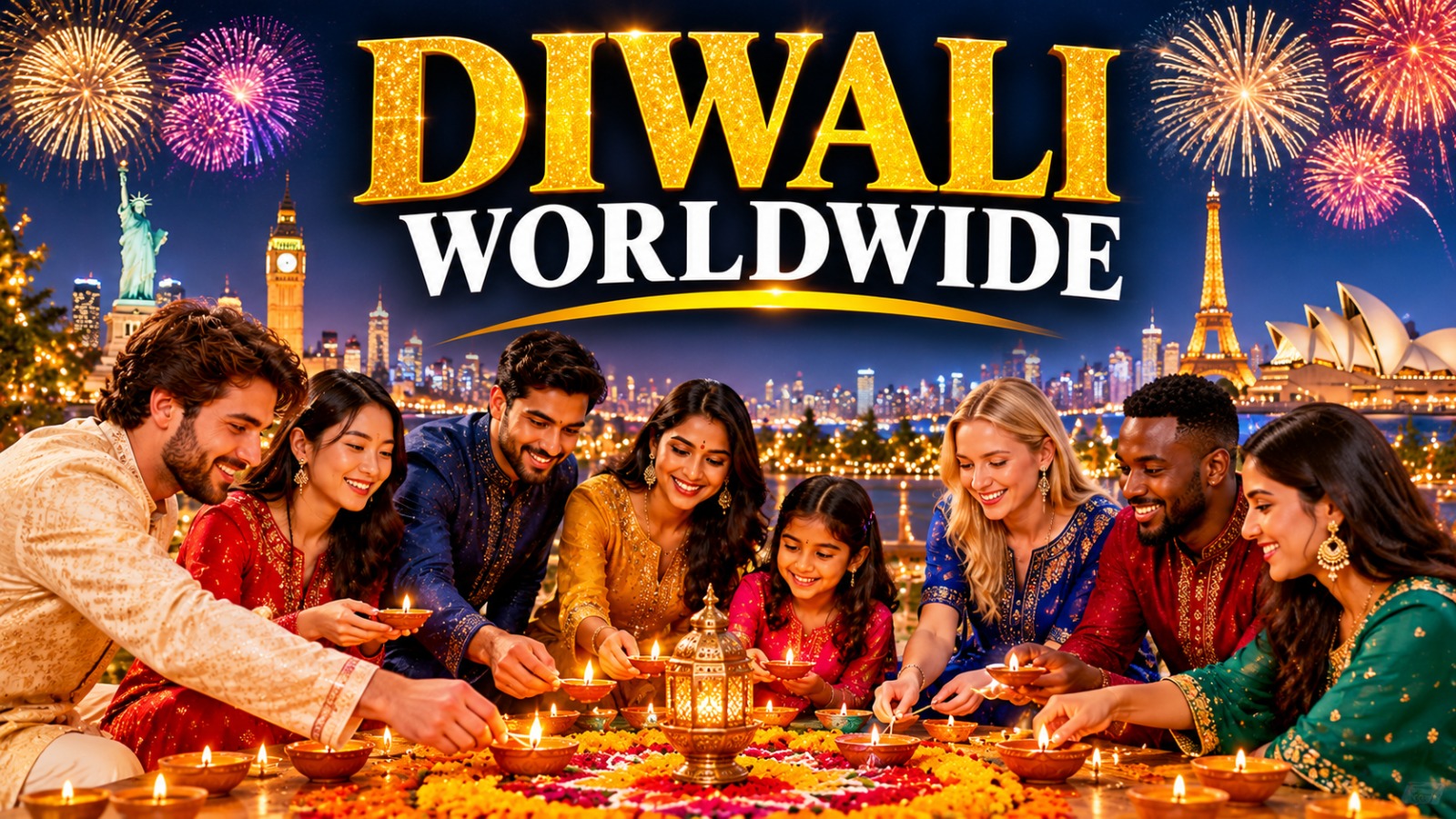
Diwali around the world looks different in every place it touches, yet the heart of it never changes. Families light lamps, share sweets, wear their best clothes and gather with the people they love. In 2026, with Diwali falling on Sunday, 8 November, millions of people across Asia, Europe, North America, Africa and Australia will celebrate the same festival in their own local way.
What makes Diwali in other countries so interesting is how it blends with local culture. In some places it is a public holiday with days of preparation. In others it is a community festival held in a city square, a temple courtyard or a school hall. Wherever you find a South Asian community, you will find diyas glowing in windows, and increasingly, neighbours from every background joining in too.
Diwali in India: The Home of the Festival
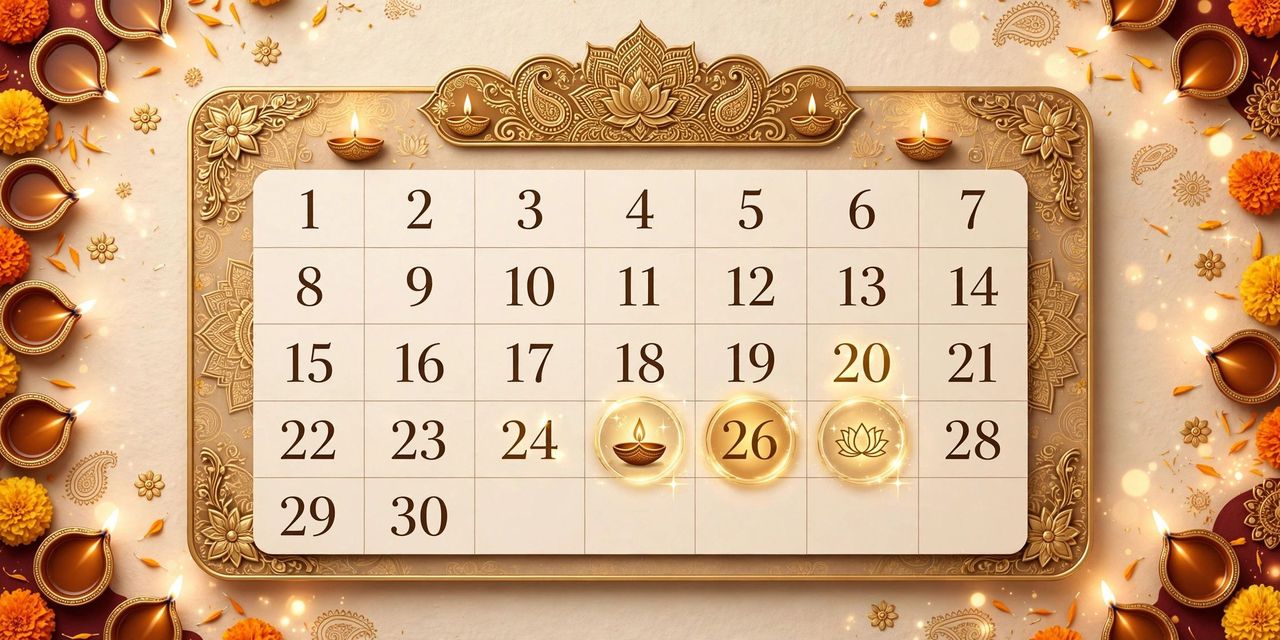
In India, Diwali is the biggest festival of the year. The five-day celebration begins with Dhanteras on Friday, 6 November, continues through Choti Diwali on Saturday, 7 November, reaches its peak on Diwali day itself, Sunday, 8 November, and ends with Govardhan on Monday, 9 November and Bhai Dooj on Tuesday, 10 November. Homes are cleaned and painted, markets overflow with lights and sweets, and Lakshmi Puja is performed in the evening as families pray for prosperity.
Every region adds its own flavour. In the north, the festival marks Lord Rama's return to Ayodhya. In the south, it often celebrates Lord Krishna's victory over the demon Narakasura. In the west, traders begin their new financial year, while in the east, Goddess Kali is worshipped. For a full guide to the dates and rituals, see our Diwali 2026 date and Lakshmi Puja calendar.
Diwali in Nepal: Tihar, the Festival of Lights and Animals
Nepal celebrates Diwali as Tihar, a five-day festival that runs alongside the Indian dates. Tihar has a beautiful tradition found nowhere else: each day honours a different animal. Crows are honoured on the first day, dogs on the second, and cows on the third. Dogs receive flower garlands and tilak on their foreheads, a sight that has made Nepali Tihar famous on social media around the world.
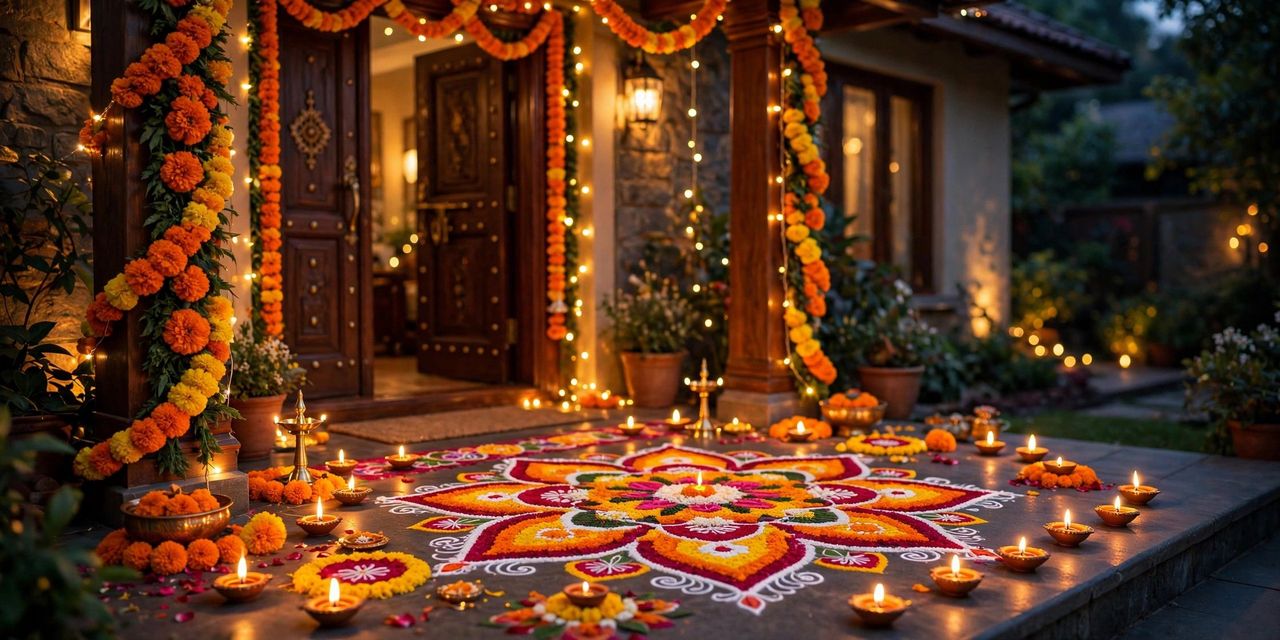
The fourth day honours the ox and the self, and the fifth day is Bhai Tika, the Nepali equivalent of Bhai Dooj, when sisters pray for their brothers' long life. Homes are decorated with oil lamps and colourful rangoli, and the goddess Lakshmi is welcomed with patterns of footprints leading to the door. If you are visiting Nepal during Tihar, expect music, dancing and deusi-bhailo groups going door to door singing for blessings and treats.
Diwali in the USA: From Times Square to Small-Town Temples
Diwali in the USA has grown from a quiet family affair into one of the most visible cultural festivals in the country. New York City now holds a Diwali celebration in Times Square, complete with dance performances, food stalls and a mass lighting of diyas. Cities like Edison in New Jersey, Houston, Chicago and the San Francisco Bay Area host large public events that draw tens of thousands of visitors.
At home, Indian-American families follow the same rituals as their relatives in India: Lakshmi Puja in the evening, sweets exchanged with neighbours, and children dressed in new ethnic outfits. Fireworks are more limited than in India because of local rules, so many families use sparklers, string lights and LED diyas instead.
Diwali in the UK: Trafalgar Square and Leicester's Golden Mile
London hosts one of the largest Diwali celebrations outside India, with the Mayor of London's Diwali festival in Trafalgar Square drawing crowds from across the city. Leicester, home to a large British-Indian community, is famous for its Diwali lights switch-on along Belgrave Road, known as the Golden Mile, where thousands of lights turn the street into a river of gold.
Diwali in Singapore and Malaysia: A Public Holiday
In Singapore, Deepavali, as Diwali is called there, is a public holiday, and the Little India district is transformed weeks in advance. Serangoon Road glows with elaborate light arches, bazaars sell flowers, saris and sweets, and Hindu temples hold special prayers.
Malaysia celebrates Deepavali as a public holiday too. Open houses are a much-loved tradition: families welcome friends and neighbours of every race into their homes for murukku, ladoo and other festive food.
Diwali in Mauritius, Fiji and the Caribbean
In Mauritius, where a large part of the population is of Indian origin, Diwali is a public holiday celebrated with great enthusiasm. Homes are lit with clay diyas and electric lights, and families share sweets with neighbours. The island's multicultural character means the festival is enjoyed well beyond the Hindu community.
Fiji also marks Diwali as a public holiday, with celebrations in Suva and other towns. In Trinidad and Tobago, Guyana and Suriname, where Indian indentured workers settled generations ago, Diwali is a national holiday too, with the lighting of diyas along streets and in homes.
Diwali in Australia, Canada and the Middle East
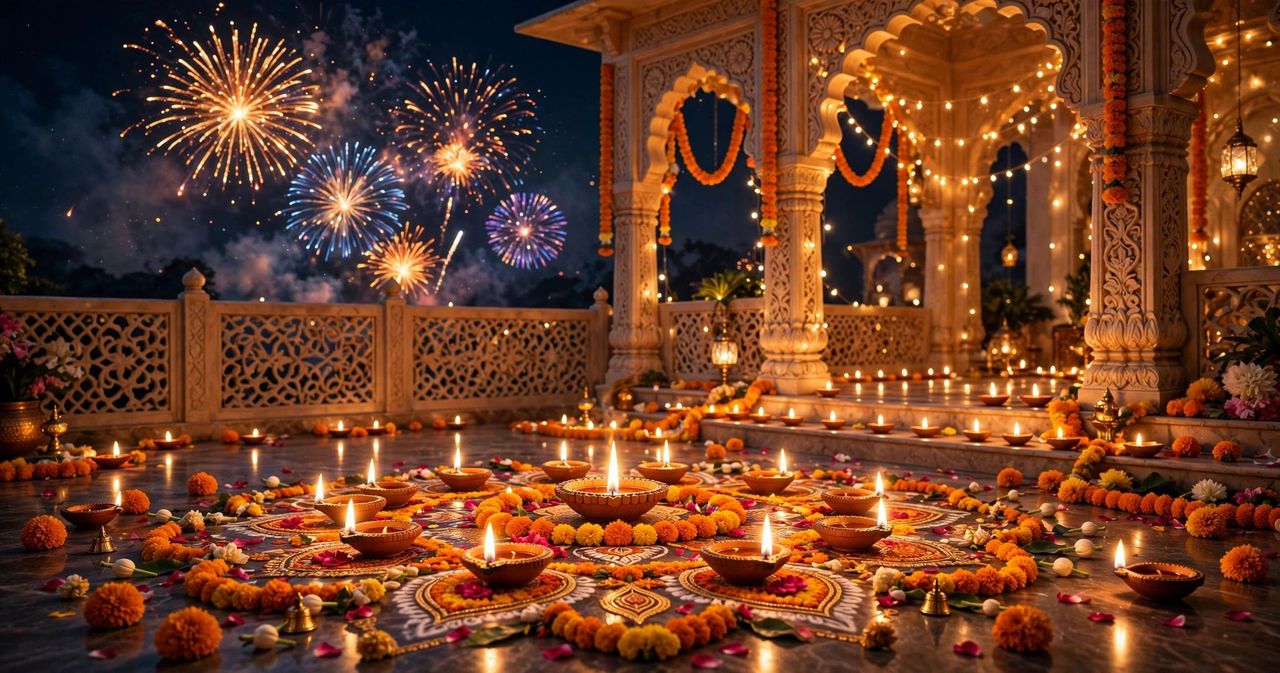
Australia's large Indian community celebrates Diwali in Sydney, Melbourne and Brisbane with public festivals in parks and town squares. Because November is late spring in Australia, many celebrations take place outdoors, with food stalls, dance performances and fireworks under warm evening skies.
Canada has one of the largest Diwali celebrations in North America, with events in Toronto, Vancouver and Brampton, and Diwali is recognised in several provinces. In the United Arab Emirates and other Gulf countries, where large Indian expatriate communities live, malls and public spaces host Diwali decorations and events, and families gather for puja and feasts after work.
What Stays the Same Everywhere
Across all these countries, a few things never change. The lighting of lamps is always at the centre, symbolising the victory of light over darkness and good over evil. Sweets are always shared, whether they are homemade ladoo, shop-bought barfi or a local twist on a traditional recipe. And the festival always brings people together, across generations and across communities.
How to Experience Diwali Abroad in 2026
If you live outside India and want to join the celebrations, start with your local temple or Indian community association. Most organise public events that welcome everyone, and they are the best place to experience the food, music and rituals properly. City festivals in places like London, New York and Singapore are open to all and need no invitation.
Helpful Finds for a Global Diwali
Festive lights bring the celebration home wherever you live. - solar fairy lights work beautifully on balconies and in gardens, - warm white fairy lights suit windows and indoor corners, and - a bohemian table runner sets the table for a Diwali dinner with friends.
- Solar Fairy Light Strip Outdoor Garden Decoration Spherical
- 1pc 30 Warm White Led Fairy Lights Glowing Shaped
- 1pc Bohemian Style Table Runner
- 1pc Star Fairy Lights 40 Led Star String Lights
As an affiliate, EventBuzz may earn a commission on qualifying purchases at no extra cost to you.
Conclusion
Diwali in different countries proves that a festival can travel the world without losing its soul. Whether it is called Diwali, Deepavali or Tihar, whether it is marked with clay diyas in a village or LED lights in a New York apartment, the meaning stays the same: light wins over darkness, and family and friendship matter more than anything else. In 2026, wherever you are on Sunday, 8 November, light a lamp, share something sweet, and you are part of the celebration.
For more Diwali reading, try our Happy Diwali wishes for 2026, our Diwali sweets and recipes, and our eco-friendly Diwali guide.