Every Diwali night, millions of small clay lamps flicker in windows, on doorsteps and along balconies. The sight is beautiful, but it is also very old. Diwali is one of the oldest festivals still celebrated in the world, with roots reaching back more than two thousand years, and its story is not a single tale but a collection of stories from different regions and faiths, all pointing at the same truth: light wins over darkness, and good wins over evil. This guide traces the Diwali history and the stories behind it, so the lamps you light this year carry their full meaning.
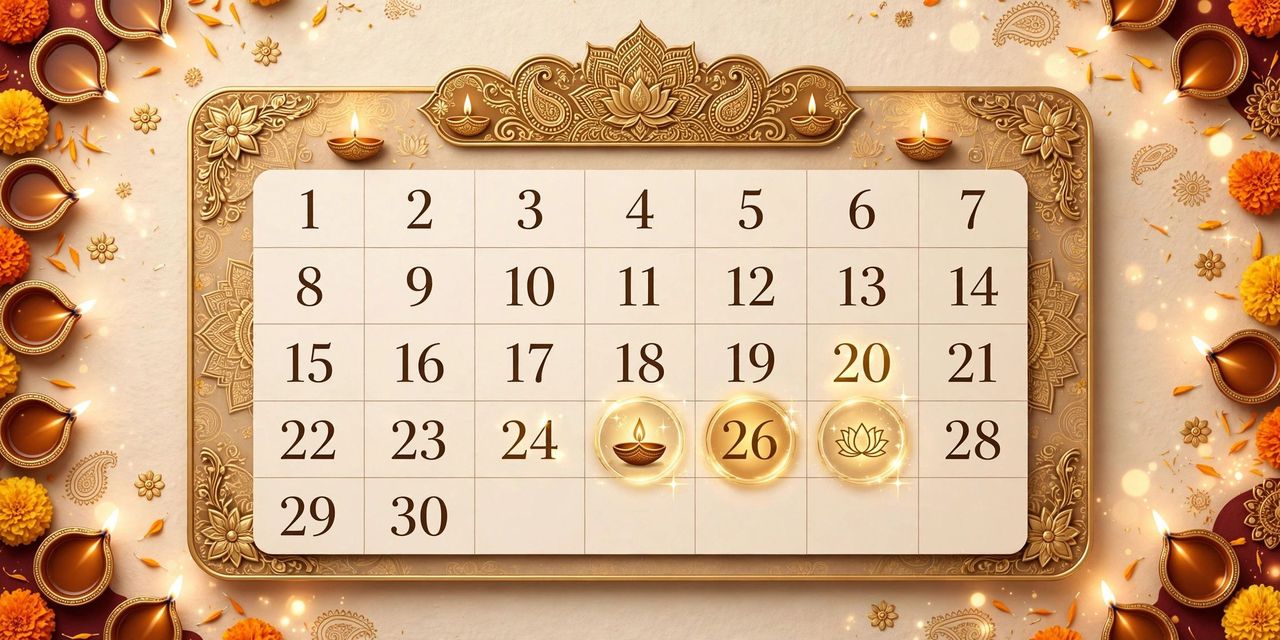
Diwali 2026 falls on Sunday, 8 November, with the five-day festival running from Dhanteras on Friday, 6 November through Bhai Dooj on Tuesday, 10 November. The name comes from the Sanskrit Deepavali, meaning a row of lamps, and that image has survived every change of century, kingdom and technology, from clay diyas to LED fairy lights.
The Ramayana: Rama's Return to Ayodhya
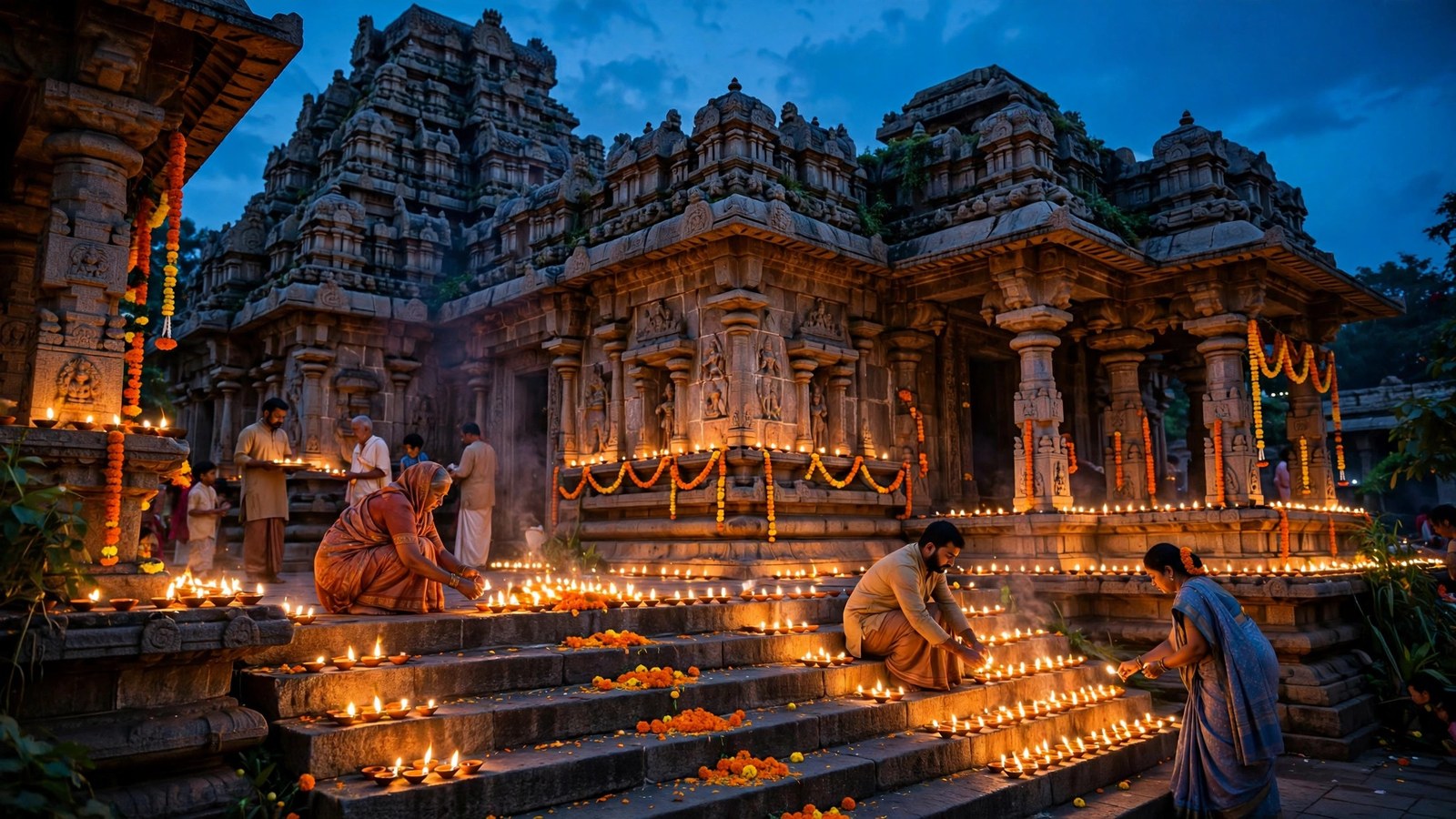
The most widely told Diwali story comes from the Ramayana, the ancient epic of Prince Rama. Rama was exiled from his kingdom of Ayodhya for fourteen years, during which the demon king Ravana abducted his wife Sita and carried her to Lanka. With the help of his brother Lakshmana and the monkey god Hanuman, Rama defeated Ravana in a great battle and rescued Sita. When the couple finally returned to Ayodhya, the night was dark, it was the new moon, and the people of the city lined the streets and rooftops with rows of oil lamps to light their path home and celebrate the victory of good over evil.
That homecoming is the heart of Diwali. The lamps are not decoration; they are a welcome. They say: the exile is over, the darkness has ended, and the rightful light has come home. In many parts of North India, this story is the reason the festival exists, and children still hear it retold every year as the diyas are lit. It is also why Diwali falls on the darkest night of the lunar month, the new moon of Kartik, because the festival is about choosing light precisely when the night is at its deepest.
Goddess Lakshmi and the Night of Prosperity
A second great story explains the Lakshmi Puja that takes place on Diwali night. Goddess Lakshmi, the goddess of wealth and fortune, is believed to wander the earth on this night, visiting homes that are clean, bright and welcoming. Houses are scrubbed, doors are left open, and lamps are placed in every window so the goddess can find her way in and bless the family with prosperity for the year ahead.
The story is often linked to the churning of the cosmic ocean, the Samudra Manthan, from which Lakshmi is said to have emerged. In another telling, Lakshmi visits the home of a poor but devout woman who lights a single lamp in faith, and rewards her devotion with abundance. The lesson is the same in every version: prosperity follows cleanliness, generosity and devotion, not luck alone. That is why Diwali cleaning is not a chore but a ritual, and why the puja matters as much as the fireworks.
Lord Krishna and the Demon Narakasura
In South India and in the story of Choti Diwali, the hero is Lord Krishna. The demon Narakasura had terrorised the heavens and the earth, imprisoning thousands of people and stealing the earrings of Aditi, the mother of the gods. Krishna, with his wife Satyabhama, fought Narakasura and defeated him, freeing the prisoners and restoring peace. The day of the victory, Naraka Chaturdashi, is celebrated as Choti Diwali, the day before the main festival.
Krishna appears again on Govardhan Puja, the fourth day of the festival. According to the story, the people of Vrindavan were preparing a grand offering to Indra, the god of rain, when the young Krishna told them to worship the Govardhan hill instead, which gave them food, shelter and grazing for their cattle. Indra, angered, sent a terrible storm, and Krishna lifted the entire hill on his little finger like an umbrella, sheltering the whole village for seven days until Indra relented. The Annakut, the mountain of food offered on this day, remembers that act of protection.
Diwali in Jain and Sikh Traditions
Diwali belongs to more than one faith, and its other stories are just as important. For Jains, Diwali marks the night in 527 BCE when Lord Mahavira, the twenty-fourth Tirthankara, attained nirvana and liberation. Jains light lamps to honour the light of his knowledge, which continues to guide the world after his passing, and many observe fasting and prayer through the festival.
For Sikhs, Diwali coincides with Bandi Chhor Divas, the day of liberation. In 1619, Guru Hargobind was released from imprisonment in Gwalior Fort, and he refused to leave until fifty-two other imprisoned princes were freed with him. The Golden Temple in Amritsar was lit with lamps to celebrate his return, and Sikhs still illuminate the temple and their homes on this day, remembering freedom and compassion. These shared stories are part of why Diwali is celebrated so widely and warmly across communities.
Why We Celebrate Diwali Today
The stories are old, but the reasons people celebrate are current. Diwali is a homecoming festival, a time when families travel long distances to be together. It is a festival of gratitude, marked by Lakshmi Puja and the giving of gifts. It is a festival of renewal, when old account books are closed and new ones are opened, and when people quietly resolve to do better in the year ahead. And it is a festival of hope: the reminder, repeated every year on the darkest night, that light returns.
Festive Finds for a Traditional Diwali Evening
The old stories were told by lamplight, and a home that glows with real flames and warm lights brings those stories to life. Candles and lamps on the dining table, fairy lights around the windows, and a row of diyas at the door recreate the welcome that Ayodhya gave Rama, in miniature, in your own home.
- Mindful Relaxation Scented Candles, Natural Soy Wax
- 9 Heart Shaped Scented Candles, Burn 3 Hours
- LED Acrylic Touch Crystal Table Lamp, Plant Decorative Light
- Solar Fairy Light Strip, Outdoor Garden Decoration, Spherical
As an affiliate, EventBuzz may earn a commission on qualifying purchases at no extra cost to you.
Conclusion
Diwali's history is not a museum piece; it is a living story that people re-enact every year with their own hands. When you light a diya, you are repeating a gesture made by the people of Ayodhya thousands of years ago. When you clean your home for Lakshmi, you are joining a ritual that has crossed centuries and continents. The stories differ by region and faith, but they all end the same way: the light comes home. This Diwali, on Sunday 8 November 2026, light your lamps knowing why they matter, tell the stories to someone younger, and let the festival do what it has always done: remind us that darkness, however deep, never lasts. For more on the festival's meaning, explore our eco-friendly Diwali 2026 guide and our Diwali gift ideas 2026 collection.