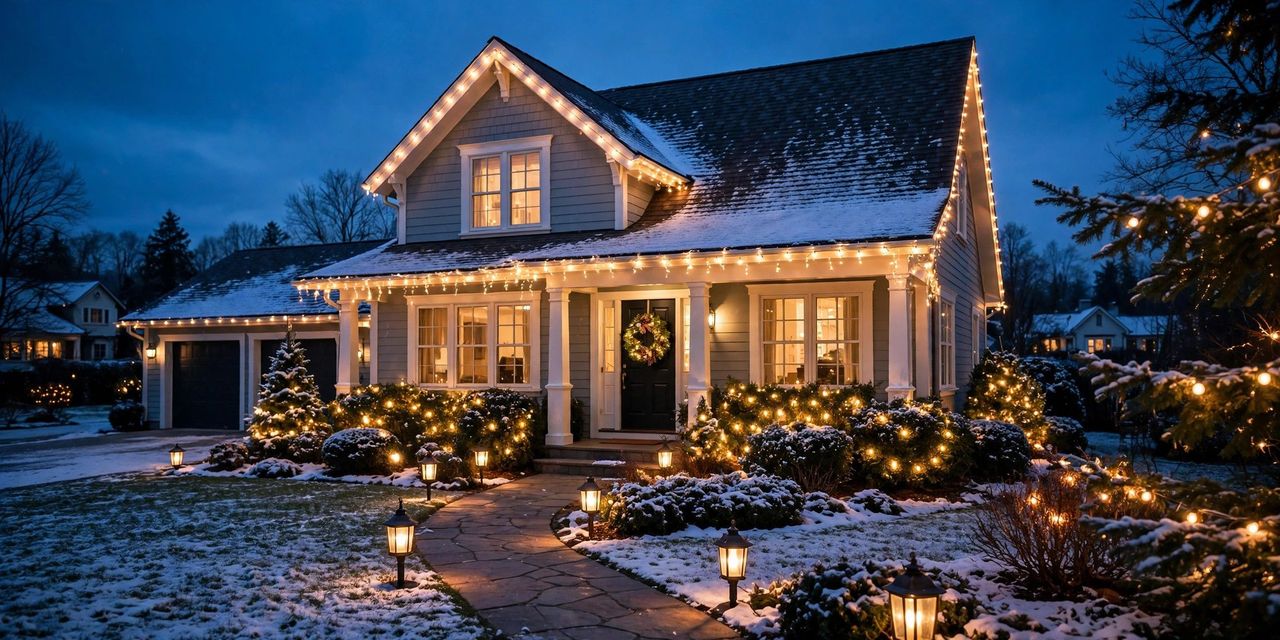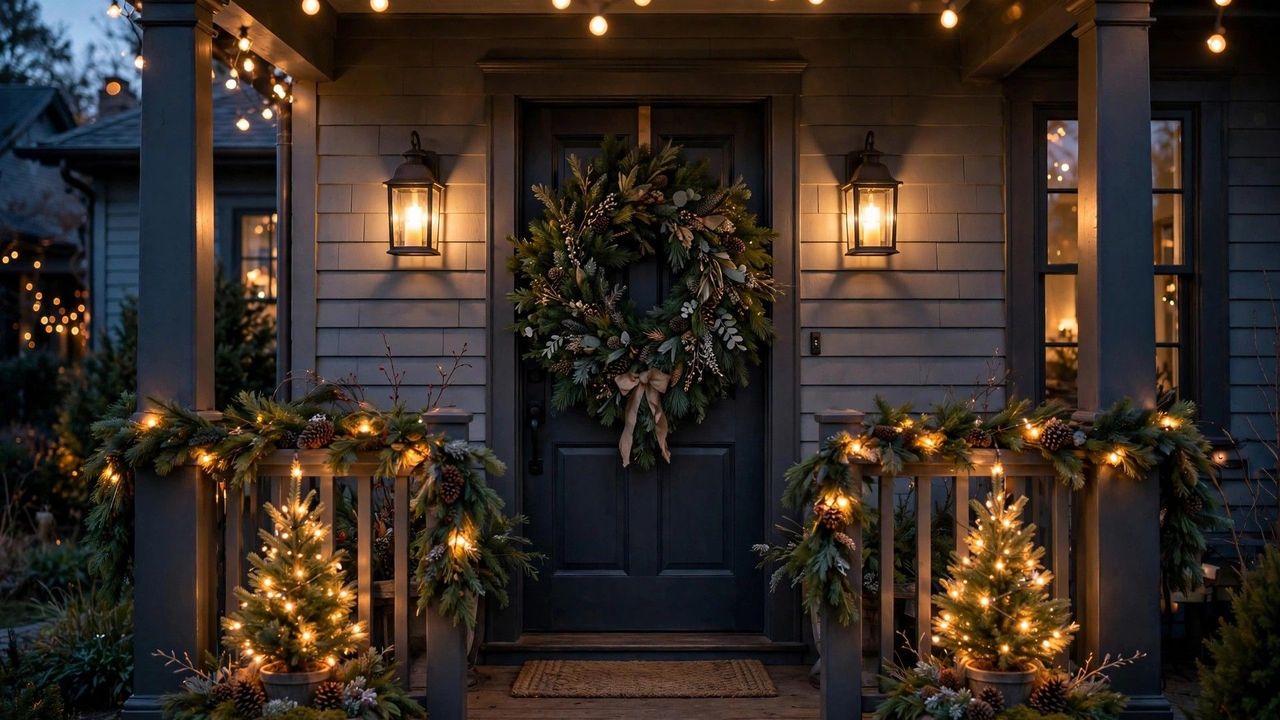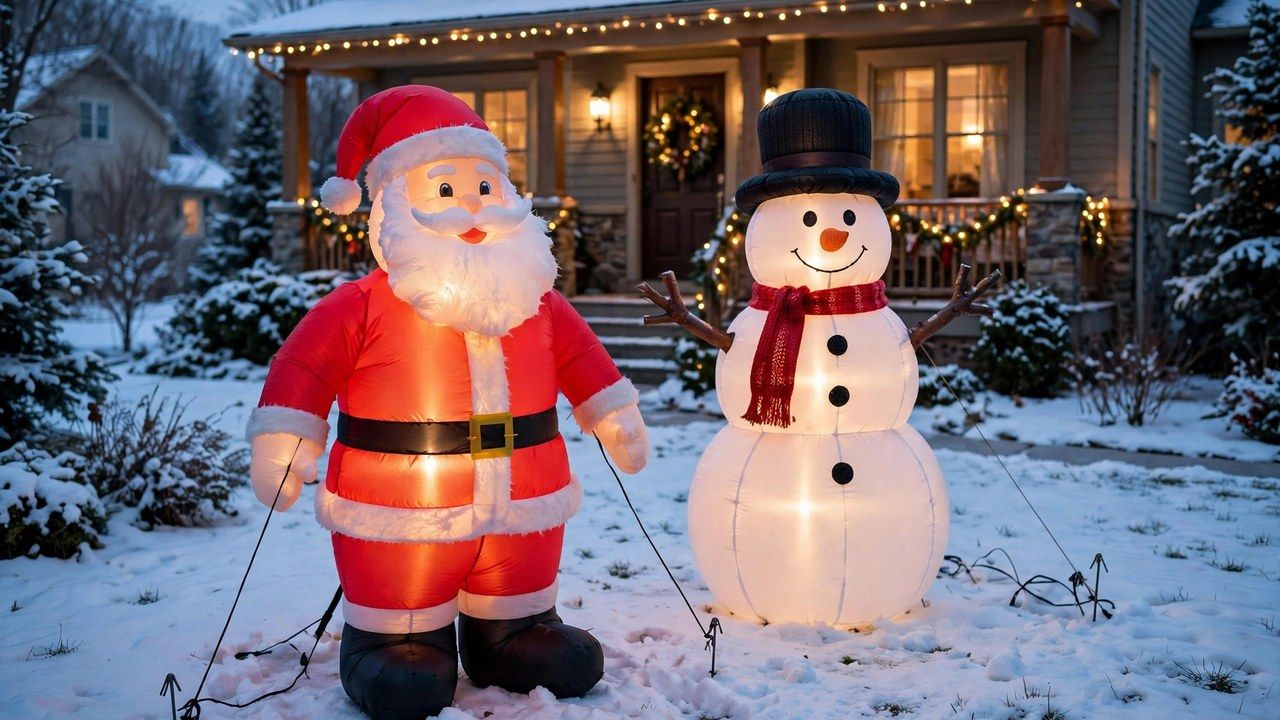
Nothing announces Christmas to a street quite like a twelve foot Santa swaying gently over the hedge. Outdoor christmas inflatables are the biggest, fastest and, hour for hour, most cheerful decorations you can put in a yard, and also the ones most likely to be found face down in a flowerbed after the first winter storm if they were bought and staked carelessly. This is a practical guide: how to size one for your yard, buy for December weather rather than for the product photo, anchor it like you mean it, power it safely and store it so it survives to next year.
There are no product picks attached to this guide; it is an editorial buying and setup manual, designed to work alongside our outdoor lighting ideas and porch decor guide when you plan where an inflatable belongs in the whole display.
Sizing: Bigger Is Not Always Better
Inflatables are sold by height, but yards experience them by footprint and presence. A very tall inflatable in a small front yard overwhelms the house, blocks windows and becomes the only thing anyone sees; the same piece on a deep lawn reads as festive scale. Measure your intended spot, allow clear space around the piece for its tethers to angle out properly, and check the view from the street: you want the inflatable framed by the house, not hiding it.
Also consider the deflated reality. The fan runs whenever the display is on; when it stops, the piece collapses into a large fabric puddle that covers plants and can sit in meltwater. Choose a spot where a daily collapse is harmless: open lawn rather than a flowerbed, and never over a walkway. Households new to inflatables usually do best starting with one medium anchor piece and adding smaller companions in later seasons, rather than launching a full inflatable population in year one.
Buying Criteria: Fans, Fabric and Lights
| Part | What to look for | Why it matters |
|---|---|---|
| Fan (blower) | Adequate power for the size; protected intake; reasonable noise | The fan is the heart; a weak fan means a soft, leaning display and constant running |
| Fabric | Outdoor rated, stitched seams, repair patch included | December adds wind, ice and abrasion; seams are the usual failure point |
| Internal lights | Evenly placed LEDs, warm or matching color | Night is the display's main show; dark patches look like damage from the street |
| Anchoring kit | Enough stakes and tether ropes for the size; ground loops well attached | Tall inflatables are sails; the kit decides whether the first storm is an anecdote or a loss |
| Zipper and deflation | A deflation zipper that opens fully | Makes morning collapse quick and packing far less of a wrestling match |
Read winter reviews specifically. A design that charms through October Halloween duty and December in a mild state may behave differently under ice load and repeated freeze thaw. Reports of fans icing, stakes pulling from frozen or saturated soil, and fabric tearing at the same seam are the patterns to take seriously.
Anchoring: The Section That Saves Your Display
An inflatable in wind is a sail with a cartoon printed on it, and it must be rigged like one. Use every tether point the maker provided, angled outward so the ropes share the load, and use stakes long enough for your soil; the short pegs in some kits are fair weather equipment. In soft or sandy ground, upgrade the stakes. In frozen ground, get stakes in during a milder afternoon rather than hammering at a frozen lawn in the dark.
Then respect the weather forecast. Makers and experienced owners share one rule: on genuinely high wind nights, and during heavy wet snow or ice, switch off, let the piece deflate, and if a storm is serious, bring light pieces in. A deflated inflatable under snow can trap meltwater and strain seams when it refreezes. No display looks good enough to justify a Santa touring the neighborhood at 2 a.m., which is the genuine alternative the wind offers.
Power, Timers and Running Costs in Plain Terms
The fan runs continuously while the inflatable is up, so power planning is simple but constant. Use an outdoor rated extension and a covered, weather protected connection, keep plugs out of puddles and meltwater channels, and never run a cord where it will be driven over or become a trip line across a dark path. A timer is close to essential: most owners run inflatables for the high audience hours, roughly dusk to bedtime, which saves wear, electricity and neighborly goodwill compared with a fan humming outside a bedroom window all night.
Group your outdoor display on timed circuits where you can, so inflatables, lights and projection share a sensible schedule, following the overall plan in our outdoor lights guide. If a breaker trips when the fan starts, treat that as information: the circuit is telling you it is full, and the answer is a different circuit, not a bigger tolerance.
Weather Playbook: Snow, Rain, Ice and Thaw
- Light snow: Usually fine while inflated; brush heavy accumulation off before it weighs the piece down and blocks the fan intake.
- Heavy wet snow or ice: Deflate. Ice adds serious weight and sharp edges, and a fan struggling against a loaded, sagging piece wears fast.
- Rain: Rated pieces handle rain, but check that the fan intake and electrical connections stay protected, and let everything dry before any storage.
- Freeze after thaw: The risky combination. Fabric puddles freeze to the ground and tear when pulled; free a frozen piece gently with time, not force.
- Wind: The hard limit. If gusts are strong enough to worry you, they are strong enough to deflate for.
HOA Rules, Neighbors and Local Reality Checks
Before a large piece goes up, check the rules that actually govern your street. Some homeowners associations limit inflatable size, display hours or the dates displays may run; some towns have sign and lighting ordinances that catch very large displays. A two minute check beats a compliance letter in mid December. Courtesy covers the rest: keep fan noise and light in mind near neighbors' bedroom windows, run to a timer, and keep tethers and cords inside your own yard and off shared paths.
If you are planning the whole front of the house, our front door decor guide helps the doorway hold its own beside a large lawn piece, so the composition stays balanced rather than all inflatable, all the time.
Storage: Dry, Loose and Away From Mice
More inflatables die in storage than in storms. The rules are unglamorous: clean and completely dry before packing, because mildew in a folded fan powered Santa is forever; fold loosely rather than compressing seams into hard creases; keep the fan, stakes and tethers together with the piece, ideally in a labeled bin; and store where rodents cannot nest in the fabric over summer. Before packing, run the piece once, inspect seams and tether loops in daylight, and do any small repair now, while it is a ten minute job rather than a December emergency.
Label a photo of the finished display on the bin. Next season's setup, stake positions and all, will take half the time.
Honest Pros and Cons
Pros: maximum festive presence per dollar and per setup minute; children love them unconditionally; they store in a fraction of the space their inflated size suggests; and one piece can carry a whole yard theme. Cons: they are weather dependent in a way lights are not, fans add noise and constant power draw while running, big pieces can dominate or clash with a classic display, and cheap seams and fans make some budget pieces effectively single season.
Choosing a Theme Your Yard Can Carry
A single inflatable is a decoration; two or more become a scene, and scenes need the same discipline as any other display. The strongest inflatable yards pick one story, a Santa's workshop corner, a snow family, a nativity, a woodland group, and let every piece belong to it. Random accumulation, however cheerful each piece is individually, reads from the street as a storage unit emptying itself. If your collection already mixes stories, zone them: one story grouped at one side of the yard, another near the porch, with plain lights as the buffer between them.
Also design for the daytime view. Inflatables spend their off hours deflated and their daylight hours looking, frankly, like bright fabric machinery in the garden. Pieces in colors that sit well with your house, grouped tightly rather than spread thin, look intentional at noon as well as at seven in the evening. A yard that holds together in daylight is the mark of an inflatable display designed rather than merely inflated.
Conclusion
Buy an inflatable for December, not for the photograph: a strong fan, real fabric, enough lights and a serious anchoring kit. Size it to the yard, rig every tether, run it on a timer, deflate ahead of the worst weather, and store it dry and loose. Do those things and a big inflatable is the easiest joy on the street. Skip them, and it is a parachute with your address on it. Plan its place in the full display with our outdoor lighting ideas.