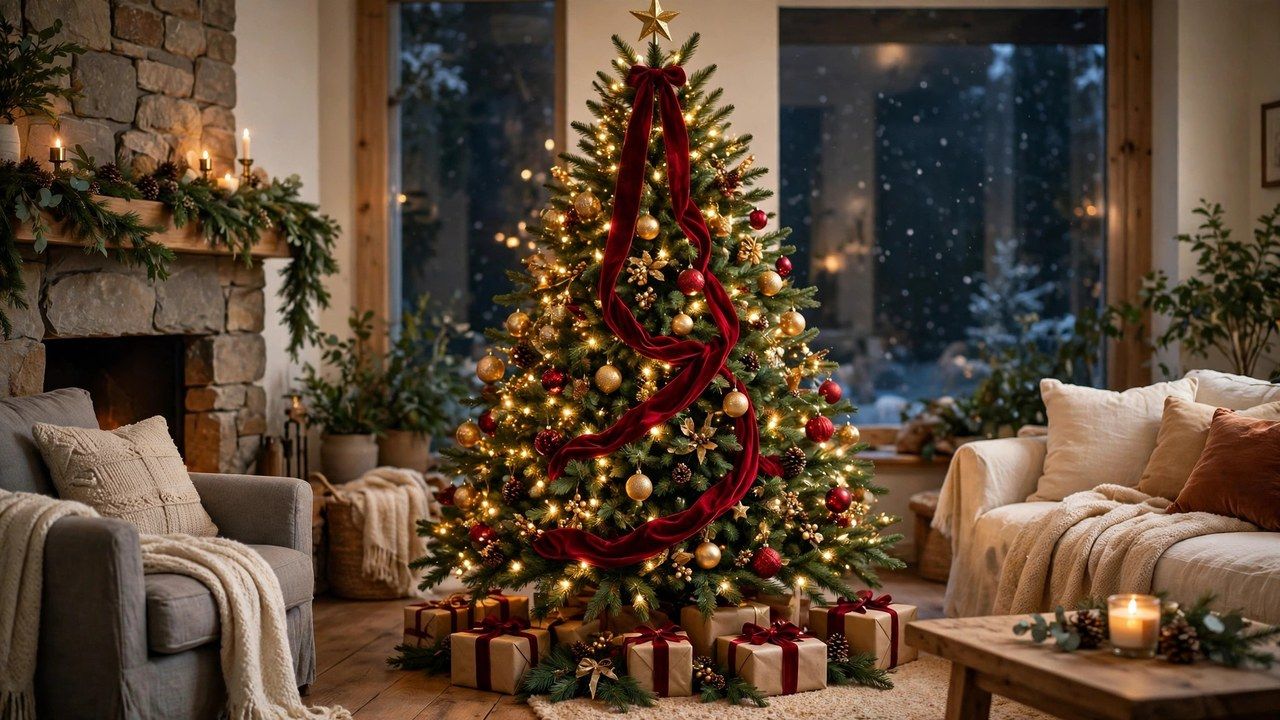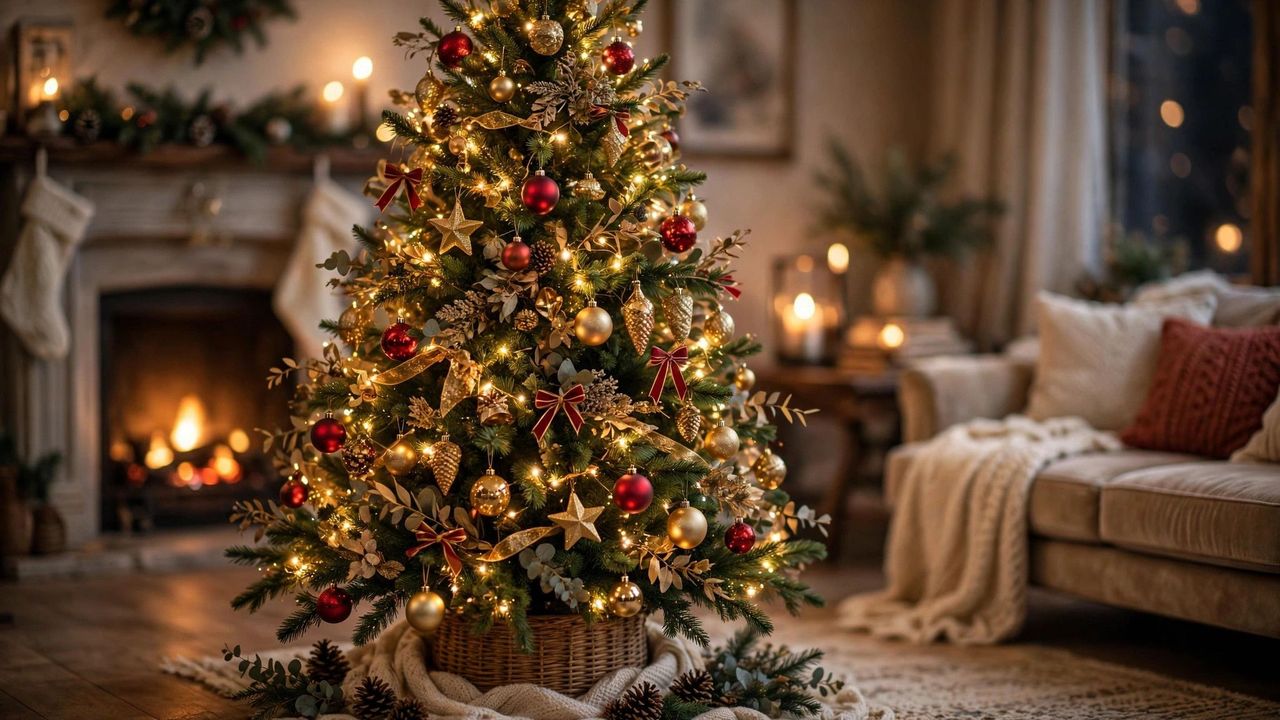
The topper is the full stop at the end of the tree’s sentence, and for many households it has been the same star for twenty years. There is nothing wrong with the classic star, but christmas tree topper ideas have widened enormously: oversized bows, ribbon bursts, floral crowns, angels, snowflakes, and heirloom objects with a family story all compete for the top branch now. This guide works through proportion, the main styles, and the unglamorous but essential business of making the thing stay upright until January.
Choose the topper as part of the whole tree rather than as an afterthought on decorating day; it should speak the same language as your theme, and our Christmas tree themes guide and tree decorating ideas will help you match them. The sizing rule below comes first because most topper disappointment is simply a scale problem.
Proportion First: Sizing a Topper to Your Tree
A topper should read clearly from across the room without overwhelming the tree’s silhouette. As a working guide, a topper’s visual height suits roughly a tenth to an eighth of the tree’s height: a six-foot tree carries a seven-to-nine-inch topper happily, while a nine-foot tree can take a foot or more, especially a bow with ribbon tails that extend the line. Slim pencil trees need lighter, narrower toppers or the tree looks top-heavy and tips visually.
Ceiling clearance is the forgotten measurement. Measure from the top branch to the ceiling and subtract the stand or stem of the topper before you fall in love with anything tall. Angels with raised wings and stars on long spikes fail this test in low rooms every year. If clearance is tight, a bow or floral crown wins because its height is soft, compressible and adjustable rather than rigid.
The Classics: Star and Angel, Done Well
The star remains the most versatile topper in existence: it suits every theme from rustic to glam, reads from any angle, and carries the oldest symbolism on the tree. Choose the finish to echo something already in your scheme, matte gold with brass elsewhere, silver with cool white lights, rustic wood with a natural tree. An illuminated star adds a genuine focal glow at the tree’s highest point, which is why it anchors so many traditional trees.
The angel is the topper with the strongest heirloom energy, and the one most often passed down. A good angel has a cone or stand that sits securely rather than balancing on a wire, and a face and gown that suit the tree’s formality. If your family angel is fragile or beloved beyond risk, display her on the mantel where she is safe and crown the tree with something replaceable; sentiment does not require altitude.
Bows and Ribbon Bursts: The Stylist’s Favorite
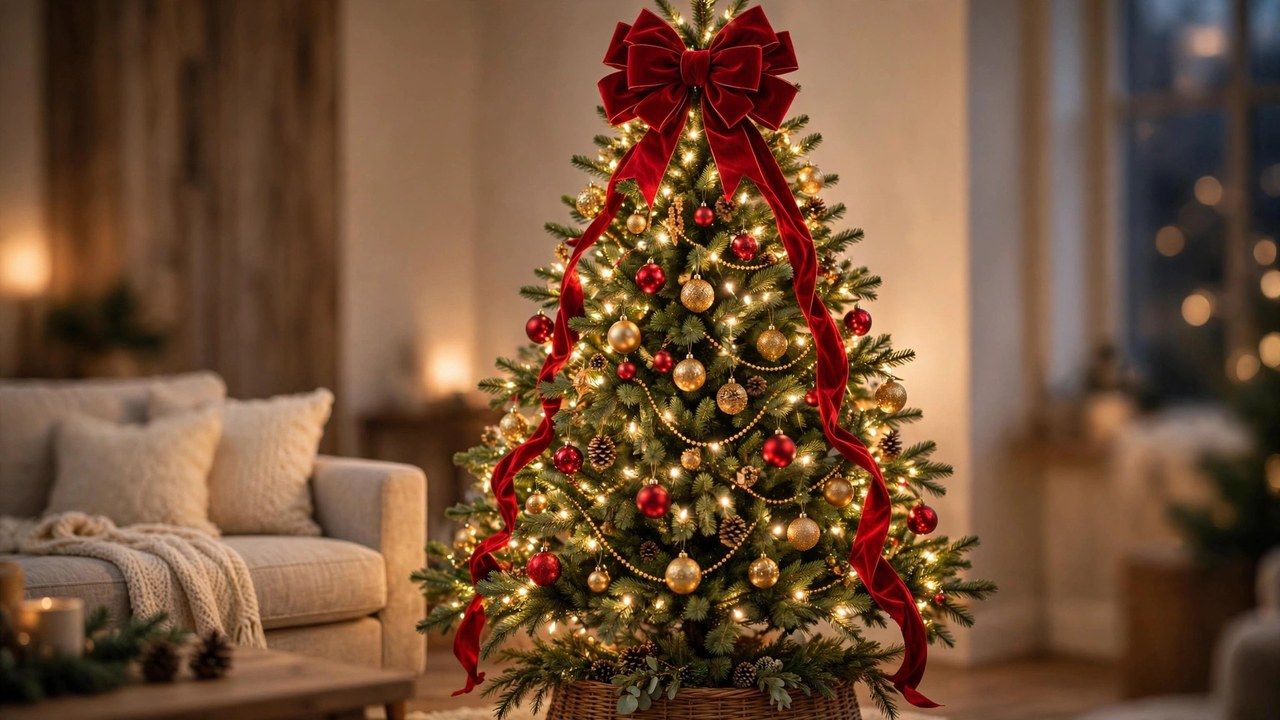
The oversized bow is the topper of the moment because it solves proportion, softness and ceiling clearance at once, and because it ties the tree visually to the ribbon worked through its branches. A bow topper is one large layered bow, often in velvet, with long tails that cascade a foot or two down the tree and become part of the decorating itself. Matched to the ribbon in the tree, it looks tailored; in a contrasting jewel tone, it becomes the tree’s single statement.
Ribbon bursts, also called floral or spray toppers, fan a cluster of picks, berries, branches and small ornaments from the top like a firework frozen mid-burst. They suit tall trees and dramatic themes and let you use leftover picks from the tree’s own decorating for a perfect match. Learn the ribbon handling itself from our tutorial on how to put ribbon on a Christmas tree, because the same wired-ribbon skills build both the burst and the bow.
Floral Crowns, Snowflakes and Nature Toppers
A floral crown topper rings the top of the tree with poinsettias, roses, berries and greenery, like a wreath laid at an angle or worn as a halo. It suits romantic, garden and vintage themes and spreads its visual weight horizontally, which flatters wide trees. Keep the crown’s inner diameter honest to your tree’s top branches so it sits rather than slides, and echo one of its flowers lower in the tree to connect the design.
Oversized snowflakes, in white, silver or natural wood, are the topper for winter-woodland and Scandinavian trees: graphic, light and readable from far away. Nature toppers go further, a bird’s nest with faux eggs for a woodland tree, a pair of antlers in a rustic scheme, a small lantern with a flameless candle. The rule for novelty nature pieces is commitment: one clear idea, executed at proper scale, reads as design; a timid small version reads as an ornament that wandered too high.
Heirloom and Personal Toppers
| Topper type | Best tree match | Practical note |
|---|---|---|
| Family heirloom | Traditional family tree | Photograph and insure the story, not just the object |
| Child-made star or angel | Family and kids’ trees | Reinforce with a hidden support; date it on the back |
| Hat toppers (Santa, top hat, crown) | Playful and themed trees | Check the inner band size against your top branches |
| Monogram or initial | Modern and minimalist trees | Lightweight materials only; metal letters get heavy fast |
The most loved topper in many homes is not the prettiest: it is the one a child made, the one from a first apartment, or the one that survived a move across the country. Give heirloom toppers a proper support so sentiment is not risked on a weak branch, and write the story on a card stored with it. A tree crowned by family history needs no trend’s permission.
Securing a Topper: The Engineering Nobody Sees
Most topper failure is a mounting failure. The top leader branch of an artificial tree is often thin, and a real tree’s leader can be surprisingly floppy. The fixes are simple: bind a wooden dowel or a sturdy floral stem alongside the leader with wire or zip ties to create a rigid post, slide the topper’s cone or clip over the reinforced post, and add a discreet wire from the topper to a stronger branch below for anything heavy or tall. Test with a gentle shake before decorating the rest of the tree.
Illuminated toppers need their cord planned, not draped: run it down the tree’s back inside the branches to the same outlet as the lights, and put the whole tree on one timer so the topper never glows alone into the night. Battery toppers avoid the cord but add weight at the very worst place, so reinforce the leader for those too. A straight topper in every photo is engineering, not luck.
Matching the Topper to the Tree’s Theme
Run the consistency check: the topper should repeat a color, a material or a motif already present in the tree’s top third. A glam tree wants crystal, metal or a luxe bow; a rustic tree wants wood, burlap ribbon or a natural burst; a children’s tree can carry the one playful hat or character with confidence because the whole tree agrees with it. Our Christmas ornaments guide covers the coordination system for the rest of the tree in the same terms.
If you decorate more than one tree, vary the toppers deliberately: the formal tree takes the heirloom angel, the family tree takes the big bow, the small tree in the hallway takes a snowflake. Different crowns give each tree its own personality and stop the house’s trees from looking like copies at different scales.
Honest Pros and Cons of Leaving the Star Behind
Pros of alternatives: bows and bursts solve low ceilings, personalize the tree instantly, and can be made from materials you already own. Cons: they date faster than the classics, a bow’s tails need arranging every year, and novelty toppers can fight a traditional tree’s dignity. The balanced answer many households land on is rotation: the heirloom star or angel most years, a bow or crown the years you restyle the tree, and no guilt either way, because the topper’s real job is finishing the tree you actually have.
Toppers for Small, Slim and Second Trees
Small trees need toppers with presence out of proportion to their size but not their weight: a wired bow with two short tails, a single bold snowflake, or a miniature version of the main tree’s heirloom all crown a four-foot tree better than a shrunken star. Slim pencil trees take vertical toppers, a slim finial or a narrow bow, that extend their line upward instead of widening a silhouette that is deliberately narrow.
Children’s and themed second trees are where playful toppers earn their place: the Santa hat, the tiny crown, the star a small person made from card and unreasonable amounts of glitter. Give these trees the same engineering respect as the main one, a reinforced leader and a shake test, because a second tree is usually in a busier room where it will be brushed, bumped and admired at close range by exactly the people least likely to catch it.
Conclusion
Pick the topper by proportion first, theme second and trend last; reinforce its mount like you mean it; and let it repeat something the tree already says. Whether it is a twenty-year-old star, a velvet bow with long tails or a crown of poinsettias, a well-scaled, well-secured topper turns a decorated tree into a finished one.