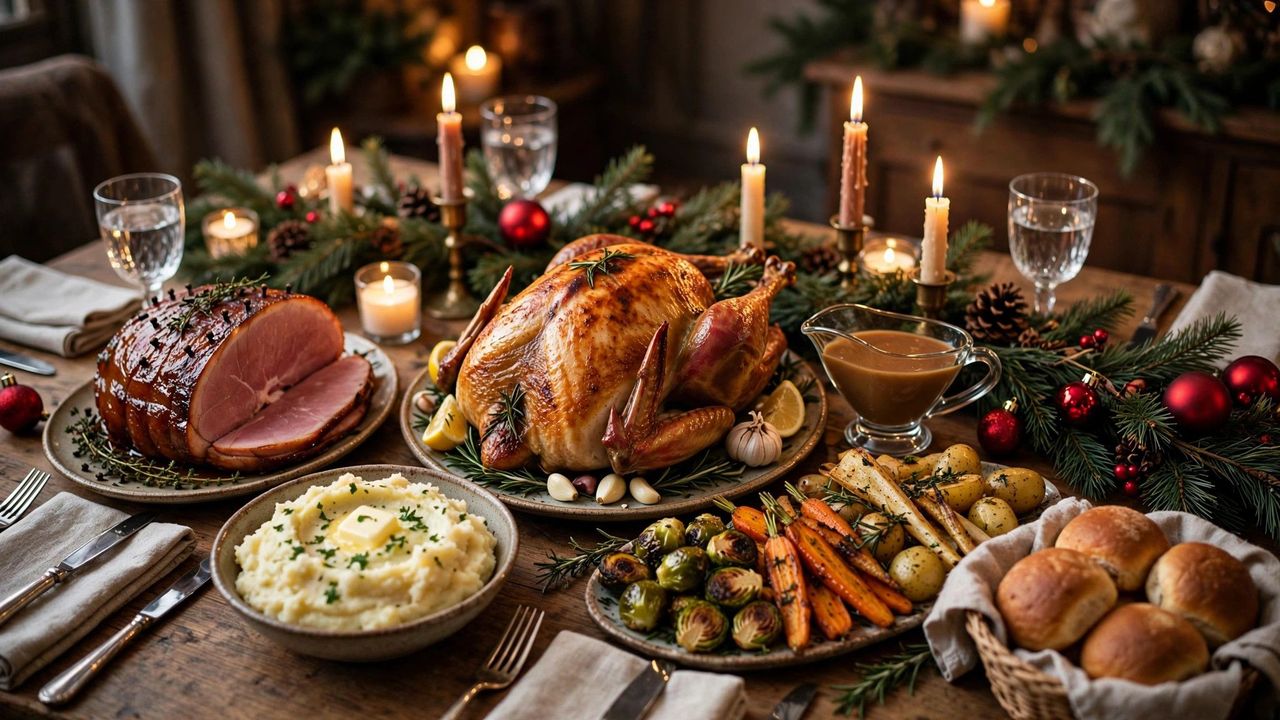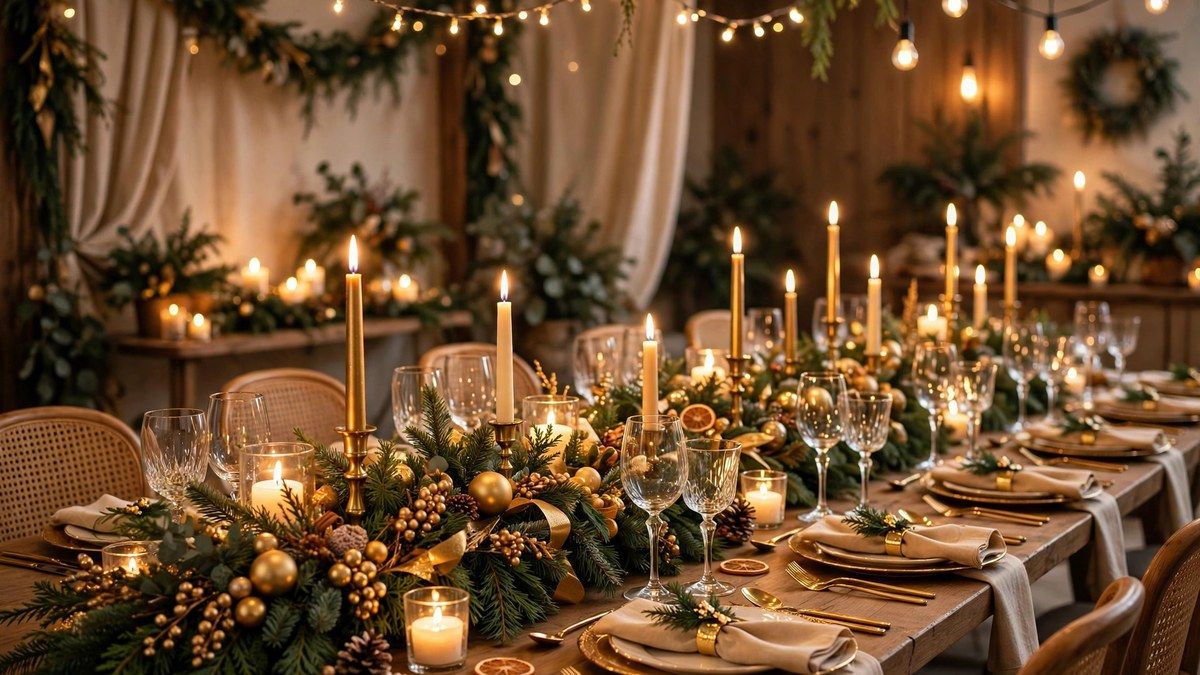
A Christmas party buffet is the smartest way to feed a crowd without spending the whole evening in the kitchen. Guests serve themselves, picky eaters find something they like, and you actually get to enjoy your own party. The catch is that a buffet only feels generous when it is planned: the right mix of dishes, a layout people can move through, and quantities that do not run out in the first hour. This guide gives you a complete game plan for christmas party buffet ideas in 2026, from guest-count math to the final dessert station.
Start by deciding the shape of the party. A buffet works best alongside a loose theme, and our Christmas party themes guide can help you pick one that ties the food, decor and music together. Then build the menu below around that theme, use the make-ahead timeline to protect your party day, and let guests graze their way through the evening.
Why a Buffet Beats a Plated Christmas Dinner
A plated dinner locks you into courses, timing and a seat for every guest. A buffet removes all three pressures. People eat when they are hungry, go back for the dish they loved, and mingle instead of staying anchored to one table neighbor. For mixed groups — family, coworkers, neighbors and plus-ones who barely know each other — that freedom is the difference between a stiff evening and a lively one.
The honest trade-off is front-loaded work. A buffet host does more planning and prep before guests arrive, and needs a plan for keeping food warm and fresh across several hours. The sections below are built to handle exactly those two jobs, so the party itself runs on autopilot.
Start With the Guest Count: Quantity Planning Without the Guesswork
Quantities are where buffets succeed or quietly fail. Work from your confirmed guest count, then think in shares rather than exact servings. As a widely used rule of thumb, hosts estimate that guests eat the most during the first hour, take smaller portions as the evening goes on, and almost always leave room for dessert. Treat every number here as an estimate to adjust for your crowd, not a promise.
- Appetizers and grazing food: plan the largest share here for parties where the buffet is the main event. A common estimate is several pieces per person for the first hour, then a slower pace. Our Christmas appetizers guide is a good source for the mix.
- Main dishes: offer two choices rather than one, and expect guests to take a modest portion of each instead of a full portion of one. A meat main plus a hearty vegetarian main covers nearly everyone.
- Sides: sides are the cheapest way to make a table look abundant. Bread, roasted vegetables and a big salad stretch a long way and cost little per guest.
- Dessert: estimate roughly one full dessert serving per person, knowing some guests will sample two small items and others will skip. Small, portioned desserts get sampled more than one large cake.
When in doubt, round up on items that keep well as leftovers and round down on anything expensive that does not. A slightly generous table that sends guests home with a small plate of leftovers feels far better than a table that empties early.
Build the Menu in Five Blocks
The easiest buffet menu is built in blocks, not dishes. Fill each block once and the table balances itself:
| Block | What belongs there | Reliable examples |
|---|---|---|
| Welcome bites | Food that is ready the moment doors open | Cheese and crackers, nuts, olives, a festive dip with vegetables |
| Main anchors | Two substantial dishes that hold heat well | Sliced ham, meatballs in sauce, a baked pasta or hearty grain dish |
| Fresh balance | Something crisp and bright between the rich dishes | A winter salad, roasted vegetables, pickled elements |
| Bread and fillers | The inexpensive abundance layer | Rolls, sliced baguette, cornbread, seasoned rice |
| Sweet finish | Small desserts guests can pick up with coffee | Cookies, brownies, mini pies, a fruit platter |
If you are also serving a sit-down meal on another night, our Christmas dinner menu guide covers the formal version. For the buffet itself, resist adding a sixth block. Five well-filled blocks beat eight half-empty ones every time.
The Station Layout: Flow Is Everything
Most buffet frustration is a traffic problem, not a food problem. Set plates at the start of the line, food in a logical order (salads and breads before mains, sauces beside the dish they belong to), and cutlery and napkins at the end so hands stay free while serving. If your space allows it, pull the table away from the wall so guests can serve from both sides and the line moves twice as fast.
Separate the drinks completely. A drinks station across the room prevents the worst bottleneck of all: one guest slowly making a drink while a line of hungry people waits behind them. Give desserts their own small surface too, even if it is just a sideboard, and borrow the styling ideas in our Christmas table settings guide to make each station look deliberate rather than leftover.
The Make-Ahead Timeline That Saves the Day
A calm buffet host prepays the work. Two or three days out, shop for everything and make anything that improves with time, like dips, dressings and marinades. The day before, assemble cold platters, bake desserts, and prep vegetables. On the day itself, only hot mains and final assembly should remain. This rhythm matters more than any single recipe, and it mirrors the planning approach in our wider Christmas party ideas guide.
Write the timeline down with clock times, not just a list. Knowing the ham goes in at a set hour and the salad gets dressed just before doors open turns a vague plan into a schedule you can follow even when the doorbell starts ringing early.
Keeping Food Safe and Fresh for Hours
Buffet food sits out, so treat freshness as part of the design. Serve hot dishes in small, deep pans and refresh them with fresh batches from the kitchen rather than piling everything out at once. Keep cold items nestled in trays over ice, and swap small platters instead of topping up ones that have been grazed for hours. As a general rule of thumb, perishable food that has sat at room temperature for most of the party should be retired, not saved — when in doubt, throw it out and note the quantity lesson for next year.
Label dishes with small tent cards, especially anything containing common allergens like nuts. Labels help guests with dietary needs serve themselves confidently, and they make the table look professionally planned for almost no effort.
Drinks and Dessert: The Two Finishing Stations
For drinks, one festive batch option, one non-alcoholic option, water and ice will cover nearly every crowd. Our Christmas punch recipes work perfectly as the batch option because punch improves as it sits. A self-serve cocoa spot is the other crowd favorite — our live hot chocolate bar ideas guide shows how to set one up as a station guests visit all evening.
For dessert, small and varied beats grand and singular. A plate of cookies from our Christmas cookie recipes, something chocolate, and something fresh like fruit gives every guest a finish they want, and leftovers pack away in minutes.
Feeding Mixed Diets and Younger Guests
Every Christmas crowd now includes a mix of needs: vegetarian guests, gluten-free family members, and children who eat on their own schedule. The buffet format handles this gracefully if you plan for it. Keep one main and several sides naturally plant-based, set a small kid-friendly zone with familiar foods at the start of the line, and place allergen labels where they can be read before serving, not after. Nobody has to make a special request, which is exactly the hospitality a good buffet offers.
The Honest Pros, Cons and Classic Mistakes
Pros: guests serve themselves, so hosting stays social; menus flex easily for different diets and budgets; food can be added in waves so the table always looks fresh; and the format scales from a dozen guests to a houseful without new equipment.
Cons: you need serving dishes and surface space; hot food needs monitoring; and quantities take judgment that only improves with practice. The classic mistakes are predictable: too many dishes that all need the oven at once, a single-file line past a wall, no labels, and drinks parked at the start of the food line. Every one of them is fixed by the layout and timeline above.
Conclusion
A great Christmas party buffet is a plan, not a pile of food. Count your guests, build the menu in five blocks, design the flow before you cook, and do the work days ahead so party day feels easy. Do that, and your christmas party buffet ideas stop being a gamble and become the way your crowd asks you to host every year.