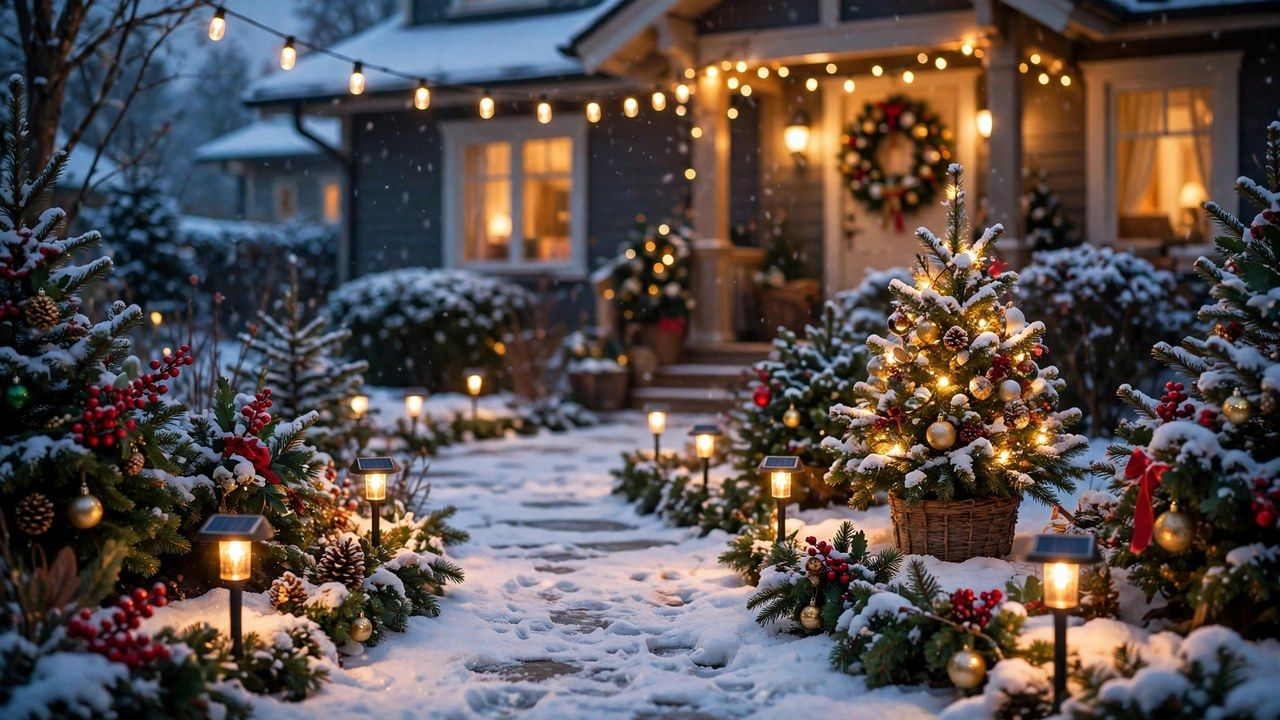
There is always one corner of the yard that deserves lights and has no outlet anywhere near it: the far fence, the mailbox, the path from the driveway, the tree at the bottom of the garden. Best solar christmas lights solve exactly that problem. They charge by day, switch themselves on at dusk, and cost nothing to run, which is why solar strands, stakes and pathway lights have become the practical backbone of a lot of outdoor displays.
Honesty first, because it shapes this whole guide: our verified product pool currently holds one genuine solar product, a solar pathway light set, and you will find it in the shop section below. Rather than padding this article with mains powered products dressed up as solar, we have built it around the buying criteria and comparison framework that let you judge any solar light in a store or listing, plus the placement science that decides whether solar works at your house at all. Start with our outdoor lighting ideas for the overall display plan.
How Solar Christmas Lights Actually Perform in Winter
A solar light is a small system: a panel, a rechargeable battery, and LEDs. In December in most of the United States, that system faces its hardest conditions of the year: the shortest days, a low sun angle, frequent cloud, and sometimes snow sitting on the panel. A light that blazed until midnight in a summer garden may manage a few bright hours in December, and that is not a defect in a particular product; it is the physics every solar product shares.
Understanding this changes what best means. The best solar christmas lights for winter are not the ones with the most LEDs per strand; they are the ones with a generously sized panel, a battery with real capacity, efficient LEDs and a panel you can angle toward what winter sun there is. Displays planned around solar should also expect a graceful arc: brightest in the early evening when people are arriving and admiring, dimmer late at night. For many homes, that arc matches the audience perfectly.
The Buying Criteria That Actually Matter
| Criterion | What to check | Why it matters in December |
|---|---|---|
| Panel size and placement | Separate, angleable panel beats tiny built in panels | Low winter sun rewards a panel you can tilt and position in the brightest spot |
| Battery capacity and type | Listed capacity; replaceable batteries are a plus | Stores the short day's charge; aging batteries are the usual reason old lights fade |
| Brightness and LED count | Judge by intended job, not headline numbers | Pathway marking needs far less light than feature illumination |
| Weather rating | Outdoor rating suitable for rain and snow exposure | December weather finds every weak seal |
| Modes and timer | Steady vs twinkle, dusk to dawn sensor, off switch | Lets you save charge for the hours guests actually see |
| Charging expectations | Hours of sun needed for a full charge | Tells you honestly whether your yard's sun is enough |
Two listing habits deserve suspicion. Runtime claims measured after a full summer day of charging do not predict December performance, and brightness photographs are almost always shot in total darkness against dark backgrounds. Judge products by panel and battery specifications and by reviews written in winter, not by the gallery images.
Solar vs Mains and Battery: An Honest Comparison
Solar wins where there is no outlet, where you want zero running cost and zero cable management, and for marking paths, edges and distant features. Solar loses on raw brightness, on guaranteed all night runtime, on north facing or heavily shaded ground, and in the darkest weeks in northern states. Mains powered lights, covered in our best Christmas lights guide, remain the right choice for the main house display where brightness and reliability carry the design.
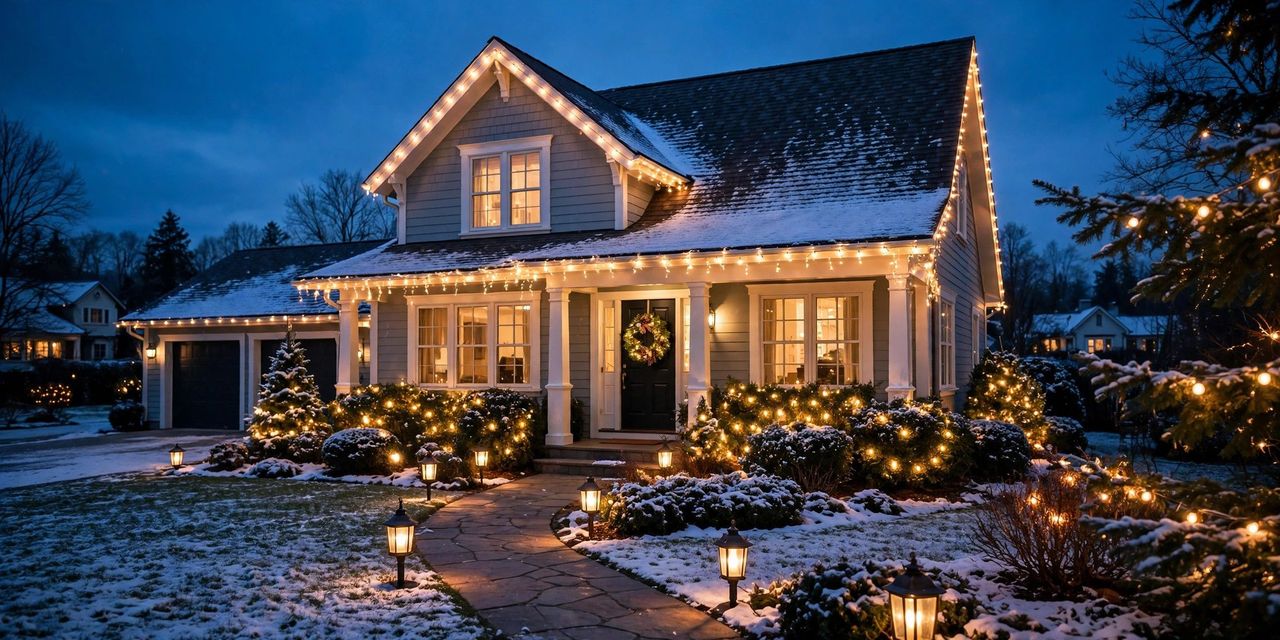
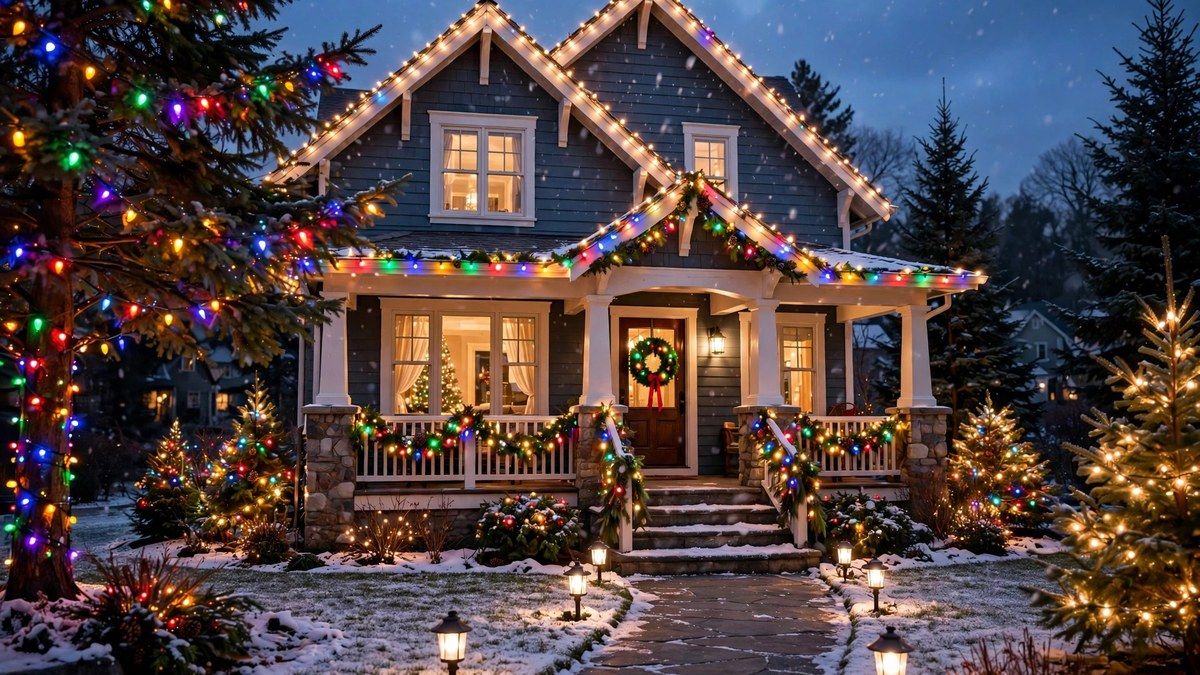
The strongest displays often mix systems without admitting it: mains for the roofline and main tree, battery timers for wreaths, and solar for the path, the mailbox and the far garden. Each technology does the job it is good at, and no extension cord crosses a walkway.
Placement Science: Getting a Real Charge in December
Placement decides solar success more than product choice. The panel needs the most direct sun your yard offers, which in winter usually means south facing, unshaded by the house after mid morning, and tilted to face the low sun rather than lying flat. Snow must be brushed off after storms; a panel under an inch of snow charges almost nothing. If the perfect display spot is shaded, look for lights with a separate panel on a cable, so the lights sit in the shade and the panel sits in the sun.
Also give new lights a head start: charge them for a full bright day, switched off if the design allows, before their first display night. And manage expectations by house: a solar path in Arizona and one in Minnesota are different propositions, and both can look lovely if the Minnesota one is planned as an early evening display.
The One Verified Solar Pick in Our Pool
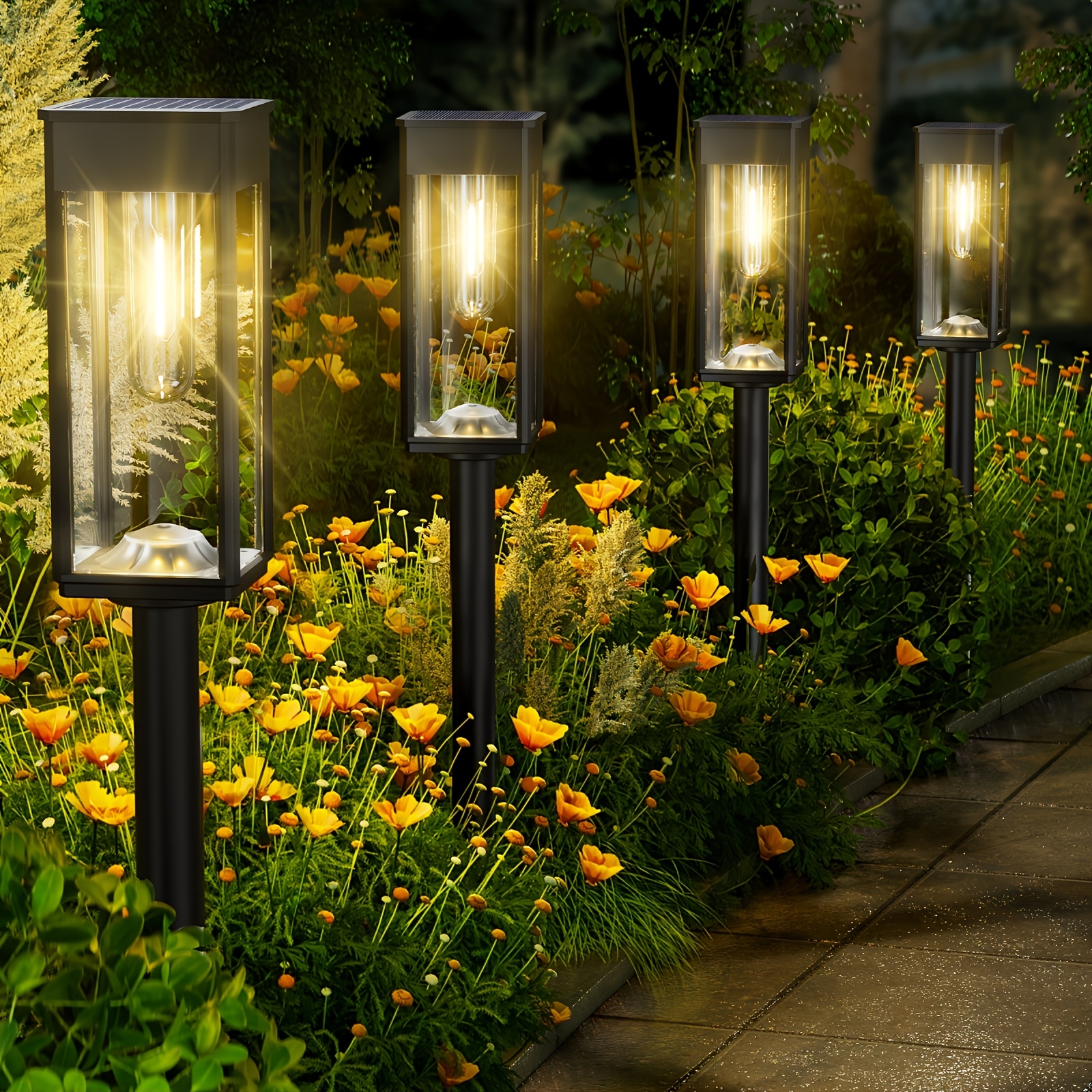
Our pool's genuine solar product is a pathway light set, which happens to be the format where solar makes the most sense: modest brightness needs, all in one stakes that push into soil or sit along a path, and no cable to trip guests. In the shop section below you will find that single verified pick, presented for what it is. We would rather show one honest solar product than a padded list; as more verified solar products are converted into the pool, this guide's framework is exactly how we will judge them.
Used well, pathway lights do three jobs at once: they guide guests safely from car to door on dark, possibly icy paths, they outline the shape of your display at ground level, and they carry the festive line out to parts of the yard the house lights never reach. Spacing them evenly, a little closer than the summer spacing you might use for garden lights, gives a continuous dotted line that reads deliberately Christmas.
Common Solar Light Problems, and Fixes
- Lights fade after an hour: Usually an undercharged or aging battery. Give the panel a full clear day, clean the panel surface, and if the model allows it, replace the rechargeable battery before replacing the whole light.
- Lights never come on: Check the on switch (many ship off), remove any protective film over the panel, and confirm the sensor is not being fooled by a porch light or street light shining on it all night.
- One light in a set is dim: It is probably shaded. Swap its position with a bright one and see if the problem follows the light or stays with the spot; that tells you whether it is the unit or the location.
- Water inside the lens: A failed seal. Dry the unit indoors, and if it repeats, that light belongs in a covered spot or should be replaced; December freeze and thaw cycles widen small leaks.
Planning a Solar Layer for a Real Yard
Work a simple plan before buying anything. Walk the yard at dusk and mark, in your mind or on paper, the route guests actually take: driveway edge, path, steps, porch. That route is the solar layer's job description. Count the lights the route needs at close, even spacing, then check each planned position for daytime sun with the same honesty: a spot in building shadow until noon is a part time position, and its light will perform like it.
Next, decide which features beyond the path deserve a solar accent: a mailbox, a gate, a small tree or the far end of a fence line where the mains display gives up. One accent per feature is enough; solar light is punctuation, not prose. Finally, keep receipts and test promptly. Solar products reveal their character within two or three real December days of charging, and a light that cannot perform in your yard's best position should go back while returns are simple, not be nursed hopefully through the season. A tested, working solar layer, modest as it may be, beats an ambitious one that fades by seven each night.
One last buying habit worth forming: keep a simple note, on your phone or in the storage box, recording which solar lights you bought, where each one was placed and how it performed on clear and cloudy December days. That small record turns next year's decisions from guesswork into knowledge, tells you which positions in your own yard are genuinely sunny in winter, and stops you rebuying a model your house already voted against. Solar rewards households that learn their own light, season by season.
Conclusion
Choose solar christmas lights with a winter realist's eye: a serious panel, a real battery, a weather rating that means something, and a spot in your yard that actually sees the sun. Use them for paths, edges and the far corners mains power cannot reach, and let them be the early evening welcome rather than an all night promise. Our one verified solar pathway pick is below; for the rest of the display, build on our outdoor lighting ideas and porch decor guide.