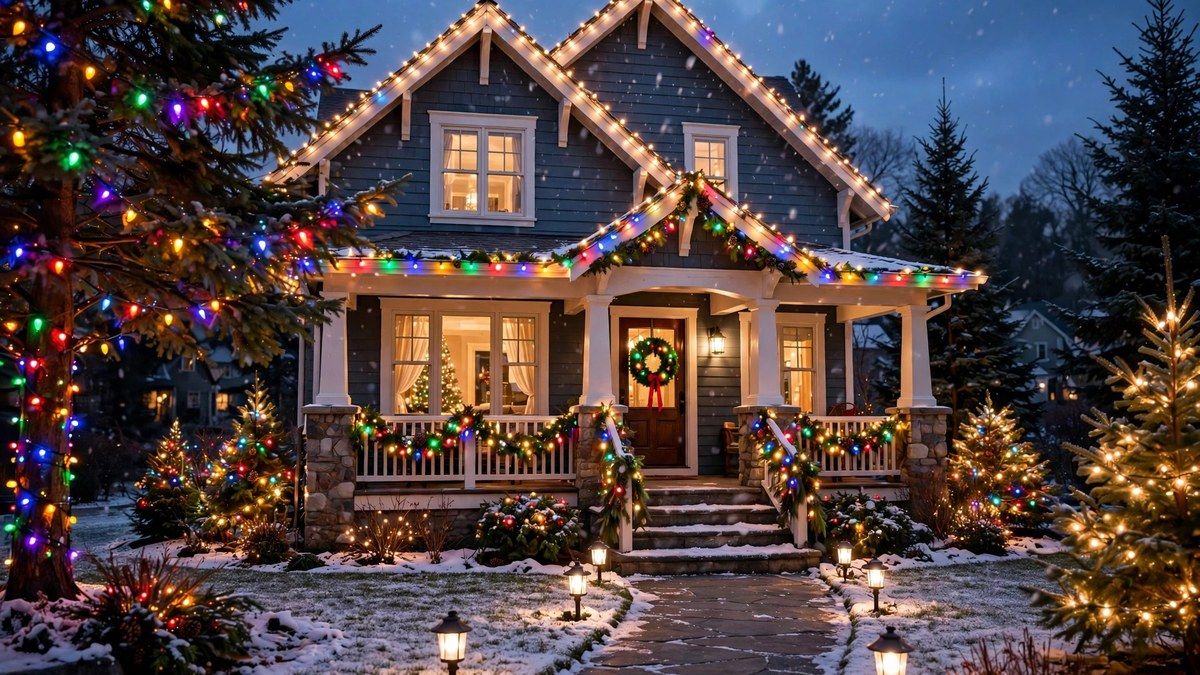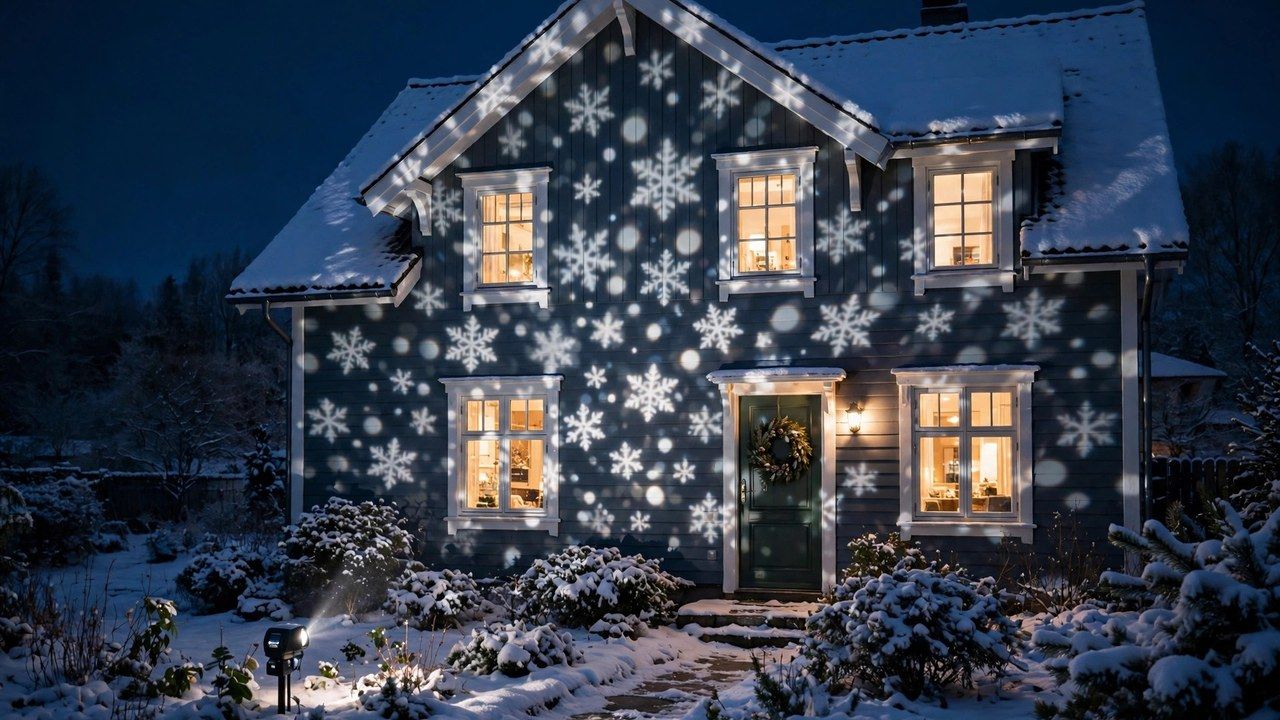
There is a reason the christmas light projector has gone from novelty to neighborhood staple: it promises the one thing every other outdoor display cannot, a whole house covered in moving light with no ladder, no clips and no Sunday afternoon on the roof. Stake it in the ground, plug it in, and snowfall drifts across your siding all evening. The promise is mostly real, and the places where it is not are exactly what this guide explains before you buy.
Below you will find how projectors work, the coverage and distance math that decides whether one unit is enough for your house, what separates a good unit from a dim one, and our verified snowflake projector pick in the shop section, alongside one honestly labelled complementary pathway pick. For the traditional alternative, our best Christmas lights guide covers the ladder based version.
How a Christmas Light Projector Works
Most holiday projectors are simple machines: a bright LED light source shining through a rotating patterned element or a set of lenses that throws repeated images, snowflakes, dots, stars or characters, across a surface. Better units add a remote, a timer, speed control for the motion, and the ability to pause the pattern as a static image. The image sharpness and brightness fall off with distance, which is why every honest specification talks about coverage at a stated distance rather than a maximum reach.
Two families dominate. Pattern projectors throw defined shapes like snowflakes and are the classic snowfall look. Laser style projectors throw thousands of tiny dots that shimmer and drift; they cover huge areas with little effort but produce a speckled effect some people love and others find more suited to a party than a quiet house front. For a traditional Christmas facade, the pattern projector is usually the better match, and it is the type our verified pick belongs to.
Coverage and Distance: The Math That Decides Your Purchase
| Decision | Working rule | Watch out for |
|---|---|---|
| Distance to house | Mid range distances give the best balance of coverage and brightness | Too close: tiny bright patch. Too far: large but washed out image |
| One unit or two | Wide or two story facades usually benefit from two angled units | Overlapping patterns can look busy; angle them to cover separate zones |
| Surface color | Light colored siding shows projection best | Dark brick and busy stone absorb and fragment the image |
| Ambient light | Darker surroundings mean a stronger effect | Bright street lights and porch floods compete directly with the projection |
| Motion speed | Slow drift reads as snowfall; fast reads as party lighting | Units without speed control lock you into the maker's choice |
Test before the season if you can: set the unit up on a plain evening, stand where passersby stand, and judge from the street, not from beside the projector. The audience view is the only one that counts, and small angle changes at the stake make large differences on the wall.
What Separates a Good Projector From a Dim One
Brightness you can trust is the first separator, and since listings describe it inconsistently, reviews with real house photos at realistic distances are worth more than any specification number. The second is weather sealing: the unit lives outdoors in December, often in snow, so an outdoor rating and a stake and cable that tolerate freeze and thaw matter more than extra patterns. Third is the timer. A built in timer that runs the display for the evening hours and rests it overnight saves both electricity and the slow fading that comes from equipment left running around the clock.
Remote control sounds minor until the unit is staked in a snowy yard and every adjustment means boots. A remote that handles power, pattern, speed and timer from the porch is a genuine quality of life feature across a whole season of evenings.
Our Verified Pick: The Snowflake Projector
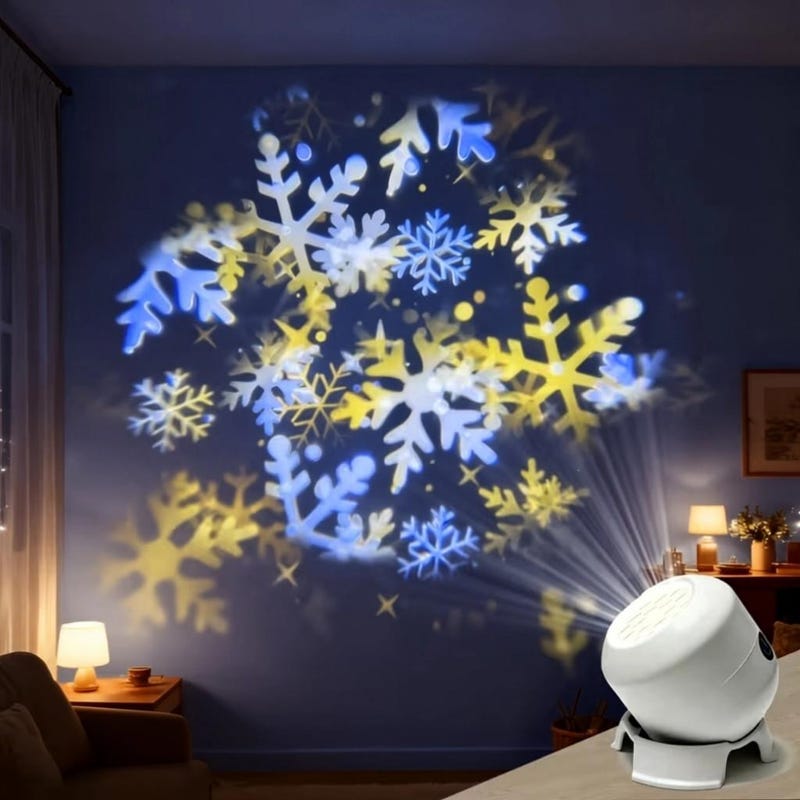
Our pool's projector pick, in the shop section below, is a snowflake projector: the classic pattern, suitable for indoor party and holiday use as its listing describes as well as for a facade, which makes it a flexible first projector for households that also host indoors. Snowflake patterns have a practical advantage beyond looks: they read clearly even when slightly soft with distance, unlike text or detailed characters, which blur into confusion.
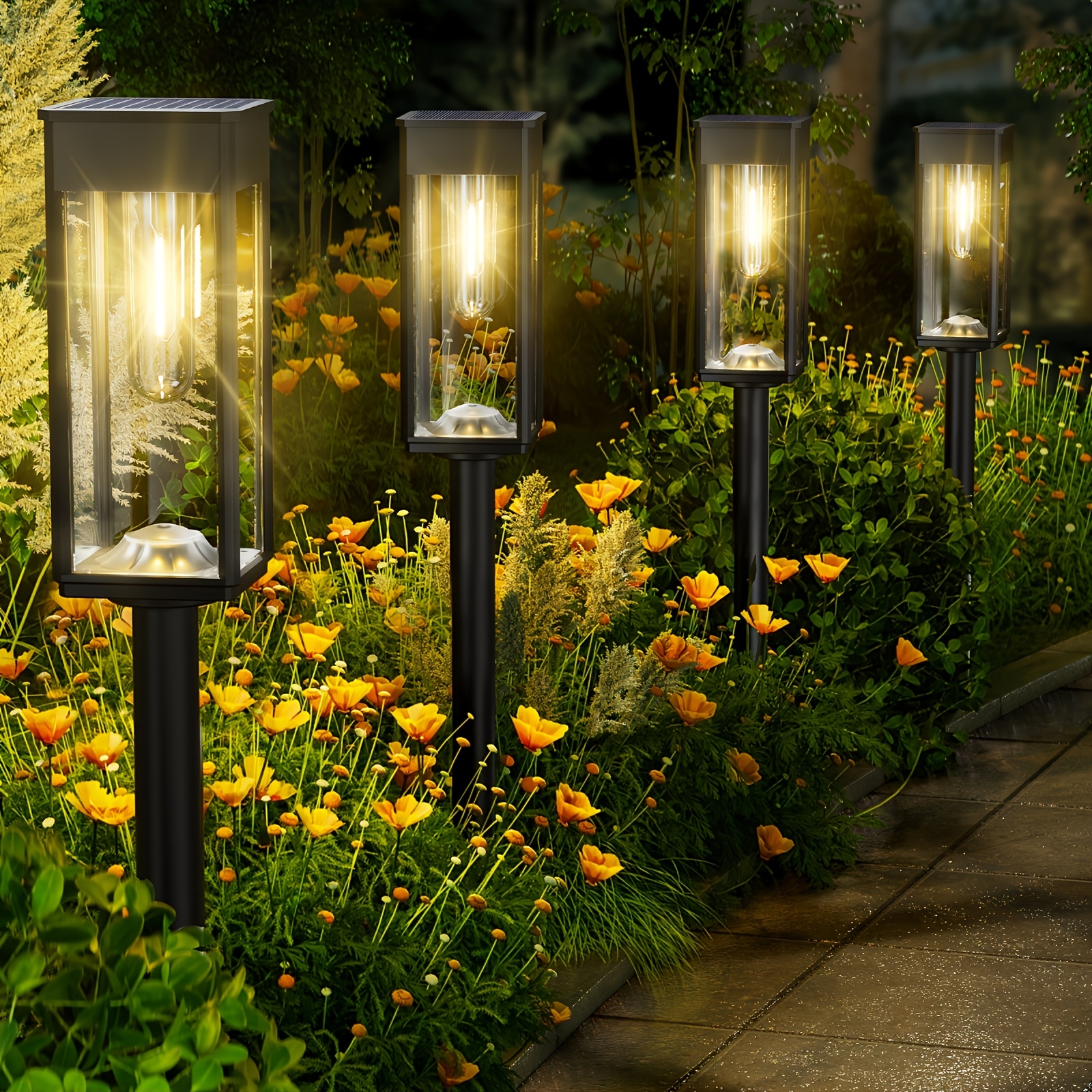
Beside it in the shop section you will also find a solar pathway light set. To be completely clear: that pathway set is not a projector. We include it only as a complementary, complete the look pick, because a projected facade above a dark, undefined yard looks unfinished; pathway lights give the display a ground line and guide guests to the door. Judge each product for its own job.
Placement and Setup, Step by Step
- Choose the darkest backdrop: Aim at the largest, plainest, lightest wall you have, and turn off or dim competing porch floods during display hours.
- Stake at mid distance: Start at a moderate distance from the wall, centered on the zone you want covered, then adjust after dark.
- Angle for the audience: View from the street and shift the unit until the pattern covers the facade evenly without spilling heavily onto windows.
- Secure the cable: Keep cords out of walkways or covered, and use outdoor rated connections protected from standing water and snow melt.
- Set the timer: Dusk to bedtime covers the audience; all night running helps no one and ages the unit.
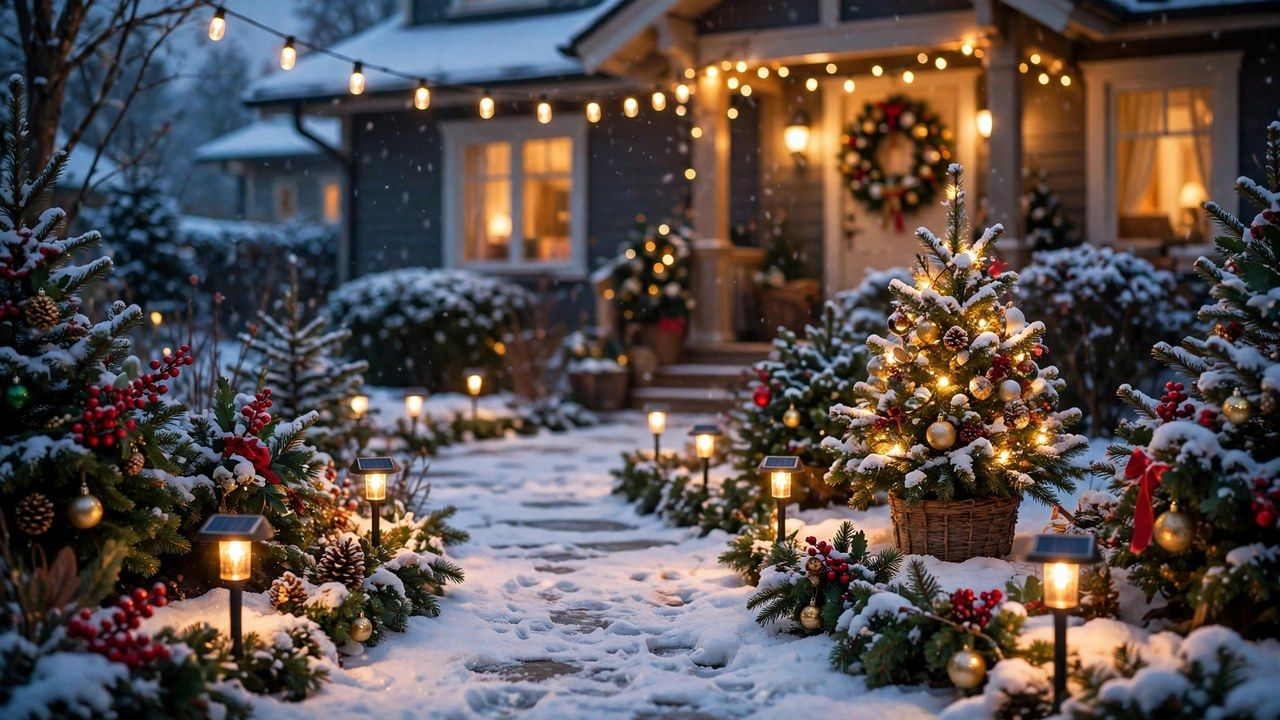
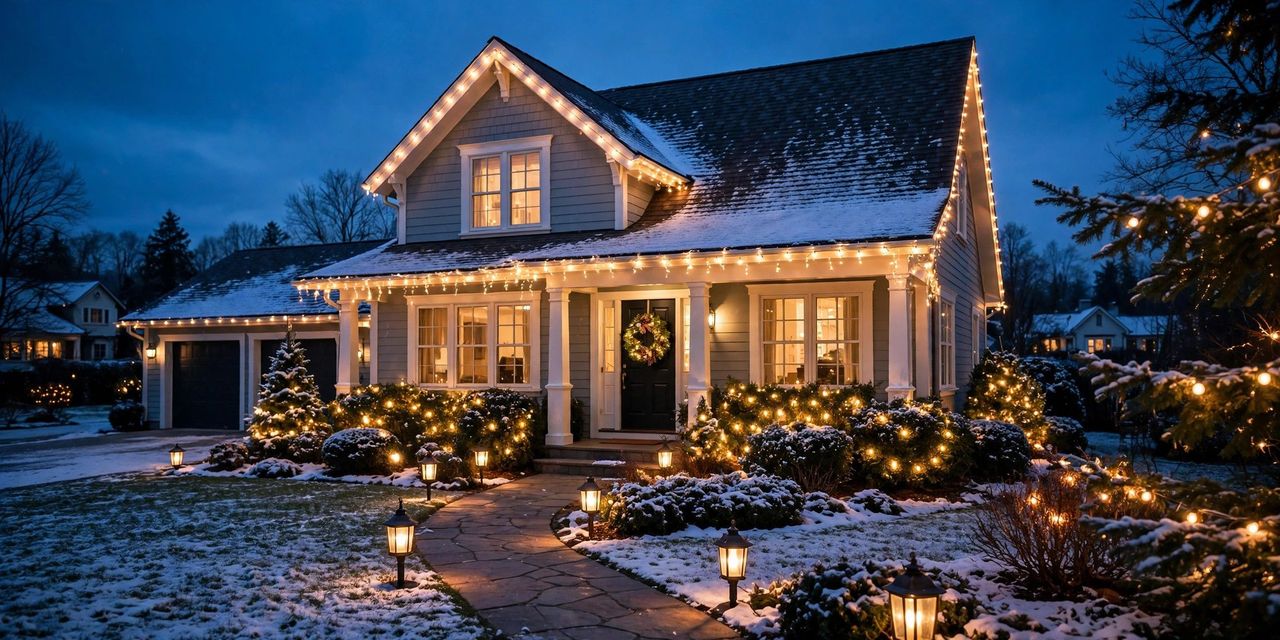
If you also run traditional lights, let each do its own layer rather than competing: projection on the wall, a lit wreath and porch as the warm focal points, and path lighting below, as laid out in our outdoor lighting ideas and porch decor guide.
Honest Pros and Cons of Projector Displays
Pros: minutes of setup with no ladder work, which matters for safety as much as convenience; instant coverage of a whole facade; easy storage in a shoebox sized space; and a moving effect string lights cannot match. Cons: the image is only as good as the darkness and the wall behind it; patterns soften with distance; a projector alone can look flat in person compared with the depth of real lights; and units are tempting, portable objects, so a discreet position or a security cable is sensible in some neighborhoods.
There is also a courtesy consideration: moving light that spills onto a neighbor's windows every night for a month wears out welcomes. Angle carefully, use the timer, and aim the snowfall at your own house.
Projectors for Parties and Indoor Use
Outdoor facades get the attention, but a projector earns its keep indoors too, which is one reason our verified snowflake pick is described for indoor party and holiday use as well as outside. A snowfall pattern drifting across a living room wall or ceiling turns a Christmas party, a children's movie night or a New Year's gathering into an event with about ninety seconds of setup, and unlike a facade display, indoor projection works in any weather, on any wall color that is reasonably light, and at any hour.
Indoors, place the unit low and angled upward for a ceiling snowfall that guests experience without staring into a light source, and keep the pattern speed slow; rooms amplify motion, and a gentle drift that looks calm on a house can feel frantic across a ceiling. For children's parties, pair the snowfall with the lights dimmed and music low, and the projector becomes the entertainment rather than the background. This double duty, facade in the early evening and party room later in the month, is the honest value case for owning one good projector instead of several single purpose gadgets.
One last consideration before you buy: think about where the projector lives in January. Its small size is a storage advantage only if it is packed dry, with its stake, cable and remote together, ideally in its original box or a labeled pouch inside your outdoor lights bin. A projector lost in a garage drawer until next November, separated from its remote, delivers none of the effortless setup that sold it. Packed properly, it is the first piece of next year's display to go up and the easiest win of the season.
Conclusion
A christmas light projector is the fastest honest route to a dressed house front, provided you respect its physics: a plain light wall, real darkness, a mid range distance and a timer. Buy for brightness, sealing and control rather than pattern count, start with a snowfall pattern that forgives distance, and ground the display with warm porch and pathway light. Our verified snowflake pick and its complementary pathway companion are below; pair them with the wider plan in our outdoor lighting guide for a complete, ladder free display.